Software coordinates the restaurant
Otter is the restaurant software layer within Atoms' food portfolio. The point of sale accepts and processes orders, the order manager consolidates channels, and the kitchen display sends work to cooking stations. These components solve related but different problems. An operator can keep an existing point of sale and connect supported integrations, or evaluate Otter's own terminal and payment arrangement. Direct online ordering gives a restaurant a branded ordering route, and loyalty tracks rewards and return visits. The menu tool handles location-specific items and availability; analytics brings channel and location data together for review. The buyer is a restaurant operator who has to decide whether the integration removes enough daily friction to justify replacing or connecting current tools. Signet would test the order path with modifiers, an unavailable item, a cancellation and a handoff, because the difficult cases reveal whether the shared queue is dependable. Product availability and pricing must retain their market scope. The public US product pages describe a portfolio offer, rather than a promise that every feature or payment arrangement is available to a Seoul customer.
Facilities are part of the product
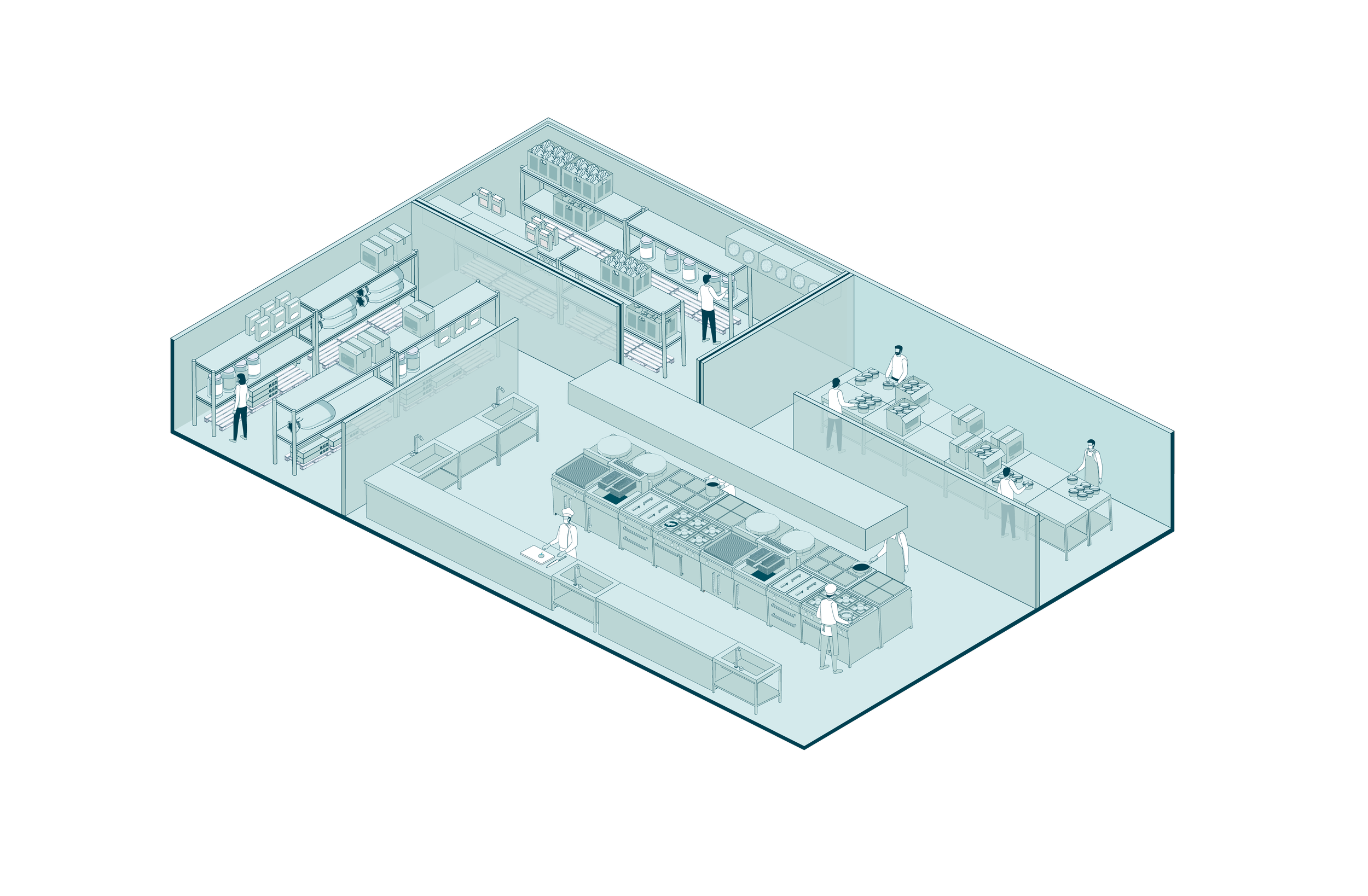
CloudKitchens offers a private commercial kitchen with shared facility infrastructure, built for delivery, takeout and production. It separates the tenant's cooking work from infrastructure and front-of-house operations managed by the provider. A delivery-only kitchen can let an existing restaurant move courier activity away from its dining room, while a producer can use ready-built space with storage and utility connections. ProFood extends the physical infrastructure into build-to-suit production and cold-chain facilities. Its services include tenant-driven acquisition, permitting, power coordination, construction delivery and property management. These are real-estate and operating services, not software interfaces. Picnic addresses another food movement problem by combining office lunch orders into one delivery, with team ordering, catering and employer subsidies as separate use cases. Lab37 appears in the group portfolio as automated kitchen systems. Signet reads the portfolio as several ways to make food production and delivery easier to operate. It would still evaluate each arrangement by the tenant's actual workflow, contract and equipment needs rather than treating all food businesses as one fully integrated commercial bundle.
Retrofit the equipment a mine already owns
Pronto supplies an autonomous haulage system for mines and quarries. The system combines vehicle actuation, sensing, route behavior and an operator interface, with editions chosen for different site needs. Its product material describes camera and positioning technology, site-specific safeguards and emergency-stop interactions with manually operated equipment. Later announcements describe additional sensor combinations for more demanding mining environments, so the original vision-based configuration should not be generalized to every edition. Heidelberg Materials is a named customer case: the Lake Bridgeport quarry used Caterpillar and Komatsu trucks together and reported more than two million tons of limestone moved in less than eight months. The result is material hauled at a particular operation, rather than Atoms' revenue or a universal cost-saving rate. April's announcement planned two additional North American sites; July's Hitachi announcement was a memorandum of understanding. Signet would distinguish an operating deployment, a planned rollout and a partner agreement. That distinction helps a candidate discuss product delivery without turning a roadmap into a completed installation.