What changed? +
Existing cloud workloads needed a supported platform upgrade.
Canonical-published SBI BITS migration case; customer-specific deployment outcome.

Open software has an accountable path from deployment to long-term operation.
See it taking shape ↓
Turn server inventory into repeatable deployments.
Existing cloud workloads needed a supported platform upgrade.
Canonical-published SBI BITS migration case; customer-specific deployment outcome.
Illustrative path for a production infrastructure team.
Inventory and commission a server.
Deploy a tested Ubuntu image.
Enroll the machine in Landscape.
Apply the selected maintenance policy.
Investigate and document an exception.
A developer can download Ubuntu and run a program without buying an operating-system licence. The harder enterprise question arrives later: who keeps that machine secure, handles a difficult incident and maintains the software when a service must run for years? Canonical turns that continuing work into a commercial promise around open source. Ubuntu is the entry point, with desktop, server, cloud and device environments sharing a familiar foundation. The company also contributes to projects such as cloud-init, Netplan and OpenStack, so the operating problem extends beyond a single distribution. Signet reads the business as a way to make open software practical for organizations that need accountable maintenance. The freely available code and the paid service are connected, but they represent different decisions. A buyer can keep operating software independently or pay for coverage, technical support and deployment help. That distinction explains why download popularity alone does not measure sales. The useful starting question is which production responsibility the customer wants Canonical to take on, and which responsibilities remain with the customer's own engineers.
Consider an illustrative infrastructure team preparing capacity for a new service. It first checks which physical servers are available, their hardware configuration and whether they pass commissioning tests. MAAS turns those machines into provisionable resources, using management-controller connections to control power and deploy an operating system through an API or interface. The team then chooses an appropriate Ubuntu release and installs its workload. Landscape provides a separate management view: enrolled machines report health information through an agent, and administrators can coordinate package updates, repositories and access. Ubuntu Pro adds security coverage and compliance tools, while Livepatch applies eligible kernel fixes during operation. Each step changes a different part of the job. Provisioning allocates a machine; patching maintains a running installation; incident support helps resolve an exceptional problem. Engineers still choose maintenance windows, test application compatibility and agree which machines need which support level. Signet would ask a candidate to explain one complete operating path rather than list product names. A reproducible deployment, an understood dependency and a clear recovery decision show how open-source tools become a dependable service.
Ubuntu's release calendar gives teams a planning framework. A new version appears every six months, while long-term-support releases arrive every two years with five years of standard security maintenance. Ubuntu Pro extends the maintenance path, and its Legacy add-on can bring the total to fifteen years. The longer period depends on the selected subscription and release coverage, so it should be discussed as a contract choice rather than a property of every installation. In 2026, Ubuntu 26.04 LTS updates the base platform and Ubuntu Core 26 applies the same long-lived operating ambition to embedded fleets. Workshop addresses a different friction: a developer can recreate an isolated working environment from a versioned definition rather than rebuild tool dependencies by hand. Signet sees a consistent direction across these products, making software easier to start and more predictable to keep running. For someone considering the company from Korea, an infrastructure example is particularly useful: show how a change moved from a development environment to a supported deployment, with the compatibility checks and owner decisions made explicit. The work connects code, operational requirements and a long maintenance horizon.
MAAS, short for Metal as a Service, manages physical servers as resources that can be discovered, tested, allocated and released. Its buyers and users are infrastructure operators who would otherwise coordinate much of that work through individual server consoles and manual installation procedures. The management controller gives the service an out-of-band way to handle power, while commissioning helps the operator inspect hardware before deployment. The interface and API connect the inventory to an operating-system installation request. This matters when a cloud-like workflow has to reach actual racks of equipment, because a virtual machine's speed does not automatically make the underlying hardware manageable. MAAS provides a consistent way to request a server, but the operator still decides network configuration, images and workload requirements. Signet would evaluate the product through commissioning results, deployment reproducibility and the handling of a failed machine. The comparison is with manual provisioning or another hardware-management system in that customer's environment. A useful demonstration begins with an available machine and ends with an installation that the operations team can understand and support.
Landscape operates after machines have joined the managed environment. An agent on each enrolled machine sends selected health information to the server, and administrators use the management view to coordinate software, users and permissions. The service is offered in SaaS, managed and self-hosted forms, allowing the deployment model to match the customer's operating requirements. Ubuntu Pro includes Landscape in its wider maintenance proposition. A system administrator can therefore connect an inventory problem to a patching problem instead of treating each host as a separate manual session. The product also supports repository control, which matters when an organization needs a tested package source rather than unrestricted changes across production machines. Its alternative is the existing collection of scripts, package tools and fleet-management systems. Signet would compare the ability to apply and audit a chosen policy across the actual estate, including machines that have exceptional constraints. The screenshot shows a management interface, not evidence that every customer's fleet has the same configuration. Good operational judgement still includes staging an update, checking its effect and recording why a machine needs a different schedule.
Workshop makes development environments repeatable through YAML definitions. Developers select SDKs and resources, then launch sandboxed environments through a command-line workflow. Its interfaces make host-resource access a deliberate configuration choice, useful when experimenting with agents or changing toolchains. The product reduces workstation setup friction, while MAAS and Landscape address production infrastructure and fleet maintenance. These are complementary jobs rather than identical products. A named customer example shows why the larger service matters. SBI BITS needed to migrate mission-critical OpenStack workloads while preserving business continuity. Canonical provided support and consulting, including a dedicated support engineer, and helped plan a phased migration into three new environments. The published case reports that deployment time improved by more than fifty percent and that a Legacy add-on maintained security for workloads remaining on the older environment. That is a vendor-published result for SBI BITS, not a promised saving for every installation. Signet reads the case as a clear link between technical expertise and the customer's operating obligation: creating new capacity only helps if important authentication and financial-service workloads keep running during the transition.
Consolidated reporting group, exact statement values; revenue separate from ARR and valuation.
| Date | Value | Basis |
|---|---|---|
| 2024-12-31 | $291.505M | Year ended December31,2024. |
| 2025-12-31 | $344.564M | Year ended December31,2025. |
Companies House / Canonical Group Limited
Ubuntu26.04 LTS released
Ubuntu Core26 generally available
Workshop introduced
Canonical's commercial model links free software to paid deployment, management, support and software-embedding agreements. Ubuntu Pro provides security and compliance coverage priced around the installed base, with optional support levels. The current public price page lists twenty-five US dollars per workstation per year and five hundred dollars per server per year for the base subscription. Support changes the bill: the page distinguishes infrastructure support from fuller coverage and weekday service from twenty-four-hour service. Public-cloud subscriptions use metered billing through the cloud provider, so their prices should be checked against the specific provider and instance. A customer can therefore grow the relationship by covering more machines or selecting a broader operating service. Signet would map a sale to a clear responsibility: security maintenance, an incident-response tier, a private-cloud deployment or managed infrastructure. The free download remains valuable as a route to adoption and community feedback, while the contract pays for an agreed service around it. This makes a machine count, a subscription price and total recognized revenue different measures of the business.
Canonical Group Limited's filed accounts show revenue of US$344.564 million for the year ended December 31, 2025, compared with US$291.505 million in 2024. These are recognized annual revenues of that reporting group. The chart retains those two comparable periods, using the audited statement's exact amounts rather than the strategic report's rounded headline of US$345 million. The same accounts identify the reporting group as part of the broader Canonical organization headed by Canonical Holdings Limited, so the legal scope remains part of the label. Signet reads the comparison as evidence that customers paid more for the covered business during the year. It does not turn those sales into annual recurring revenue or infer a company valuation. Product economics still depend on the service sold: maintaining an installed server differs from designing and operating a new private cloud. The ESA case illustrates that breadth, with architecture, deployment and managed services around Kubernetes, storage and data tools supporting mission operations. A commercial or technical candidate should be able to connect the contract to the operating work required to deliver it, including customer expansion and the cost of supporting new requirements.
The filed risk discussion highlights cyber security, people and adaptation to emerging technology among the business's principal concerns. A security failure could affect products, internal data and core operations; the company describes incorporating security risk management into development and infrastructure. Its people risk concerns attracting and retaining the expertise needed to serve customers, with the report also discussing dependence on senior individuals. Technology changes create the risk that the company fails to adapt its engineering and commercialization. Signet would translate these into three practical review questions. Can an update reach the customer safely? Does the team have enough expertise to support the promised scope? Can the portfolio remain useful as workloads and hardware change? Competition includes other supported Linux distributions, a customer's own open-source operations and proprietary infrastructure arrangements. Canonical positions its portfolio around a common open foundation with optional commercial services. The comparison should therefore consider maintenance coverage, operating effort and the customer's existing tools, beyond a licence-price comparison. The SBI BITS case is particularly relevant here: expertise helped preserve continuity during a migration, while a Legacy contract kept older workloads supported. Such work is a tangible test of the service behind the subscription.

Founded Canonical in 2004.
Connects open access with enterprise maintenance.
“with a free personal Ubuntu Pro subscription”
Mark Shuttleworth · Ubuntu Pro personal subscriptions · 2022-10-05
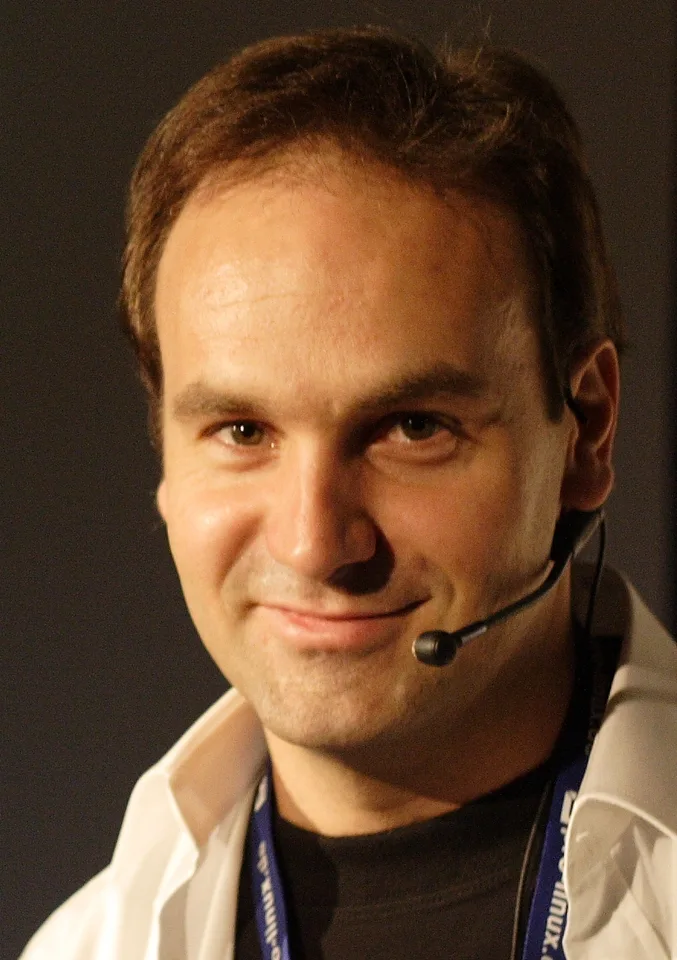
Mark Shuttleworth founded Canonical in 2004 and serves as its CEO. Ubuntu's freely usable distribution and Canonical's paid support have remained connected parts of the company. His October 2022 Ubuntu Pro announcement explained how enterprise requests for broader coverage led to a personal free subscription, bringing more of that maintenance work to individual users. The decision is useful for understanding the business: community access can expand at the same time as organizations buy a more accountable operating relationship. Canonical's current company page emphasizes an international team with more than eighty nationalities and published values around adaptability, reliability, accessibility and precision. Signet reads the combination as a company that wants broad participation while making demanding technical promises to paying customers. A candidate can discuss that tension concretely through an upstream contribution, a supported release or a customer incident. The relevant question is how a decision improves the software for a broad community and preserves a clear support commitment. It is a working choice about product scope and maintenance, beyond the founder's public profile.
Jon Seager is identified as VP of Ubuntu Engineering in the April 2026 Ubuntu 26.04 release and the May Ubuntu Core 26 announcement. The Workshop announcement later in May describes his engineering leadership while explaining the need to spend less time on dependency and workstation configuration. Those public statements connect a leader to particular decisions: modernize the operating-system base, make embedded updates more controlled and make development environments repeatable. The titles are retained in their announcement context rather than used to infer every internal reporting relationship. Signet sees an operating pattern in which the release is only one part of the promise. A platform change must have a maintenance path, a device update must be traceable and a developer's environment must be reproducible. For an engineer or technical commercial colleague, this creates a useful way to prepare: choose a decision where usability, compatibility and security requirements competed, then explain the evidence that resolved it. The aim is to understand the tradeoff behind a named product, not to claim that the leader personally directs every customer deployment or local employee.
Canonical says it has operated as a fully distributed organization since 2004. Most colleagues work remotely and meet in person for company-funded sprints at least twice a year. The remote-work description emphasizes independent organization, collaboration across time zones and the quality of execution. Its hiring process puts a business-function Hiring Lead in charge of the application and uses written interviews, a cognitive assessment and role-specific technical evaluation where appropriate. The written stage allows candidates to explain academic and professional achievements in a consistent format. Later interviews examine domain skills and the candidate's working style. The process page gives an average of around three months from application to offer across role levels, which is a planning estimate rather than an individual deadline. Signet would connect the preparation to actual distributed work: write a clear account of a problem, show how a colleague can reproduce the evidence and explain the decision in your own words. The company's published application guidance asks candidates to use their own words without online aids during assessments. A thoughtful preparation file can organize past experience, while the assessment itself should follow those instructions.
Canonical describes a distributed employment model that can connect technical colleagues across countries. For a candidate based in Korea, the relevant next step is to read the advertised role's permitted geography, working hours and travel requirements together. The current board contains worldwide and regional roles, and each location label should retain its literal meaning. A broad remote-work philosophy by itself does not settle employment arrangements for an individual applicant. The team view here therefore describes the company's published working model rather than inferred Korean reporting lines. Company-funded sprints at least twice a year are part of that model, alongside independent work and collaboration across time zones. Signet would prepare for those conditions by choosing examples that show asynchronous communication: a concise technical investigation, a decision log and a handoff that lets another colleague continue the work. An infrastructure incident can make the example concrete. Explain what was happening, which evidence changed the diagnosis and how the resolution was communicated to people working at a different hour. Such preparation is grounded in the company's operating approach while the actual application follows a suitable current advert.
Team view describes the published distributed-work model and literal employer-board locations.
Historical telecom and Samsung device collaborations connect Korean technical partners to open-platform development.
KT, LG UPlus and SK Telecom joined the founding Ubuntu mobile forum.
Ubuntu Core image and demonstration announced for ARTIK5/10.
Canonical's published history connects Ubuntu to Korean technology organizations through particular projects. In June 2013, Korea Telecom, LG UPlus and SK Telecom joined the founding Carrier Advisory Group for Ubuntu mobile development. That forum was intended to let operators influence the smartphone platform's direction. In February 2016, Canonical announced a developer image of Ubuntu Core optimized for Samsung ARTIK 5 and 10 modules, with a demonstration at Mobile World Congress. The collaboration connected hardware, application development and remote device maintenance. These are dated partnership milestones with their own product context. Signet reads them as evidence that Korean telecom and electronics organizations have participated in Canonical's open-platform ecosystem. It would use that history to understand technical relationships and the kinds of problems that draw organizations to Ubuntu. A device producer needs a supported hardware and update path; a telecom operator needs an infrastructure ecosystem that fits its operating requirements. Those are different buyer problems, and the profile keeps their historical programs distinct from today's Ubuntu Pro, server and embedded portfolio.
Canonical describes a distributed employment model that can connect technical colleagues across countries. For a candidate based in Korea, the relevant next step is to read the advertised role's permitted geography, working hours and travel requirements together. The current board contains worldwide and regional roles, and each location label should retain its literal meaning. A broad remote-work philosophy by itself does not settle employment arrangements for an individual applicant. The team view here therefore describes the company's published working model rather than inferred Korean reporting lines. Company-funded sprints at least twice a year are part of that model, alongside independent work and collaboration across time zones. Signet would prepare for those conditions by choosing examples that show asynchronous communication: a concise technical investigation, a decision log and a handoff that lets another colleague continue the work. An infrastructure incident can make the example concrete. Explain what was happening, which evidence changed the diagnosis and how the resolution was communicated to people working at a different hour. Such preparation is grounded in the company's operating approach while the actual application follows a suitable current advert.
The published hiring process helps a prospective applicant assess the time and effort required before choosing a role. A Hiring Lead from the relevant business function follows the application, and the assessment stage combines a written interview with the General Intelligence Assessment and, where applicable, a technical task. The written interview asks about academic and professional achievements, so a candidate should organize examples with a clear contribution and result. The later domain interviews explore the technical experience behind that account, while the talent interview considers motivation and working style. Signet suggests preparation around three artifacts: a reproducible problem investigation, an example of improving an operating process and a documented collaboration across teams. Those are preparation suggestions, separate from an employer's promise about a first quarter or a local team structure. Each example should expose the person's own judgement, including a tradeoff and a limitation in the result. Canonical's assessment guidance asks for the candidate's own words without online aids. That instruction makes an accurate account of past work more useful than a polished generic answer. A candidate can decide whether the distributed environment and substantial assessment process fit how they prefer to work.
No current Korea openings were found. The company story is still available.
See overseas openings →Ubuntu 26.04 LTS, released on April 23, 2026, updates the platform for modern development and enterprise deployment. The announcement includes memory-safety work using Rust, native CUDA and ROCm support and expanded confidential-computing capabilities. Signet reads these as changes to the environment in which developers build and operators run applications, with the LTS support path keeping the release connected to production maintenance. The useful follow-up is compatibility: which hardware and software combinations a customer needs, and how an upgrade will be tested before a critical workload moves. Release features become valuable through that operational decision.
Ubuntu Core 26 became generally available on May 19, 2026. The announcement describes an immutable device operating system with signed components, a measured boot chain and a Chisel-based composition process that traces files to their originating package slices. It also reports smaller over-the-air updates, with reductions varying by snap. These are product-release claims about device management, separate from a measured outcome across every customer's fleet. Signet would watch whether hardware enablement, update testing and component traceability make long-lived deployments easier to operate. The emphasis extends Canonical's maintenance thesis into machines that need dependable unattended updates.
Workshop's May 27, 2026 announcement connects repeatable development to agentic experimentation. A versioned YAML definition selects SDKs and an isolated environment, while explicit interfaces control access to the host's resources. That brings a practical boundary to rapidly changing tools: a colleague should be able to recreate the environment and understand the access that was granted. Over the next year, Signet would follow adoption of the new LTS, reliable device updates and reproducible AI development environments as separate operating tests. Together they ask whether Canonical can make open software approachable at the start and predictable over its working life. The financial evidence describes the prior reporting year, while these releases describe the product work that customers and applicants can investigate now.
Ubuntu 26.04 LTS, released on April 23, 2026, updates the platform for modern development and enterprise deployment. The announcement includes memory-safety work using Rust, native CUDA and ROCm support and expanded confidential-computing capabilities. Signet reads these as changes to the environment in which developers build and operators run applications, with the LTS support path keeping the release connected to production maintenance. The useful follow-up is compatibility: which hardware and software combinations a customer needs, and how an upgrade will be tested before a critical workload moves. Release features become valuable through that operational decision.
Ubuntu Core 26 became generally available on May 19, 2026. The announcement describes an immutable device operating system with signed components, a measured boot chain and a Chisel-based composition process that traces files to their originating package slices. It also reports smaller over-the-air updates, with reductions varying by snap. These are product-release claims about device management, separate from a measured outcome across every customer's fleet. Signet would watch whether hardware enablement, update testing and component traceability make long-lived deployments easier to operate. The emphasis extends Canonical's maintenance thesis into machines that need dependable unattended updates.
Workshop's May 27, 2026 announcement connects repeatable development to agentic experimentation. A versioned YAML definition selects SDKs and an isolated environment, while explicit interfaces control access to the host's resources. That brings a practical boundary to rapidly changing tools: a colleague should be able to recreate the environment and understand the access that was granted. Over the next year, Signet would follow adoption of the new LTS, reliable device updates and reproducible AI development environments as separate operating tests. Together they ask whether Canonical can make open software approachable at the start and predictable over its working life. The financial evidence describes the prior reporting year, while these releases describe the product work that customers and applicants can investigate now.
A developer can download Ubuntu and run a program without buying an operating-system licence. The harder enterprise question arrives later: who keeps that machine secure, handles a difficult incident and maintains the software when a service must run for years? Canonical turns that continuing work into a commercial promise around open source. Ubuntu is the entry point, with desktop, server, cloud and device environments sharing a familiar foundation. The company also contributes to projects such as cloud-init, Netplan and OpenStack, so the operating problem extends beyond a single distribution. Signet reads the business as a way to make open software practical for organizations that need accountable maintenance. The freely available code and the paid service are connected, but they represent different decisions. A buyer can keep operating software independently or pay for coverage, technical support and deployment help. That distinction explains why download popularity alone does not measure sales. The useful starting question is which production responsibility the customer wants Canonical to take on, and which responsibilities remain with the customer's own engineers.
Canonical describes a distributed employment model that can connect technical colleagues across countries. For a candidate based in Korea, the relevant next step is to read the advertised role's permitted geography, working hours and travel requirements together. The current board contains worldwide and regional roles, and each location label should retain its literal meaning. A broad remote-work philosophy by itself does not settle employment arrangements for an individual applicant. The team view here therefore describes the company's published working model rather than inferred Korean reporting lines. Company-funded sprints at least twice a year are part of that model, alongside independent work and collaboration across time zones. Signet would prepare for those conditions by choosing examples that show asynchronous communication: a concise technical investigation, a decision log and a handoff that lets another colleague continue the work. An infrastructure incident can make the example concrete. Explain what was happening, which evidence changed the diagnosis and how the resolution was communicated to people working at a different hour. Such preparation is grounded in the company's operating approach while the actual application follows a suitable current advert.
Follow the company from its vision through products, evidence and people to the Korea team and current roles. Use the table of contents to move within the page, and expand the sections for more context.