What changed? +
Multi-day prefunding and weekend float.
Vendor-published specific corridor result.

Signet connects programmable money to dependable financial operations.
See it taking shape ↓
Eligible institutions can obtain, distribute and redeem Circle assets through an account or API, with permissions and banking connections supporting their operations.
Multi-day prefunding and weekend float.
Vendor-published specific corridor result.
Introduce onchain features with a familiar experience.
Specific application implementation.
Illustrative eligible provider payout from the published product scope.
Use an eligible funding route.
Apply agreed permissions and checks.
Move value through supported rails and payout partners.
Match treasury records with payment outcomes.
Circle builds infrastructure around stable digital money, with USDC as the dollar-denominated asset at the center of its platform. A business can hold value on a blockchain, move it between supported networks and connect the transfer to banking and payment services. The customer may be an exchange distributing digital dollars, a payment company managing liquidity or a developer embedding a wallet into an application. Each customer still has a concrete operating problem: obtain the asset, authorize a transfer, settle an obligation and reconcile the result. Signet reads Circle as a bridge between programmable assets and a financial workflow that an organization can actually run. Its official mission concerns economic prosperity through easier exchange of value; the business interpretation here concerns the systems required to make that exchange dependable. A Korean applicant can start with a particular workflow and explain who controls the funds, how the recipient receives value and what record lets the institution understand the outcome. That explanation is more useful than treating every blockchain transaction as a payment made by a Circle customer.
Imagine an eligible payment provider funding a cross-border payout. This is an illustrative workflow built from Circle's product descriptions. The provider obtains USDC through an approved funding route, sends the required value through a supported network and works with a payout partner to deliver the agreed local currency. The customer-facing promise depends on more than the onchain transfer: onboarding, counterparty checks, currency conversion, settlement status and exception handling must fit together. Circle Payments Network connects those participants, while a managed configuration can let the provider work in fiat as Circle handles the digital-asset lifecycle. The named Thunes case provides a practical comparison with its earlier prefunding arrangements. It describes always-on liquidity and an integration with treasury and reconciliation systems, including phased tests of wallets, notifications and minting. Signet would ask a candidate to describe a similar implementation through its decisions and handoffs. What did the team test before production, who owned an exception, and how did the treasury record match the payment? Those questions connect a technical integration to the operation the buyer needs.
Circle's platform spans three connected layers. USDC and EURC provide dollar and euro units, while USYC represents a tokenized money market fund with its own investor eligibility and product terms. Mint supplies institutional access and redemption; Wallets supplies application infrastructure; CCTP supplies crosschain movement. Arc adds a blockchain designed around financial activity, and the September public mainnet launch is a completed milestone rather than the earlier testnet plan. StableFX organizes quotes and settlement between supported stablecoin currencies. Signet sees the platform's value in how these components remove a specific implementation burden for the buyer. A customer may choose a managed route or assemble selected tools, depending on its responsibilities and readiness. That choice changes who holds the asset, runs the wallet and handles the relevant controls. The emerging Agent Stack applies the same building blocks to software that can hold a balance and pay for a service within policies. For an applicant, the useful preparation is to connect one business use case to the exact components it requires, rather than assume every customer uses the entire platform.
Circle Mint is the institutional product for accessing, distributing and redeeming Circle assets. Exchanges, institutional traders, banks, wallet providers and consumer-application companies use its web interface or APIs after the required background, customer and sanctions checks. Its current page shows an account dashboard, granular user policies and regional banking connections. Instant availability depends on the participating bank and program; the product's supported-region list includes the Republic of Korea. That list defines eligibility for an institutional service and does not by itself establish a particular Korean customer's approval or a local currency product. Signet would evaluate a Mint implementation through funding, permissions, transfer and reconciliation. The buyer needs people who understand the asset flow and the controls around it, with clear responsibility for an approval or failed transfer. Alternatives include access through eligible exchanges and other on/offramp providers, with differences in scale, directness and operating scope. A candidate's example can show how the customer selected a route, validated the assumptions and integrated the resulting records into its existing finance process.
CPN Managed Payments serves banks, payment service providers, fintechs and enterprises that want stablecoin settlement while continuing to operate in fiat. Circle describes a single integration covering conversion, wallets, payment orchestration, reporting and controls, with the digital assets handled inside the service. The current product page is labeled beta, and product availability remains subject to the applicable entity, jurisdiction and eligibility. The April launch announcement explains how customers can later combine managed and more directly controlled configurations as their capabilities develop. Signet would compare this with constructing the full stack from separate custody, liquidity, blockchain and payout components. The meaningful comparison is the actual payment corridor and responsibility matrix, not a universal promise about every market. Immersve supplies a named example of linking USDC to an existing card network: users spend digital dollars while merchants receive familiar local-currency payments. The story shows a stablecoin serving a wider payments operation. It does not mean all merchants are direct Circle customers or that their payment volume becomes Circle revenue.
Circle Wallets gives developers APIs and SDKs for embedding wallets without operating their own blockchain nodes. The offering supports user-controlled, developer-controlled and modular designs, so key ownership and the signing workflow are part of the product choice. Multi-party computation, authentication options and configurable controls support the implementation; the current page also carries a beta label. Add-ons such as Gas Station let a developer sponsor selected transaction fees and create a more familiar experience for users. The Grab customer story describes Web3 vouchers used in Singapore, where familiar login and payment interactions helped introduce an onchain feature. That case is about a particular application and rollout rather than a claim that every Grab service uses Circle. CCTP can support movement between chains, while developer documentation defines the chains and transfer modes available for a specific build. Signet would ask an engineering or solutions candidate to explain the key model, permission boundaries and transaction-state handling. The practical demonstration is a user flow that keeps responsibility clear even when the underlying blockchain details are abstracted.
Completed quarterly totals; reserves and transaction volume are separate. These are dated disclosures, not a continuous growth record.
| Date | Value | Basis |
|---|---|---|
| 2025-12-31 | $770M | Q4 2025 total revenue and reserve income. |
| 2026-03-31 | $694M | Q1 2026 total revenue and reserve income. |
| 2026-06-30 | $701M | Q2 2026 total revenue and reserve income. |
Circle
Approximately $2.7B annual total revenue and reserve income.
$701M quarterly total revenue and reserve income.
Circle's reported total revenue and reserve income combines earnings on stablecoin reserves with other revenue from services and transactions. The distinction matters because stablecoin circulation is a liability-backed asset measure, while reserve income depends on average circulation and the return earned on the reserve. Service products provide another commercial mechanism through subscriptions, usage or transactions under their terms. Signet reads the model through what each buyer uses and how that activity produces income for Circle. An institution's principal transferred through USDC remains the value being settled, rather than a software sale of the same amount. Likewise, CPN's annualized transaction volume measures network activity over a stated observation window. It is not an annual revenue run rate for Circle. A candidate discussing growth can explain the buyer, product scope and monetization mechanism separately from the volume metric. That helps a product or commercial team assess whether a new use case broadens adoption, creates a paid service relationship or changes the company's reserve-income exposure.
The published chart here uses the same reported measure across three quarters: total revenue and reserve income. The fourth quarter of 2025 contributed seven hundred and seventy million dollars, followed by six hundred and ninety-four million in the first quarter of 2026 and seven hundred and one million in the second. Each point is a completed quarter, not an annualized estimate. The full-year 2025 release reports approximately 2.7 billion dollars for the year, a separate period that is not added to the chart's quarterly values. The second-quarter 2026 explanation attributes reserve-income performance to higher average USDC circulation partly offset by a lower return rate. Distribution payments and other transaction costs also affect the amount available before operating expenses. Signet would watch adoption, rate sensitivity, distribution economics and paid-service usage together. An applicant can describe how a customer expansion improved a defined part of that picture, with the measurement window stated. The chart is useful because it keeps operating scale visible while preserving the difference between revenue, customer activity, reserves and shareholder value.
Three business risks deserve attention when reading Circle. First, reserve-income sensitivity makes interest rates and the scale of circulating assets relevant to revenue. Second, confidence and redemption depend on reserves, banking partners and functioning markets, so the operating relationship around the asset matters. Third, the expansion into Arc and payments involves software reliability, ecosystem adoption and the division of responsibilities across participants. Circle's published risk material and product terms describe these issues in their own scope. Signet would connect them to practical candidate examples rather than turn them into a forecast about a share price. A technical example can show how a team handled a failed or delayed transaction; a commercial example can show how a buyer's operating readiness shaped deployment. The September Tazapay agreement also requires that stage discipline: the announced transaction is expected to close in2027 subject to conditions and approval. Its stated payment volume and payout reach describe the proposed target's business. They should not be counted as already consolidated Circle revenue or a completed addition to the company.

Leads strategy and operating execution.
Connects programmable money to the internet financial system.
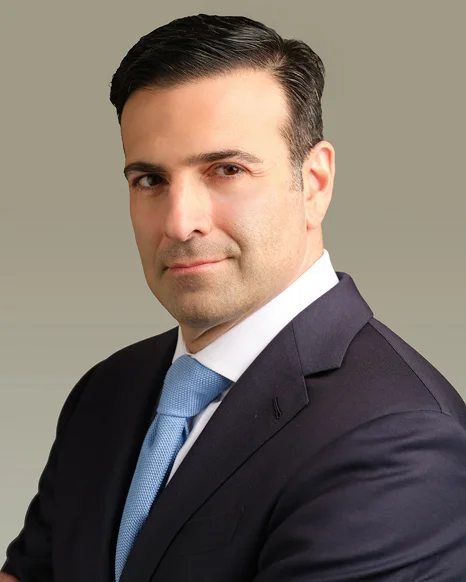
Leads regulated operations and international expansion.
Connects policy, risk and practical delivery.
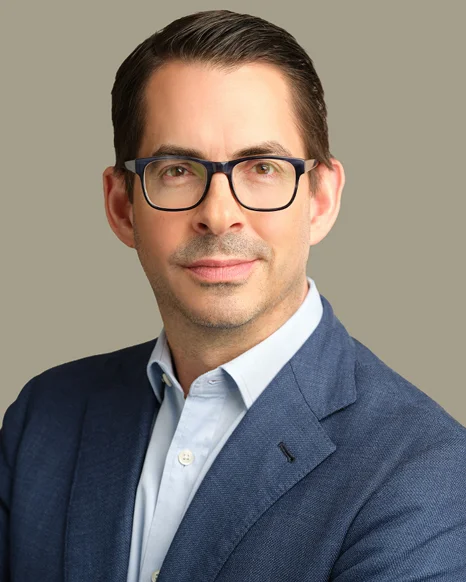
Financial services and corporate finance background.
Keeps operating and financial measures understandable.
“USDC was step one. Arc is the network built for what comes next.”
Jeremy Allaire · Arc mainnet launch · 2026-09-16
Jeremy Allaire is Circle's co-founder, CEO and chairman. His current biography connects the role to strategy, vision and operating execution, drawing on earlier work building internet software and video platforms. The September Arc announcement frames programmable money as part of an internet financial system, while the May Agent Stack launch extends the customer concept to software agents. Signet reads a consistent direction across those statements: the company wants financial value to move with the availability and programmability that users expect from software. That direction creates an operating challenge as well as a product opportunity. Money movement requires reliable assets, secure execution and a defined role for the organizations involved. A candidate can prepare by showing how a software capability became a dependable institutional workflow. The strongest example includes constraints that changed the design, a person who accepted responsibility and evidence that the result worked for its intended user. A founder's ambition gives the destination; a clear implementation example explains how the applicant would contribute to getting there.
Heath Tarbert is the current president, leading responsibilities that include legal, compliance, risk, policy, people operations and international expansion. His earlier Treasury and CFTC leadership supplies context for a business operating across financial jurisdictions. Jeremy Fox-Geen is CFO, with experience across financial services, corporate finance and operating leadership. Nikhil Chandhok leads product and technology, including accessible products and the AI agenda. These roles make the company more than a token-issuance operation. Product decisions affect how customers control funds; expansion decisions affect the entities and permissions through which services are offered; financial decisions affect what the company earns after distribution and operating costs. Signet would use that context to prepare a cross-functional example. A Korean ecosystem candidate can show how market information changed a product or sequencing decision, and how legal and commercial colleagues reached a workable plan. The example should distinguish a recommendation, an approved action and a completed result. That discipline makes the applicant's contribution understandable to colleagues with different responsibilities.
Circle's careers material puts high integrity and mindfulness alongside its other published values. Integrity concerns honest communication and decisions that customers and partners can trust. Mindfulness concerns listening, attention to detail and taking time to understand a situation before reacting. Signet connects these principles to a financial-infrastructure environment where a product claim and an operational action need a clear basis. A candidate can demonstrate them through a difficult tradeoff: explain what the team knew, what remained uncertain and how it communicated a decision to stakeholders. The public hiring guide gives an example process with an application, possible assessments, recruiting and manager conversations, and panel interviews or a presentation. It describes a remote-first culture with in-person gatherings and location-dependent benefits. Those are company-level explanations, while the actual role defines the candidate's work and location. For the Korean advert, the distinctive preparation is market intelligence and compliant engagement. Evidence of careful records, strong stakeholder communication and a workable cross-functional recommendation can speak to both the role and the stated culture.
Circle's second-quarter 2026 release describes Kakao Group exploring blockchain payment infrastructure and USDC integration in Korea. An August Current Seoul article discusses a July gathering of financial and technology stakeholders and refers to a memorandum of understanding with Kakao. Those are exploration and cooperation statements, rather than a completed production deployment or a quantified Korean revenue claim. The Circle Alliance directory also lists Korean companies such as KODA and DSRV, with the Circle products they use stated on their profiles. These directory entries show a local ecosystem connection and should be read in their published scope. StableFX separately names BDACS as the issuer of KRW1, keeping the local asset issuer distinct from Circle's own USDC and EURC. Signet sees a market where technical interoperability and the appropriate operating arrangement need to develop together. A candidate can explain how a partner's capabilities were assessed, what the two organizations agreed to explore and which evidence would support moving into a larger implementation. That explanation makes a relationship's actual stage clear.
Local ecosystem role and dated Korean relationships.
Local institutional relationships connect market intelligence to compliant expansion.
July gathering and Kakao cooperation described.
Circle's live official job board shows one role with the country Korea, Republic of: Senior Director, Ecosystem Growth, South Korea. The advert centers on market intelligence, brand presence, stakeholder engagement and ecosystem growth. It explicitly says that commercial agreement execution is handled by offshore teams, while the local role relays intelligence and supports compliant engagement with colleagues in Commercial, Business Development, Product, Policy, Legal and Compliance. The work includes maintaining contemporaneous records of counterparty-initiated contacts to evidence the absence of active solicitation. Signet therefore reads the position as a carefully scoped market-development and intelligence role. A candidate needs to understand how the company learns about an opportunity and works with stakeholders before a permitted commercial action is taken. The useful example explains the boundary, the information gathered and the decision it enabled elsewhere in the organization. That is different from assuming the person independently signs local customer contracts or owns every operational function in Korea. The original employer wording remains available in the role detail.
Circle's second-quarter 2026 release describes Kakao Group exploring blockchain payment infrastructure and USDC integration in Korea. An August Current Seoul article discusses a July gathering of financial and technology stakeholders and refers to a memorandum of understanding with Kakao. Those are exploration and cooperation statements, rather than a completed production deployment or a quantified Korean revenue claim. The Circle Alliance directory also lists Korean companies such as KODA and DSRV, with the Circle products they use stated on their profiles. These directory entries show a local ecosystem connection and should be read in their published scope. StableFX separately names BDACS as the issuer of KRW1, keeping the local asset issuer distinct from Circle's own USDC and EURC. Signet sees a market where technical interoperability and the appropriate operating arrangement need to develop together. A candidate can explain how a partner's capabilities were assessed, what the two organizations agreed to explore and which evidence would support moving into a larger implementation. That explanation makes a relationship's actual stage clear.
The Korean advert requires at least thirteen years of business-development and market-expansion experience, including a record of growth, revenue or transaction-volume outcomes in relevant financial infrastructure sectors. It also calls for senior engagement with regulators or government stakeholders, cross-functional partnership work and a deep understanding of crypto markets, stablecoins, DeFi or institutional flows. Korean and English are required at native or business-fluent level. Generative-AI familiarity appears in the core requirements, while experience in fast-growing fintech or adjacent Korean markets and repeatable multi-market playbooks is preferred. Signet would prepare three evidence-based stories: a market insight that changed sequencing, a complex institutional partnership with clear responsibilities, and a measurable expansion with its operating boundary preserved. These are editorial preparation suggestions rather than an employer's promised first-quarter target. The advert ends with a remote tag and the board identifies the position as full time. A candidate can use the published role to assess fit while keeping company-wide culture statements separate from the actual responsibilities of this Korean opportunity.
Current Signet catalog · 2026-10-19
Explain a financial flow with clear permissions, responsibilities and records.
April's CPN Managed Payments launch offered a route for institutions to retain fiat workflows while Circle handles the digital-asset lifecycle. Its significance is operational: a buyer can evaluate stablecoin settlement without first building every wallet, liquidity and compliance component itself. The current beta product description gives the specific eligibility and service scope. Signet would follow production use and the quality of reconciliation and exception handling as the practical evidence of that direction.
May's Agent Stack launch introduced tools for agents to hold USDC, discover services and pay programmatically. Wallet limits, service caps and bounded sessions connect the payment capability to an approved policy. The product combines CLI access, a marketplace and small-payment infrastructure, with developer services explaining how to build the flow. Signet sees the next useful evidence in repeatable applications where the owner can understand the permissions and the resulting transactions. A small payment is still an action with an accountable boundary.
September 16 marked Arc's public mainnet launch, with institutional and ecosystem participants and a phased validator rollout. The announcement keeps network-wide opt-in privacy in development and describes proof-of-stake as part of a future roadmap. A genesis token mint is a technical milestone rather than a commitment to a public token launch. Separately, the September 8 Tazapay agreement targets expanded payments connectivity after conditions and regulatory approvals, with closing expected in2027. Signet would watch actual network usage, reliable payment corridors and the progression from announced capabilities to operating results. Each development has a different status that matters to a customer and to someone considering work on the platform. The current CCTP page also sets October 31, 2026 as the start of the legacy version’s phase-out. Existing integrators are directed to a migration guide, while new builders are directed to the current documentation. Signet treats that as an immediate implementation watchpoint: identify the transfer version in use, review the supported flow and test the migration before relying on a continuing production connection.
Circle builds infrastructure around stable digital money, with USDC as the dollar-denominated asset at the center of its platform. A business can hold value on a blockchain, move it between supported networks and connect the transfer to banking and payment services. The customer may be an exchange distributing digital dollars, a payment company managing liquidity or a developer embedding a wallet into an application. Each customer still has a concrete operating problem: obtain the asset, authorize a transfer, settle an obligation and reconcile the result. Signet reads Circle as a bridge between programmable assets and a financial workflow that an organization can actually run. Its official mission concerns economic prosperity through easier exchange of value; the business interpretation here concerns the systems required to make that exchange dependable. A Korean applicant can start with a particular workflow and explain who controls the funds, how the recipient receives value and what record lets the institution understand the outcome. That explanation is more useful than treating every blockchain transaction as a payment made by a Circle customer.
Circle's second-quarter 2026 release describes Kakao Group exploring blockchain payment infrastructure and USDC integration in Korea. An August Current Seoul article discusses a July gathering of financial and technology stakeholders and refers to a memorandum of understanding with Kakao. Those are exploration and cooperation statements, rather than a completed production deployment or a quantified Korean revenue claim. The Circle Alliance directory also lists Korean companies such as KODA and DSRV, with the Circle products they use stated on their profiles. These directory entries show a local ecosystem connection and should be read in their published scope. StableFX separately names BDACS as the issuer of KRW1, keeping the local asset issuer distinct from Circle's own USDC and EURC. Signet sees a market where technical interoperability and the appropriate operating arrangement need to develop together. A candidate can explain how a partner's capabilities were assessed, what the two organizations agreed to explore and which evidence would support moving into a larger implementation. That explanation makes a relationship's actual stage clear.
Employer postings were checked on 2026-10-10. Availability can change. Mock applications request a review from Signet.
Follow the company from its vision through products, evidence and people to the Korea team and current roles. Use the table of contents to move within the page, and expand the sections for more context.