The deliverable replaces the answer
Genspark's first product was AI search. That starting point matters because its subsequent change was a change in the job it accepted, not merely a new chat interface. Its April 2025 explanation described the limits of a fixed search pipeline: expand a question, retrieve information, rank results and produce an answer. A request for a finished presentation demands another sequence. Someone has to choose the argument, check the evidence, decide what belongs on a slide and keep revising the material. Genspark moved toward an agent that chooses tools as the task unfolds. Signet reads this as a bet on completed work as the unit a user values. The test is practical: after a response arrives, how much assembling and correcting does the person still have to do? A long and fluent answer can still leave that burden with the user. An editable deliverable moves more of it into the product, while leaving the human responsible for the purpose of the work.
Context enters before execution
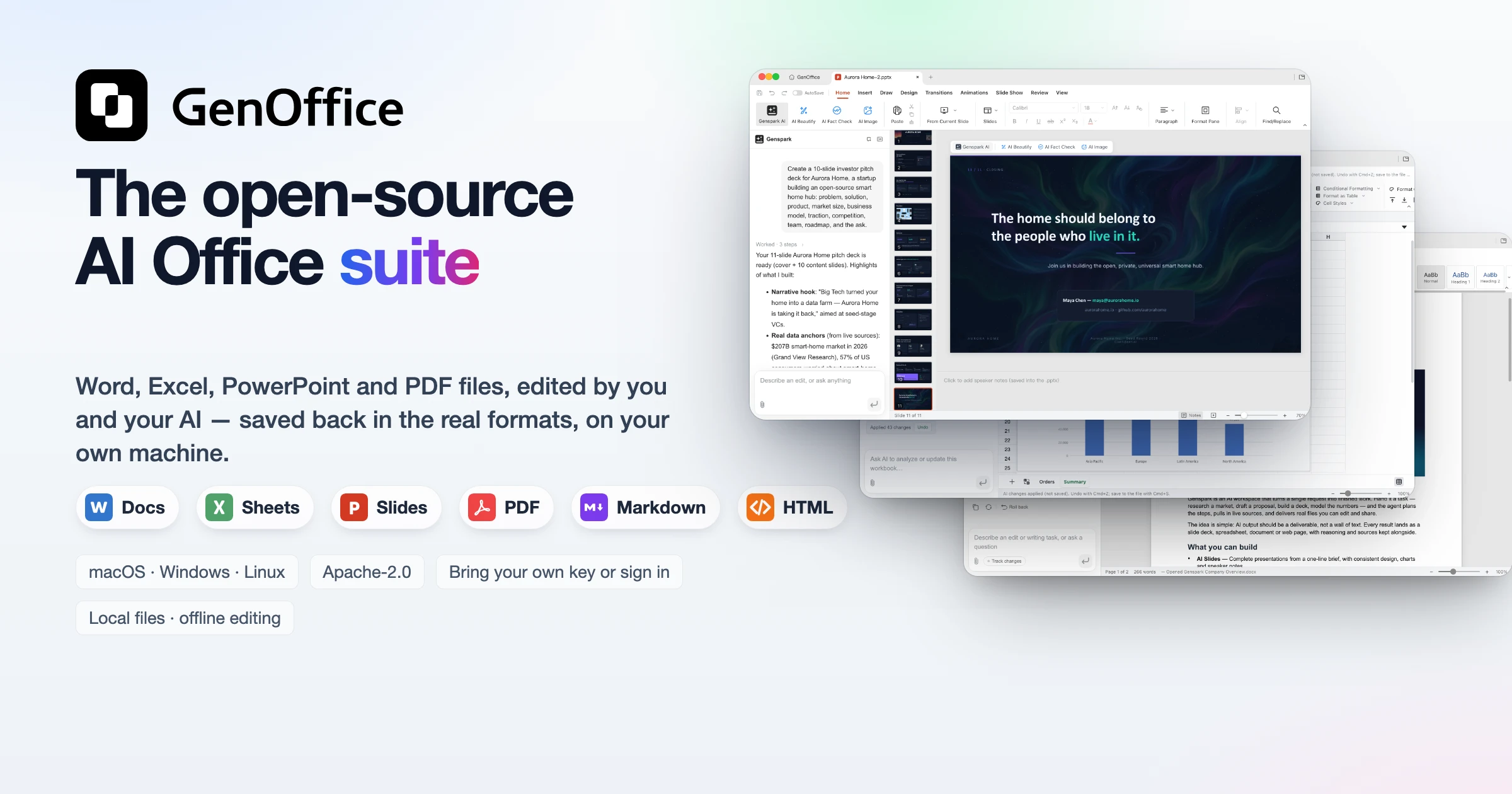
Consider an illustrative team preparing a customer briefing. The starting material is scattered across email, meeting notes, a spreadsheet and a prior deck. This is an example of the workflow, rather than a claim about a named customer. Hub made files and project instructions part of a shared work space in October 2025. SecondBrain later extended that idea to authorized business connectors and persistent context. The person first chooses which accounts and documents to connect, and which question the briefing must answer. Super Agent can then research, analyze and generate material using that context. Office editors provide the place to inspect the result. This sequence explains why Genspark groups memory, intelligence, execution and collaboration into four layers in Workspace 6. The interfaces are useful together only when information survives the handoff between them. A team still needs to decide which source controls a disputed number and who approves the final version. Those decisions make context an operating practice, rather than a pile of uploaded files.
The last decision still belongs to a person
The more an agent can execute, the more consequential the review becomes. Email connectors and meeting records carry customer details; a generated deck can turn tentative research into a confident-looking claim. Eric Jing's writing in May 2026 puts human judgment at the center of that change. His argument is about deciding which output deserves trust, not simply producing more text. Genspark's enterprise materials place administration, permissions and contractual security terms alongside the generation tools. Signet's reading is that a successful workspace must shorten production without blurring the responsibility to approve what is sent or shared. For a Korean reader, this connects personal adoption to the harder task of team adoption. A person can experiment with a draft alone. A department needs a repeatable way to connect data, review outputs and keep working in formats colleagues already use. That is where product usefulness, enterprise implementation and an applicant's understanding of real customer work meet. The relevant question is whether a workflow stays dependable when it is repeated every week.