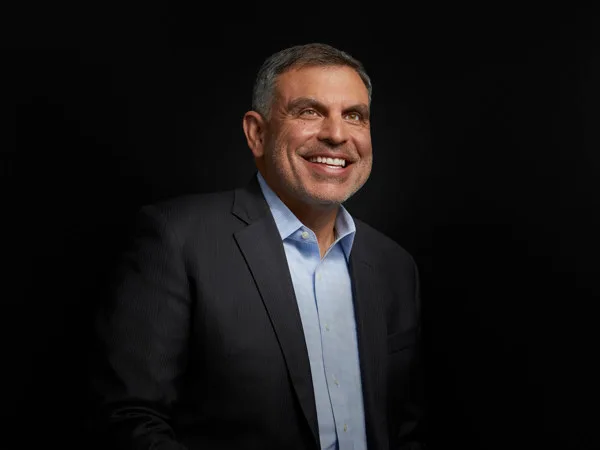
Dave Rosa, CEO of Intuitive
Intuitive Surgical / THE WORLD THEY ARE BUILDING

Give the surgeon more precision.

The opportunity is broader, disciplined use of minimally invasive technology. Product capability, simulation findings, hospital operations and patient outcomes each require evidence appropriate to their scope.

See it taking shape ↓
01 / THE PRODUCTS

The products behind the promise.

The official page shows the da Vinci 5 surgeon controls.
da Vinci 5

Control compatible instruments from an ergonomic console with 3D vision.

Surgical capability and integrated operating-room workflow.

Salina Regional Health Center

Size instruments to actual program demand

Intuitive’s August 2025 case study reports approximately $90,000 in avoided costs from the 2024 inventory and return-merchandise-authorization improvements.

The Intuitive Genesis program supported instrument inventory optimization at Salina.

What changed? +

A robotic surgery program needs instruments ready for use without unnecessary inventory expense.

A hospital operational case, not a clinical outcome, revenue figure or universal cost-saving guarantee.

Samsung Medical Center

A nine-robot programme and an early da Vinci 5 case

About 3,400 robotic operations in 2023 (hospital figure).

Performed what it calls Asia's first da Vinci 5 operation on 16 December 2024 and now runs nine da Vinci systems. Intuitive named it an Epicenter for urologic cancer in 2022.

What changed? +

One of Korea's busiest robotic centres: about 3,400 robotic operations in 2023 and 20,000 cumulative cases by January 2024, by the hospital's count.

Hospital announcement reported by Korean trade press in December 2024; volumes and firsts are the hospital's own claims, and the case covers adoption, not clinical outcomes.

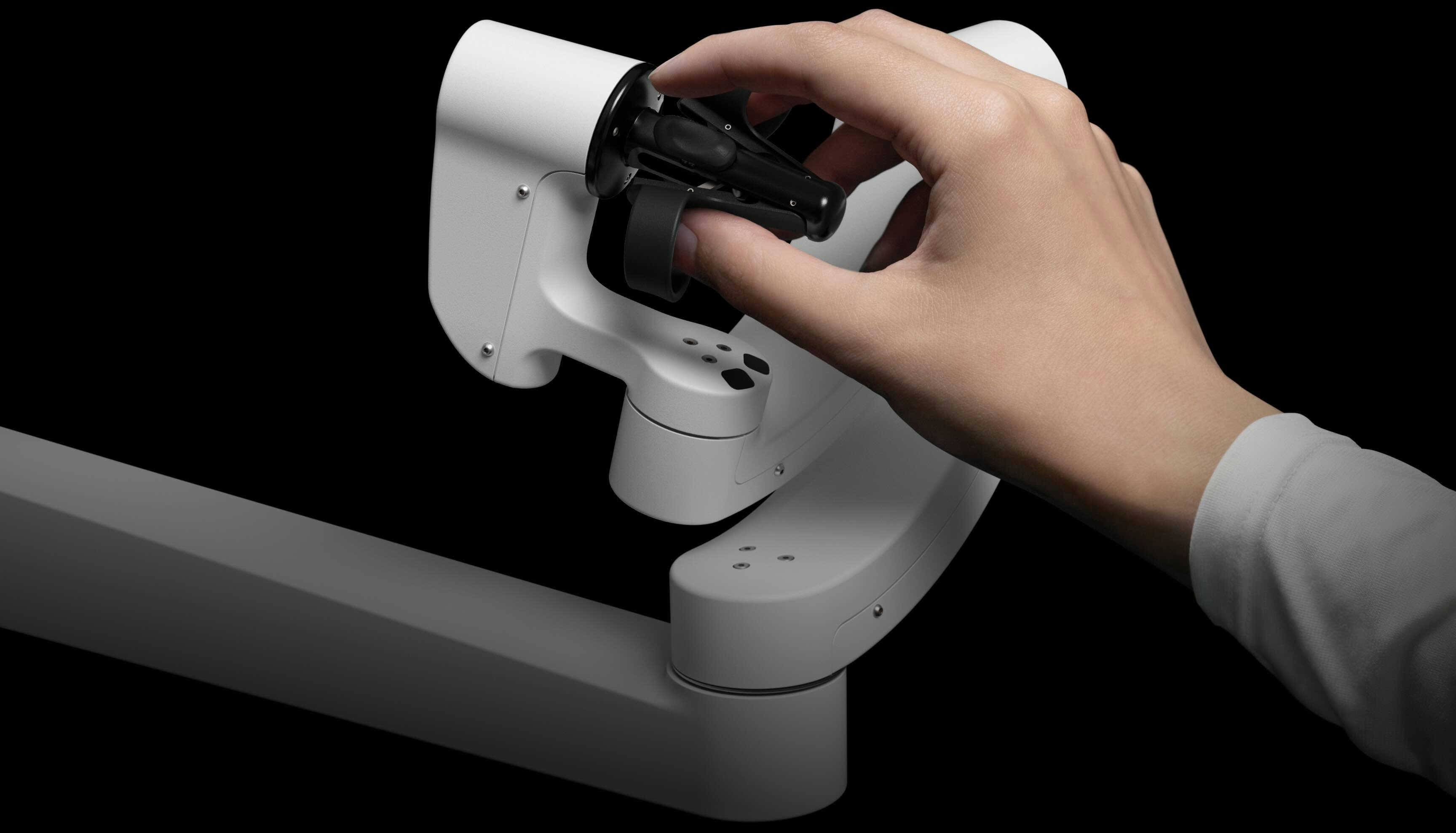
A surgeon at the da Vinci 5 console with a hand on the controller
A surgeon at the da Vinci 5 console, from Intuitive's da Vinci 5 page. The robot follows the surgeon's hands.
02 / HOW IT BECOMES REAL

Build a robotic surgery program around the care team

Illustrative workflow: a hospital wants to use an installed da Vinci system consistently while preserving clinical and operational standards.

  1. 01

    Align the program and procedure

    Hospital leaders and clinicians establish the appropriate scope of robotic procedures. Scheduling, staffing and training readiness shape the program before utilization expands.

  2. 02

    Prepare surgeon and care-team skills

    Learning programs and simulation support system familiarity and skills practice. Competency and clinical judgment remain with healthcare professionals.

  3. 03

    The surgeon controls the instruments

    The da Vinci console supplies a 3D view and instrument control; da Vinci 5 adds Force Feedback capabilities with compatible instruments. The robot assists the surgeon rather than choosing the procedure autonomously.

  4. 04

    Use data to improve the program

    Digital tools support case review while hospital teams monitor scheduling, instrument inventory and training needs. Operational indicators guide resource decisions without replacing clinical assessment.

Follow the work, step by step

Smaller openings, steadier hands

Intuitive starts from a belief about patients and a problem for surgeons. The first line of its company page reads: we believe minimally invasive care is life-enhancing care. Its own cardiac release shows the size of what remains: more than two million patients a year undergo open heart surgery, most of them through a cut that splits the breastbone. The robot exists to make the smaller route practical. In June 2026 the head of the Korean subsidiary, Yongbum Choi, put its job in two plain points: it stops the surgeon's hand from trembling and it helps the surgeon see. He added a reason that matters in Korea: as doctors become scarcer, robotic surgery is becoming an alternative.

We are at an exciting time with a significant opportunity to advance the work that customers care most about, the Quintuple Aim: improving patient outcomes, enhancing patient and care team experience, expanding patient access to care, and ultimately lowering the total cost to treat.

Dave Rosa · President, on being named chief executive · Intuitive release announcing the CEO transition · 2025-05-15

What sets Intuitive apart is how much it builds around the machine. The surgeon sits at a console, sees the operating field in 3D and moves instruments held by robotic arms at the bedside; the robot follows the surgeon's hands and does not choose the operation. Around that console the company sells instruments that have limited lives and must be replaced as they expire or wear out in use, service contracts, simulators, training courses and software that records each case. Its yardstick is what Dave Rosa, chief executive since July 2025, calls the Quintuple Aim. Hospitals pay through system purchases or leases, followed by recurring instruments and service.

Why the bet is moving now

Three things moved at once. The fifth generation, da Vinci 5, was cleared in the U.S. in March 2024 and in Korea that October, the second country in the world. By the company's account it brings more than 150 design changes, 10,000 times the computing power of the previous model, and Force Feedback, which lets the surgeon feel push and pull at the tip of the instrument. Use reached scale: about 3,153,000 operations were performed on da Vinci systems in 2025, up about 18% on 2024, and the installed base reached 11,710 systems on 30 June 2026. And the company returned to heart surgery. Cardiac surgery was the first specialty cleared on the original da Vinci in 2002, but Intuitive says the limits of its first platforms and the lack of a global training and support network made it shift its focus. With those barriers addressed, da Vinci 5 won U.S. clearance for nine selected thoracoscopically assisted cardiac procedures using non-Force Feedback instruments in January 2026 and a European CE mark in September 2026.

One hospital's programme, step by step

Follow an illustrative Korean hospital through the four steps the company describes. It prepares: leaders and surgeons agree which operations suit the robot, and Intuitive's area sales managers, in the words of a Seoul posting, present to the whole buying team through a capital equipment purchase. It trains: surgeons practise on the SimNow simulator, which offers more than 65 exercises, and attend courses taught by experienced surgeons, while the theatre team learns the system on site. It operates: the surgeon controls the instruments, the bedside and anaesthesia teams work around the patient, and Intuitive's clinical sales staff support cases in the operating room. It reviews: case video and data flow into My Intuitive and Intuitive Hub, where they can be shared with a trainee or a colleague.

At every step a person's judgement stays in charge. Which patient should have robotic surgery, and whether it beats laparoscopy for a given disease, are clinical calls. In Korea they are also a question of money, because national insurance lists robotic surgery as a non-covered procedure that patients pay for themselves.

Robotic surgery and AI are developing toward extending the surgeon's abilities, rather than replacing the surgeon.

Catherine Mohr · President, Intuitive Foundation (former Intuitive vice president) · Interview in a Korean business daily, in Korean; English translation of published Korean text · 2026-04-15

Most of the outcome evidence behind the pitch is the company's own. The up to 43% lower tissue force figure comes from preclinical testing in a company footnote, and the Korean savings figures presented in June 2026 are Intuitive's analysis. A commercial signal is adoption: hospitals keep placing systems, and in Korea the company says the contract rate for its da Vinci Care Plan service plan stood at 100% in early 2025.

A role in Seoul sits inside this programme logic. Whether the title says sales, marketing, training or access, the work is to make robotic surgery routine in Korean hospitals: one surgeon, one specialty and one payment decision at a time.

Understand the products and their customers

Three platforms, sold to hospitals

Intuitive sells to hospitals, and its main surgical platform is the da Vinci multiport system. The surgeon works at a console with a magnified 3D view, and a patient cart at the bedside carries the camera and wristed instruments that follow the surgeon's hands. da Vinci 5 adds Force Feedback with compatible instruments and connects case video and data to Intuitive's learning and review tools. Of the 468 da Vinci systems placed worldwide in Q2 2026, 246 were da Vinci 5. On the April 2026 earnings call, management reported an installed da Vinci 5 base of almost 1,500 systems, used by almost 13,000 surgeons since launch. These are different measures: quarterly placements, systems in place, and surgeons who have used them.

A second da Vinci, the single port system SP, operates through one incision, and it matters most in Korea. Korea recorded the most SP procedures of any country in 2024, according to the company's 20th anniversary material, and on three earnings calls between October 2024 and April 2026 Intuitive's leaders named Korea as a driver of SP growth. In April 2026 the chief financial officer said the SP stapler would move into a measured launch in Korea and Europe in the second quarter.

Ion is a different machine for a different doctor. It is a robotic bronchoscopy system: a pulmonologist steers a thin, shape-sensing catheter deep into the lung to take a biopsy of a suspicious nodule, with the goal of finding lung cancer sooner. Launched in the U.S. in 2019, it reached about 800 systems and at least 200,000 procedures worldwide by the end of 2024, and 1,096 systems by 30 June 2026. Korea became its fourth market in August 2025.

A further layer is software. My Intuitive gives surgeons their own case data and video, SimNow lets them practise, and Intuitive Hub records, edits and shares case video and links surgeons by telepresence during an operation. A Seoul posting names Case Insights among the digital solutions it sells and describes a Digital Sales Representative whose job is to sell these products to hospitals and teach surgeons to use them. In April 2026 the CEO described them as the base of a digital and AI road map meant to add telesurgery, deeper decision support and augmented dexterity.

Korean hospitals as showcase customers

The named customers in Korea are teaching hospitals, and what they announce is adoption and teaching. Samsung Medical Center in Seoul says it performed Asia's first da Vinci 5 operation on 16 December 2024, runs nine da Vinci systems, performed about 3,400 robotic operations in 2023 and has been an Intuitive Epicenter for urologic cancer since 2022. Korea University Anam Hospital was named an Epicenter in June 2026; it also describes itself as the first in Asia to introduce da Vinci 5, reports at least 3,000 robotic operations in urology, and uses Intuitive Hub to let surgeons abroad watch and mentor its cases in real time.

Outside Seoul the pattern repeats. Ulsan University Hospital was the first Korean hospital to install Ion, reached 100 Ion procedures in March 2026, and from 1 May 2026 became Korea's first Ion case observation site, with visits from Taiwanese and Japanese clinicians planned. At Pusan National University Hospital a thoracic surgeon reached 500 robotic operations and in August 2026 used Intuitive Hub to let surgeons at other hospitals watch a lung cancer operation live.

Read these as signs of adoption, as each hospital announced them: case counts, designations and firsts. Two hospitals each call themselves first in Asia with da Vinci 5, a reminder that these are claims made by customers. The one measured result in a company case study is operational: a U.S. hospital, Salina Regional Health Center, reported about $90,000 in avoided costs from better instrument inventory in 2024.

What it replaces, and who else is selling

In its annual filing Intuitive lists its competition broadly: open surgery, conventional laparoscopy, drug therapies, radiation and other emerging approaches. Robots are now the sharper threat. Medtronic's Hugo, which its maker says was approved in Korea in 2024, saw its first U.S. commercial cases at the start of 2026, and Medtronic pitches it to surgeons as another choice. Johnson & Johnson's Ottava was authorised in the U.S. in July 2026. In heart surgery the rival is often a catheter rather than a robot: Rosa said in April 2026 that some patients benefit from minimally invasive cardiac surgery and some from percutaneous transcatheter approaches, and the cardiac procedures cleared in January are core businesses for heart device makers such as Boston Scientific, Abbott and Edwards Lifesciences.

A Korea hire carries more than one product. The sales roles sell systems and keep them busy, the marketing roles build specialties around da Vinci, SP and Ion, and the digital role sells the software layer. Knowing which platform fits which hospital and specialty is likely to be the first thing a Korean surgeon tests.

03 / THE EVIDENCE

The story, in numbers.

DATED OBSERVATIONS

Annual revenue

USD · B

Audited consolidated revenue includes systems, instruments/accessories and service. Clinical outcomes are evaluated through clinical evidence.

Figures, dates & basis +
Annual revenue
DateValueBasis
2021-12-31$5.71BFull fiscal year ended 2021-12-31; consolidated company revenue.
2022-12-31$6.222BFull fiscal year ended 2022-12-31; consolidated company revenue.
2023-12-31$7.124BFull fiscal year ended 2023-12-31; consolidated company revenue.
2024-12-31$8.352BFull fiscal year ended 2024-12-31; consolidated company revenue.
2025-12-31$10.065BFull fiscal year ended 2025-12-31; consolidated company revenue.

Intuitive / SEC · Intuitive

Da Vinci 5 FDA clearance

FDA granted 510(k) clearance for the next-generation multiport system.

CEO succession announced

Dave Rosa was named CEO effective July 1, with Guthart becoming executive chair.

2025 annual filing

The 10-K reports approximately 3.153M da Vinci procedures and 11,106 installed systems.

Read the growth story

Paid once for the robot, again with every operation

Intuitive earns money in three ways, and only one of them is selling robots. In FY2025 total revenue was $10,064.7M, up from $8,352.1M in FY2024. Systems brought in $2,473.7M. Instruments and accessories, the tools used and replaced with each operation, brought in $6,018.9M, about 60% of the total. Service, such as the contracts that keep systems running, added $1,572.1M. Leases are growing: in the second quarter of 2026, 254 of the 468 da Vinci systems placed were operating leases, and 131 of those were usage-based, where what the hospital pays follows its use of the robot. On the first quarter 2026 earnings call, management put recurring revenue at $2.4B, 86% of that quarter's total.

The dated numbers and what each one measures
MeasureValuePeriodWhat it measures
Annual revenue$10,064.7MFY2025All company revenue: systems, instruments and accessories, and service
Instruments and accessories revenue$6,018.9MFY2025Tools used and replaced with each operation; the recurring core
da Vinci proceduresAbout 3,153,0002025Operations performed on da Vinci systems, up about 18% on 2024
da Vinci installed base11,710 systems30 June 2026Systems in place at customers, not systems placed in the period
Quarterly revenue$2.89BQ2 2026Revenue in one quarter, up 19% on Q2 2025
Korean subsidiary revenue342.4 billion wonFY2025Korea only, from the subsidiary's audit report as relayed by Korean trade press

What has grown, and where

Revenue has grown every year in the series on this page, from $5.71B in FY2021 to $10.06B in FY2025, and the driver is operations: about 3,153,000 da Vinci procedures in 2025 against about 2,683,000 in 2024. The company placed 1,721 da Vinci systems in 2025, 870 of them da Vinci 5, and for 2026 it expects da Vinci procedures to grow about 13.5% to 15.5%. Geography matters for a reader in Seoul. In FY2025, 68% of revenue came from the U.S. and 32% from outside it. In the first quarter of 2026 procedures outside the U.S. grew 20%, with strong results named in India, Canada, the U.K., Korea and Taiwan, while China was challenging because of fewer tenders and pressure on price.

Korean trade publication Dailypharm, reporting from the subsidiary's audit reports in May 2026, puts Korean revenue at 159.7 billion won in 2021 and 342.4 billion won in 2025. It reports 280.9 billion won of goods revenue, 43.2 billion won of service and 18.2 billion won of other revenue in 2025, with operating profit of 10.3 billion won and net profit of 7.2 billion won. This is the Korean subsidiary's won-denominated business, separate from the group's consolidated dollar revenue. Signet uses the figures as press-reported financial data. The original audit document and the article are different sources; the chart's basis remains press-reported.

Who else is in the market

Intuitive created this market and still holds most of it. Wire coverage in July 2026 described robotic surgery as currently dominated by da Vinci, and a Korean trade paper calls da Vinci practically a monopoly among Korean laparoscopic soft tissue robots. 2026 brought additional competitors into the U.S. market: Medtronic's Hugo in U.S. hospitals, Johnson & Johnson's Ottava with U.S. authorisation in July, and CMR Surgical, Distalmotion and Moon Surgical aiming at outpatient centres. The Korean trade view is that switching is the real barrier: a hospital that changes platform has to retrain surgeons, nurses, anaesthesia and engineering staff and may lose operating time while it does, so hospitals now choose on the strength of a whole programme rather than one machine.

Where it could go wrong

Three risks stand out. Competition can change how hospitals buy: 254 of 468 da Vinci placements in Q2 2026 were operating leases, including 131 usage-based leases. Intuitive must earn continued use as rival systems expand. Demand also depends on who pays: management reported 12% U.S. da Vinci procedure growth in Q2 2026 and discussed customers linking insurance changes to care-seeking. In Korea, Health Chosun reported a 10 to 20 million won price range in July 2026, varying by hospital and procedure. HIRA told the publication that a coverage study begun in April was expected to finish around November; that timetable is a study forecast, rather than a coverage decision. Trust is the third risk. Intuitive discussed a contained cybersecurity incident and customer notifications on its April earnings call; data stewardship sits alongside product and service quality in a hospital relationship.

Two habits help in an interview. Name the measure: revenue, procedures and installed base move differently, and the Korean subsidiary's revenue comes in won from its own audit reports, separate from the group's dollar accounts. And talk about utilisation: a robot that sits idle is a cost to the hospital and a missed instrument sale for Intuitive, which is why so many Seoul postings are about keeping systems busy.

04 / THE PEOPLE

Someone saw it first.

Photograph of Dave Rosa
CEO since July 1, 2025

Dave Rosa

Rosa previously served as president and helped guide product development and global expansion.

The choice behind the company +

The board elevated him to CEO through its succession process while Gary Guthart became executive chair.

Portrait of Gary Guthart
Executive Chair

Gary Guthart

Guthart led Intuitive as CEO before the July 2025 transition.

The choice behind the company +

He led the da Vinci 5 clearance announcement and remained in a senior advisory role after the transition.

“We are at an exciting time with a significant opportunity to advance the work that customers care most about, the Quintuple Aim: improving patient outcomes, enhancing patient and care team experience, expanding patient access to care, and ultimately lowering the total cost to treat.”

Dave Rosa · Intuitive release announcing the CEO transition · 2025-05-15
The decisions behind the company

A company run by the people who built it

Intuitive's history page tells its story as a company rather than as a founder's biography: it started in 1995, launched the first da Vinci system in 2000, expanded country by country and launched Ion in 2019. The people running it today grew up inside it. Dave Rosa joined in March 1996 as the ninth employee and worked across engineering, clinical and product development, marketing, regulatory and quality, and the commercial organisation. He founded the company's first clinical engineering and endoluminal groups, which led to the SP system and Ion, and he started the Future Forward group that looks for new businesses. He became chief executive on 1 July 2025.

Gary Guthart, chief executive for the previous 15 years, became executive chair and stayed on in a senior advisory role. The launch of da Vinci 5 happened on his watch; on his last full-year call, in January 2025, he called 2024 a strong year with robust early adoption of the new platform. Jamie Samath, chief financial officer, has spoken about Korea on call after call, from the 2024 doctors' strike that held back Korean procedure growth to the Single Port stapler launch planned for Korea in 2026.

Four decisions behind the shape of the company

Four decisions explain what a Korea hire walks into. First, build an ecosystem around each installed robot, so that revenue follows operations rather than machine sales: instruments and accessories were about 60% of FY2025 revenue. Second, sell directly: the annual filing lists South Korea among the markets with Intuitive's own sales organisation, alongside the U.S., parts of Europe, China, Japan, India, Taiwan and Canada. Third, wait for the support system before chasing a specialty: the company stepped back from heart surgery until training and support could carry it, then built a dedicated cardiac team for training, evidence and instruments. Fourth, promote from within: Rosa after 29 years, and Taylor Patton, who spent nearly two decades at the company and led the worldwide launch of Ion, as chief commercial and marketing officer from 1 July 2026.

The leaders above a Korea role

Patton now runs sales and marketing worldwide, succeeding Henry Charlton. Glenn Vavoso is commercial president and senior vice president for Asia Pacific; he spoke for the company when Korea's current head was appointed in 2021 and attended the Seoul City signing in April 2025 and the Seoul National University Hospital signing in July 2026. In Seoul the subsidiary is led by Yongbum Choi, representative since August 2021, who spent 26 years in pharmaceutical and healthcare sales and marketing and was chief executive of the Korean arms of Ferring and Baxter before joining. Intuitive's cardiac effort worldwide is led by Darla Hutton, global vice president of cardiac.

Our goal is to provide customers the tools, support, training, and resources they need to succeed, ultimately helping them achieve the Quintuple Aim across every platform, in every geography.

Taylor Patton · Chief Commercial and Marketing Officer from 1 July 2026 · Intuitive release announcing his promotion · 2026-05-28

How Intuitive says it works and hires

The company's published culture is short and practical. Its careers site says the driving force behind its work is the customers it serves and the unmet needs of their patients, not new technology for its own sake. It says there is significant work to do and no time for egos, so the culture rests on inclusion and collaboration. A Korean trade paper interviewing the local service team reports Patients Always First as the first of Intuitive's founding principles. On hiring, the company names four attributes it looks for: Character, Capacity, Energy and Experience. Interviews are behavioural, built on past examples; some roles add a skills assessment, a presentation or a dexterity test; and the process from first interview to offer typically takes about 30 to 45 days.

On the fear that headquarters decides and Seoul only executes, the record is mixed. Seoul has its own chief with a public voice and a strategy of his own, Korea gets new platforms early, and several open postings are written for the Korea leadership team. But regional roles report to Asia directors, and the Asia cardiac posting leaves market-level commercial decisions with country sales directors and Asia general managers. Expect to win arguments by influence, in two languages.

05 / THE NEXT CHAPTER

Seoul builds hospital programmes and trains Asia's surgeons

Current roles combine hospital field work, procedure-specific marketing, training, market access, legal, finance and commercial operations. Read each posting for its clinical specialty, travel range and working arrangement.

Korea subsidiary leadership

최용범

Representative, Intuitive Surgical Korea

Clinical sales
  • Clinical Sales Associate
Clinical marketing
  • Clinical Marketing Manager
Marketing leadership
  • Senior Director, Marketing
Programme and training
  • Genesis programme and training

Public LinkedIn profiles were read on October 8, 2026. The Korea filter showed 163 profiles; company-matched titles inform the functions shown. Profile counts and overlapping job facets do not establish total employees or reporting lines.

Why Korea? Why now?+

The official Seoul careers page calls Korea key to Intuitive's Asian growth strategy. Korea received da Vinci 5 in October 2024 and Ion in August 2025; its SP procedure volume led the world in 2024 according to company-anniversary coverage. Seoul City announced a planned additional 15 billion won investment and 100 hires over five years in April 2025. The July 2026 hospital-led training agreement adds another route for clinical education. Signet reads Korea as both a commercial market and a place to teach and develop surgical practice. The reimbursement study is a separate policy process with its own timetable.

Approval and first operation

Korea's drug and device regulator approved da Vinci, and the first Korean da Vinci operation took place that year at Severance Hospital.

da Vinci Xi arrives

The fourth generation, with its boom-mounted design, was launched in Korea, followed by da Vinci X in 2017.

First agreement with Seoul City

Intuitive and Seoul City signed the first of two agreements behind a surgical training centre in Seoul, which by the end of 2024 had trained 2,268 Korean and foreign clinicians.

Single Port system launched

da Vinci SP, the first single-port system, came to Korea. By 2024 Korea recorded the most SP procedures of any country.

New head of Korea

Intuitive Korea announced Yongbum Choi as representative, a commercial executive with 26 years in pharmaceuticals and healthcare.

Cardiothoracic training agreement

Intuitive Korea and the Korean Society for Thoracic and Cardiovascular Surgery agreed to set up a robotic surgery training platform for cardiothoracic residents.

da Vinci 5, second in the world

Korea cleared and launched da Vinci 5, the second country after the U.S.

Second agreement with Seoul City

Intuitive committed to invest a further 15 billion won and hire 100 more people over five years for its Seoul training centre and new business.

Ion launched in Korea

Korea became the fourth country to get the Ion lung biopsy system.

500,000 cumulative da Vinci operations

At a media day the Korea chief said cumulative Korean da Vinci operations had passed 500,000 since 2005.

Hospital-led certification course

Seoul National University Hospital and Intuitive Surgical Korea agreed to build the first hospital-led robotic surgery certification course in Korea.

Intuitive 360 Korea 2026

About 100 hospital leaders attended the company's flagship programme event, rebuilt from the former Korea Executive Summit.

Understand the Korea opportunity

Why Korea: surgeons, speed and scale

Intuitive gives three reasons for Korea, and its record supports each. Its careers page says the Korean market is key to its growth strategy in Asia. The Korea chief relays the company chairman's view that Korea has many surgeons with outstanding technique, and the Intuitive Foundation's president points to fast adoption of technology, high clinical concentration and research output that ranked fourth in the world for robotic surgery papers from 2014 to 2023. The history fits. da Vinci was approved in Korea in 2005 and the first operation followed that year at Severance Hospital. Korea was the second country, after the U.S., to get da Vinci 5, in October 2024, and the fourth to get Ion, in August 2025.

At a June 2026 briefing, the Korea business head said cumulative Korean da Vinci operations had passed 500,000 since 2005. A July 2025 company-anniversary report described at least 200 da Vinci systems in Korea and the country's leading SP procedure volume in 2024. The 2025 specialty mix reported in 2026 was 36% gynecology, 27% urology, 22% head and neck, 12% general surgery and 3% cardiothoracic surgery. These figures describe different periods and populations. Cumulative operations, installed systems and a year's specialty shares each answer a different question about adoption.

Robotic surgery techniques developed by Korean surgeons sometimes become the standard abroad. But it is a pity that patient access seems lower than in other countries.

Yongbum Choi · Representative, Intuitive Surgical Korea · Press briefing at the Korea office marking 20 years of da Vinci in Korea, as reported in Korean; English translation of published Korean text · 2025-07-18

The limit is payment. Robotic surgery sits on the national insurance list of non-covered procedures, so each hospital sets its price and patients pay 10 to 20 million won, in cash or through private insurance. Earlier governments discussed coverage and dropped it over cost-effectiveness. The national review agency began a new study in April 2026, expected to finish around November 2026, and which diseases would be covered, and how, will be decided after that. Choi's own view, given in July 2025, is that coverage is the long-term direction but must weigh government finances and the medical community's views.

A teaching base for Asia

Seoul is also a place where surgeons train. A July 2025 anniversary report says the Seoul training centre had trained 2,268 Korean and foreign clinicians by the end of 2024. Seoul City independently announced a second agreement with Intuitive on April 16, 2025: the company planned to invest an additional 15 billion won and hire 100 people over five years for the centre and new business. Those are planned investment and hiring commitments, rather than current headcount. In July 2026, Seoul National University Hospital and Intuitive Surgical Korea signed an agreement to develop a hospital-led robotic surgery certification curriculum. The announced division of work puts clinical teaching with the hospital and technical training development with Intuitive.

We will work actively so that Korea can establish itself as the robotic surgery training hub of the Asia region.

Glenn Vavoso · Commercial President, Senior Vice President, Asia Pacific · At the signing of the training agreement with Seoul National University Hospital, as printed in Korean by Korean trade press; English translation of published Korean text · 2026-07-09

Who runs Seoul, and what the team is for

Yongbum Choi, named 최용범 in the company's Korean newsroom, has led the Korea business since August 2021. His public message extends beyond equipment: connect surgery preparation, the operation and recovery with hospital programmes. The official Intuitive 360 Korea 2026 account describes about 100 hospital, nursing and administrative leaders discussing clinical, operational and financial programme management. It also identifies Choi as the Korea representative. The current public LinkedIn observation on October 8 found 163 Korea-filtered profiles. Explicit company-matched titles show clinical sales, clinical marketing, senior marketing leadership and programme/training work. This is a profile observation and a view of functions, rather than an employee census or a reporting chart.

Through robot-assisted surgery, we will provide a platform that connects the stages before, during and after an operation with the hospital and the local community.

Yongbum Choi · Representative, Intuitive Surgical Korea · Connect Intuitive media day in Seoul, as reported in Korean; English translation of published Korean text · 2026-06-30

What the 18 open roles are for

On October 8, 2026, Intuitive's employer board listed 18 Korea roles. Five sales postings cover capital equipment, three clinical field roles in Seoul, Busan and Daegu, and digital sales. Four marketing postings cover Ion, Head and Neck, Breast/Cardiac/Vascular and academic programmes. A separate Asia cardiac market-development director supports five markets as an individual contributor; local commercial decisions stay with country sales directors and general managers. Three learning posts have distinct audiences: a Customer Trainer teaches customers, a Professional Education Manager develops surgeon education, and a Commercial Learning Manager teaches Intuitive's sellers. The remaining roles cover market access, public affairs, legal, finance and commercial operations. The cards below use the same ten job-family keys as the application flow; these group functions for navigation rather than infer internal departments.

On the fear that the Korea office is a satellite: the subsidiary's revenue more than doubled from 2021 to 2025 and it is profitable, Intuitive committed in 2025 to five more years of investment in Seoul, and the open roles include legal, finance and public affairs posts written for the Korea leadership team. Signet reads the timing of the market access and public affairs roles alongside the national reimbursement review.

The cardiac postings show a programme being built across specialties and countries. The Asia director translates global cardiac strategy into market plans, tools, education and metrics, while the Korean BCV marketing role covers Breast, Cardiac and Vascular work. Myongji Hospital reported a totally endoscopic off-pump coronary bypass with da Vinci Xi in July 2025. That hospital case concerns Xi. The January 2026 U.S. clearance concerns selected da Vinci 5 cardiac procedures with non-Force Feedback instruments. Each product, market and indication has its own scope.

KOREA OPEN ROLES

16 open roles in Korea

Current Signet catalog · 2026-10-19

FOR YOU

Read the location, required experience and travel terms for your chosen role.

GTM · Sales · BD

Clinical Sales Associate

Daegu, South Korea (Remote)

Posting checked

The work
Support da Vinci clinical programs, surgeon training and hospital account development.
Who fits
Bachelor’s degree and equivalent, as stated in the posting.
Keep in mind
Cover Daegu hospitals; travel up to 50%, depending on account distribution.
GTM · Sales · BD

Clinical Sales Representative

Busan, South Korea (Remote)

Posting checked

The work
Support da Vinci surgery in the OR, train clinical teams and grow utilization.
Who fits
Bachelor’s degree and equivalent, as stated in the posting.
Keep in mind
Cover Busan hospitals; travel up to 50%, depending on account distribution.
GTM · Sales · BD

Clinical Territory Associate

Seoul, South Korea (Remote)

Posting checked

The work
Help train surgeons, support robotic programmes and manage the territory.
Who fits
Minimum 1 year of leadership experience (including military) or 1 year of outside sales experience.
Keep in mind
A developmental role; travel up to 25% and work nights or weekends as needed.
See all 16 roles
Operations

Commercial Learning Manager

Seoul, South Korea

Posting checked

The work
Develop and coach the commercial team’s product and sales training.
Who fits
Bachelor’s degree or equivalent experience.
Keep in mind
Bachelor’s degree or equivalent experience; travel up to 30%.
Customer Success

Customer Trainer

Seoul, South Korea (Hybrid)

Posting checked

The work
Train surgical teams and manage training-centre courses and equipment.
Who fits
Three to five years in a healthcare-related company or equivalent experience.
Keep in mind
Flexible hours and travel up to 25%; training and clinical experience preferred.
GTM · Sales · BD

DaVinci Area Sales Manager

Seoul, South Korea (Hybrid)

Posting checked

The work
Sell da Vinci capital systems and build hospital purchase plans.
Who fits
Bachelor’s degree or equivalent.
Keep in mind
Bachelor’s degree or equivalent; operating-room knowledge preferred.
GTM · Sales · BD

Digital Sales Representative

Seoul, South Korea

Posting checked

The work
Develop hospital adoption of digital products and related business.
Who fits
Bachelor’s degree or equivalent experience.
Keep in mind
Basic HL7, PACS, DICOM and EPIC knowledge; travel up to 75%.
Operations

Director, Cardiac Market Development, Asia

Seoul, South Korea (Hybrid)

Posting checked

The work
Adapt global cardiac surgery programs and training for five Asian markets.
Who fits
Bachelor’s degree in business, marketing, life sciences, healthcare or a related field.
Keep in mind
Individual contributor with no direct reports; expected international travel is 30% to 40%.
Operations

Professional Education Manager

Seoul, South Korea (Hybrid)

Posting checked

The work
Develop physician-led courses and partnerships for surgical education.
Who fits
At least six years of experience, including at least three in training or professional education.
Keep in mind
Bachelor’s degree required; travel up to 50%.
Finance · Legal

Senior Financial Analyst

Seoul, South Korea (Hybrid)

Posting checked

The work
Own Korea budgets, forecasts and business analysis to support leadership decisions.
Who fits
At least seven years in FP&A, business planning, commercial/sales analytics, consulting or related work.
Keep in mind
Work with Korea leadership on a three-year plan and dashboards for procedures and system placements.
Marketing · Content

Sr Clinical Marketing Manager (Breast, Cardiac & Vascular)

Seoul, South Korea (Hybrid)

Posting checked

The work
Develop breast, cardiac and vascular programmes and physician engagement.
Who fits
At least 7 years in the medical-device industry or hospital marketing.
Keep in mind
Ability to travel up to 30 to 40%, including international and weekend events.
Marketing · Content

Sr Clinical Marketing Manager (H&N)

Seoul, South Korea (Hybrid)

Posting checked

The work
Develop head-and-neck programmes and physician engagement.
Who fits
At least 7 years in the medical-device industry or hospital marketing.
Keep in mind
Ability to travel up to 30 to 40%, including international and weekend events.
GTM · Sales · BD

Sr Clinical Sales Representative

Seoul, South Korea (Remote)

Posting checked

The work
Train surgical teams and expand da Vinci utilization at new and existing hospitals.
Who fits
3+ years selling to clinics and hospitals; medical-device or pharmaceutical sales preferred.
Keep in mind
Cover Seoul hospitals; travel up to 50%, depending on account distribution.
Marketing · Content

Sr Endoluminal Marketing Manager

Seoul, South Korea (Hybrid)

Posting checked

The work
Lead Ion marketing in Korea, connecting lung-care evidence, campaigns and physician engagement.
Who fits
8+ years of mainly marketing experience; medical devices, robotics or lung-care experience preferred.
Keep in mind
Lead the annual Ion marketing plan across Korea; travel up to 40%.
Operations

Sr Manager Commercial Operations Korea

Seoul, South Korea

Posting checked

The work
Coach commercial teams and coordinate Korea/APAC sales execution.
Who fits
At least ten years of medical sales and marketing experience, plus at least five years of commercial leadership or management.
Keep in mind
Korea residence and bachelor’s required; travel is written as “up to 70+%”.
Operations

Sr Market Access Manager

Seoul, South Korea (Hybrid)

Posting checked

The work
Lead reimbursement, nHTA and pricing strategy for da Vinci and Ion in Korea.
Who fits
Bachelor’s degree.
Keep in mind
Hands-on Korean nHTA, premium reimbursement or post-nHTA reimbursement work is required.
07 / NOW & NEXT

The next scene is taking shape.

European adult cardiac CE mark

Da Vinci 5 received CE marking for adult cardiac surgery in Europe, including specified cardiotomy and minimally invasive bypass procedures.

Q2 revenue and placements

Revenue reached $2.89B; 468 da Vinci systems were placed, including 246 da Vinci 5 systems.

SNUH training agreement

The hospital and Intuitive Korea agreed to develop hospital-led robotic surgery certification education.

More context on what comes next

Back to the heart

The thread that ties the last year to the thesis is cardiac surgery. In January 2026 the U.S. cleared da Vinci 5 for nine selected thoracoscopically assisted cardiac procedures with non-Force Feedback instruments, including mitral valve repair and the artery preparation step of bypass surgery, and a limited number of U.S. hospitals start cardiac programmes with Intuitive through 2026. In September the system won a CE mark in Europe for adult cardiac surgery, including coronary bypass, with new instruments and dedicated support promised. In July the chief financial officer called cardiac and nipple-sparing mastectomy promising long-term opportunities still in early stages, with procedure growth in both accelerating sharply in the second quarter. In Seoul, cardiac work shows up both at Asia level and in Korean specialty marketing.

And when surgery is warranted, then I think the investments we're making, capabilities of da Vinci 5 and our investments in training, in particular, will pay dividends and have an opportunity for surgeons to treat patients with a very minimally invasive cardiac approach to their disease.

Dave Rosa · Chief executive officer · Intuitive first quarter 2026 earnings call · 2026-04-21

A slower quarter and real rivals

The same months brought the first signs of strain. Second quarter 2026 revenue was $2.89B, up 19%, but U.S. procedure growth slowed to 12%, and the CEO said some customers linked changes in patient coverage to when patients seek care. Outside the U.S. procedures grew 20%. Rival robots reached Intuitive's home market, a disclosed cybersecurity incident tested trust, and the company's 2026 margin outlook includes an effect from tariffs of about 1.0% of revenue. Signet's reading: the model holds, but the pressure on price and on clinical proof is rising.

What to watch next

In Korea the year looked like consolidation: a media day in June, the 360 event in July, the training agreement with Seoul National University Hospital and a new Epicenter at Korea University Anam Hospital all presented Intuitive as a long-term partner for hospital programmes rather than a robot vendor.

  • The national review of robotic surgery coverage in Korea, expected to finish around November 2026: which diseases, and whether coverage is general or selective.
  • Whether cardiac programmes take root: the first U.S. sites through 2026, Europe after the September CE mark, and cardiac use of da Vinci 5 in Asia.
  • Price and competition: the share of operating and usage-based leases, hospital utilisation, and how rival systems fare in each cleared market.

Their future. Your next chapter.

Find your part ↑

An independent profile by Signet. No affiliation or investment recommendation. Introductions happen only with your consent.
Research reviewed 2026-10-10

A LITTLE MORE CONTEXT

Understanding Intuitive Surgical.

What does Intuitive Surgical do?

Intuitive builds surgeon-controlled robotic systems and an ecosystem of instruments, learning and digital tools. Hospitals must integrate the technology with appropriately selected procedures, trained teams and reliable operating-room processes.

What is the opportunity in Korea?

Current roles combine hospital field work, procedure-specific marketing, training, market access, legal, finance and commercial operations. Read each posting for its clinical specialty, travel range and working arrangement.

Are these confirmed job openings?

Employer postings were checked on 2026-10-10. Availability can change. Mock applications request a review from Signet.

How can I explore the company in more depth?

Follow the company from its vision through products, evidence and people to the Korea team and current roles. Use the table of contents to move within the page, and expand the sections for more context.

Back to the collection ↗