Waiting was the first problem
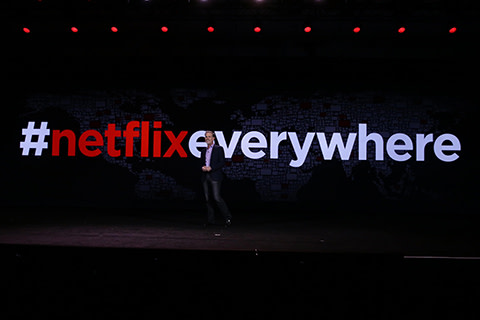
Netflix switched on its service in more than 130 new countries on 6 January 2016, during Reed Hastings's keynote at CES, and South Korea came in that wave, with Korean added as a service language the same day. Hastings described what was broken as waiting. With the launch, he said, people from Singapore to St. Petersburg would enjoy TV shows and movies at the same time as everyone else, on whatever device they chose. Ten years later Netflix has more than 325 million paid memberships, a mark it crossed in the fourth quarter of 2025, and it describes its audience as approaching one billion people.
We’re looking forward to bringing great stories from all over the world to people all over the world.
Reed Hastings · Co-founder and then chief executive · Netflix release on the global launch at CES 2016 · 2016-01-06
The belief behind that line is that a story made for one country can find viewers in many others, and Netflix acted on it in Korea with money and space. From 2015 to 2020 it put USD 700 million into Korean content and more than 80 Korean shows. In January 2021 it leased nine stages at two studio sites in Paju and Yeoncheon, just outside Seoul, to make Korean originals. In April 2023 co-CEO Ted Sarandos said Netflix would invest USD 2.5 billion in Korean series, films and unscripted shows over four years, about twice what it had announced since it started in Korea in 2016.
Why the bet grew when it did
The proof came in 2021. Squid Game, a Korean survival drama released on 17 September, first caught on in Korea and then became Netflix's biggest TV show at the time: 142 million member households chose to watch it in its first four weeks, and it ranked first in 94 countries. By 2022 more than 60 percent of all members watched a Korean title. Two business changes followed. In November 2022 Netflix launched a cheaper plan with ads in 12 countries, Korea among them, and by 2025 it ran those ads on its own advertising platform. In 2026 it also began staging live events in Asia: BTS's comeback concert from Gwanghwamun Square in March drew 18.4 million viewers worldwide.
One Korean series, from pitch to screen
Take an illustrative Korean series. It starts as a pitch to the Korea content team, which, in the words of Asia content head Minyoung Kim, likes to ask a creator what story they have always wanted to tell but never could. Once the title is commissioned, business affairs lawyers draft the license, production, talent and music agreements, and the content finance team turns the plan into a multi-year budget and cash forecast. The production management team then keeps the shoot on time and on budget, while the production technology team judges where newer tools, generative AI among them, can help a scene and where traditional methods are better.
Before launch, the localization team prepares dubbing, subtitles and accessibility tracks so viewers far from Korea can follow the story, and the marketing team builds the trailer, key art and on-set photography. On release the title competes for a place in the weekly Top 10, members on the ads plan see ads in the breaks, and brand partners build campaigns around it. People still make the calls that matter at every step: which story to commission, what a scene needs, how to sell the show in Korea and abroad.
Netflix's own numbers show the trade it makes between kinds of programming. Live events will take just over 5 percent of its 2026 content spend and about 1 percent of view hours, yet they produced six of its top ten days for new member sign-ups over five years. Korea now sits on both sides of that trade: it supplies long-running series, and since March 2026 it has also staged a live event for a worldwide audience.
Most of the 20 open Korea roles on 10 October 2026 sit somewhere on this path: production, localization, marketing and ads, plus the finance, legal and HR staff around them. You would work on one step of how a Korean story is made, sold or paid for, inside a company that had about 68 percent of its roughly 16,000 full-time employees in the United States and Canada at the end of 2025.