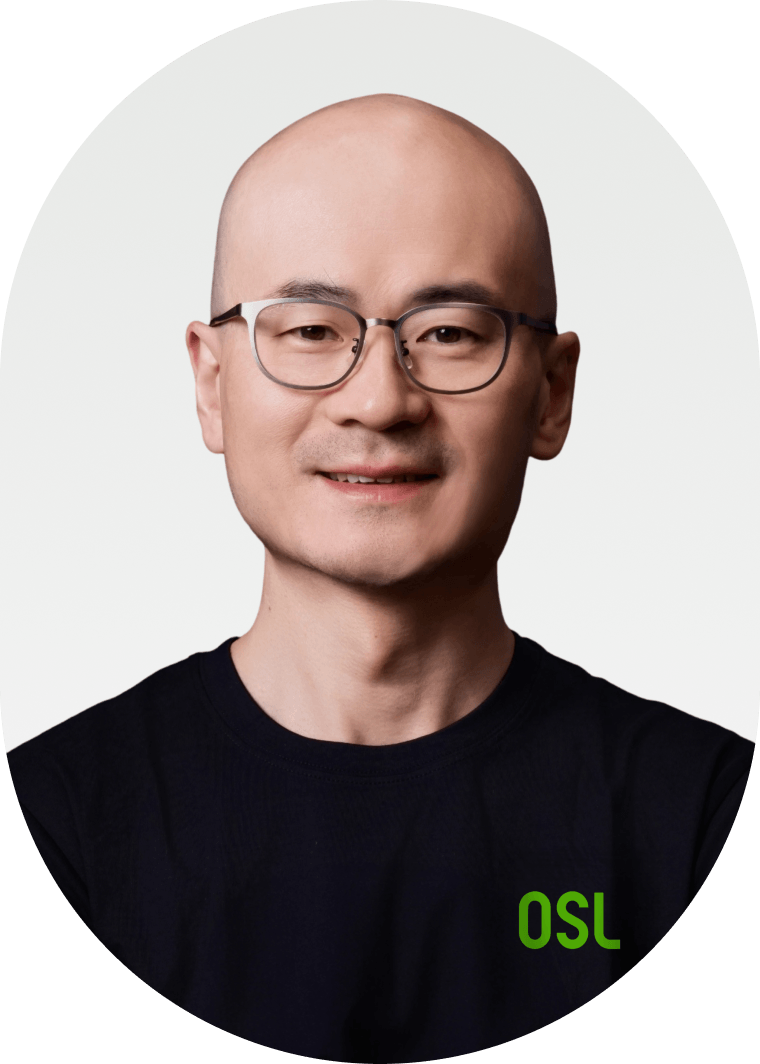
Kevin Cui on the official leadership page.
OSL / THE WORLD THEY ARE BUILDING

Connect stablecoins, banking and controls to complete financial operations.

A company can agree a sale immediately and still wait for the money to reach its supplier.

See it taking shape ↓
01 / THE PRODUCTS

The products behind the promise.

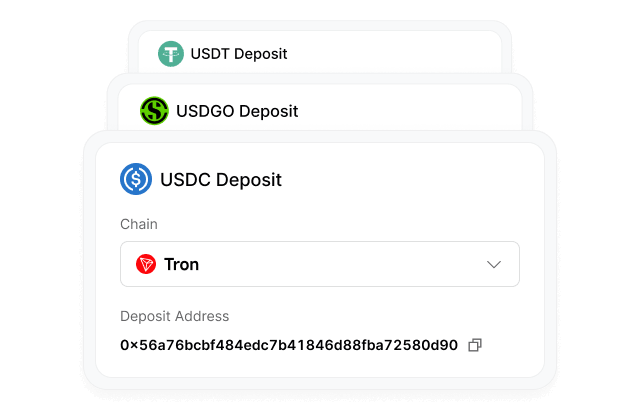
Official stablecoin collection interface illustration.
OSL BizPay

Collect, convert, settle and pay through supported routes.

Connect the money and reconciliation workflow.

Mirae Asset Securities (HK) Limited

Integrate institutional trading and custody

A described institutional infrastructure integration.

The July announcement says it integrated Omnibus Pro.

What changed? +

The Hong Kong subsidiary sought a foundation for digital asset capabilities.

Hong Kong subsidiary and Hong Kong regulatory scope; further offerings subject to approvals and readiness.

Payment Asia / Anchorpoint

Reconcile a commercial stablecoin payment

The announcement describes same-day reconciliation.

The implementation followed funding, payment, reconciliation and redemption of HKDAP.

What changed? +

Verified logistics and hospitality services needed B2B settlement.

Partner-described implementation with ShipAny and Flow services; specific eligible workflows.

Official stablecoin collection interface illustration.
02 / HOW IT BECOMES REAL

An approved invoice becomes a reconciled payment

Illustrative workflow derived from the published products and implementation.

  1. 01

    Agree the business purpose, serving entity and beneficiary.

    Agree the business purpose, serving entity and beneficiary.

  2. 02

    Receive supported fiat or stablecoins and attribute the incoming funds.

    Receive supported fiat or stablecoins and attribute the incoming funds.

  3. 03

    Request an eligible quote and approve the conversion.

    Request an eligible quote and approve the conversion.

  4. 04

    Use the agreed blockchain or banking route for delivery.

    Use the agreed blockchain or banking route for delivery.

  5. 05

    Match the commercial record and final settlement, resolving exceptions.

    Match the commercial record and final settlement, resolving exceptions.

Follow the work, step by step

Start with an invoice, not a token

A company can agree a sale immediately and still wait for the money to reach its supplier. OSL addresses the operations between that agreement and a usable balance: receiving funds, converting currencies or digital assets, moving value across a supported network, paying a beneficiary and reconciling the result. Its mission frames money movement as an information problem. Signet reads the company as a provider that wants to make stablecoins useful inside financial operations, with bank connectivity, liquidity and account controls attached to the transfer.

Consider an illustrative marketplace paying an overseas seller. The operations team starts with an approved payment instruction and the finance team decides the required destination currency. Before a transfer, the serving entity, merchant eligibility, beneficiary information and permissible route are agreed. A platform integration can bring the instruction into an approved payment workflow, but the commercial customer still owns its own user relationship and business purpose. These boundaries explain why an apparently simple payment requires coordination between sales, finance, compliance and engineering.

Conversion and settlement are separate jobs

The funding leg can use a supported fiat account or a stablecoin balance. OSL Business Account provides a view of eligible balances, while Markets provides institutional conversion through negotiated dealing or a request for quote. A quote has an asset, an amount and settlement conditions; a treasury team must decide whether those terms fit its obligation. BizPay then connects the selected conversion and payment route. A blockchain leg can run beyond ordinary bank hours, while the destination bank, local partner and compliance checks still influence final delivery.

The operating result is more than an on-chain transaction identifier. A finance team needs to match the payer, invoice, conversion, recipient and final balance. Named account references can help attribute incoming funds. Permissions and multi-person approval can separate the person who prepares an instruction from the person who approves it. Exceptions also matter: a delayed payout, a wrong beneficiary detail or a returned bank payment needs an owner. Signet would evaluate the infrastructure through these completed financial tasks rather than a speed claim on its own.

Keep the commercial record attached

A September 2026 implementation with Payment Asia and Anchorpoint makes the workflow tangible. Payment Asia used HKDAP for completed logistics services with ShipAny and eligible hospitality services booked through Flow. Anchorpoint handled issuance and redemption; OSL supplied distribution and settlement infrastructure. The announcement follows funding, minting, payment, same-day reconciliation, redemption and token destruction. The case shows how a digital settlement asset can stay connected to commercial records. It is evidence of that described implementation, with its partners and eligible activities, rather than a guarantee for every corridor.

For a Korean reader, the useful starting question is which corporate obligation needs this chain of work. A Korean financial group may operate through a Hong Kong subsidiary; a marketplace may need a permitted overseas seller payout; a treasury team may need to reconcile multiple assets. Each situation has a different customer, contract and control boundary. Signet suggests drawing the full flow of money and records, then marking who approves, executes, holds assets and resolves an exception. That diagram makes both the product value and the human judgement easier to explain.


Understand the products and their customers

Collect, quote and pay

OSL BizPay links stablecoin collections, fiat conversion, settlement and business payouts. Its product examples cover contractor payments, merchant settlement, supplier payments and approved platform withdrawals. The buyer is an enterprise or payment platform trying to connect those steps without maintaining each bank and blockchain route independently. OSL Business Account supplies the related balance and control environment; Markets supplies approved institutional execution. They are different jobs in one operating journey. Signet would ask which legal entity serves the transaction, which assets and beneficiaries are eligible and how the final payment is recorded.

Banxa is the embedded entry and exit path between fiat and digital assets. An exchange, wallet or fintech can present a hosted checkout or integrate a supported SDK or API. The customer funds a purchase through an available payment method, completes the agreed verification and receives supported assets in the intended account or wallet. The reverse journey converts supported assets into fiat through an available payout route. Compared with BizPay, the starting point is frequently an individual user inside another company’s product. The partner still has obligations attached to its users and its jurisdiction.

The dollar asset has a distinct issuer

USDGO is a dollar-denominated settlement asset issued by Anchorage Digital Bank N.A. OSL operates the brand and distribution ecosystem and connects eligible enterprise applications. The distinction matters: issuing and redeeming the asset, distributing it to a customer and executing a payment are separate responsibilities. The launch announcement in February 2026 described an initial fifty million dollar mint on Solana. The current product material describes reserves, issuer reporting and approved access. A buyer compares these arrangements with other eligible stablecoins and existing fiat balances, including redemption, custody and network conditions.

Treasury connects supported balances to conversion, approvals and payment planning. It can help a finance team decide when to rebalance currencies or prepare an obligation, while the enterprise retains treasury policy, accounting and valuation decisions. The published ecosystem incentive features have eligibility and discretionary terms, so their product role should be read separately from a bank deposit. Cards and Business Platform describe further corporate spending and embedded account possibilities, but their own FAQs identify planned propositions. Signet treats their capabilities as product direction and keeps current operations tied to the released, eligible service.

Read integrations through their boundaries

Mirae Asset Securities (HK) Limited provides a named institutional example. Its July 2026 collaboration announcement says the Hong Kong subsidiary integrated Omnibus Pro, which combines institutional trading and custody infrastructure. The intended change is a licensed operating foundation for its digital asset capabilities in Hong Kong. The announcement ties further offerings to approvals, readiness and compliance. Signet therefore keeps the customer’s Hong Kong scope attached to the case and avoids turning a Korean parent company into proof of domestic Korean product distribution. For a reader, the concrete outcome is the infrastructure integration itself.

Waka supplies a second view of the product at an emerging-market settlement boundary. OSL’s September announcement describes stablecoin-to-dollar conversion and dollar payout integrated with Waka’s settlement infrastructure for Africa and global trade corridors. Waka brings local market access and counterparties, while OSL contributes the conversion and delivery capability described in the partnership. The product argument is connecting those responsibilities in a usable service. A prospective operator can compare a conventional correspondent route with this setup using the same currency, recipient, compliance requirements and reconciliation needs, then assess the actual implementation.

03 / THE EVIDENCE

The story, in numbers.

DATED OBSERVATIONS

Continuing-business income

HKD · M

Comparable 2024 and 2025 annual income from digital assets and blockchain platform business.

Figures, dates & basis +
Continuing-business income
DateValueBasis
2024-12-31374.747MIFRS income from continuing digital asset and blockchain platform operations.
2025-12-31488.773MIFRS income from continuing digital asset and blockchain platform operations.

OSL Group / HKEX

USDGO launched with Anchorage as issuer.

USDGO launched with Anchorage as issuer.

HKDAP connected verified business services and settlement.

HKDAP connected verified business services and settlement.

OSL announced tokenization, custody and distribution for a 2WA fund.

OSL announced tokenization, custody and distribution for a 2WA fund.

Read the growth story

A flow business has several different numbers

OSL earns income from its digital asset and platform activities, including trading and the payment services described in its financial material. An institutional customer needs execution, liquidity, custody or an agreed payment route; a platform may integrate those functions into its own customer service. More flow can create more activity, but the amount of money passing through a service is different from the income retained by the company. Signet separates platform volume, financial statement income, adjusted management measures and stablecoin circulation before reading the scale of the business.

The 2025 annual results reported HK$488.773 million of income from continuing digital assets and blockchain platform business, compared with HK$374.747 million in 2024. The same statement reports a continuing-operations loss of HK$388.179 million for 2025. A separate adjusted income measure in the accompanying announcement is HK$534.1 million. These figures have different definitions and should remain separate. The company also reported HK$201.2 billion of annual platform trading volume. That describes activity handled by the platform, with a much larger denominator than financial statement income.

Keep the basis attached to growth

The first half of 2026 results use a gross revenue headline of HK$55.813 billion and adjusted non-IFRS income of HK$331 million. Payment gross revenue accounts for the bulk of the stated gross figure. Signet does not join that gross revenue directly to the earlier annual income series: the period and accounting basis differ. The chart here uses the comparable 2024 and 2025 continuing-business income disclosures. For the newer period, the useful reading is the company’s growing payment emphasis, assessed alongside its adjusted measure, operating costs and the detailed financial statement definitions.

For a buyer, alternatives include its existing correspondent banking arrangement, another eligible payment or stablecoin infrastructure partner and an in-house set of banking and custody connections. OSL positions the combination of regulated entities, bank connectivity, institutional liquidity and digital asset operations as the reason to work with it. That argument has to be tested at the actual corridor. The September Banking Circle announcement adds six supported currencies in that partnership, rather than proving every currency in every market. Signet would compare completion, exception handling, reconciliation and contractual responsibility using equivalent transactions.

Growth creates control and cost work

Three operating risks shape the business. First, permissions attach to an entity, market, customer type and activity; a group licence count cannot replace product-specific eligibility. Second, asset custody, counterparties, liquidity and banking dependencies affect whether a promised payment can complete. The company’s risk and treasury material makes those conditions part of the service. Third, acquisitions and new payment infrastructure require staff, technology and integration spending. The annual results show substantial staff and information technology costs alongside a loss, so growing activity must eventually support the operating organisation required to deliver it.

For an applicant, commercial credibility means being able to name the metric and connect it to a completed customer workflow. A stablecoin balance can support settlement without being company revenue. A custody asset is held for a client and cannot be treated as the company’s own sales. Gross revenue and an adjusted income measure answer different questions from retained profitability. Signet suggests preparing a short financial explanation that moves from customer need to the transaction, its revenue definition and the costs and controls needed to operate it. This is especially useful when a technology narrative attracts attention faster than an accounting explanation.

04 / THE PEOPLE

Someone saw it first.

Kevin Cui on the official leadership page.
Executive Director and CEO

Kevin Cui

Official biography lists senior roles at Bybit, FangDuoDuo and Google.

The choice behind the company +

His results announcement links the company to stablecoin payment infrastructure.

Gary Tiu on the official leadership page.
Executive Director and Head of Regulatory Affairs

Gary Tiu

Legal counsel experience across financial institutions.

The choice behind the company +

His verified responsibility places regulatory scope in the operating team.

“OSL Group’s mission is to make money move as freely as information.”

Kevin Cui · Annual results announcement · 2026-03-31
The decisions behind the company

A management team for financial operations

OSL’s current story is best read through the management responsibilities that shape the platform. Its official leadership page identifies Kevin Cui as executive director and chief executive officer. His biography combines engineering, product and operations experience, with earlier senior work at Bybit, FangDuoDuo and Google. Signet reads that background alongside the company’s move from a Hong Kong digital asset exchange toward payments infrastructure. The relevant question is how a product organisation turns technical capabilities into controlled financial operations and a repeatable enterprise service, rather than simply adding another trading feature.

Gary Tiu is executive director and head of regulatory affairs. His official biography lists legal counsel experience across several financial institutions. Ivan Wong is executive director and chief financial officer, with corporate finance, transactions and overseas investment experience. These positions place regulatory scope and financial discipline next to product delivery. They do not establish a reporting line for a Korean employee. In Signet’s reading, they explain why the same enterprise proposal has to answer questions about the serving entity, safeguarding, commercial terms, accounting treatment and the business value of an integration.

Build distribution around an issuing partner

The USDGO launch illustrates a deliberate responsibility split. Anchorage issues the digital dollar, while OSL leads branding, distribution and enterprise use. Kevin Cui’s launch comments link the asset to corporate settlement and cross-border payments. Anchorage cofounder and chief executive Nathan McCauley links the arrangement to actual financial systems and treasury use. The choice connects a regulated issuer with an operating and distribution network rather than requiring one entity to perform every function. A candidate can study which commercial and technical decisions follow from that separation, including onboarding, reserves, redemption and product support.

Banxa’s acquisition, completed in January 2026 according to the company’s results announcement, adds a different customer entry path. It brings embedded fiat and digital asset access into the group’s wider payment proposition. The strategic work after an acquisition includes aligning product routes, customer disclosures, service responsibilities and financial reporting. Signet reads the combined product catalogue through these interfaces rather than assuming that every acquired service has identical terms. A successful integration should make the choice of product clearer for the buyer and the ownership of a failed transaction clearer for the operator.

Principles have operating consequences

The published values are Open, Secure and Licensed. The first points to connecting traditional finance and digital assets; the others place security and regulatory permissions in the service proposition. The 2025 ESG report adds a stated code of conduct, fair employment processes, regular performance feedback and training on business ethics and financial crime controls. These are the company’s published practices and commitments. Signet would explore their everyday consequences with an example: when a lucrative deal conflicts with the permitted route or a client’s documentation, who can pause it and what evidence resolves the issue?

Current official hiring also makes the work visible. The October board includes payment operations and risk functions with duties around customer onboarding, counterparty exposure, settlement, reconciliation and collaboration with technology and control teams. These descriptions are global or overseas roles with their own locations, so Signet uses them to understand the operating organisation. A Korean reader can bring evidence of coordinating a difficult financial workflow, documenting responsibility and converting recurring exceptions into a clearer process. That preparation follows the business context and does not substitute for an employer’s actual requirements for a specific vacancy.

05 / THE NEXT CHAPTER

An institutional connection through Hong Kong

The current official recruitment board divides work into functions including BizPay, Trading and Liquidity, Engineering, Risk, Finance and Client Onboarding. Its published location filters include Hong Kong, Singapore, mainland China, Malaysia, Indonesia, Japan, the United States and other locations. The team view in this profile follows those publicly named functions and does not turn them into a Korean office hierarchy. For an institutional project, Signet reads the collaboration as commercial teams bringing a use case, control teams agreeing the permitted flow and technical and operating teams implementing and maintaining it.

Functions follow the official global recruitment board and current leadership page; they describe collaboration rather than Korean headcount or reporting lines.

Why Korea? Why now?+

That case gives a Korean reader a useful way into the business. An institution can have a familiar brand and distribution capability while selecting an external trading and custody foundation. The integration then has to connect client classification, execution, asset holding and the customer’s own controls. The announcement describes an intention to support responsible digital asset capabilities rather than a measured domestic customer rollout. Signet would use the case to explain how an institutional project moves from a partnership announcement to permissions, implementation and day-to-day service responsibilities in its actual market.

Mirae Asset HK integrated Omnibus Pro

Mirae Asset HK integrated Omnibus Pro

Understand the Korea opportunity

A Korean financial group connects through Hong Kong

The clearest Korean connection in the reviewed material is the collaboration with Mirae Asset Securities (HK) Limited. The July 2026 announcement identifies it as a subsidiary of the Korean securities company and says it integrated Omnibus Pro. The activity is framed within Hong Kong’s regulated digital asset ecosystem, with future capabilities tied to applicable approvals and operational readiness. Signet reads this as a concrete institutional connection through an overseas subsidiary. The geographic boundary matters because the parent company’s nationality, the serving market and the location of a customer’s final product are different facts.

That case gives a Korean reader a useful way into the business. An institution can have a familiar brand and distribution capability while selecting an external trading and custody foundation. The integration then has to connect client classification, execution, asset holding and the customer’s own controls. The announcement describes an intention to support responsible digital asset capabilities rather than a measured domestic customer rollout. Signet would use the case to explain how an institutional project moves from a partnership announcement to permissions, implementation and day-to-day service responsibilities in its actual market.

Follow functions before drawing a local hierarchy

The current official recruitment board divides work into functions including BizPay, Trading and Liquidity, Engineering, Risk, Finance and Client Onboarding. Its published location filters include Hong Kong, Singapore, mainland China, Malaysia, Indonesia, Japan, the United States and other locations. The team view in this profile follows those publicly named functions and does not turn them into a Korean office hierarchy. For an institutional project, Signet reads the collaboration as commercial teams bringing a use case, control teams agreeing the permitted flow and technical and operating teams implementing and maintaining it.

For someone considering future work connected to Korea, a useful exercise is an explicitly illustrative cross-border payment case. Choose a business purpose and the sending and receiving market, then trace the fiat funding, stablecoin conversion, settlement and final payout. Mark the company that contracts with the customer and the party that holds each balance. Ask which documents identify the beneficiary and how a rejected payment returns to the sender. This preparation comes from the published payment workflow. It is a research exercise for a reader and carries no claim about a current Korean vacancy or product permission.

Prepare an operating explanation

Signet’s suggested preparation has three parts. First, a one-page account of an institutional integration should explain the starting business problem, the involved legal entities and the implementation result. Second, a money-flow diagram should separate the transfer from the financial record and show the control owner at each step. Third, an exception case should explain how an unresolved transaction was investigated, communicated and reconciled. These materials fit the company’s financial operations context. A future employer posting would supply the actual location, seniority and mandatory experience for any particular application.

The same exercise helps assess personal fit. Someone who enjoys connecting enterprise requirements with financial controls can investigate how OSL’s product boundaries and partner network work in practice. Someone whose preference is only for an isolated software feature should examine the amount of coordination involved in customer onboarding, bank connectivity and settlement exceptions. Signet frames this as a choice of work environment, not a prediction of hiring success. The concrete Korean connection remains the Hong Kong institutional collaboration; the broader payment cases supply questions to research as the company develops further relationships and services.

Korea openings

No current Korea openings were found. The company story is still available.

See overseas openings →
07 / NOW & NEXT

The next scene is taking shape.

USDGO launched with Anchorage as issuer.

USDGO launched with Anchorage as issuer.

HKDAP connected verified business services and settlement.

HKDAP connected verified business services and settlement.

OSL announced tokenization, custody and distribution for a 2WA fund.

OSL announced tokenization, custody and distribution for a 2WA fund.

More context on what comes next

A payment thesis gains concrete rails

The 2026 developments connect the payment ambition to distinct pieces of infrastructure. Banxa’s completed acquisition adds embedded fiat access. The February USDGO launch adds a branded settlement asset with Anchorage as issuer. The July Mirae Asset Hong Kong collaboration adds an institutional trading and custody integration. Signet reads these as different layers of the same operating proposition: reach a customer, convert an eligible balance, settle a transaction and maintain control of the assets and records. Each layer still has its own terms and market scope.

Partners connect to actual business obligations

In September, Waka’s partnership described stablecoin-to-dollar conversion and dollar delivery for emerging-market trade, while Banking Circle’s expanded relationship described six currencies within that banking partnership. Payment Asia and Anchorpoint supplied a specific logistics and hospitality settlement implementation using HKDAP. These announcements give the reader concrete parties and responsibilities to follow. Signet would watch whether new routes are used repeatedly, how businesses reconcile them and how the infrastructure handles exceptions across partners. An announced connection becomes more meaningful when it supports a continuing operating workload.

The October 8 announcement adds tokenization, custody and distribution for 2WA’s USDGO Plus SP fund, offered to eligible professional investors in Hong Kong. This is a further institutional application of the asset and infrastructure. Its strategy, eligibility and investment risks belong to the fund, so Signet does not turn fund performance into the company’s revenue or a guarantee for a settlement asset. The operational connection to follow is how asset holding, subscriptions, redemption and distribution fit together under the relevant agreements and controls.

Watch operating quality and financial definitions

Over the next year, three questions keep the story grounded. Do published payment partnerships become repeatable commercial flows with clear service ownership? Do the planned Cards and Business Platform propositions reach a documented release with specific markets and capabilities? And do growth in payment activity and adjusted income support the staff, technology and control costs shown in the financial statements? These are Signet’s reading of what to monitor, rather than forecast results. Keeping operational evidence and accounting definitions together helps a prospective colleague understand which part of the company’s ambition has become durable work.

Their future. Your next chapter.

Find your part ↑

An independent profile by Signet. No affiliation or investment recommendation. Introductions happen only with your consent.
Research reviewed 2026-10-10

A LITTLE MORE CONTEXT

Understanding OSL.

What does OSL do?

A company can agree a sale immediately and still wait for the money to reach its supplier. OSL addresses the operations between that agreement and a usable balance: receiving funds, converting currencies or digital assets, moving value across a supported network, paying a beneficiary and reconciling the result. Its mission frames money movement as an information problem. Signet reads the company as a provider that wants to make stablecoins useful inside financial operations, with bank connectivity, liquidity and account controls attached to the transfer.

What is the opportunity in Korea?

The current official recruitment board divides work into functions including BizPay, Trading and Liquidity, Engineering, Risk, Finance and Client Onboarding. Its published location filters include Hong Kong, Singapore, mainland China, Malaysia, Indonesia, Japan, the United States and other locations. The team view in this profile follows those publicly named functions and does not turn them into a Korean office hierarchy. For an institutional project, Signet reads the collaboration as commercial teams bringing a use case, control teams agreeing the permitted flow and technical and operating teams implementing and maintaining it.

How can I explore the company in more depth?

Follow the company from its vision through products, evidence and people to the Korea team and current roles. Use the table of contents to move within the page, and expand the sections for more context.

Back to the collection ↗