Neil Barua on the official executive page.
PTC / THE WORLD THEY ARE BUILDING

Connect engineering records with the product and asset decisions that depend on them.

A manufacturer designs a product, releases a configuration to production and later services individual assets in the field.

See it taking shape ↓
01 / THE PRODUCTS

The products behind the promise.

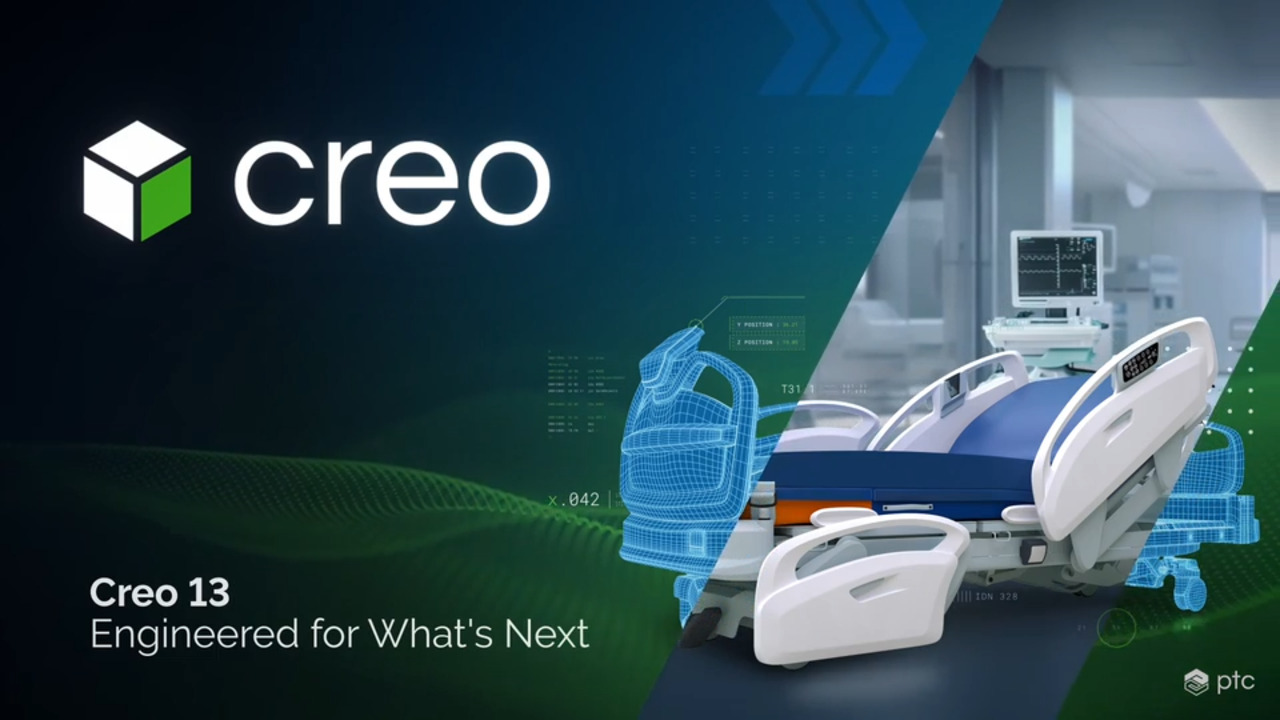
Official Creo 13 design-model illustration.
Creo

Define and evaluate product geometry.

Connect a design with manufacturing work.

Hyundai Motor Company and Kia

First enterprise PLM phase completed in 2012

Qualitative deployment milestone.

The first Windchill phase connected R&D data, BOM, CAD and change management.

What changed? +

A vehicle development program needs shared product and change records.

Selection in 2011 and first-phase completion announced in January 2012.

Southern Water

One view of asset condition and risk

Customer-attributed operating use.

The customer described using Orbit for prioritization, field activity and investment decisions.

What changed? +

Network risk and offline monitoring devices required a coherent asset view.

Customer statements in the June 2026 Orbit launch announcement.

Official Creo 13 design-model illustration.
02 / HOW IT BECOMES REAL

From a design change to a maintained asset

Illustrative engineering workflow grounded in the product capabilities.

  1. 01

    Model the change

    Change and evaluate geometry in Creo.

  2. 02

    Locate the configuration

    Identify product parts, versions and affected configurations.

  3. 03

    Approve and share

    Release the record to the appropriate manufacturing or supplier user.

  4. 04

    Trace software

    Connect requirements, tests and release evidence.

  5. 05

    Inspect the asset

    Connect service and enterprise data with the maintained asset.

Follow the work, step by step

The design follows the product into service

A manufacturer designs a product, releases a configuration to production and later services individual assets in the field. Each team sees a different part of the same lifecycle. Engineering works with geometry and requirements, manufacturing works with parts and processes, and service works with the asset actually installed at a customer. PTC connects these records through CAD, product lifecycle management, application lifecycle management and service lifecycle management. Signet reads its direction as keeping a usable product data foundation from the first engineering decision through the later operating asset, so a change has meaning for the people who must act on it.

Consider an illustrative industrial equipment maker modifying a component after a field failure. A designer first changes the model and evaluates the proposed geometry in Creo. The organization then needs to identify the affected product configurations, approve the change and communicate the released information to downstream users. Windchill brings product structures, versions, documents and change workflows into that discussion. Software requirements and tests can also be involved in a connected product. The business problem is deciding which asset and team need the change, with enough traceability to avoid treating one revised file as an entire completed transformation.

A shipped asset has its own history

The June 2026 launch of PTC Orbit extends the journey into the as-maintained state. Its stated problem is that the product configuration becomes fragmented across enterprise systems after shipment. An installed asset accumulates repairs, replacements, service events and operating signals. Orbit connects PLM, ERP, CRM, IoT, enterprise asset management and field service records into a shared asset view. This is a practical extension of the product data foundation: a service professional can inspect the state of an actual installed asset while engineering and quality see the relevant operating patterns. A designed product and a maintained asset remain related records with different purposes.

Southern Water gives this idea a named operational setting. At launch, its head of operational technology platforms described needing a coherent view of network condition and risk while sewer level monitoring devices were offline. He attributed a shared view, prioritization of high-risk areas, field activity planning and investment decisions to Orbit. The account describes the customer’s use and judgment, rather than a controlled comparison of maintenance outcomes. Signet reads the example through the work of an operator deciding where to send attention and resources, with asset data made useful at the moment the decision is taken.

Focus the portfolio before extending intelligence

PTC completed the divestiture of ThingWorx and Kepware to TPG in March 2026. Management presented that decision as concentrating on CAD, PLM, ALM and SLM within the Intelligent Product Lifecycle direction. The present explanation therefore centers on engineering, product records, software traceability and service. Orbit can connect data from IoT systems as an integration source while those divested businesses sit outside the current PTC product portfolio. Signet keeps the ownership change attached to the product story, because a prospective customer and a candidate both need to understand which capabilities the employer now develops, sells and supports.

AI features make the quality of the underlying record more important. Creo describes guidance and model-related assistance with explicit release stages, while Windchill describes product information access and part intelligence. Orbit adds natural language interaction with the maintained asset. Signet would evaluate these capabilities using a real engineering or service question: which data was consulted, what configuration it represented, and how a human checked the result before acting. The commercial proposition is stronger when a team can connect the feature with a dependable workflow, a responsible owner and a useful decision in the customer’s product lifecycle.

Understand the products and their customers

Creo makes and checks the geometry

Creo is the parametric 3D CAD environment in which an engineer defines a product model and works toward manufacturing. Its published scope combines modeling with simulation, generative design, composites, additive manufacturing and machining workflows. An engineer can change dimensions or features while related geometry and downstream tasks respond to the model. The product page distinguishes conventional Creo deployment from Creo+, which adds cloud-based collaboration and administration. The buying question is therefore broader than whether a user can draw a part: a team chooses an environment for making, testing, sharing and maintaining design information through its actual development process.

The current Creo 13 description separates AI guidance from assistance and automation. Advise supplies guidance based on Creo documentation and practices without depending on the specific 3D model. Assist is described as a beta extension for model-specific insights, troubleshooting and validation, while Automate is described as an alpha extension for geometry-level work. These stages matter when demonstrating a capability to a customer. Signet would show the actual supported task, identify the extension and let an engineer compare the output with the intended design. The release page also describes modeling, assembly, composite, simulation and manufacturing improvements that can be discussed through the same concrete task.

Windchill gives a change its business context

Windchill manages the product data, processes and participants around the design. Its core scope includes bills of materials, change and configuration management, multi-CAD data, visualization, quality and supplier collaboration. A bill of materials defines the parts and relationships in a particular product structure; manufacturing and service can need different views of that structure. Windchill connects the information with version and access controls so the appropriate participant can use the released record. Signet reads PLM value through the customer’s handoffs: identify the configuration, approve the change, share the right information and preserve the history needed to explain the result.

Windchill 13 describes a redesigned home experience, table controls and BOM reporting, with manufacturing and supplier workflows across the product record. Windchill+ is the SaaS deployment option, and Navigate exposes selected role-based tasks to participants beyond specialist PLM users. These choices change the implementation conversation. An engineering administrator, an occasional manufacturing user and an external supplier have different access needs. Signet would ask a solution consultant to identify the relevant configuration and permission boundary before demonstrating a shared view. The official help illustration included here shows part classification attributes; it is a documented interface example, not a claim that every customer sees the same configuration.

Software and service complete the product journey

Codebeamer covers application lifecycle management, connecting requirements, development, risk, tests and releases with traceability. Its published integrations place software records into the wider engineering digital thread. Onshape offers cloud-native CAD and product data management, while the Velocity Group also includes Arena and education. These products serve different implementation and customer contexts within the larger portfolio. For a software-defined physical product, Signet would compare a mechanical design change with its requirements and tests. The useful discussion connects engineering disciplines and identifies which records must remain associated as the product changes, rather than treating every tool as an interchangeable CAD or PLM interface.

ServiceMax and PTC Orbit address service execution and the maintained asset record. Orbit’s September release notes describe an AI Hub with context-aware widgets and analytical reasoning, alongside comparison of as-built and as-maintained structures. This expands the question from what was approved in engineering to what is installed and operating now. Signet would use one asset to explain the design record, the physical configuration, the service event and the decision a user must take. When comparing competitors, the PLM presales posting itself names Siemens Teamcenter and Dassault ENOVIA or 3DEXPERIENCE as relevant prior experience, grounding the comparison in the engineering software category.

03 / THE EVIDENCE

The story, in numbers.

DATED OBSERVATIONS

Historical annual revenue

USD · million

Fiscal years ended September. Historical portfolio includes later divested businesses; no FY2023 interpolation.

Figures, dates & basis +
Historical annual revenue
DateValueBasis
2022-09-30$1933MAnnual revenue, fiscal year ended September; published rounded millions.
2024-09-30$2298MAnnual revenue, fiscal year ended September; published rounded millions.
2025-09-30$2739MAnnual revenue, fiscal year ended September; published rounded millions.

PTC

Korean PLM first phase

Hyundai and Kia announced completion of the first deployment phase.

Portfolio divestiture completed

ThingWorx and Kepware moved to TPG.

Orbit launched

The maintained asset record connects the service data journey.

Read the growth story

Subscriptions fund the engineering workflow

PTC sells engineering and lifecycle software through subscription arrangements, SaaS, support and related services. Its financial releases use Annual Run Rate, abbreviated ARR, to describe the value of active subscription, cloud and support arrangements at a point in time. That company definition matters alongside recognized revenue. A multi-year contract can create obligations that become active over time, and accounting can recognize components of a software arrangement at different moments. Signet reads the business through the paying organization and the workflow retained over the subscription period, while separating contract portfolio measures from the sales recognized in a fiscal year.

The annual chart uses company-reported fiscal-year revenue of 1,933 million US dollars for 2022, 2,298 million for 2024 and 2,739 million for 2025. The fiscal year ends in September, and the chart deliberately labels each reported year rather than adding an interpolated observation. The earlier and later disclosures cover the company portfolio at those dates, including businesses sold in 2026. This is a historical revenue series in millions of US dollars, with the company’s recognition basis. It establishes the scale of reported sales while leaving the later portfolio change visible in the explanation.

A portfolio change changes the comparison

The July 2026 quarter provides a more recent operating observation. For the quarter ended June 30, PTC reported ARR of 2,412 million US dollars excluding the divested businesses and compared it with 2,256 million on the same adjusted prior-year scope. Constant currency ARR was a separate 2,448 million measurement using the fiscal 2026 planning exchange rates. The quarter’s revenue was 600 million, compared with 644 million a year earlier. These measures answer different questions. Signet would use the adjusted ARR comparison to discuss the retained contract portfolio and the reported quarterly revenue to discuss that period’s recognized sales.

PTC cautions that ASC 606 influences revenue and related margins and earnings. Its ARR definition also explains why deferred contract ramps should be distinguished from arrangements already active at the measurement date. Cash flow introduces another timing basis because invoicing and collection can occur in different periods. Signet would therefore ask an applicant discussing growth to name the exact metric, currency treatment, portfolio scope and period before interpreting the trend. A sales or customer success case can connect adoption and renewal work with a commercial outcome, while the public financial observation remains a company-level measure rather than proof that one local activity caused it.

The acquisition price has a different purpose

Schneider Electric’s October agreement assigns PTC an equity value of 22.6 billion US dollars and an enterprise value of 23.7 billion. The announcement also states a cash purchase price per share and expected completion conditions. Those are transaction terms for a proposed ownership change. They differ from annual revenue, ARR and a market capitalization measured from a traded share price at a stated time. The present profile keeps the agreement in the dated news and financial interpretation while using current listed status for the company. Signet avoids presenting the agreed enterprise value as operating sales or treating the transaction as already completed.

Three risks follow from the company’s own business and transaction disclosures. Manufacturers can change spending decisions under economic pressure, so contract demand and sales cycles require attention. Competition and technical changes require PTC to keep the software relevant as customers compare engineering environments and AI capabilities. Finally, the acquisition agreement introduces approvals, closing conditions and integration expectations that unfold over time. Signet would watch those risks through documented customer commitments, retained-product execution and official transaction milestones. For a candidate, the useful business explanation connects a customer’s adoption or renewal decision with the right commercial measure while preserving the difference between a completed result and a forecast.

04 / THE PEOPLE

Someone saw it first.

Neil Barua on the official executive page.
President and CEO

Neil Barua

Former ServiceMax CEO; joined PTC with the January 2023 acquisition.

The choice behind the company +

The stated portfolio focus centers on CAD, PLM, ALM and SLM.

Jennifer DiRico on the official executive page.
Chief Financial Officer

Jennifer DiRico

Previously CFO at Commvault and a finance and operating leader at Toast.

The choice behind the company +

Oversees the finance organization and explains capital allocation.

Jon Stevenson on the official executive page.
Chief Product Officer

Jon Stevenson

CAD, PLM and engineering leadership, including earlier PTC roles.

The choice behind the company +

Owns Digital Thread portfolio strategy, development and delivery.

“Q4 capped a year of solid execution and focus.”

Neil Barua · FY2025 results · 2025-11-05
The decisions behind the company

The current CEO came through service software

Neil Barua has led PTC as president and chief executive since February 14, 2024. Before the appointment, he ran ServiceMax, joined PTC when its acquisition closed in January 2023 and led the service lifecycle management business. His earlier work includes an operating partner role at Silver Lake and leadership of IPC Systems. Those facts are useful for understanding a current executive rather than inventing a founder story. Signet connects his service background with the company’s stated interest in extending engineering product information through the operating asset and customer service, while treating the connection as an interpretation of the published strategy.

Jennifer DiRico is the current chief financial officer. Her official biography describes earlier CFO work at Commvault, nearly a decade of finance and operating roles at Toast and finance positions at Nuance Communications and Passkey International. Jon Stevenson, the chief product officer, is responsible for strategy, development and delivery of the Digital Thread portfolio; his background includes CAD, PLM, SaaS and engineering leadership as well as earlier PTC roles. These leaders cover different parts of executing the strategy. Finance defines reporting and capital decisions, while product leadership turns the connected data direction into capabilities that customers can implement and use.

Portfolio focus is a concrete management choice

At the November 2025 results, Barua described the planned Kepware and ThingWorx divestiture as sharpening the CAD, PLM, ALM and SLM portfolio. The sale closed in March 2026, turning that direction into an ownership and operating change. It is useful to follow the sequence: a decision announced with annual results, a transaction completed later, and a product explanation written for the resulting portfolio. Signet would ask a candidate to distinguish the company’s current scope from older case studies and materials, especially where an earlier customer used both retained engineering software and a divested connectivity product.

The October agreement for Schneider Electric to acquire PTC is another distinct decision. The announcement connects PTC’s product design and lifecycle software with Schneider’s energy and industrial capabilities, with completion expected in the third quarter of 2027 subject to approvals and other conditions. Until completion, the company’s current leadership and public status remain the basis for this profile. Signet would follow the promised operating integration as a future transaction outcome. A candidate can explain the existing customer workflow today and then describe the potential combined scope using the language of an agreement and its remaining conditions.

Published values can be tested in a handoff

Customers Matter asks employees to listen and understand a customer’s particular challenge. Team PTC emphasizes shared results, trust, promises, deadlines and knowledge sharing across silos. Be Bold permits disagreement and early escalation of concerns with accountability. These published values map to a practical engineering software setting: sales, presales, services and product teams need to agree what a demonstration proves and what remains in the implementation. Signet would look for a candidate who can describe how a customer requirement reached the right person, how an early risk was raised and how a commitment was kept through delivery.

The Korea director posting makes coordination concrete by naming Product and Engineering feedback, global technical resources and the local sales partnership. The PLM specialist posting separately stresses discovery, demonstrations, proposals and proof-of-concept work. Together they show how a corporate value can become observable work at different levels. A specialist establishes the technical case in a specific opportunity, while a leader sets the team’s approach and develops people. Signet would compare a candidate’s example with that actual scope, keeping individual technical contribution and formal team leadership distinct. The employer’s experience requirements provide the starting point for that comparison.

05 / THE NEXT CHAPTER

Connect manufacturing discovery and adoption

The official employer board contains eight roles with Seoul as a primary or additional location on October 10. Demand Generation Marketing Manager owns Korea demand strategy, campaigns, budget and pipeline impact, reporting into International Growth Marketing. Inside Sales Business Development Representative builds new-logo opportunities through targeting, outbound activity, qualification and clear handoff context. Strategic Accounts Sales Representative connects enterprise transformation requirements with PTC value and account planning. These are related commercial tasks with different points of responsibility. Signet would ask a candidate to show how a specific target account became a meaningful conversation and how the next participant received enough context to act.

Marketing and Sales
Presales and Partners
Customer Success and Services

The public employer postings name collaboration functions and distinct reporting scopes.

Why Korea? Why now?+

The public Korea event page brings the present product direction into a different setting. PTC Innovation Exchange Korea 2026 is scheduled for November 12 in Seoul and presents the Intelligent Product Lifecycle with Digital Thread, industrial AI and physical AI topics. Its stated product scope includes Creo, Windchill, Codebeamer, Onshape and ServiceMax. As of the October research date, this is a future event invitation. Signet would use the agenda to understand the conversations PTC wants to have with Korean manufacturing customers, while retaining the distinction between an announced event and a customer implementation that has already happened.

Hyundai and Kia select Windchill

Enterprise PLM selection after benchmarking.

First deployment phase completed

R&D product information connected through Windchill.

Eight Seoul-location openings

One APAC director role includes Singapore and Seoul.

Understand the Korea opportunity

A Korean PLM customer supplies historical context

Hyundai Motor Company and Kia selected Windchill for enterprise PLM in January 2011 after a benchmark process. The January 2012 announcement described completion of the first deployment phase, with research and development teams using product data across the full vehicle program. It covered bills of materials, CAD information, digital mock-ups and change management, with Hyundai AutoEver as an implementation partner. The dated sequence is useful: a selection and an initial completed phase, each with its own scope. Signet reads it as a documented Korean manufacturer’s engineering data journey rather than a statement about the current size or status of the deployment.

The public Korea event page brings the present product direction into a different setting. PTC Innovation Exchange Korea 2026 is scheduled for November 12 in Seoul and presents the Intelligent Product Lifecycle with Digital Thread, industrial AI and physical AI topics. Its stated product scope includes Creo, Windchill, Codebeamer, Onshape and ServiceMax. As of the October research date, this is a future event invitation. Signet would use the agenda to understand the conversations PTC wants to have with Korean manufacturing customers, while retaining the distinction between an announced event and a customer implementation that has already happened.

Eight openings connect discovery with adoption

The official employer board contains eight roles with Seoul as a primary or additional location on October 10. Demand Generation Marketing Manager owns Korea demand strategy, campaigns, budget and pipeline impact, reporting into International Growth Marketing. Inside Sales Business Development Representative builds new-logo opportunities through targeting, outbound activity, qualification and clear handoff context. Strategic Accounts Sales Representative connects enterprise transformation requirements with PTC value and account planning. These are related commercial tasks with different points of responsibility. Signet would ask a candidate to show how a specific target account became a meaningful conversation and how the next participant received enough context to act.

Senior FA&D Business Development Manager adds executive engagement and value assessment, with the posting requiring ten or more years in federal, aerospace and defense business development or consulting, or relevant manufacturing transformation expertise. Inside Sales Director covers the APAC team, partners and regional quota, reporting to the global inside sales vice president. The director posting lists Singapore and Seoul, so its regional scope stays explicit in the Korea view. Signet distinguishes an individual industry opportunity creator from a leader managing distributed teams and revenue. Both work with sales and marketing, yet their evidence and experience requirements should be compared with their particular responsibilities.

Technical proof needs a customer outcome

Technical Presales Specialist, Senior (PLM) joins sales early to discover business and technical challenges, run demonstrations and support proposals, proof-of-concept work and benchmarks. The requirement begins with at least three years in relevant engineering software, with prior presales and named PLM tools described as preferred experience. Senior Director Solution Consulting, Presales leads the Korea presales organization across CAD, PLM, ALM and SLM, with senior technical team leadership and enterprise sales experience. These roles show that technical credibility must reach a customer decision. Signet would prepare a discovery-to-validation example for the specialist and a team strategy-and-coaching example for the leader.

Principal Customer Success Management Manager works after the commercial commitment, coordinating adoption, expansion, renewal and partner success. The posting requires at least eight years of customer-facing service experience, including at least three in CSM or relevant work, with manufacturing transformation experience. Together the eight roles connect demand, qualification, commercial value, technical proof and sustained use. Signet’s suggested first quarter would map a real customer workflow, agree a useful handoff or success measure with collaborators and deliver one documented improvement. That is an editorial preparation framework derived from the job descriptions, with the employer’s mandatory qualifications and actual reporting relationships retained in the original postings.

KOREA OPEN ROLES

8 open roles in Korea

Current Signet catalog · 2026-10-19

FOR YOU

Match your evidence to the specific individual or leadership role.

Marketing · Content

Demand Generation Marketing Manager

Seoul, Korea

Posting checked

The work
Own Korea campaigns, demand strategy, budget and pipeline impact.
Who fits
7 to 10+ years in demand generation, digital marketing or field marketing.
Keep in mind
Reports into International Growth Marketing; leads Korea demand generation.
GTM · Sales · BD

Inside Sales Business Development Representative

Seoul, Korea

Posting checked

The work
Create and qualify new-logo opportunities and hand them to sales.
Who fits
3 to 4 years of professional experience, with B2B sales development or inside sales preferred.
Keep in mind
Measured on qualified opportunities and outreach-to-pipeline conversion.
GTM · Sales · BD

Inside Sales Director

SNG-HO-Singapore / Seoul, Korea

Posting checked

The work
Own APAC inside sales quota, partners and distributed-team leadership.
Who fits
Holds a bachelor's degree in mechanical or manufacturing engineering
Keep in mind
Singapore or Seoul; reports to the global Inside Sales VP.
See all 8 roles
Customer Success

Principal Customer Success Management Manager

Seoul, Korea

Posting checked

The work
Lead enterprise adoption, expansion, renewal and partner success.
Who fits
Minimum 8 years in customer-facing service roles, with at least 3 years in a CSM or relevant role.
Keep in mind
Manufacturing transformation experience and cross-functional engagement.
Solutions Engineer

Senior Director Solution Consulting, Presales

Seoul, Korea

Posting checked

The work
Lead Korea presales strategy and a senior technical team.
Who fits
A bachelor's degree in engineering, computer science or a related field.
Keep in mind
Reports to VP Solutions Consulting across CAD, PLM, ALM and SLM.
GTM · Sales · BD

Senior FA&D Business Development Manager

Seoul, Korea

Posting checked

The work
Engage executives and assess value to create industry pipeline.
Who fits
10+ years in business development or consulting for government, aerospace and defense, or leading business transformation in a manufacturer.
Keep in mind
Works with Korea Sales, Presales, Marketing and headquarters.
GTM · Sales · BD

Strategic Accounts Sales Representative

Seoul, Korea

Posting checked

The work
Develop strategic enterprise accounts and present PTC value.
Who fits
Holds a bachelor's degree or equivalent.
Keep in mind
Works with local and international sales teams.
Solutions Engineer

Technical Presales Specialist, Senior (PLM)

Seoul, Korea

Posting checked

The work
Discover PLM needs, demonstrate solutions and support POCs and proposals.
Who fits
Bachelor's degree or higher in Engineering, Computer Science, Information Technology or a related field.
Keep in mind
A customer-facing presales role; prior presales and PLM tools are preferred.
07 / NOW & NEXT

The next scene is taking shape.

Orbit 6.0 release

AI Hub and asset hierarchy comparisons appear in the release notes.

Fisica selects CAD and PLM

Creo and Windchill support its combined engineering environment.

Schneider acquisition agreement

Completion is expected in Q3 2027 subject to approvals and conditions.

More context on what comes next

Orbit gains a new asset intelligence layer

PTC launched Orbit on June 11 as a cloud-native maintained-asset intelligence solution. The September 9 release notes for version 6.0 then describe an AI Hub with context-aware widgets, analytical reasoning with supporting evidence and comparison between as-built and as-maintained hierarchies. The product direction is therefore visible in both a launch announcement and subsequent release documentation. Signet would follow a concrete asset question through those features: reconcile its current configuration, investigate a pattern and explain the evidence supporting an action. The release stage and the source of the asset record remain part of the explanation.

The September 15 Fisica Applied Technologies announcement supplies a separate engineering case. Following its organizational combination, the defense manufacturer selected Creo and Windchill across four business units and multiple sites to support a consistent design environment, configuration control and traceability. It is a selection announcement and includes the customer’s account of why standardization mattered. Signet would connect this with PTC’s industry-oriented sales and presales work: a technical environment serves an organizational change, and the buying argument combines product capabilities with how teams will collaborate. The announcement establishes the chosen tools and intended scope; it does not supply a later measured financial return.

The October transaction remains conditional

On October 5, Schneider Electric and PTC announced an agreement with a 22.6 billion US dollar equity value and a 23.7 billion enterprise value. The transaction is expected to close in the third quarter of 2027, subject to PTC shareholder approval, regulatory approvals and other closing conditions. The combination is presented as connecting energy and industrial capabilities with product design and lifecycle software. Signet would follow the official approval and closing milestones before changing company ownership language. For current customers and applicants, the existing product portfolio, current management and live employer postings continue to describe the work available today.

Korea has a dated customer conversation ahead

The November 12 Seoul event is the next dated Korean conversation published by PTC. Its agenda connects product data with AI-enabled decisions across development, production and service. That future invitation sits alongside the eight current Korea-location openings rather than proving a completed local expansion or a newly signed customer. Signet would watch how the themes become technical demonstrations, customer questions and follow-up work. A candidate can prepare one workflow that moves from an engineering problem to a validated product decision, then use the actual job scope to explain whether they contribute through marketing, sales, presales or sustained customer adoption.

Their future. Your next chapter.

Find your part ↑

An independent profile by Signet. No affiliation or investment recommendation. Introductions happen only with your consent.
Research reviewed 2026-10-10

A LITTLE MORE CONTEXT

Understanding PTC.

What does PTC do?

A manufacturer designs a product, releases a configuration to production and later services individual assets in the field. Each team sees a different part of the same lifecycle. Engineering works with geometry and requirements, manufacturing works with parts and processes, and service works with the asset actually installed at a customer. PTC connects these records through CAD, product lifecycle management, application lifecycle management and service lifecycle management. Signet reads its direction as keeping a usable product data foundation from the first engineering decision through the later operating asset, so a change has meaning for the people who must act on it.

What is the opportunity in Korea?

The official employer board contains eight roles with Seoul as a primary or additional location on October 10. Demand Generation Marketing Manager owns Korea demand strategy, campaigns, budget and pipeline impact, reporting into International Growth Marketing. Inside Sales Business Development Representative builds new-logo opportunities through targeting, outbound activity, qualification and clear handoff context. Strategic Accounts Sales Representative connects enterprise transformation requirements with PTC value and account planning. These are related commercial tasks with different points of responsibility. Signet would ask a candidate to show how a specific target account became a meaningful conversation and how the next participant received enough context to act.

Are these confirmed job openings?

Employer postings were checked on 2026-10-10. Availability can change. Mock applications request a review from Signet.

How can I explore the company in more depth?

Follow the company from its vision through products, evidence and people to the Korea team and current roles. Use the table of contents to move within the page, and expand the sections for more context.

Back to the collection ↗