Daniel Surmacz, co-founder of RTB House
RTB House / THE WORLD THEY ARE BUILDING

Connect an advertiser’s goal with relevant audiences, creative and measurable delivery.

A retailer wants a shopper to return to its store and buy a relevant product.

See it taking shape ↓
01 / THE PRODUCTS

The products behind the promise.

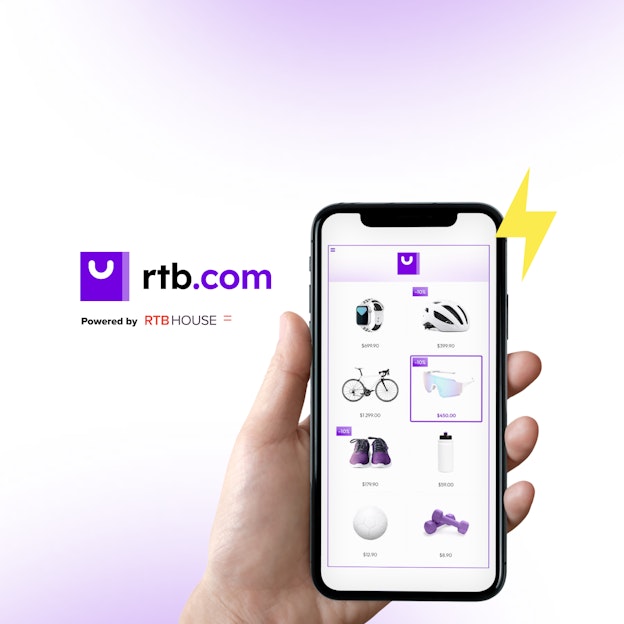
rtb.com launch illustration with mobile product offers.
Official rtb.com product-ad illustration.
rtb.com

Build catalog-based ads and control a campaign directly.

Give smaller brands and agencies an accessible advertising workflow.

Elex

Re-engage mobile game players across markets

Qualitative cross-market case.

MMP data supports re-engagement campaigns expanded to Korea and other markets.

What changed? +

The publisher seeks returning players for The Walking Dead: Survivors.

Overall campaign evidence with a list of expansion markets.

rtb.com launch illustration with mobile product offers.
Official rtb.com product-ad illustration.
02 / HOW IT BECOMES REAL

From a business goal to campaign evidence

Illustrative scene: an agency asks how catalog ads will support a client’s campaign goal.

  1. 01

    Agree an outcome

    Define the advertiser objective and event.

  2. 02

    Connect delivery

    Coordinate catalog, creative and campaign setup.

  3. 03

    Review evidence

    Interpret observed results with the agreed comparison.

Follow the work, step by step

Connect a commercial goal with the next ad impression

A retailer wants a shopper to return to its store and buy a relevant product. RTB House connects that commercial goal with decisions about audience, advertising space, the offer shown and the price bid for an impression. Its website describes performance advertising built around Deep Learning across the buying pipeline. Signet reads the proposition through the advertiser’s task: use available behavioral and product information to decide which advertising opportunity is worth pursuing, then examine what happens after the shopper arrives. The value becomes concrete when a campaign decision can be connected with an agreed business outcome.

An illustrative project starts by agreeing what the advertiser wants to improve. A shop might care about profitable orders, while an app publisher might want lapsed players to become active again. These goals call for different conversion events and evaluation periods. Signet would ask the team to identify the paying advertiser, the people being reached, the event that counts as progress and the data available to assess it. That preparation gives a sales conversation an operational shape: the customer and delivery team can discuss the same goal before choosing targeting, budget and creative approaches.

Signals become audiences, bids and relevant creative

The technology pages describe two complementary stages. Large language models interpret the meaning of web content and product catalog information, while Deep Learning uses richer signals to make advertising decisions. Semantic relationships can connect an offer with a relevant audience even when that person has not previously viewed that exact item. Signet would explain this with a clearly hypothetical catalog: an advertiser has several related products, and the campaign chooses a suitable offer from that range. The explanation follows the published mechanism without turning a general marketing claim into a guaranteed result for the example advertiser.

Ad delivery also needs a place to show the message. RTB House lists supply and technology partners such as Xandr, Magnite and PubMatic, and its agency material describes display, online video and connected television opportunities. The practical handoff is between the advertiser’s offer, the buying technology and available advertising inventory. Signet would keep partner relationships distinct from advertiser customer examples. A supply partner contributes access to advertising opportunities; a retailer or game publisher defines a campaign goal. Understanding those roles helps a candidate explain where a technical integration ends and a commercial account relationship begins.

Read the visit and purchase against the agreed goal

Quality Traffic focuses on engaged visits between initial awareness and a later conversion. The offer page says the service validates landing visits through a tag instead of treating an ad click alone as sufficient progress. That changes the question an account team asks: did the person arrive, engage and remain a plausible customer? Signet would connect those observations with a later conversion window and with the advertiser’s other channels. The company’s technology can optimize a selected objective, while the customer still needs a coherent interpretation of what the reported event means for its business.

The published cases make that interpretation visible. A property portal seeks inquiries about listings; a fashion brand works on awareness around a seasonal campaign; an app publisher re-engages players. Each uses advertising to influence a different part of a customer journey. Signet would present a case with the customer’s initial task, the campaign action and the scope of the reported outcome. This is also a useful working pattern for the Seoul sales role: learn the advertiser’s business, coordinate the required delivery work and discuss results using the same definitions established when the opportunity entered the pipeline.

Understand the products and their customers

Personalized retargeting chooses an offer for a returning shopper

Personalized Retargeting is the offer for reaching people who have interacted with an advertiser and may return to convert. The product page describes recommendations based on context and intent, with campaign objectives such as return on advertising spend, order frequency and average order value. Signet would demonstrate it through a retailer’s actual catalog and clearly named conversion event. The relevant product question is how a campaign selects an offer, controls its spend and reports progress toward that objective. A useful demonstration connects the recommendation with the shopper’s next action and the advertiser’s agreed evaluation method.

The Next Gen Tech page adds interactive creative formats that give the viewer a way to express interest within an advertisement. Search Banner, for example, can let a traveler enter a destination and dates before reaching an offer. Other listed formats include switches, simple preference interactions and chat-style banners. These are creative delivery formats inside the advertising proposition. Signet would evaluate one through the information a viewer provides, the offer the interaction produces and the quality of the landing experience. This shows what the format changes in the user journey without treating an interactive button as evidence of incremental sales.

Quality Traffic and In-App serve different points in the journey

Quality Traffic targets a stage where the advertiser wants people to engage before they buy. The service description combines catalog-related audiences, contextual relevance and validated site visits. For a shop, a meaningful visit might involve looking at a relevant range; the exact event must be agreed for that shop. Signet would compare this with retargeting at the point of intended use: one campaign may develop consideration, while another addresses people who already know the store. The account team needs the same clarity when explaining why two campaigns can coexist and how their contribution will be evaluated.

In-App advertising applies the performance approach to mobile applications, including user conversion and re-engagement. The Walking Dead: Survivors case describes Elex using mobile measurement partner data to understand activity and buying behavior. The campaign began with the United States and expanded to additional markets, including Korea. That is a useful product example because it joins an app-specific data connection with a commercial objective for returning players. Signet would keep the campaign’s overall reported result attached to the whole case; the geographic expansion and the reported campaign outcome should retain their respective scopes in a local discussion.

rtb.com gives smaller advertisers direct campaign control

RTB House announced rtb.com on March 4, 2026 as a self-service advertising platform for small and medium-sized businesses and agencies. Its current site describes retargeting for ecommerce advertisers, automatic personalized ads built from a product catalog and no minimum budget. A Shopify integration is also listed on the self-service offer page. The product gives an advertiser direct control of campaign setup rather than requiring every setup action to pass through a managed account workflow. Signet would show the catalog connection, campaign objective and later reporting together, so the easier setup remains connected with the customer’s actual marketing task.

The launch illustration shows a phone surrounded by product offers. It is a promotional illustration of product advertising, and the dossier labels it that way. The underlying product proposition is access to the group’s Deep Learning advertising technology through a self-service workflow. Signet would assess the difference using a realistic small-brand scenario: a limited catalog, a chosen daily spend and a clearly documented conversion definition. The team can then discuss setup, creative relevance and measurement on the same terms. The vendor’s published typical performance claims remain marketing claims until a specific customer’s method and results establish their relevance.

03 / THE EVIDENCE

The story, in numbers.

DATED OBSERVATIONS

Active campaign coverage

campaigns
4,000+

One current company-published lower bound; an operating count, not financial sales.

Figures, dates & basis +
Active campaign coverage
DateValueBasis
2026-10-104,000+Current about and agency pages report more than 4,000 active campaigns.

RTB House

Self-service platform launch

On March 4, 2026, RTB House announced rtb.com for small and medium-sized businesses and agencies. The announcement describes direct campaign control, automatically generated personalized ads and an accessible starting budget. The current product site continues to present ecommerce retargeting and catalog-based creative. Signet reads the event as a change in who can start using the technology and how they enter the campaign workflow. The next useful evidence is the customer’s setup experience and measured campaign use, with the launch date kept separate from the article’s later update timestamp.

Berlin event account

RTB Day Berlin took place on April 16, 2026, and the company published its account on August 25. Nearly sixty brands participated in a discussion of attribution, incrementality, customer journeys and practical AI applications. The account describes marketers combining measurement with judgment and comparing applications already used with those still being tested. Signet reads the conversation as context for the selling problem: an advertiser needs to understand how a channel contributes alongside its other activities. A conference discussion informs that question, while an individual campaign still needs its own agreed measurement method.

AI shopping research

The September 22 article examines AI-assisted discovery and purchasing through the company’s research on United States consumers. It discusses people finding brands through AI, taking time to compare offers and wanting clear return policies or approval conditions before an agent buys for them. Signet preserves the geographic scope and reads this as customer research for marketers. It is not an announcement that RTB House has shipped a transaction-performing shopper agent. The useful next question for an advertiser is how its product information, trust signals and campaign timing fit the shopping journey it can actually observe. For the Seoul salesperson, Signet would connect that question with an opportunity discussion: identify the customer’s audience, ask what changed in the discovery path and agree which campaign event will show meaningful progress before proposing a new creative or audience approach.

Read the growth story

Advertisers pay for a defined advertising service

The paying customer is an advertiser or an agency acting in a campaign relationship. RTB House offers advertising services intended to support goals such as purchases, engaged visits and app re-engagement. The publicly linked Korean terms, version 2.1 dated July 21, 2022, describe an order specifying service scope, duration and remuneration. Signet uses this dated document to explain the commercial structure of an ordered service, while preserving its historical version. A current contract can have its own terms. The practical account discussion connects the purchased service, campaign objective, budget and agreed basis for evaluating delivery.

Self-service access changes how the customer starts the service. The rtb.com website says an ecommerce brand or agency can choose a budget without a required minimum and build personalized advertising from its catalog. Signet reads that as a route to customers who may find a managed campaign setup too demanding for their available resources. The account economics still depend on delivery, continued customer use and the service’s costs. Easier access can create a new opportunity to adopt the technology, while the customer’s willingness to continue spending follows its own business case and measured campaign experience.

Campaign coverage shows operating reach at one point in time

The current company and agency pages describe more than 4,000 active campaigns, and the agency page also reports more than 550 partner agencies. The chart records the campaign lower bound at the October 10, 2026 website check. It is a one-point company-published operating snapshot. Signet would use that count to ask about the breadth of delivery work, account support and technology operation. A campaign count does not establish the spend per campaign, retained customer revenue or profitability. The snapshot is kept separate from financial amounts so a reader can see what the observed measure actually covers.

Several pages retain different round-number descriptions of the company’s reach. The March product launch uses an older campaign count in its boilerplate, while the current company site and investor portfolio also differ in employee and market descriptions. Signet treats those statements as separately published descriptions, with the date or check attached, rather than stitching them into a time series. That choice keeps the growth discussion useful: the live offer set and current campaign snapshot show operating breadth, while the actual commercial question remains how advertisers adopt, use and renew the service under their own objectives.

Customer outcomes need a measurement method

A published customer case can report a better advertising outcome without describing RTB House’s own sales. The Autotrader case, for example, discusses app re-engagement against campaign targets and other acquisition channels. Those comparison bases answer different questions from a randomized incrementality test. Signet would ask what changed, what the result was compared with, which users and markets were included and how the relevant event was attributed. This gives a salesperson a disciplined way to discuss evidence with an advertiser: preserve the case’s scope, then agree what evidence the prospective customer needs for its own campaign.

Three business pressures follow from the public proposition. Advertising budgets move with an advertiser’s demand and economics. Attribution and audience access evolve as platforms, tracking conditions and shopper behavior change. Campaign delivery also requires ongoing investment in models, infrastructure, creative execution and security. Signet would discuss these through a practical customer scenario instead of assigning an unsupported margin estimate: what happens if a client reduces spend, if the measured event changes or if the campaign needs a new integration? These questions connect commercial resilience with delivery choices that the sales and account teams can actually observe.


04 / THE PEOPLE

Someone saw it first.

Daniel Surmacz, co-founder of RTB House
Co-founder

Daniel Surmacz

RTB House names Daniel Surmacz among its four co-founders in its 2021 IAB MIXX lifetime achievement announcement.

“We are delighted to be working with Cinven.”

Robert Dyczkowski and Bartłomiej Romański · Investment announcement · 2019-01-14
The decisions behind the company

The business began with advertising technology in 2012

RTB House’s company page dates its founding to 2012 and describes a team with mathematical and advertising technology roots. Its early proposition developed around real-time bidding and personalized retargeting. A primary transaction account from the adviser VCP records Cinven’s investment agreement in December 2018 and completion in April 2019. Signet reads those events as distinct stages: the operating business began first, and an investor subsequently backed its expansion. The transaction dates describe ownership history. They do not provide a present valuation or a current financial result for the private company.

The January 2019 investment announcement named Robert Dyczkowski as chief executive, Bartłomiej Romański as technology chief, Daniel Surmacz as operating chief and Wojciech Głowacki as sales leader. That is a historical leadership record with a date. The company’s 2025 modern slavery statement is signed by Dyczkowski as president of the management board, and the October 2023 commercial leadership announcement identifies him as CEO. Signet retains the dated evidence for each title and follows his continuing board responsibility without assigning every title in the older investment announcement to the present management team.

Commercial leadership connects technology with customer adoption

Michael Lamb joined as chief commercial officer in the announcement dated October 2, 2023, on a page first published September 29. The biography describes experience at PayPal, MediaMath and McKinsey and co-founding X+1. The March 2026 rtb.com announcement again identifies him as chief commercial officer and explains the new platform’s focus on smaller businesses and agencies. These facts give a concrete commercial responsibility: make the technology accessible through a workflow suitable for a different customer group. Signet would discuss how the company changes setup, support and communication when it serves an advertiser with fewer internal marketing resources.

Cinven’s portfolio description sets out an expansion strategy through technology investment, new products and additional geographies, with organic and acquired growth both in scope. The current RTB House offer pages show how that technology direction is expressed in retargeting, engaged traffic, app campaigns and self-service access. Signet would connect investor strategy with a delivered product and its user before drawing a conclusion about execution. A private ownership strategy describes intended development; the March launch and the live offer descriptions provide different evidence about what customers can actually use at the current stage.

Security and workplace policies describe operating expectations

In November 2025, the company announced DEKRA certification against ISO/IEC 27001:2022 for its information security management system. The article describes a continuing cycle of planning, implementation, review and improvement across relevant operating functions. Signet reads this as a governance discipline around the advertising operation, not a substitute for understanding a particular customer’s data integration. An account handoff still benefits from naming the data involved, the applicable agreement and the people responsible for delivery. The certification announcement is evidence of a management system and its assessment, with that scope preserved when discussing the product.

The published diversity and inclusion policy and the 2025 group statement describe fair treatment, clear working arrangements and channels for raising concerns. Those are stated organizational expectations rather than proof that every team has the same everyday experience. Signet would use them to prepare specific questions about collaboration: how disagreements are resolved, who owns a delivery decision and how a new colleague can get help. Together with the security management announcement, the documents show several kinds of operating responsibility around the technology business. A candidate can connect these expectations with concrete examples from prior teamwork and customer coordination.

05 / THE NEXT CHAPTER

Local advertisers, agencies and commercial work

The responsibilities span prospecting, closing and growing relationships with direct advertisers and agencies. The salesperson builds a pipeline, manages the full sales cycle, maintains decision-maker relationships and coordinates with marketing, account management and technical colleagues. The posting also gives quarterly and annual revenue targets as responsibilities. Those are performance expectations for the role. Signet would prepare an applicant to describe one opportunity from discovery through agreement and delivery coordination, showing what they learned about the customer, how they involved internal specialists and how they recorded progress in the pipeline.

Advertisers and agencies
Sales and marketing
Account and technical teams

Collaboration functions named in the posting, without staffing estimates.

Why Korea? Why now?+

The Walking Dead: Survivors case adds a Korea-facing product example. Elex expanded an app re-engagement campaign beyond the United States to markets including Korea, Brazil, Thailand, Turkey and the Philippines. The page describes mobile measurement partner data and adapting campaign decisions to market characteristics. Elex is the named publisher in a cross-market case, not a Korean headquarters claim. Signet would use the example to explain why a Seoul account conversation may need both local market understanding and a coordinated technical workflow: the customer wants a commercial result in a particular market from a product operated across markets.

Dated Korean service terms

Version 2.1 names RTB House Korea Ltd.

Seoul role first published

Official Greenhouse first_published date.

Understand the Korea opportunity

A Korean operating entity and a Seoul office are documented

The current contact page lists a Seoul office in Gangnam, and the publicly linked Korean service terms name RTB House Korea Ltd. in their July 2022 version. Together they establish a local operating presence with dated and current evidence. Signet would use that foundation to discuss the work the company can do with Korean advertisers and agencies: understand the customer’s objective, agree the campaign structure and coordinate delivery. The office listing gives a present location signal. The older contract document gives a historical legal entity reference, with its version preserved rather than recast as a newly issued agreement.

The Walking Dead: Survivors case adds a Korea-facing product example. Elex expanded an app re-engagement campaign beyond the United States to markets including Korea, Brazil, Thailand, Turkey and the Philippines. The page describes mobile measurement partner data and adapting campaign decisions to market characteristics. Elex is the named publisher in a cross-market case, not a Korean headquarters claim. Signet would use the example to explain why a Seoul account conversation may need both local market understanding and a coordinated technical workflow: the customer wants a commercial result in a particular market from a product operated across markets.

The live Seoul opening owns the commercial cycle

The official Greenhouse board lists one Korea location match at this check: Sales Manager / Sales Director in Seoul. It is classified in sales with hybrid working mode. The posting asks for at least three years of B2B sales experience, evidence of exceeding targets, CRM pipeline discipline, familiarity with online advertising and performance marketing or RTB, and business-level Korean and English. Signet preserves the combined title exactly. A broader sounding director title does not justify inventing a higher minimum experience requirement than the employer actually states in the current description.

The responsibilities span prospecting, closing and growing relationships with direct advertisers and agencies. The salesperson builds a pipeline, manages the full sales cycle, maintains decision-maker relationships and coordinates with marketing, account management and technical colleagues. The posting also gives quarterly and annual revenue targets as responsibilities. Those are performance expectations for the role. Signet would prepare an applicant to describe one opportunity from discovery through agreement and delivery coordination, showing what they learned about the customer, how they involved internal specialists and how they recorded progress in the pipeline.

Local execution joins data, creative and account decisions

Korean campaign work can include several counterparts identified in the public material: the advertiser or agency, the sales team and the account and technical teams. The organization view therefore shows collaboration functions without assigning headcounts or a local leader. Signet’s illustrative handoff is a retailer asking how a proposed campaign will use catalog information and how a useful visit will be measured. The salesperson records the business question, brings the relevant specialists into the discussion and agrees the next evidence needed. This is an interpretation of the published role and offers, not an additional employer-mandated task list.

The dated Korean data processing addendum describes client-controlled data, processing instructions and the kinds of online identifiers and behavioral information used in advertising delivery. It also excludes direct identifying information such as names, telephone numbers and email addresses from the client transfer described in that document. Signet would use the document’s stated scope to prepare a clear discussion of the proposed integration, while asking which agreement governs the actual campaign. The commercial skill is connecting a customer’s performance goal with an implementation the customer and delivery team both understand, including the boundaries of the data used.

KOREA OPEN ROLES

1 open role in Korea

Current Signet catalog · 2026-10-19

FOR YOU

Prepare a B2B sales example from discovery through delivery.

GTM · Sales · BD

Sales Manager / Sales Director

Seoul, Seoul, South Korea

Posting checked

The work
Prospect, close and grow advertiser and agency accounts.
Who fits
At least 3 years of B2B sales experience.
Keep in mind
Hybrid; complete sales cycle and quarterly/annual targets.
07 / NOW & NEXT

The next scene is taking shape.

Self-service platform launch

On March 4, 2026, RTB House announced rtb.com for small and medium-sized businesses and agencies. The announcement describes direct campaign control, automatically generated personalized ads and an accessible starting budget. The current product site continues to present ecommerce retargeting and catalog-based creative. Signet reads the event as a change in who can start using the technology and how they enter the campaign workflow. The next useful evidence is the customer’s setup experience and measured campaign use, with the launch date kept separate from the article’s later update timestamp.

Berlin event account

RTB Day Berlin took place on April 16, 2026, and the company published its account on August 25. Nearly sixty brands participated in a discussion of attribution, incrementality, customer journeys and practical AI applications. The account describes marketers combining measurement with judgment and comparing applications already used with those still being tested. Signet reads the conversation as context for the selling problem: an advertiser needs to understand how a channel contributes alongside its other activities. A conference discussion informs that question, while an individual campaign still needs its own agreed measurement method.

AI shopping research

The September 22 article examines AI-assisted discovery and purchasing through the company’s research on United States consumers. It discusses people finding brands through AI, taking time to compare offers and wanting clear return policies or approval conditions before an agent buys for them. Signet preserves the geographic scope and reads this as customer research for marketers. It is not an announcement that RTB House has shipped a transaction-performing shopper agent. The useful next question for an advertiser is how its product information, trust signals and campaign timing fit the shopping journey it can actually observe. For the Seoul salesperson, Signet would connect that question with an opportunity discussion: identify the customer’s audience, ask what changed in the discovery path and agree which campaign event will show meaningful progress before proposing a new creative or audience approach.

More context on what comes next

March launch opens a self-service route

On March 4, 2026, RTB House announced rtb.com for small and medium-sized businesses and agencies. The announcement describes direct campaign control, automatically generated personalized ads and an accessible starting budget. The current product site continues to present ecommerce retargeting and catalog-based creative. Signet reads the event as a change in who can start using the technology and how they enter the campaign workflow. The next useful evidence is the customer’s setup experience and measured campaign use, with the launch date kept separate from the article’s later update timestamp.

April conversations were reported in August

RTB Day Berlin took place on April 16, 2026, and the company published its account on August 25. Nearly sixty brands participated in a discussion of attribution, incrementality, customer journeys and practical AI applications. The account describes marketers combining measurement with judgment and comparing applications already used with those still being tested. Signet reads the conversation as context for the selling problem: an advertiser needs to understand how a channel contributes alongside its other activities. A conference discussion informs that question, while an individual campaign still needs its own agreed measurement method.

September research follows the changing shopping journey

The September 22 article examines AI-assisted discovery and purchasing through the company’s research on United States consumers. It discusses people finding brands through AI, taking time to compare offers and wanting clear return policies or approval conditions before an agent buys for them. Signet preserves the geographic scope and reads this as customer research for marketers. It is not an announcement that RTB House has shipped a transaction-performing shopper agent. The useful next question for an advertiser is how its product information, trust signals and campaign timing fit the shopping journey it can actually observe. For the Seoul salesperson, Signet would connect that question with an opportunity discussion: identify the customer’s audience, ask what changed in the discovery path and agree which campaign event will show meaningful progress before proposing a new creative or audience approach.

Their future. Your next chapter.

Find your part ↑

An independent profile by Signet. No affiliation or investment recommendation. Introductions happen only with your consent.
Research reviewed 2026-10-10

A LITTLE MORE CONTEXT

Understanding RTB House.

What does RTB House do?

A retailer wants a shopper to return to its store and buy a relevant product. RTB House connects that commercial goal with decisions about audience, advertising space, the offer shown and the price bid for an impression. Its website describes performance advertising built around Deep Learning across the buying pipeline. Signet reads the proposition through the advertiser’s task: use available behavioral and product information to decide which advertising opportunity is worth pursuing, then examine what happens after the shopper arrives. The value becomes concrete when a campaign decision can be connected with an agreed business outcome.

What is the opportunity in Korea?

The responsibilities span prospecting, closing and growing relationships with direct advertisers and agencies. The salesperson builds a pipeline, manages the full sales cycle, maintains decision-maker relationships and coordinates with marketing, account management and technical colleagues. The posting also gives quarterly and annual revenue targets as responsibilities. Those are performance expectations for the role. Signet would prepare an applicant to describe one opportunity from discovery through agreement and delivery coordination, showing what they learned about the customer, how they involved internal specialists and how they recorded progress in the pipeline.

Are these confirmed job openings?

Employer postings were checked on 2026-10-10. Availability can change. Mock applications request a review from Signet.

How can I explore the company in more depth?

Follow the company from its vision through products, evidence and people to the Korea team and current roles. Use the table of contents to move within the page, and expand the sections for more context.

Back to the collection ↗