Founders who stayed
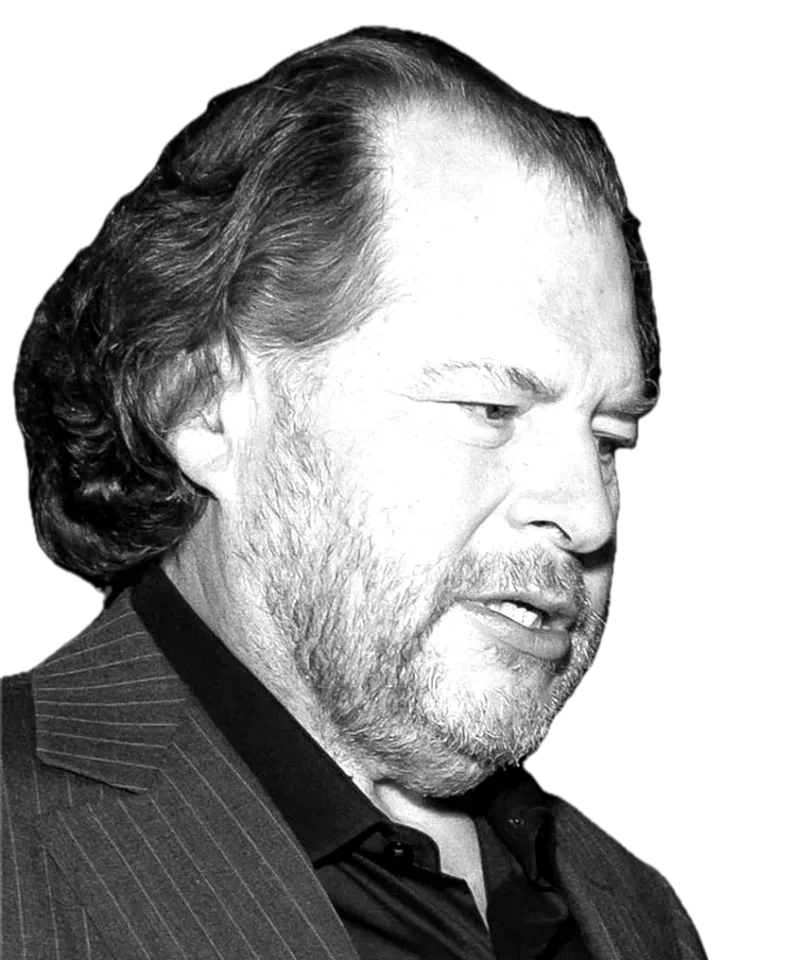
Marc Benioff incorporated Salesforce on 8 March 1999 with Parker Harris, Frank Dominguez and Dave Moellenhoff, and he is still Chair, CEO and Co-Founder. On the first day he set up the 1-1-1 model, giving 1 percent of equity, product and employee time to communities, and he later co-founded the Pledge 1% movement; he also owns TIME. Harris ran engineering, product, infrastructure and security over the years and most recently led engineering for the Slack business unit; today he is an adviser to the CEO and a board member. Salesforce listed on the New York Stock Exchange on 23 June 2004 at $11 a share.
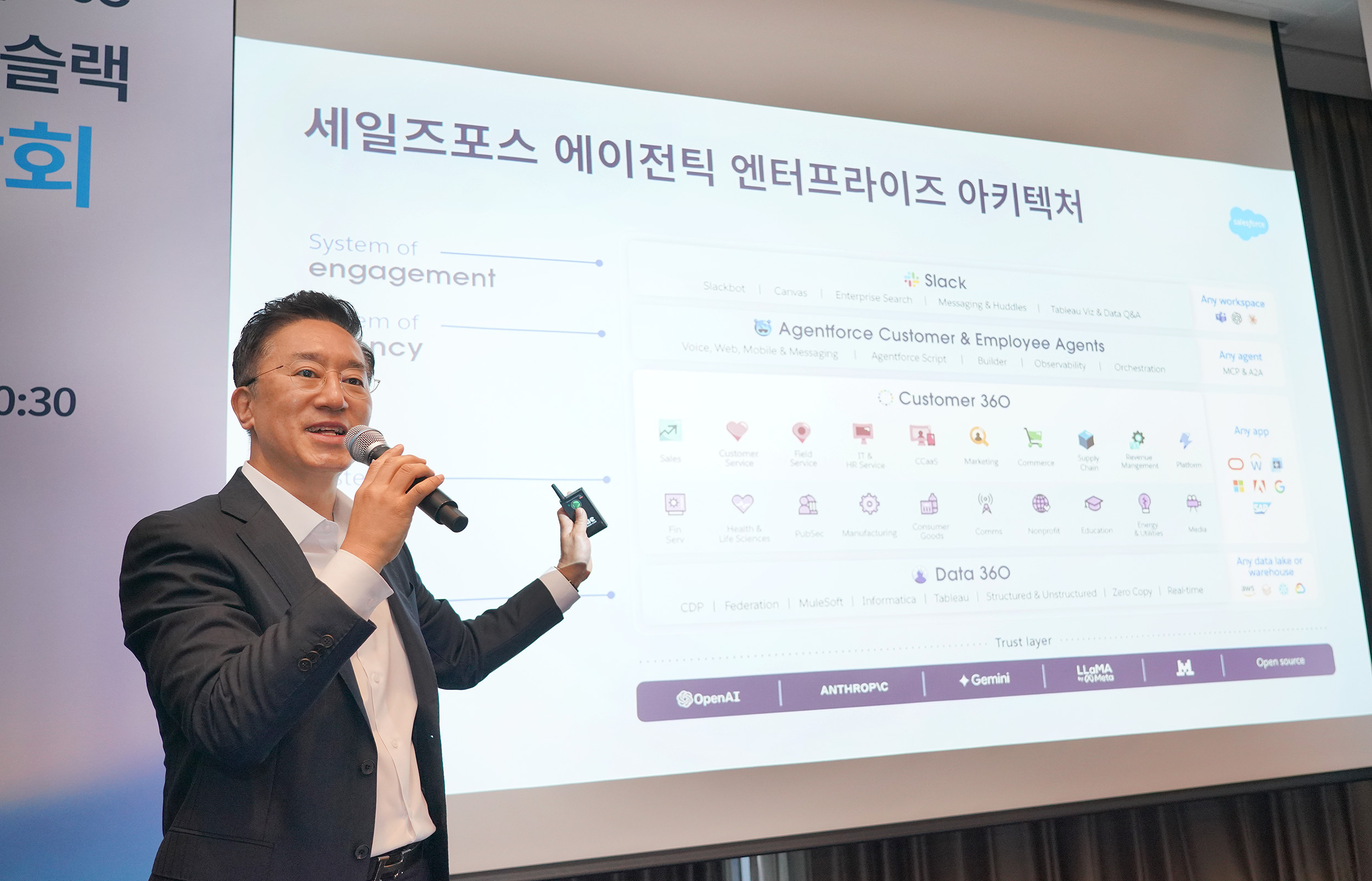
AI is creating an interface revolution. We are combining model intelligence with all the context that customers have built into Salesforce to create an intelligent, dynamic, composable system that is securely governed, built with Zero Data Retention, and designed to work with the core systems that already run your business.
Marc Benioff · Chair and CEO · AIforce launch release at Dreamforce 2026 · 2026-09-16
Decisions that shaped the company
Three choices explain today's Salesforce. First, it bought the layers around the CRM rather than building them: MuleSoft for integration in 2018, Tableau for analytics in 2019, Slack in 2021, Informatica for data management in November 2025 at about $8 billion in equity value, and Fin, a customer service agent company, agreed in June 2026 for about $3.6 billion. Second, it rebuilt around agents, from the Agentforce launch in 2024 to renaming its reported product lines after Agentforce. Third, with AIforce it opened its data and permissions to other AI interfaces, including Claude through a partnership with Anthropic, betting that the records matter more than the screens.
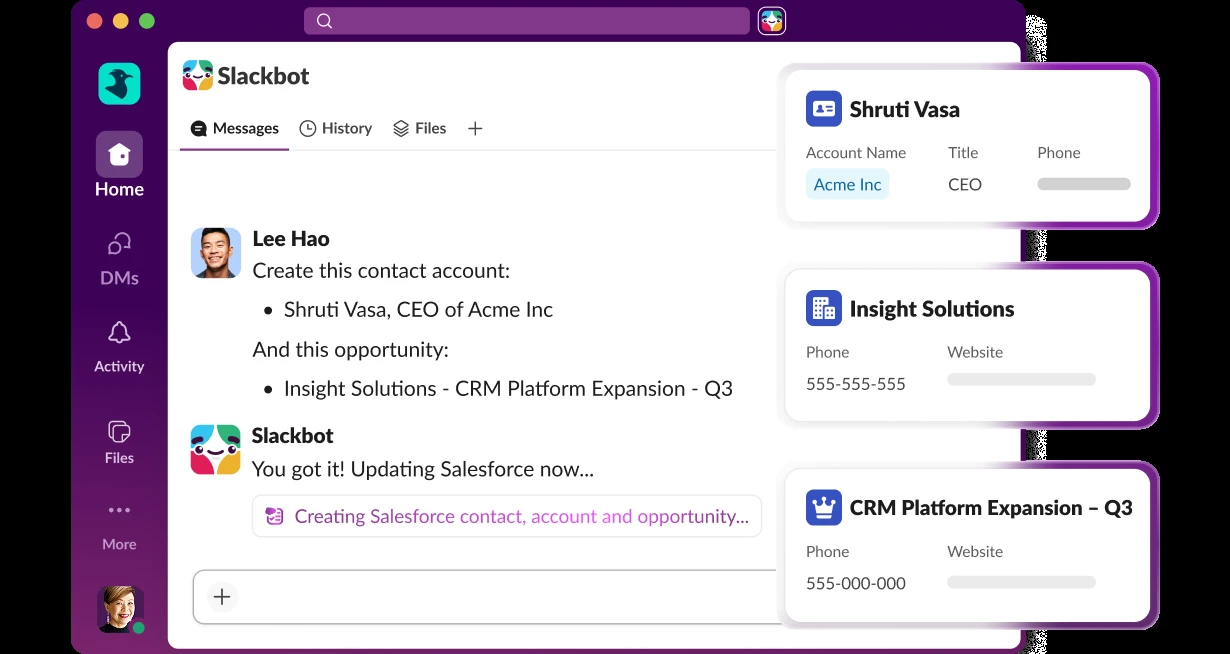
Salesforce also tested the idea on itself. It runs its own support on Agentforce, and Benioff said in 2025 that this let him shrink the support organization; a company spokesperson told Fortune that Salesforce no longer needed to actively backfill support engineer roles and had redeployed hundreds of employees, including into sales.
I've reduced it from 9,000 heads to about 5,000, because I need less heads.
Marc Benioff · Chair and CEO · On The Logan Bartlett Show podcast, as reported by Fortune, about Salesforce's own customer support · 2025-09-02
The leaders a Korea hire is likely to meet
Robin Washington is president and chief operating and financial officer, responsible for planning, finance, HR, investor relations, legal and revenue operations; she sat on the board from 2013, as lead independent director from 2022 to 2025, and was previously CFO of Gilead Sciences. Miguel Milano, president and chief operating officer, leads the customer-facing growth engines worldwide; he ran international sales across Asia-Pacific, EMEA and Latin America from 2011 to 2020. In Korea, 박세진 (Sejin Park) has led Salesforce Korea since August 2025, after joining in 2024 to run enterprise sales and spending about 20 years at SAP, Workday and Oracle. His predecessor, 손부한 (Son Bu-han), led the Korean business for more than six years and moved to an advisory role.
How Salesforce says it works and hires
Four habits recur in what Salesforce publishes about itself. Trust is the first of five values, next to customer success, innovation, equality and sustainability. Every team and employee writes a V2MOM each year and posts it internally. The 1-1-1 model shows up in the Korea postings as seven paid volunteer days. And in hiring, AI tools help recruiters screen resumes while people make every selection decision; candidates are asked to apply for no more than three roles in twelve months.
Products are designed outside Korea, and Korea's work is mainly selling, delivering and supporting them. Several postings still carry local decisions: the Security GRC Senior Lead keeps the product certification roadmap current for Korean regulators, the Sales Strategy Senior Specialist designs territories and quotas and negotiates with US headquarters, and the Technical Architect works with global product teams on customer architecture.