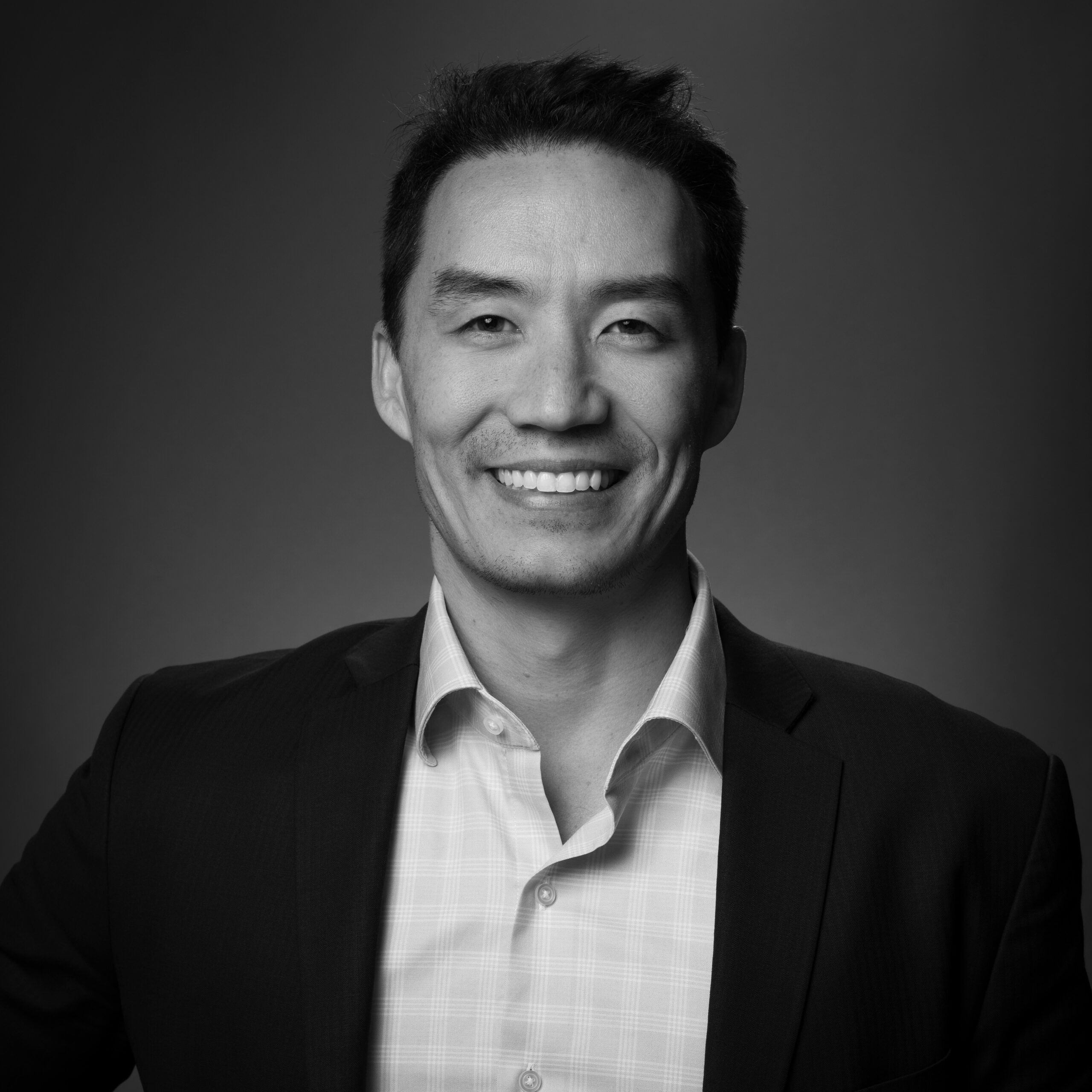
Gary Steele, official leadership portrait.
Shield AI / THE WORLD THEY ARE BUILDING

Develop and integrate mission autonomy with aircraft and simulation.

A team needs an unmanned system to continue its assigned work when navigation or communication becomes unreliable.

See it taking shape ↓
01 / THE PRODUCTS

The products behind the promise.

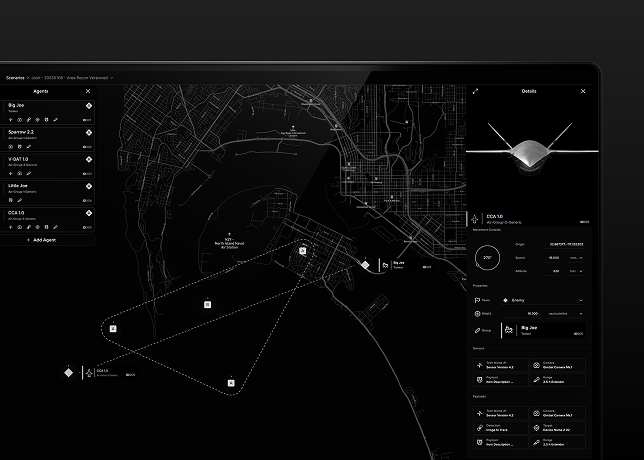
Official Hivemind Enterprise software illustration.
Hivemind

Build, test and integrate an AI pilot.

Support customer autonomy across vehicle types.

Indian Army

Aircraft and software selection

Selection announced January 28, 2026.

Selected V-BAT procurement with Hivemind licenses and SDK.

What changed? +

A requirement for unmanned aircraft and autonomy capability.

The program described in the procurement announcement.

Official Hivemind Enterprise software illustration.
02 / HOW IT BECOMES REAL

Requirement, integration and evidence

Illustrative scene: a partner evaluates a software integration with reviewed test evidence.

  1. 01

    Define

    Clarify platform, mission scope and responsibility.

  2. 02

    Integrate

    Connect the software and customer system.

  3. 03

    Evaluate

    Review evidence before the next release.

Follow the work, step by step

A mission needs intelligence on the vehicle

A team needs an unmanned system to continue its assigned work when navigation or communication becomes unreliable. Shield AI describes Hivemind as mission-autonomy software that senses the environment, makes decisions within the assigned mission and adapts as conditions change. Signet explains the company through the division of work between the operator, vehicle maker and software provider. The operator defines intent and authority, the vehicle supplies the physical platform and the autonomy software carries the assigned task through changing conditions. The current product spans different vehicle types, so the introduction should identify the customer’s actual platform and the intended operational scope.

Hivemind has two delivery routes. Shield AI engineers can build an integrated AI pilot for a customer through Hivemind Solutions, or a customer’s own developers can use Hivemind Enterprise to build, test and deploy autonomy. The Korea Aerospace Industries announcement describes a modular software suite with development tools, middleware, an autonomy catalog and mission control. Signet would begin with the buyer’s responsibility: whether it needs an integrated capability or tools its own engineering team can use and own. That choice affects the implementation work, the support relationship and the evidence the customer needs before putting the software on its platform.

Simulation prepares the testable behavior

Aechelon supplies high-fidelity visual and sensor simulation and synthetic environments used for human training and autonomous-system development. Shield AI’s September simulation article explains why rare conditions and limited real-world data make repeatable environments valuable. Signet reads the development loop through a defined scenario, an observed result and a review of the assumptions behind the simulation. A digital environment can repeat a condition safely and collect evidence for an engineering team. The evidence still needs validation against the system and the intended use, so the introduction should connect simulation, integration and live testing instead of treating a rendered scene as proof of every capability.

The September defense-software article describes a common autonomy foundation, reusable integration patterns and a repeatable path through laboratory work, flight testing and approval. It separates safety-critical aircraft functions from mission software within the government’s reference architecture. Signet would show a high-level change record: the capability being evaluated, the applicable boundary and the evidence reviewed before release. This makes the work understandable to software, program and customer colleagues. The explanation concerns how a team establishes confidence in a product; it should preserve the distinction between a laboratory result, a flight demonstration and a capability accepted for a particular customer program.

Support the customer after integration

The Seoul applications-engineer posting makes deployment tangible. The engineer supports customers on site, develops applications with the enterprise SDK, helps debug software and API integration, creates training materials and brings feedback to product engineering. Signet would explain the workflow through a customer-reported issue and the evidence needed to reproduce it. The commercial and engineering teams need a shared understanding of the accepted capability and the customer’s next requirement. Support, documentation and product feedback are therefore part of delivering autonomy, alongside the software itself and the platform on which it runs.

V-BAT adds an aircraft and operating support to the portfolio, while Vision Systems turns electro-optical and infrared data into detections and tracks. Benchmark supports post-flight evaluation and debrief. These products place the software work inside a wider customer process: collecting information, understanding behavior and maintaining a usable system. Signet would choose one product and its intended user for an introduction rather than blend all the portfolio claims. The useful question is what the customer receives today, which service supports it and what evidence demonstrates that particular result. That keeps current products connected to concrete work as the company develops additional aircraft.

Understand the products and their customers

Software and an operating aircraft

Hivemind is the mission-autonomy product for vehicle manufacturers and government users. The current page describes operation under GPS and communications disruption and coordinated teams of systems. Hivemind Solutions provides an integrated pilot; Enterprise provides software for a customer to develop its own autonomy. Signet would introduce the product through the customer’s engineering responsibility and the evidence needed for its platform. The official Enterprise illustration shows a software interface with agents and a mission map. It is a product illustration that helps explain the workspace, while a particular customer’s test record establishes the behavior delivered in its own configuration.

V-BAT is a Group 3 vertical-takeoff-and-landing aircraft with an enclosed ducted fan. Its current product page describes more than twelve hours of endurance in the stated EO/IR configuration and a small launch-and-recovery footprint. The page notes that environment, aircraft configuration and mission profile affect performance. Signet uses the aircraft’s physical form and customer support needs to explain the product. A maritime customer needs an aircraft, relevant payloads, training and sustainment to keep the capability usable. The introduction should keep a specification tied to its stated conditions rather than extend it to every payload, weather condition or deployment.

Simulation and perception support the system

Aechelon’s current portfolio includes synthetic environments, image generation and sensor simulation for training and evaluation. Its July 2026 account confirms that it joined Shield AI and identifies Nacho Sanz-Pastor as general manager with responsibility for its product and customer roadmap. Signet explains simulation as a product that supports both a human trainee and a team evaluating autonomous behavior. The same environment can provide different views for those users, with a traceable set of assumptions behind each one. That connects software improvement with the customer’s need for repeatable training and evidence before live operation.

Vision Systems includes ViDAR software and payload implementations, Tracker and Tracker C-UAS. The product page describes converting sensor inputs into prioritized detections and tracks for the operator. Benchmark takes flight or simulator data and supports procedure identification, configurable scoring and debriefing. Signet would keep the users separate: an operator interpreting sensor data and an instructor reviewing a flight have different tasks. A useful demonstration names the input, the displayed result and the person who interprets it. The portfolio is easier to understand when a reader can see how each product changes a specific review or information-processing step.

X-BAT remains a development program

X-BAT is the company’s AI-piloted vertical-takeoff-and-landing fighter development program. The current page schedules first flight for 2026, mission capability for 2028 and production for 2029. July’s engine-integration announcement reports ground testing, and October’s funding update still schedules flight testing for later this year. Signet keeps those stages explicit. A development aircraft’s intended range and mission are design claims and objectives, while ground-test completion is a specific achieved milestone. The company’s existing V-BAT operations supply separate evidence about its aircraft business and do not establish that X-BAT is already delivered or operational.

The September 2026 facility announcement names Frisco for prototyping, Newton for flight test and sustainment, and Des Moines, Washington for production. The sites connect design, acceptance testing and long-term support in the intended industrial plan. Signet would read the announcement through the work needed to take a product from prototype to a customer-accepted aircraft. Facility leases and buildout are present actions; projected production, regional jobs and economic impact depend on the program proceeding as planned. For a company introduction, the concrete change is the assignment of industrial responsibilities across sites, with future dates preserved beside the forecast outcomes.

03 / THE EVIDENCE

The story, in numbers.

DATED OBSERVATIONS

Announced post-money valuation

USD · million
$12.7B

One dated financing valuation, separate from company revenue.

Figures, dates & basis +
Announced post-money valuation
DateValueBasis
2026-03-26$12.7BAnnounced post-money value; financing proceeds have different amounts.

Shield AI

Maritime teaming demonstration

On September 28, 2026 Shield AI and Kraken announced a Portsmouth demonstration with two Hivemind-enabled K3 SCOUT vessels coordinating an ISR mission. The release describes the demonstration as evidence of teaming under operator-defined parameters and established command authority, and proposes future trials with UK and NATO partners. Signet keeps the achieved event separate from the future trial plan. The commercial implication is a new maritime integration example for Hivemind’s platform-independent proposition. A customer still needs evidence appropriate to its own environment and program. The event therefore broadens the portfolio’s demonstration record rather than establishing every maritime capability as an accepted deployment.

X-BAT industrial sites

The September 30 announcement assigns Newton, Kansas to X-BAT flight testing and sustainment and Des Moines, Washington to production, alongside the existing Frisco prototype site. The company reports a Washington lease and current buildout, with production planned for 2029 and full rate in the early 2030s. Signet reads the change as assigning responsibilities for the path from prototype to acceptance and support. The economic-impact and job figures are conditional regional projections that include suppliers and induced employment. They should remain distinct from the company’s present employee count, current manufacturing output and already recognized sales.

X-BAT capital commitments

The October 8 release announces a government modification and matching company investment that bring the stated X-BAT public and private commitments to $400 million. It reports completed ground-development milestones and still schedules flight testing for later in 2026. Signet would connect the funding with the next test evidence while preserving the separate government and private-capital components. The program is progressing through development; the announced amount is a commitment total rather than aircraft sales or a new company valuation. The next review can therefore examine the planned flight-test milestone and the evidence that supports it, with the current production schedule retained as a future plan. The dated announcements also assign separate sites to prototype work, testing, maintenance and production, so each milestone has a specific operating context.

Read the growth story

Aircraft, software and simulation serve buyers

Shield AI’s customer offering combines aircraft procurement, autonomy software, implementation and simulation. The January 2026 Indian Army selection describes V-BAT aircraft alongside Hivemind licenses and an SDK for local development. Taiwan’s February NCSIST contract combines customer-developed AI pilots with turnkey integrations. Signet reads these as examples of different deliverables in the business model. A buyer can purchase a platform, a software capability or tools and support for its own engineering work. Each has a different acceptance and service process, so the company’s commercial story should name the contracted scope before describing the broader opportunity.

The May 2026 CEO letter reports FY26 orders and revenue doubling year over year. Signet retains that as a company statement with its fiscal-year label, separate from an annual dollar amount and from the timing of an order becoming recognized revenue. Aircraft work can require development, manufacturing, customer acceptance and support, while software work includes integration and continuing product improvement. A useful commercial analysis asks where each program stands in that process. The letter’s relative growth claim indicates momentum in the company’s own account, but it does not by itself define the revenue contribution of a specific product or country.

Financing has several different components

On March 26, 2026 Shield AI announced $1.5 billion of Series G funding at a $12.7 billion post-money valuation and $500 million of fixed-return preferred equity financing. It also described a separate $250 million delayed-draw facility. The chart records the announced Series G valuation at that date. Signet keeps the valuation, investment proceeds and additional facility separate. The release connects the proceeds with the planned Aechelon acquisition and phases of X-BAT development. The financing story therefore explains how the company intends to fund product expansion, while the valuation remains the financing round’s stated company value rather than company sales.

The October 8, 2026 X-BAT announcement describes a $150 million government agreement modification matched by $150 million of company capital. Together with August’s separate $50 million government action and $50 million company commitment, announced public and private commitments reach $400 million. Signet reads the figure as development-program funding and committed capital. The public and private components have different providers and roles. Adding them explains the announced program support, while recognition as revenue depends on the underlying contract and delivery process. The introduction keeps that distinction visible when connecting financing with the aircraft’s next flight-test milestone.

Acceptance and support shape the economics

The facility plan connects prototype work, flight-test acceptance and sustainment with eventual production. V-BAT’s program account adds production capacity, spare parts and field support to the operating picture. Signet would examine a program’s demand, delivery capacity and support requirements together. A larger aircraft order creates work in manufacturing and service as well as commercial opportunity. A software integration creates engineering and validation work before the customer can use the capability. Understanding those stages helps a candidate explain why technical evidence, realistic schedules and a clear customer requirement matter to the business as much as the first sales discussion.

Signet identifies three business risks from these primary accounts. A development program must reach the next test and acceptance milestone; production expansion must align capacity with customer demand; and software integration must earn customer confidence while respecting program requirements. These are analytical questions rather than a forecast of failure. The current role descriptions place capture planning, qualification and customer support close to the product work. A candidate can therefore connect a commercial example with the actual deliverable, the evidence that qualifies it and the resources needed to support it. That produces a more useful business explanation than treating funding as the same thing as revenue.

04 / THE PEOPLE

Someone saw it first.

Gary Steele, official leadership portrait.
CEO

Gary Steele

The current leadership page identifies Gary Steele as CEO, Ryan Tseng as president, co-founder and chief strategy officer, and Brandon Tseng as president and co-founder. Reiter is a co-founder working on V-BAT state estimation and GPS-denied navigation. Signet keeps the different responsibilities visible. Strategy defines the longer direction, executive leadership coordinates a multi-product company and specialist engineering develops a critical capability inside a platform. A company with several product lines needs those functions to connect: the commercial promise, product roadmap and engineering evidence must describe the same outcome that a customer is expected to receive.

The choice behind the company +

Gary Steele’s May 26, 2026 employee letter connects scaling V-BAT and Hivemind with X-BAT development and the planned Aechelon acquisition. He emphasizes contact with operators and the conditions in which systems are used. Signet reads the decision as balancing a current business with investment in a future aircraft and a stronger simulation loop. The reader can examine what is already delivering value and what still requires testing and validation. Keeping those stages clear gives the leadership account a practical basis: existing customer work informs the next product decision, and a development plan remains accountable to its next evidence milestone.

Ryan Tseng, official leadership portrait.
President, Co-founder and CSO

Ryan Tseng

Co-founder now responsible for long-term vision and strategy.

The choice behind the company +

Set priorities across autonomy and national security.

“Customers need systems that can be trusted under real operational conditions and at scale.”

Gary Steele · Employee letter · 2026-05-26
The decisions behind the company

A 2015 origin in service-member needs

Shield AI’s origin account describes Brandon Tseng’s experience as a Navy SEAL and his question about how intelligent autonomy could protect people. The company was founded in 2015 with Ryan Tseng and Andrew Reiter. Signet reads that origin as a product question: how to give a system useful intelligence when a person cannot continuously direct every movement. The current mission retains protection of service members and civilians. The origin becomes relevant to a reader when it connects with present work in autonomy, aircraft and simulation, rather than serving only as a dramatic biography separate from the product.

The current leadership page identifies Gary Steele as CEO, Ryan Tseng as president, co-founder and chief strategy officer, and Brandon Tseng as president and co-founder. Reiter is a co-founder working on V-BAT state estimation and GPS-denied navigation. Signet keeps the different responsibilities visible. Strategy defines the longer direction, executive leadership coordinates a multi-product company and specialist engineering develops a critical capability inside a platform. A company with several product lines needs those functions to connect: the commercial promise, product roadmap and engineering evidence must describe the same outcome that a customer is expected to receive.

Scale current products while developing the next

Gary Steele’s May 26, 2026 employee letter connects scaling V-BAT and Hivemind with X-BAT development and the planned Aechelon acquisition. He emphasizes contact with operators and the conditions in which systems are used. Signet reads the decision as balancing a current business with investment in a future aircraft and a stronger simulation loop. The reader can examine what is already delivering value and what still requires testing and validation. Keeping those stages clear gives the leadership account a practical basis: existing customer work informs the next product decision, and a development plan remains accountable to its next evidence milestone.

Nacho Sanz-Pastor’s July account describes Aechelon’s transition from visual effects to flight simulation and its existing collaboration with Shield AI before the acquisition. The current role places him in charge of the simulation product and customer roadmap. Signet uses the account to explain how specialist experience joins a broader autonomy company. Combining products is useful when the integration improves the customer’s development or training task. A clear explanation names the existing capability, the part being connected and the outcome the teams intend to evaluate together, while preserving each product’s continued responsibility to its own customers.

Rigorous work includes candid evidence

The careers page publishes principles around trust, candor, customer empathy, teamwork, rigor and careful use of resources. Signet would connect those values with a candidate’s own project record. A clear example describes the requirement, the disagreement or uncertainty, the evidence gathered and the decision the team made. That makes collaboration visible without relying on an abstract claim about passion. The preparation can include a case where testing changed the original plan or customer feedback exposed an integration issue. The useful evidence is how the person handled the problem and helped colleagues understand the next step.

Jeff Mabry’s June V-BAT interview discusses reliability, improvements to the aircraft and the people needed to support operations and sustainment as demand grows. The September software article similarly argues for continuous testing with reviews and approvals still in place. Signet reads both as an operating principle: speed should produce more opportunities to learn from evidence, and the product’s usefulness includes the service around it. For an applicant, a concrete example can connect an engineering change with documentation, customer support and the observed result. That demonstrates responsibility across the product lifecycle rather than stopping at the moment a feature is built.

05 / THE NEXT CHAPTER

Partner development and Seoul recruitment

Applications engineering covers Hivemind deployment, SDK development, API debugging, demonstrations and training. The role explicitly anticipates about 50% travel, including international trips that can last several weeks. Required experience is a relevant bachelor’s degree with seven or more industry years, or a relevant master’s degree with five or more, together with strong modern C++ skills. Signet would prepare a candidate to explain an integration issue, the evidence used to reproduce it and the communication with the customer. The stated travel requirement is a central part of the job’s fit, alongside the technical and customer-facing responsibilities.

International business development
Applications engineering

Current Seoul roles; office listed as coming soon.

Why Korea? Why now?+

Hyundai Rotem’s October 24, 2025 release reports an MoU signed on October 23 at ADEX. It sets out phased research and development for autonomous drones, ground systems and integrated manned-unmanned teaming, with Quantum Aero participating. LIG Nex1’s January 22, 2026 release goes further than an MoU: it commemorates a contract for integration, flight and testing of its L-MDM with V-BAT. Signet preserves those different stages. Research cooperation, a contracted integration project and delivery of a finished system carry different evidence, and each relationship should be described at the stage stated in its own announcement.

KAI partnership

Develop and integrate AI pilots with Hivemind tools.

Hyundai Rotem MoU

Phased development plans signed at ADEX.

LIG Nex1 contract event

Contracted integration, flight and testing project.

Understand the Korea opportunity

Korean partners develop and integrate capabilities

Korea Aerospace Industries and Shield AI announced a Hivemind Enterprise partnership on March 20, 2025 to accelerate KAI’s AI-pilot development. Quantum Aero is named as the exclusive Korean technology partner supporting integration. Signet treats the announcement as evidence of a development and integration relationship. A local manufacturer’s responsibility is different from an aircraft operator’s procurement, and the introduction should name that role. The collaboration connects a Korean aerospace team’s own software work with the Hivemind toolchain. Its public account describes the intended capability and support relationship, rather than a completed fleet-wide operational rollout.

Hyundai Rotem’s October 24, 2025 release reports an MoU signed on October 23 at ADEX. It sets out phased research and development for autonomous drones, ground systems and integrated manned-unmanned teaming, with Quantum Aero participating. LIG Nex1’s January 22, 2026 release goes further than an MoU: it commemorates a contract for integration, flight and testing of its L-MDM with V-BAT. Signet preserves those different stages. Research cooperation, a contracted integration project and delivery of a finished system carry different evidence, and each relationship should be described at the stage stated in its own announcement.

Two Seoul roles connect sales and implementation

The official careers site links to Lever. On October 10, 2026 its public job feed and individual details showed two Seoul roles: Senior Staff BD Account Executive, Autonomy Specialist (R5123), and Staff Engineer, Software Autonomy Applications (R4987). Both use International EOR as the commitment label. The BD role is on site; applications engineering is hybrid. Signet keeps the employer’s label and the work arrangement separate. The current locations page marks Seoul as Coming Soon, so the confirmed local evidence is the current recruitment and the named partner programs, with the office opening treated as a plan.

The BD posting assigns the Hivemind sales lifecycle, capture strategy, government-customer relationships, proposals and accurate forecasting. It requires 10-15+ years in complex-domain sales or capture, a bachelor’s degree, defense-acquisition experience and fluent English. Its Seoul metadata is accompanied by body references to US government markets and the Americas business. Signet retains the full employer text and records that geographic inconsistency privately rather than rewriting it into a Korean-only requirement. Preparation can focus on a real program pursuit: the customer requirement, the acquisition pathway and how technical evidence shaped the commercial decision.

A customer engineer spends time on site

Applications engineering covers Hivemind deployment, SDK development, API debugging, demonstrations and training. The role explicitly anticipates about 50% travel, including international trips that can last several weeks. Required experience is a relevant bachelor’s degree with seven or more industry years, or a relevant master’s degree with five or more, together with strong modern C++ skills. Signet would prepare a candidate to explain an integration issue, the evidence used to reproduce it and the communication with the customer. The stated travel requirement is a central part of the job’s fit, alongside the technical and customer-facing responsibilities.

The two roles connect with different parts of the Korean partner workflow. A BD colleague qualifies a program and aligns its proposal with the customer’s acquisition process; an applications engineer helps the customer integrate and use the software. Signet’s preparation suggestion is to keep the handoff between those functions explicit: the agreed requirement, available capability, test evidence and next support step. The current Aechelon product page also lists Republic of Korea within the P-8A training-program scope. That is a separately scoped simulation reference, and the company introduction should retain that product context instead of merging all Korean relationships into one contract or local organization.

Korea openings

No current Korea openings were found. The company story is still available.

See overseas openings →
07 / NOW & NEXT

The next scene is taking shape.

Maritime teaming demonstration

On September 28, 2026 Shield AI and Kraken announced a Portsmouth demonstration with two Hivemind-enabled K3 SCOUT vessels coordinating an ISR mission. The release describes the demonstration as evidence of teaming under operator-defined parameters and established command authority, and proposes future trials with UK and NATO partners. Signet keeps the achieved event separate from the future trial plan. The commercial implication is a new maritime integration example for Hivemind’s platform-independent proposition. A customer still needs evidence appropriate to its own environment and program. The event therefore broadens the portfolio’s demonstration record rather than establishing every maritime capability as an accepted deployment.

X-BAT industrial sites

The September 30 announcement assigns Newton, Kansas to X-BAT flight testing and sustainment and Des Moines, Washington to production, alongside the existing Frisco prototype site. The company reports a Washington lease and current buildout, with production planned for 2029 and full rate in the early 2030s. Signet reads the change as assigning responsibilities for the path from prototype to acceptance and support. The economic-impact and job figures are conditional regional projections that include suppliers and induced employment. They should remain distinct from the company’s present employee count, current manufacturing output and already recognized sales.

X-BAT capital commitments

The October 8 release announces a government modification and matching company investment that bring the stated X-BAT public and private commitments to $400 million. It reports completed ground-development milestones and still schedules flight testing for later in 2026. Signet would connect the funding with the next test evidence while preserving the separate government and private-capital components. The program is progressing through development; the announced amount is a commitment total rather than aircraft sales or a new company valuation. The next review can therefore examine the planned flight-test milestone and the evidence that supports it, with the current production schedule retained as a future plan. The dated announcements also assign separate sites to prototype work, testing, maintenance and production, so each milestone has a specific operating context.

More context on what comes next

Maritime teaming demonstrated in September

On September 28, 2026 Shield AI and Kraken announced a Portsmouth demonstration with two Hivemind-enabled K3 SCOUT vessels coordinating an ISR mission. The release describes the demonstration as evidence of teaming under operator-defined parameters and established command authority, and proposes future trials with UK and NATO partners. Signet keeps the achieved event separate from the future trial plan. The commercial implication is a new maritime integration example for Hivemind’s platform-independent proposition. A customer still needs evidence appropriate to its own environment and program. The event therefore broadens the portfolio’s demonstration record rather than establishing every maritime capability as an accepted deployment.

Industrial sites assigned for X-BAT

The September 30 announcement assigns Newton, Kansas to X-BAT flight testing and sustainment and Des Moines, Washington to production, alongside the existing Frisco prototype site. The company reports a Washington lease and current buildout, with production planned for 2029 and full rate in the early 2030s. Signet reads the change as assigning responsibilities for the path from prototype to acceptance and support. The economic-impact and job figures are conditional regional projections that include suppliers and induced employment. They should remain distinct from the company’s present employee count, current manufacturing output and already recognized sales.

October adds development commitments

The October 8 release announces a government modification and matching company investment that bring the stated X-BAT public and private commitments to $400 million. It reports completed ground-development milestones and still schedules flight testing for later in 2026. Signet would connect the funding with the next test evidence while preserving the separate government and private-capital components. The program is progressing through development; the announced amount is a commitment total rather than aircraft sales or a new company valuation. The next review can therefore examine the planned flight-test milestone and the evidence that supports it, with the current production schedule retained as a future plan. The dated announcements also assign separate sites to prototype work, testing, maintenance and production, so each milestone has a specific operating context.

Their future. Your next chapter.

Find your part ↑

An independent profile by Signet. No affiliation or investment recommendation. Introductions happen only with your consent.
Research reviewed 2026-10-10

A LITTLE MORE CONTEXT

Understanding Shield AI.

What does Shield AI do?

A team needs an unmanned system to continue its assigned work when navigation or communication becomes unreliable. Shield AI describes Hivemind as mission-autonomy software that senses the environment, makes decisions within the assigned mission and adapts as conditions change. Signet explains the company through the division of work between the operator, vehicle maker and software provider. The operator defines intent and authority, the vehicle supplies the physical platform and the autonomy software carries the assigned task through changing conditions. The current product spans different vehicle types, so the introduction should identify the customer’s actual platform and the intended operational scope.

What is the opportunity in Korea?

Applications engineering covers Hivemind deployment, SDK development, API debugging, demonstrations and training. The role explicitly anticipates about 50% travel, including international trips that can last several weeks. Required experience is a relevant bachelor’s degree with seven or more industry years, or a relevant master’s degree with five or more, together with strong modern C++ skills. Signet would prepare a candidate to explain an integration issue, the evidence used to reproduce it and the communication with the customer. The stated travel requirement is a central part of the job’s fit, alongside the technical and customer-facing responsibilities.

Are these confirmed job openings?

Employer postings were checked on 2026-10-10. Availability can change. Mock applications request a review from Signet.

How can I explore the company in more depth?

Follow the company from its vision through products, evidence and people to the Korea team and current roles. Use the table of contents to move within the page, and expand the sections for more context.

Back to the collection ↗