Shahid Hanif, official leadership portrait.
Shufti / THE WORLD THEY ARE BUILDING

Connect identity evidence with onboarding and ongoing review.

Shufti supplies identity verification and compliance software to businesses that need to decide whom they are onboarding and how that relationship should be monitored.

See it taking shape ↓
01 / THE PRODUCTS

The products behind the promise.

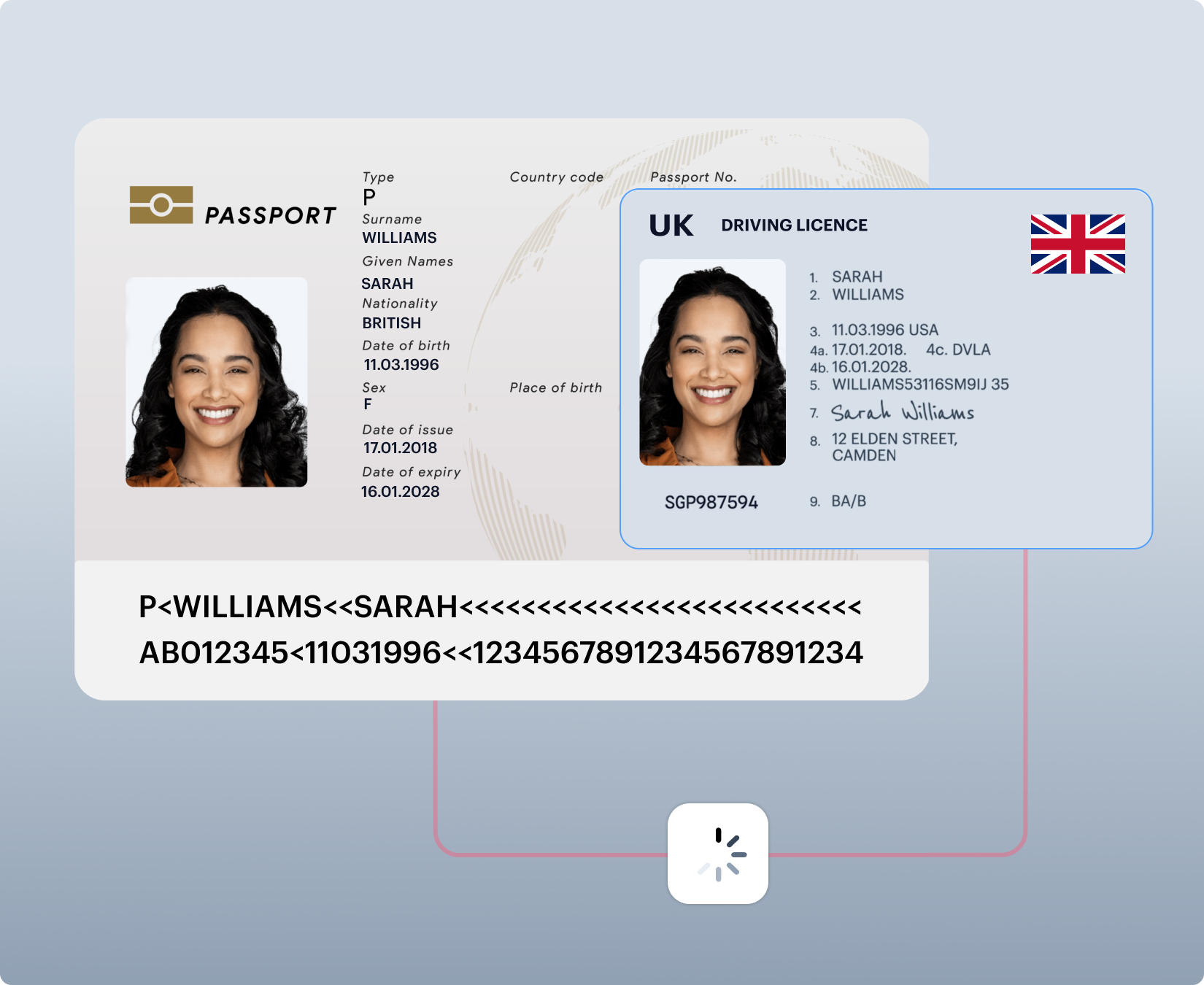
Official document cross-check illustration, using sample identities.
Document Verification

Check submitted document integrity and fields.

Supply evidence for onboarding and review.

QQ Pay

Unified remittance compliance

The case reports about 50% fewer manual reviews.

Combined checks in one platform for the client’s named market expansion.

What changed? +

Separate KYC, AML and sanctions tools created integration and review overhead.

The named QQ Pay implementation, not a guaranteed result for other buyers.

Official document cross-check illustration, using sample identities.
02 / HOW IT BECOMES REAL

Capture, route and review

Illustrative scene: a business configures an applicant’s identity-evidence path.

  1. 01

    Capture

    Collect evidence through the chosen applicant interface.

  2. 02

    Route

    Apply configured conditions to returned results.

  3. 03

    Review

    Record the responsible operator’s determination.

Follow the work, step by step

One verification connects several kinds of evidence

Shufti supplies identity verification and compliance software to businesses that need to decide whom they are onboarding and how that relationship should be monitored. A buyer can combine document checks, facial matching, business verification and screening through the platform instead of treating each result as a disconnected record. The operating problem is practical: a customer wants to complete an application, while the business needs enough evidence to decide whether it can accept that customer. Shufti places capture, checks and recorded results within the same journey. Its current positioning extends from initial onboarding to continuing identity, fraud and compliance work.

The developer documentation separates document upload, authenticity checks and stored verification results. This matters because taking a photograph does not itself establish that an identity is genuine. The document service examines validity, legibility and required fields, while other services contribute different evidence. Facial matching asks whether the person corresponds to the submitted identity; liveness addresses a different question about presentation. A compliance team chooses the service combination and the point at which a case needs human attention. Signet would explain these distinct questions before presenting a single pass result, so the customer understands what the workflow actually checked.

Policy becomes an executable customer path

Journey Builder provides a graph of services, conditions, actions and outcomes. A condition can use a previous result or declared information to route the applicant toward another check, rejection or manual review. The current page describes a shared journey record and a catch-all route at each fork. A form collects an applicant’s declaration but does not verify it, an important boundary when combining questionnaires with identity evidence. Teams can preview the graph and validate it before distribution. Signet would review the applicant’s path alongside the policy rule, because a correct individual service still needs an appropriate place in the full onboarding process.

A developer can integrate the REST API, use mobile SDKs or direct applicants to a hosted verification journey. The MCP tools documentation makes the hosted boundary explicit: verification tools return a verification URL, and applicants upload their evidence to Shufti through that journey. The tools do not accept a document photograph or selfie as a file argument. That detail prevents an AI-agent integration from being described as an unrestricted document-upload channel. The business still needs to manage authentication, the verification reference and returned results. Signet would map these responsibilities before deciding which interface provides the clearest customer experience.

The customer owns the decision context

Deployment options include SaaS and infrastructure under the customer’s control. The on-premises offering is relevant when procurement and data-governance requirements shape the architecture, while the privacy policy addresses personal information processed through the service. Compliance Co-Pilot supplies classifications and reasons inside the AML workflow, with the final determination assigned to the customer’s responsible officer. Signet therefore reads the platform as a way to organize evidence and review, rather than as a replacement for every customer decision. A useful implementation makes the chosen checks, exception route, access responsibilities and review record visible to the team operating it.

Understand the products and their customers

Document and face evidence answer different questions

Document Verification is the evidence-checking layer used to examine an identity document and extract information for a decision. Its current description includes forensic checks, cross-document comparison and review-ready results. The product is more specific than an OCR reader: extracted text is one part of the record, while authenticity and integrity checks assess the submitted material. The official cross-document illustration shows a passport and driving licence being compared. Signet would use that product diagram to explain why matching identity fields across evidence differs from simply copying a name into an application form. The image is illustrative evidence of the product workflow.

Face Verification adds facial matching and liveness to the verification stack. NFC Verification reads information from supported identity-document chips and checks it against visible document data, introducing another evidence channel. These services can be combined but they are not interchangeable: a face match, a valid chip read and an image-based authenticity assessment cover different failure modes. Age Verification is another configurable service for the buyer’s intended journey. Signet would ask which evidence is required for a particular applicant and document, then confirm the supported service and device path. A broad country-coverage statement is insufficient to establish that every document supports every check.

Business and monitoring services extend the relationship

Business Verification checks an organization and its associated ownership information, so a business customer has a different evidence path from an individual applicant. AML Screening evaluates identity information against screening sources; Transaction Monitoring examines activity through rules and pattern detection. The distinction matters to product selection: proving who a person is, identifying a business owner and reviewing a transaction are separate tasks. Signet would show them within a lifecycle diagram rather than grouping them under an undifferentiated compliance claim. An enterprise buyer can then decide which stage needs a service, who reviews the output and where the resulting evidence should be recorded.

Journey Builder organizes services into a customer path and supplies preview and distribution options. Its official drag-and-drop diagram shows service selection, settings and a verification link or QR code. This is a product-specific workflow illustration, not a photograph of a production customer account. The graph approach gives product and compliance teams a shared object to discuss: a changed condition can be evaluated against the route that applicants will take. Signet would preserve the distinction between declared inputs and verified results when documenting that graph. The company’s policy-generation feature drafts a journey using approved components and validates it before execution.

AI tools remain connected to the verification infrastructure

The July 2026 AI Suite announcement groups AI Journey Builder, Copilot and MCP integration. Current Compliance Co-Pilot documentation focuses on reviewing AML screening hits with classifications, explanations and an analyst override. MCP offers a conversational entry point into verification services, while the developer tools retain the hosted applicant journey. The current product descriptions are more useful than treating every AI feature as one universal agent. Signet would evaluate an integration against a defined task: build a valid journey, explain a screening hit, or initiate a hosted check. Each task has a different operator, evidence output and authority boundary.

03 / THE EVIDENCE

The story, in numbers.

DATED OBSERVATIONS

Company-disclosed business reach

businesses
2,000+

A single lower-bound observation; not revenue or an annual series.

Figures, dates & basis +
Company-disclosed business reach
DateValueBasis
2026-10-102,000+Businesses stated on the current company page.

Shufti

AI Suite launch

The July 16, 2026 AI Suite launch connects journey creation, questions about verification data and checks initiated from MCP-capable clients. It says the suite is available to existing customers and locates the builder and Copilot inside the back office. The current MCP tools documentation specifies that the applicant completes a hosted journey rather than attaching identity evidence directly to a tool call. Signet would evaluate the launch by following a task from the user’s instruction through the service request and returned record. The product gain is easier access to a defined verification workflow, with authentication and review boundaries still relevant to operation.

Identity Fraud Report

The September report release analyzes identity checks processed from January through June 2026 across eleven industries. Its crypto figure, 22.49 percent, is confirmed fraudulent attempts divided by that sector’s verification requests in Shufti’s sample. It is not a population-wide rate for all crypto users. The study also connects repeated documents, devices and IP addresses across attempts to examine coordinated networks. The release is dated September 3 on the page and September 2 in the body dateline. Signet retains that distinction in review notes and uses the publication-page date in the timeline. The measurement describes the network’s observed requests and methodology.

G2 Fall recognition

The September 9 G2 Fall announcement reports badges and category rankings derived from customer-review reports. It follows the August 4 company account of a fraud-prevention award. Signet separates these recognition events from technical test results, customer-specific business outcomes and financial performance. A reader can use recognition to discover questions worth asking, then examine the product, certification scope and a relevant implementation case. For the next update, Signet would track how AI tools fit into actual review tasks and how fraud-network findings inform product work. Those are review questions, not claims about a future release or a promised business result.

Read the growth story

The commercial unit is a configured verification service

Shufti sells verification and compliance services to business buyers whose onboarding volume, required checks and deployment preferences differ. The pricing page lets buyers select annual verification volume and service categories, with a free plan, an Essentials tier and negotiated Enterprise terms. Free Forever and Essentials are described as pay-as-you-go, while Enterprise conditions depend on volume, coverage and compliance requirements. Signet reads the business model through that commercial unit: a verification request combined with the services and support the buyer selects. The business’s number of customers describes reach; it does not directly reveal revenue per customer or the value of a particular enterprise contract.

An enterprise implementation can include API or SDK work, workflow configuration and infrastructure requirements. The deployment pages describe operating the platform in the customer’s environment as another purchasing choice. The partner program adds a route through organizations that bring the service to their own buyers. Signet would connect these paths with procurement and adoption: the decision maker needs a service fit, the technical team needs a working integration and the operator needs a review process it can use. Selling the initial contract and getting the agreed workflow into daily use are related but separate commercial tasks, especially when customer data governance shapes the deployment.

Financing and customer reach have different meanings

The March 2022 company release announced a $20 million Series A led by Updata Partners; the investor confirmed the round in its March 17 account. That is financing capital for expansion and product work, separate from sales earned through verification services. The current company page says more than 2,000 businesses trust the platform, whereas the dated 2022 release referred to more than 500 clients. Signet keeps those statements as dated customer-reach observations. The chart uses the current 2,000-plus business count as one observed lower-bound point, so it does not manufacture intermediate annual results or convert financing proceeds into recurring revenue.

Customer cases illustrate economic benefits on the buyer’s side. QQ Pay’s case describes consolidating KYC, AML and sanctions work and reports about a fifty-percent reduction in manual reviews. Misterb&b’s case reports lower chargebacks while describing identity and fraud work within a travel marketplace. These results belong to the named implementations and do not establish Shufti’s own margin or the outcome another buyer will receive. Signet would investigate which workload was measured, the starting process and the broader fraud measures deployed alongside verification. A useful commercial conversation connects the chosen service with a buyer’s measurable operating problem and a clearly defined scope.

Adoption depends on evidence and integration quality

The company operates in identity verification, screening and fraud prevention, where a buyer can evaluate a combined platform against individual services or an existing internal workflow. Signet’s comparison would focus on supported evidence, deployment control, configuration, recorded reasons and the operator’s workload. The pricing structure makes volume and selected services relevant, while certifications supply evidence that procurement teams can examine within their stated scope. Commercial growth therefore involves both winning service volume and keeping the implementation suitable as the customer’s process changes. The company’s published materials help define those questions, but they should be examined against the actual use case and contractual service conditions.

04 / THE PEOPLE

Someone saw it first.

Shahid Hanif, official leadership portrait.
CEO and Co-founder

Shahid Hanif

Shufti’s current company history dates the founding to 2017. Its current leadership page lists Shahid Hanif as CEO and co-founder and Victor Fredung as chairman and co-founder. Those titles differ from the March 2022 financing release, when Fredung was described as CEO and Hanif as founder and CTO. Signet preserves the date on the older statement while using current titles for the people card. The change matters because company direction, board oversight and technical leadership are different responsibilities. A reader preparing for a conversation needs the current role and the historical context together, without treating an old announcement as a current organization chart.

The choice behind the company +

Hanif’s August 4 statement explains that fraud continues after onboarding and varies by market. The company’s September research uses its own production checks to examine repeated documents, devices and infrastructure across attempts. These accounts connect the company’s full-lifecycle positioning with a specific operating problem: a single convincing submission can be part of a coordinated pattern. Signet would distinguish the leader’s stated direction from the measurements in the research sample. That distinction helps a reader assess a strategy without converting a company position into an independently established market fact, and keeps evidence from a verification network tied to its actual scope.

Victor Fredung, official leadership portrait.
Chairman and Co-founder

Victor Fredung

Current chairman; described as CEO in the dated 2022 financing release.

The choice behind the company +

The Series A company release describes a configurable identity-verification platform and the option to deploy it on premises. Hanif’s contemporary funding statement emphasizes finding a strategic partner with relevant experience. The investor’s separate announcement describes investment in sales, marketing and continued product development. Together these dated accounts show a business decision about expanding an existing verification company, rather than a new founding event. Signet would connect the decision to subsequent product scope only where later documents support it. Financing goals explain the intention of a round; the current product and deployment pages are the evidence for what buyers can evaluate today.

“Teams should get the speed of AI without giving up control of their verification,”

Farryam Asif · AI Suite announcement · 2026-07-16
The decisions behind the company

The founders’ current roles are explicit

Shufti’s current company history dates the founding to 2017. Its current leadership page lists Shahid Hanif as CEO and co-founder and Victor Fredung as chairman and co-founder. Those titles differ from the March 2022 financing release, when Fredung was described as CEO and Hanif as founder and CTO. Signet preserves the date on the older statement while using current titles for the people card. The change matters because company direction, board oversight and technical leadership are different responsibilities. A reader preparing for a conversation needs the current role and the historical context together, without treating an old announcement as a current organization chart.

The Series A company release describes a configurable identity-verification platform and the option to deploy it on premises. Hanif’s contemporary funding statement emphasizes finding a strategic partner with relevant experience. The investor’s separate announcement describes investment in sales, marketing and continued product development. Together these dated accounts show a business decision about expanding an existing verification company, rather than a new founding event. Signet would connect the decision to subsequent product scope only where later documents support it. Financing goals explain the intention of a round; the current product and deployment pages are the evidence for what buyers can evaluate today.

Technical speed is paired with operator control

In the July 16 AI Suite release, the CTO statement argues that teams should receive AI speed while retaining control over verification. The same announcement separates creating journeys, analyzing verification information and running checks through an AI client. Current product documentation makes the operating boundaries more concrete through validation, hosted evidence submission and human review of AML classifications. Signet reads this as a testable product principle: an easier interface should still expose what it did and who has authority to act on its output. A candidate can prepare a case where a faster workflow also made exceptions, evidence or review responsibilities easier to understand.

Hanif’s August 4 statement explains that fraud continues after onboarding and varies by market. The company’s September research uses its own production checks to examine repeated documents, devices and infrastructure across attempts. These accounts connect the company’s full-lifecycle positioning with a specific operating problem: a single convincing submission can be part of a coordinated pattern. Signet would distinguish the leader’s stated direction from the measurements in the research sample. That distinction helps a reader assess a strategy without converting a company position into an independently established market fact, and keeps evidence from a verification network tied to its actual scope.

Published working principles describe shared responsibility

The current careers page describes ownership of problems, open context and documented decisions across locations. It treats asking for help early as good judgement and says team arrangements determine hybrid work. These are published employer principles, not a guarantee about an individual manager or every employment jurisdiction. Signet would turn them into concrete conversation topics: explain a problem you owned, how you recorded the decision and when you asked another team for help. A candidate can compare that evidence with the actual team’s responsibilities. The published hiring sequence also includes a manager conversation and a short practical exercise where the role requires one.

05 / THE NEXT CHAPTER

Korean service coverage and global application path

Use the official application path for a suitable team and role.

Product and engineering
Fraud and compliance

Product coverage and the published global team.

Why Korea? Why now?+

The document and NFC product documentation give a more concrete technical frame for this discussion. Document checks assess submitted evidence, while NFC relies on a supported chip and device path. A business offering can require corporate-registration and ownership evidence rather than the documents used by an individual applicant. Signet would use a sample integration map to connect the Korean evidence category with the relevant product check and returned record. Where a workflow collects declared information, that field should remain distinct from a verified result. This is a preparation method for a product or implementation discussion, rather than a claim that Signet has tested every Korean identity document.

Understand the Korea opportunity

Korean coverage starts with specific evidence

Shufti’s South Korea coverage page describes individual and business checks for citizens, foreign residents and companies. It names resident registration cards, passports, driving licences and residence cards as supported evidence categories and discusses Hangul fields and mixed-script onboarding. That is a product-coverage claim about Korean applicants, not evidence of a local office, a named customer deployment or a particular regulator’s approval. Signet would start with the applicant and intended document, then identify the required service and evidence output. A Korean-language interface alone would not answer whether the proposed identity path is appropriate for the buyer’s own onboarding policy and customer population.

The document and NFC product documentation give a more concrete technical frame for this discussion. Document checks assess submitted evidence, while NFC relies on a supported chip and device path. A business offering can require corporate-registration and ownership evidence rather than the documents used by an individual applicant. Signet would use a sample integration map to connect the Korean evidence category with the relevant product check and returned record. Where a workflow collects declared information, that field should remain distinct from a verified result. This is a preparation method for a product or implementation discussion, rather than a claim that Signet has tested every Korean identity document.

Data handling is part of a service discussion

Shufti’s deployment choices include customer-controlled infrastructure, private-cloud options and SaaS. A Korean buyer considering identity evidence would discuss the architecture, who handles the submitted information and how review records are retained. The service’s privacy policy and contractual deployment requirements provide material for that discussion; a general global-coverage statement cannot replace it. Signet would prepare questions about the data path, access ownership, exception review and the difference between hosted and customer-managed capture. Those questions are relevant to evaluating the product. They do not assert a legal conclusion about a buyer’s compliance or imply that the service has received Korean regulatory certification.

The current company and careers pages describe a global team with offices including Singapore and Hong Kong. The careers page offers a speculative application form with named location preferences and describes a recruiter conversation, manager interview, role-specific exercise where applicable and final discussion. Signet treats this as the current published application path. A person interested in the company can prepare relevant work examples and use the official process when a suitable team or opening is identified. The broader APAC organization and service coverage do not themselves define a Korean employment contract, local reporting line or a guaranteed work arrangement.

Prepare a workflow case grounded in Korean users

For a product, technical or customer-facing conversation, Signet suggests preparing one clearly labeled example of a Korean applicant journey. State the document and service choice, how the applicant supplies evidence, which result routes the case to review and what the operator can see afterward. For a commercial conversation, connect the workflow with the buyer’s manual workload and the intended service volume, rather than borrowing another customer’s reported result. For engineering, distinguish a hosted verification link from file arguments sent to an AI agent. These are Signet’s preparation suggestions based on the current product and application materials; they are not decoded requirements from a Korean job description.


Korea openings

No current Korea openings were found. The company story is still available.

See overseas openings →
07 / NOW & NEXT

The next scene is taking shape.

AI Suite launch

The July 16, 2026 AI Suite launch connects journey creation, questions about verification data and checks initiated from MCP-capable clients. It says the suite is available to existing customers and locates the builder and Copilot inside the back office. The current MCP tools documentation specifies that the applicant completes a hosted journey rather than attaching identity evidence directly to a tool call. Signet would evaluate the launch by following a task from the user’s instruction through the service request and returned record. The product gain is easier access to a defined verification workflow, with authentication and review boundaries still relevant to operation.

Identity Fraud Report

The September report release analyzes identity checks processed from January through June 2026 across eleven industries. Its crypto figure, 22.49 percent, is confirmed fraudulent attempts divided by that sector’s verification requests in Shufti’s sample. It is not a population-wide rate for all crypto users. The study also connects repeated documents, devices and IP addresses across attempts to examine coordinated networks. The release is dated September 3 on the page and September 2 in the body dateline. Signet retains that distinction in review notes and uses the publication-page date in the timeline. The measurement describes the network’s observed requests and methodology.

G2 Fall recognition

The September 9 G2 Fall announcement reports badges and category rankings derived from customer-review reports. It follows the August 4 company account of a fraud-prevention award. Signet separates these recognition events from technical test results, customer-specific business outcomes and financial performance. A reader can use recognition to discover questions worth asking, then examine the product, certification scope and a relevant implementation case. For the next update, Signet would track how AI tools fit into actual review tasks and how fraud-network findings inform product work. Those are review questions, not claims about a future release or a promised business result.

More context on what comes next

July adds interfaces for verification work

The July 16, 2026 AI Suite launch connects journey creation, questions about verification data and checks initiated from MCP-capable clients. It says the suite is available to existing customers and locates the builder and Copilot inside the back office. The current MCP tools documentation specifies that the applicant completes a hosted journey rather than attaching identity evidence directly to a tool call. Signet would evaluate the launch by following a task from the user’s instruction through the service request and returned record. The product gain is easier access to a defined verification workflow, with authentication and review boundaries still relevant to operation.

September research measures a defined production sample

The September report release analyzes identity checks processed from January through June 2026 across eleven industries. Its crypto figure, 22.49 percent, is confirmed fraudulent attempts divided by that sector’s verification requests in Shufti’s sample. It is not a population-wide rate for all crypto users. The study also connects repeated documents, devices and IP addresses across attempts to examine coordinated networks. The release is dated September 3 on the page and September 2 in the body dateline. Signet retains that distinction in review notes and uses the publication-page date in the timeline. The measurement describes the network’s observed requests and methodology.

Customer recognition is another type of evidence

The September 9 G2 Fall announcement reports badges and category rankings derived from customer-review reports. It follows the August 4 company account of a fraud-prevention award. Signet separates these recognition events from technical test results, customer-specific business outcomes and financial performance. A reader can use recognition to discover questions worth asking, then examine the product, certification scope and a relevant implementation case. For the next update, Signet would track how AI tools fit into actual review tasks and how fraud-network findings inform product work. Those are review questions, not claims about a future release or a promised business result.

Their future. Your next chapter.

Find your part ↑

An independent profile by Signet. No affiliation or investment recommendation. Introductions happen only with your consent.
Research reviewed 2026-10-10

A LITTLE MORE CONTEXT

Understanding Shufti.

What does Shufti do?

Shufti supplies identity verification and compliance software to businesses that need to decide whom they are onboarding and how that relationship should be monitored. A buyer can combine document checks, facial matching, business verification and screening through the platform instead of treating each result as a disconnected record. The operating problem is practical: a customer wants to complete an application, while the business needs enough evidence to decide whether it can accept that customer. Shufti places capture, checks and recorded results within the same journey. Its current positioning extends from initial onboarding to continuing identity, fraud and compliance work.

What is the opportunity in Korea?

Use the official application path for a suitable team and role.

How can I explore the company in more depth?

Follow the company from its vision through products, evidence and people to the Korea team and current roles. Use the table of contents to move within the page, and expand the sections for more context.

Back to the collection ↗