Sierra · Official brand film
Sierra / THE WORLD THEY ARE BUILDING

Your problem, resolved.
Your day, uninterrupted.

AI that goes beyond an answer, into the work it takes to solve a customer’s problem.

See it taking shape ↓
Sierra · Official brand film
01 / THE PRODUCTS

The products behind the promise.

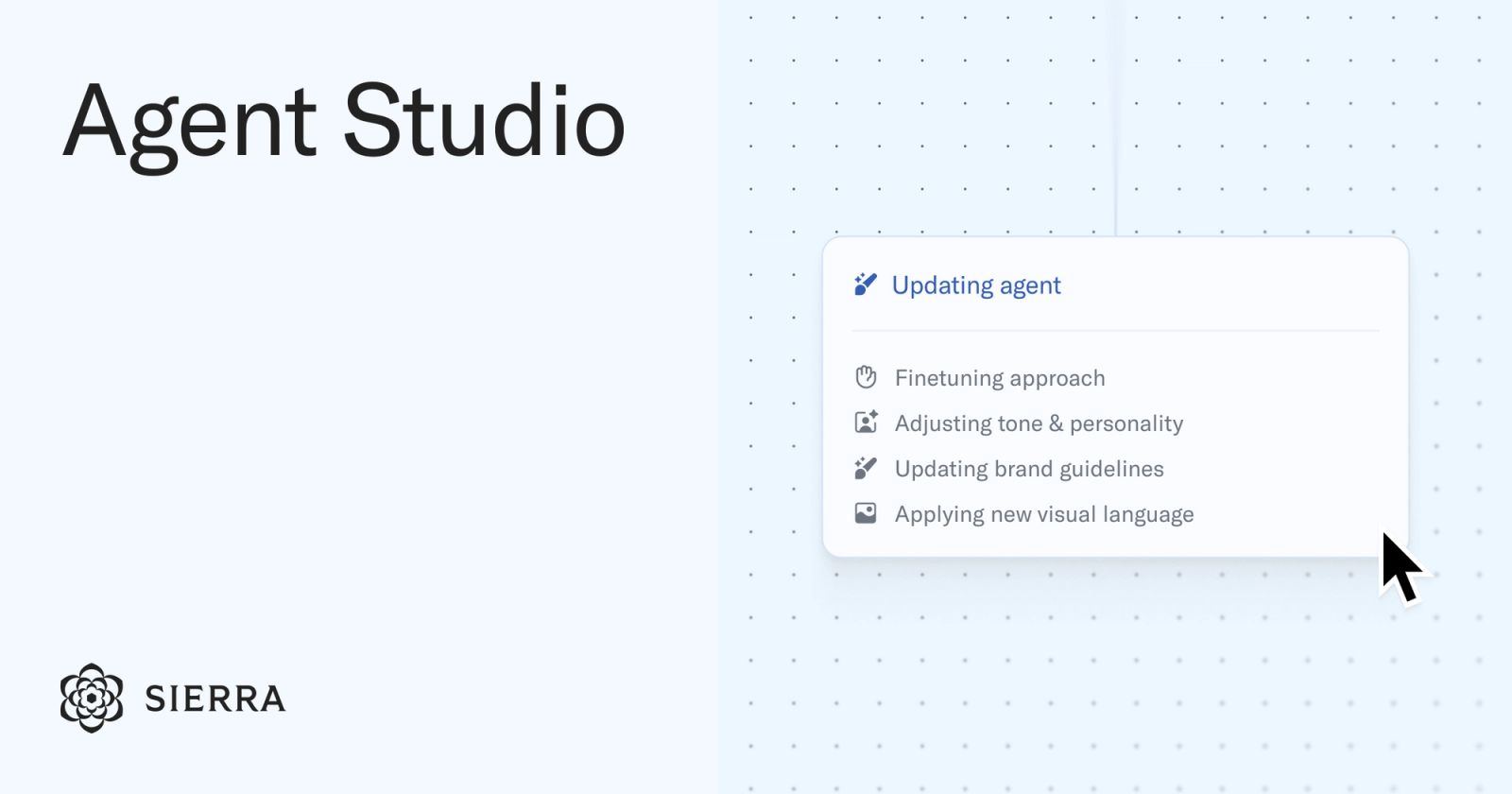
Official Sierra Agent Studio interface
Agent Studio

Agent Studio helps teams define behavior, connect systems and design the work an agent will handle.

A customer experience built around the business’s own operating rules.

Brex

Brex customers get back to running their business.

90% · Faster answers for customers

Brex’s case study connects faster answers for customers with more time for its engineers to build the spend management product.

Results reported by Brex and Sierra for this deployment. They do not guarantee the same outcome for every customer.

Casper

A mattress question does not keep office hours.

74% · Resolution rate during the Labor Day sale

Casper’s agent helps shoppers find answers on their own schedule. The support team can devote attention to the more complex requests.

Casper case study published by Sierra. The resolution rate covers a specific sales event, not an ongoing average.

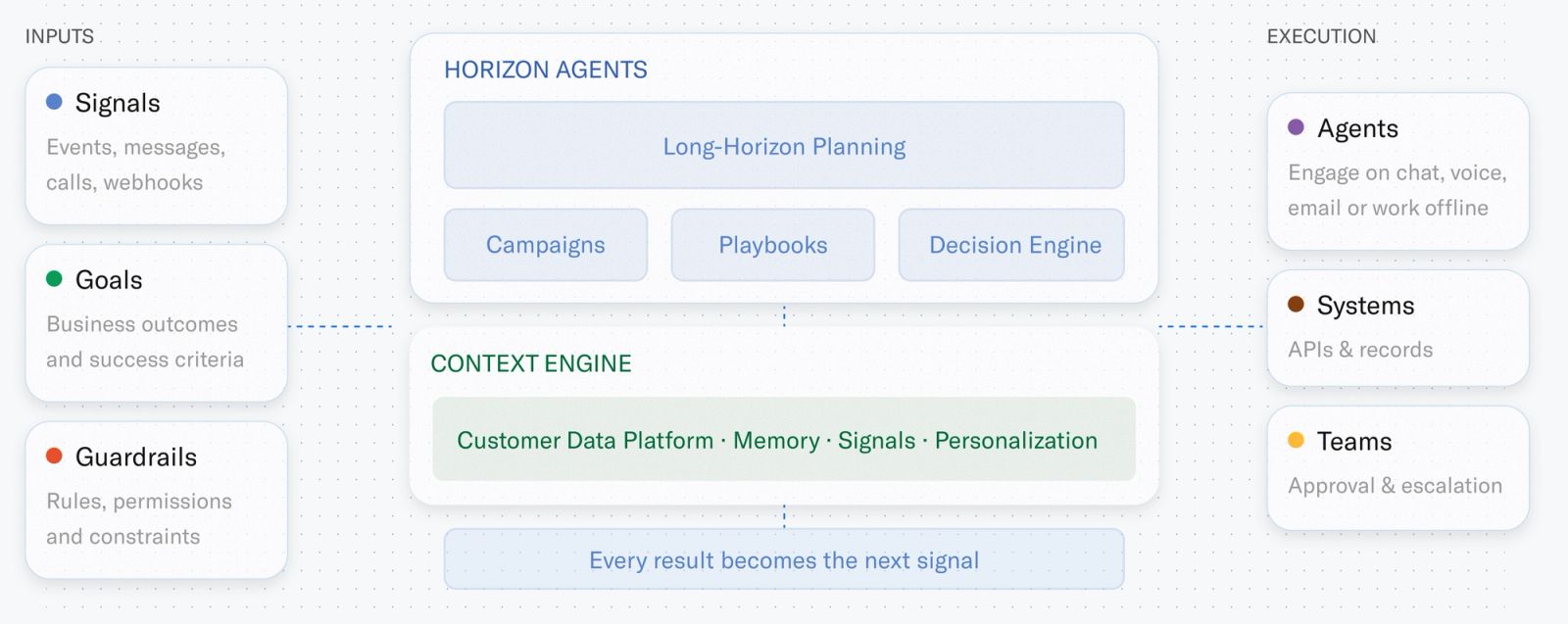
Sierra's architecture diagram: signals, goals and guardrails feed Horizon agents and the context engine, which act through agents, systems and teams
How a Sierra agent takes inputs and acts, in the company's own diagram from the Horizon launch, July 2026
02 / HOW IT BECOMES REAL

A reply is only useful
if the work gets done.

Follow one address change through five steps. This illustrative order shows the decisions and system actions behind a completed request.

  1. 01

    Understand what the customer needs changed.

    “I travel tomorrow. Can I change the delivery address?” The request is to update an order. Identify the intended action and the information needed to carry it out.

  2. 02

    Find out what the agent is allowed to do.

    Verify the customer, check whether the order has shipped and apply the company’s address-change policy.

  3. 03

    Update the order itself.

    Write the permitted change to the connected system, then check that it succeeded. Requests outside the agent’s authority need a human handover.

  4. 04

    Confirm the result in plain language.

    Tell the customer what changed and where to find it. If a person needs to take over, pass along the context so the customer does not have to start again.

  5. 05

    Learn from the request it could not finish.

    Review conversations and completed outcomes. Use unresolved cases to improve policies, system connections and the agent’s behavior.

Follow the work, step by step

A cost every consumer business carries

Sierra starts from a cost almost every large consumer business carries. Bret Taylor estimates that $400 billion is spent on customer service each year, and he has called it something very expensive that no one likes much. Earlier chatbots could answer a question or send a help article, but a customer who wanted to change a delivery or fix a broken device still waited for a person. Sierra's founding bet, set out at its launch in February 2024, is that talking to an AI agent will become the main way people deal with brands, not only for service but for every part of the customer relationship.

We think that conversational AI will become the dominant form factor that people use to interact with brands

Bret Taylor · Co-founder and CEO, Sierra · Interview at the company launch · 2024-02-19

What sets Sierra apart is its view of what an agent is for. The founders wrote that answering questions is easy and that building lasting relationships with customers is much harder. Sierra connects its agents to systems of record, from order management to the CRM, so they can process an insurance claim, return an order or originate a mortgage from start to finish. It prices the work the same way: customers pay when the agent resolves the issue, and in most cases nothing when the conversation is escalated to a person.

Why it became possible now

Two things changed. Large language models let software hold a natural conversation, understand context and sense frustration. And Sierra worked out how to make that behaviour safe enough for banks and health insurers. Its founders wrote in 2024 that agents break the usual rules of software: they are goal-based, non-deterministic, slower and more expensive. Their answer is to state the goal (help this customer return an order) together with fixed rules the agent cannot cross (returns only within 30 days of purchase), and to have people who know the business review conversations, because judging an agent is rarely a technical task.

One request, followed through

Take an illustrative request: a customer travelling tomorrow asks whether the delivery address can change. The agent first works out that this is a request to update an order, not a question about shipping. It checks who the customer is, whether the order has shipped and what the company's address policy allows. If the change is permitted, it writes the new address into the order system and confirms it in plain words. If not, it hands over to a person with the conversation attached. Unresolved cases go back into review, where policies, connections and behaviour are adjusted. That review is where human judgement now sits: deciding what the agent may do, and noticing when it got something wrong.

Sierra is stretching the same idea across time. Horizon, announced in July 2026, gives an agent a goal such as a loan, a claim or a renewal and lets it plan and act over weeks or months, drawing on a context engine that joins every past call, chat and email with the company's own customer and billing data. The founders' summary of the strategy is to rent the intelligence and own the context: the models come from OpenAI, Anthropic and others, and the lasting asset is what a company learns about each of its customers.

The evidence that agents finish work comes from Sierra and its customers: Singtel's agent resolved 73% of mobile and home troubleshooting cases without a care officer in its first six weeks, and Casper's resolved 74% of inquiries during its Labor Day sale. These are single deployments over short windows. A Korean buyer will ask what resolved means in its own contact centre; Sierra agrees the criteria for each outcome before launch.

Whatever the title, a Korea hire at Sierra works on one question: which customer job can an agent finish for this company, and how will both sides know it did. Sellers write that definition into the deal, sales engineers show it working, and strategists and engineers make the agent meet it in production.

Understand the products and their customers

Sierra sells one platform, which it calls Agent OS, together with a team that helps each customer use it. The platform builds an agent once and runs it on the phone, in chat, by email and on WhatsApp, in 59 languages and around the clock, connected through more than 40 ready-made integrations to knowledge bases, systems of record and contact centres. The team is the agent development team of strategists and engineers, which the company says has supported hundreds of deployments. Four products matter for a reader in Korea.

Four products, one way of building

Agent Studio is where an agent is built and managed without writing code. A customer experience team sets the goals, the brand voice and the steps; developers can go further with Sierra's software kit, where every goal sits beside fixed guardrails. Version 2.0, launched in November 2025, aims to turn agent building into a product rather than a project, in the founders' comparison what Shopify did for e-commerce, and its Insights tool reviews live conversations to suggest improvements.

Ghostwriter builds agents from a plain-language request. Introduced on 25 March 2026 as an agent that builds other agents, it takes a description of the job and creates and deploys a specialised agent. In September 2026 Sierra made it an always-on teammate in Slack and Teams that reviews conversations and outcomes, spots patterns and proposes changes for people to approve.

Horizon is the July 2026 bet on longer work: an agent is given an outcome, such as a mortgage, a claim or a renewal, and plans and acts across days or months. One design partner, a US healthcare provider, uses it to schedule referrals from primary care physicians to specialists, a task that can take dozens of calls and texts. BBVA launched the first long-running Horizon agent in 30 days for customers in Spain and Argentina. Customers pay for the business outcome, and Sierra carries the cost of model tokens.

Multimodal agents, announced in September 2026, put voice, text and visuals into one conversation, so customers get the best of each medium without picking one. Taylor said in May 2026 that Sierra had digitised the last analog channel, the telephone line, and that its agents are naturally multilingual. At the 2026 Summit the company said one large subscription business raised its resolution rate by over 50% after deploying Voice Personas.

Who buys it, and what was measured

Sierra's buyers are large and often regulated. One in four of its customers had revenue above $10 billion in February 2026, and by October it said it worked with almost 50% of the Fortune 50; the company also counts one in three leading banks among its customers. Brex says its customers now get answers 90% faster, saving those customers over 15,000 hours a year. Rocket Mortgage clients who use both the AI chat and a banker convert four times as often in refinance lead-to-application and purchase lead-to-PAL, and its assistant handles more than 400,000 successful chats a month. Cigna went into production in eight weeks and cut the time to authenticate a patient by 80%.

The Asian references a Korean buyer will ask about

The Asian cases come closest to what a Korean buyer will want to see. Singtel began a pilot in late January 2026 on its Singapore assistant, Shirley, which understands Singlish; it went live in under 10 weeks and in its first six weeks handled over 70,000 cases, resolving 73% of mobile and home troubleshooting cases and completing 76% of roaming sign-ups without a care officer. SoftBank reported a 97% resolution rate and 93% satisfaction in a LINEMO customer-support deployment, and in July 2026 became Sierra's exclusive distributor in Japan. In Thailand, LINE MAN Wongnai chose Sierra for a rider-support agent after a head-to-head evaluation, then invited it into roadmap and AI strategy work.

They engage on our roadmap and AI strategy as a partner, not a supplier.

Werapong Goo · Managing Director of On-Demand Services, LINE MAN Wongnai · Customer story published by Sierra · 2026-07-28

Every figure here is published by Sierra or by the customer, for one deployment and often for its first weeks. SoftBank's two sets of numbers come from two different deployments and should not be added together. In an interview, ask which outcome a Korean contract would pay for and how it would be measured.

03 / THE EVIDENCE

The story, in numbers.

DATED OBSERVATIONS

ARR (annual recurring revenue)

USD · M
ARR (annual recurring revenue)2025-11-21: $100M; 2026-02-06: $150M+; 2026-08-31: $200M$100MNov 2025$150M+Feb 2026$200MAug 2026

Sierra's own ARR milestones. ARR is the yearly value of recurring contracts at a point in time, not revenue recognised over a finished year. The February 2026 point is a floor (over $150M). These are dated disclosures, not a continuous growth record.

Figures, dates & basis +
ARR (annual recurring revenue)
DateValueBasis
2025-11-21$100MARR reached $100M seven quarters after the February 2024 launch, per the company.
2026-02-06$150M+Over $150M at the start of the third year, per the company.
2026-08-31$200M$200M in nine quarters, stated by the company when it announced its CFO.

Sierra

DATED OBSERVATIONS

Valuation at each funding round

USD · B
Valuation at each funding round2024-01: $1B; 2024-10: $4.5B; 2025-09: $10B; 2026-05: $15.8B$1BJan 2024$4.5BOct 2024$10BSep 2025$15.8BMay 2026

Round valuations, not revenue. Values are as reported at each round; the May 2026 point is the post-money figure reported by the press, against the company's own "over $15 billion". These are dated disclosures, not a continuous growth record.

Figures, dates & basis +
Valuation at each funding round
DateValueBasis
2024-01$1BValuation in January 2024, as reported in the press in October 2024.
2024-10$4.5B$175M round led by Greenoaks Capital.
2025-09$10B$350M round led by Greenoaks, per the company.
2026-05$15.8B$950M round led by Tiger Global and GV; $15.8B post-money per the press, over $15 billion per the company.

CNBC · Sierra

More than $150M in reported ARR

Sierra announced ARR above $150M in its year-two review, after reaching $100M in seven quarters. ARR annualizes recurring business; it is not recognized revenue for a completed year.

Capital for the next deployment cycle

Sierra announced $950M of funding at a valuation above $15B. The valuation belongs to that financing round; it is neither revenue nor a promised investment return.

A Seoul launch with local work ahead

Sierra announced its launch in Korea on August 25, 2026. The announcement connects its agents with Korean enterprises and describes an outcomes-based commercial approach.

Read the growth story

Paid when the work is done

Sierra makes money from enterprise contracts priced by outcome. A customer pays when the agent completes a defined piece of work: a resolved support conversation, a saved cancellation, an upsell or a sale. If the conversation is left unresolved, or is escalated to a person, in most cases there is no charge. Simple routing or greeting conversations can instead be priced per conversation, in what the company calls a blended approach, and the criteria for each outcome are agreed before launch. Fees vary with the complexity of the task, and with Horizon Sierra carries the cost of model tokens itself.

The model is also a sales argument. Older service software is sold by the seat, so a vendor whose AI works well shrinks its own licence revenue; Sierra tells buyers to ask incumbents how much their seat bill will fall. An industry analyst read the September 2026 OpenAI marketplace listing the same way: outcome pricing answers the buyer's demand to prove the return.

we charge by results not usage.

Clay Bavor · Co-founder, Sierra · Korea launch post · 2026-08-25

How fast the number has grown

The number Sierra reports is ARR, annual recurring revenue: the yearly value of its recurring contracts at a point in time, not revenue recognised over a finished year. ARR crossed $100M in November 2025, seven quarters after the February 2024 launch, passed $150M in February 2026, and stood at $200M in nine quarters when the company announced its new CFO on 31 August 2026. These are the company's own figures.

Investors have priced that growth steeply. Sierra was valued at $1 billion in January 2024, at $4.5 billion with a $175M round in October 2024, at $10 billion with $350M in September 2025, and at over $15 billion with a $950M round in May 2026 led by Tiger Global and GV; the press put that round at $15.8 billion post-money. The company says it now has more than $1 billion to invest. Taylor has said a public listing is definitely in Sierra's future, and that staying private is an advantage for now.

Who else sells this, and where Sierra stands

The field is crowded and well funded. Decagon passed $100 million in annualized revenue by August 2026 and sells speed with less hand-holding. Salesforce reports Agentforce above $1 billion in ARR and agreed in June 2026 to buy Fin, the customer agent business formerly known as Intercom, for approximately $3.6 billion. Rivals publish prices per resolution: Intercom charged 90 cents for most resolutions in 2025. An independent newsletter described Sierra in August 2026 as bigger and better funded than Decagon, with three times the funding and, by a source close to the company, well over $200 million in annualized revenue. In Korea, OpenAI, Anthropic and Salesforce were already selling enterprise AI to Korean companies when Sierra arrived.

We are multiples larger than the next biggest and are trying to invest aggressively

Bret Taylor · Co-founder and CEO, Sierra · Television interview on the $950M round · 2026-05-04

Three risks matter for someone joining. Delivery is labour-heavy: the press reports that vendors including Sierra keep forward-deployed engineers tuning customer agents, and Sierra absorbs unresolved conversations and token costs. Prices face pressure as large suites bundle agents. And trust is the product: an agent that misstates a policy damages the brand it speaks for, while Taylor chairs OpenAI's board as Sierra sells through OpenAI's marketplace, a conflict he said in 2024 he would recuse himself from.

Say ARR, not revenue, when you cite $200M, and give the date. Keep the valuation apart from the money raised. Be ready to explain why a buyer would choose outcome pricing over a seat licence, and what it would take for a Korean contact centre to agree on a definition of resolved.

04 / THE PEOPLE

Someone saw it first.

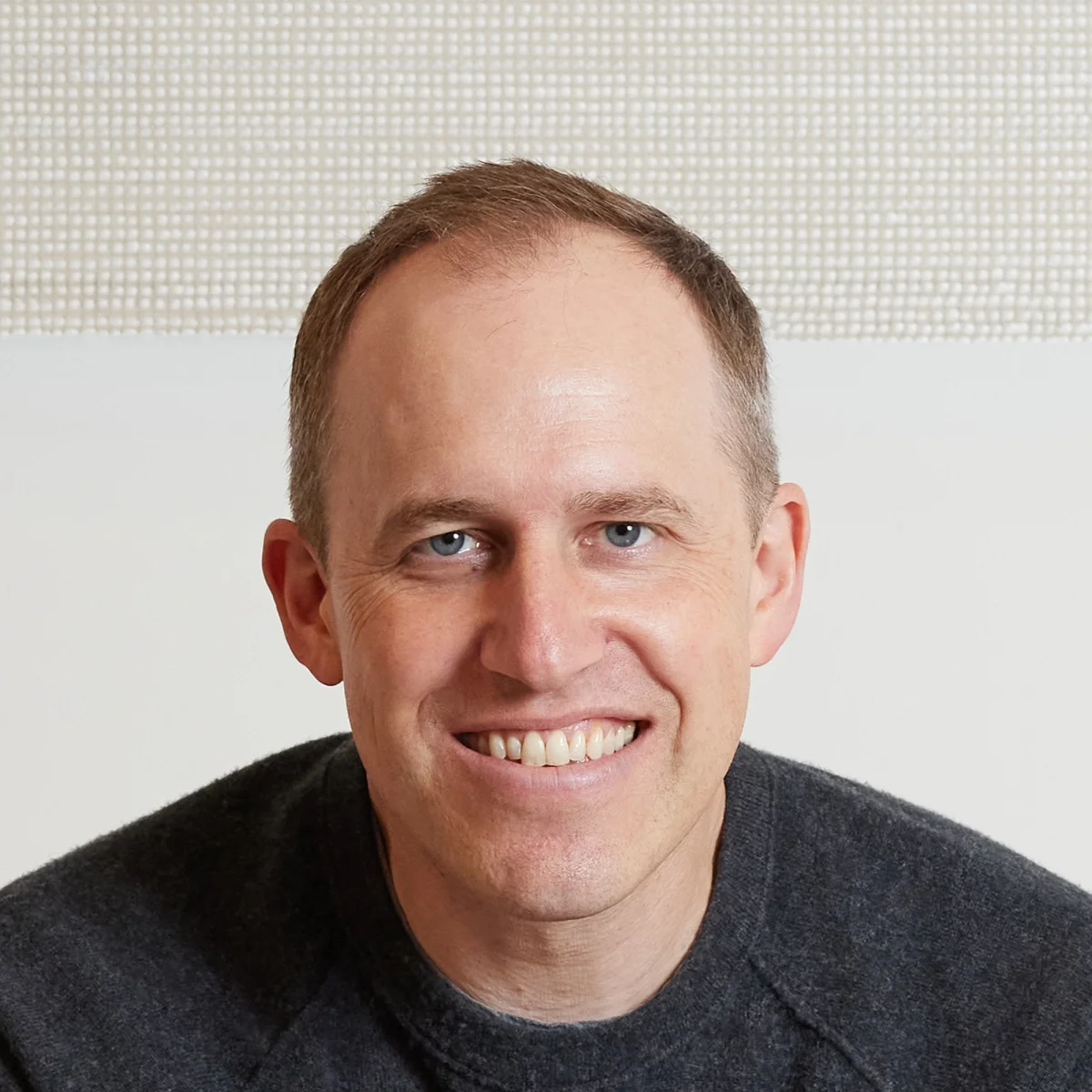
Bret Taylor, co-founder and CEO of Sierra
Co-founder and CEO

Bret Taylor

Former Salesforce co-CEO and Facebook CTO; co-created Google Maps.

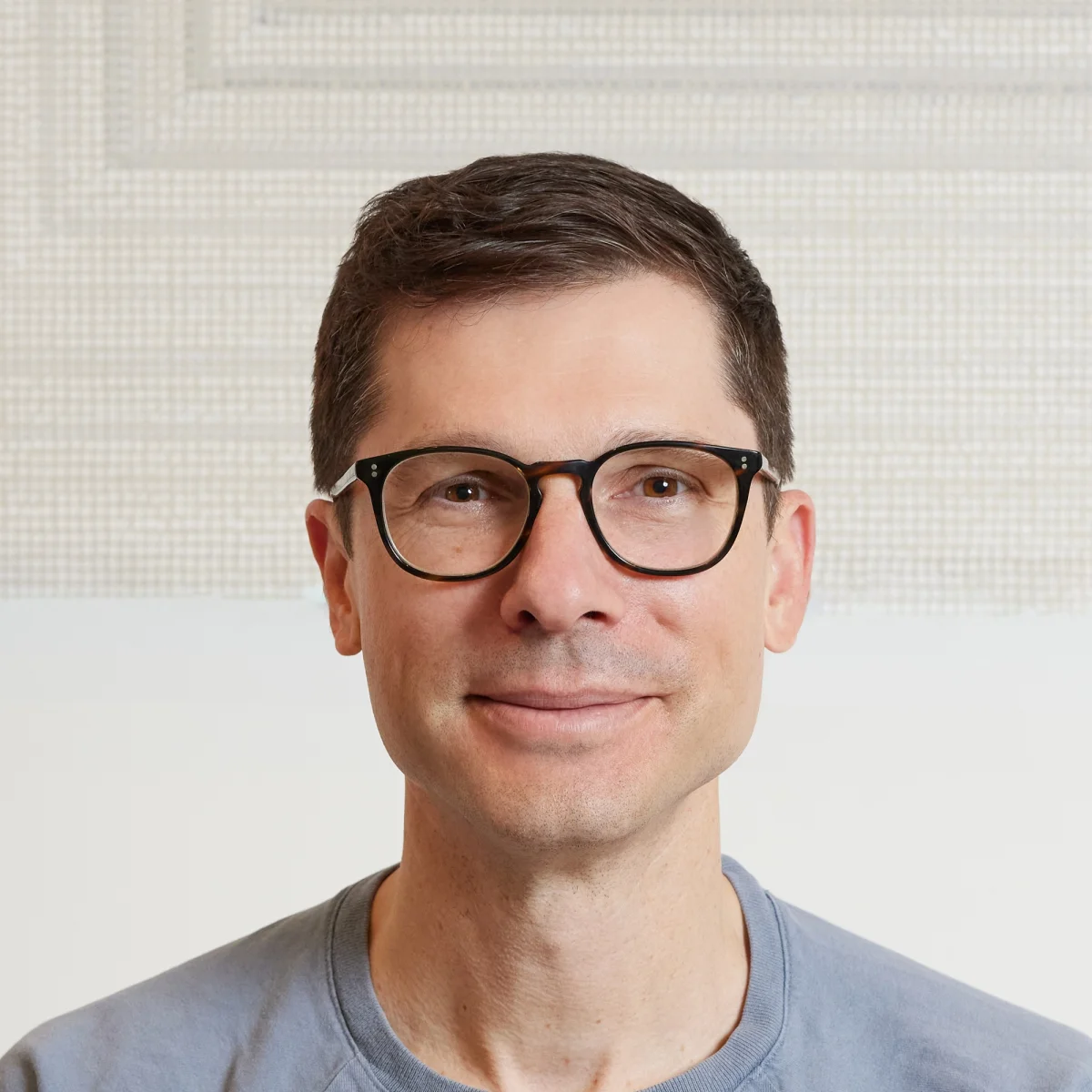
Clay Bavor, co-founder of Sierra
Co-founder

Clay Bavor

Spent 18 years at Google, leading product organizations including Google Labs and Workspace.

“We think that conversational AI will become the dominant form factor that people use to interact with brands”

Bret Taylor · Interview at the company launch · 2024-02-19
The decisions behind the company

Two Google colleagues and a lunch in 2023

Sierra was founded in 2023 by Bret Taylor and Clay Bavor, who first met while working at Google. Taylor, the chief executive, co-created Google Maps, was chief technology officer of Facebook, founded Quip and was co-CEO of Salesforce; he also chairs the board of OpenAI. Bavor spent 18 years at Google, where he led Google Labs, started its AR and VR effort, Project Starline and Google Lens, and earlier ran product and design for Google Workspace. After Taylor left Salesforce in 2023, Bavor invited him to lunch, and they decided to start a company together.

They did not start from the technology. By their own account the company began with a series of conversations, and a Korean-language magazine profile reports that they asked business leaders to name the hardest problems in running their companies. Customer service kept coming up; the profile says the chief executive of Grab described the difficulty of serving users, drivers and merchants across many languages.

being intensely customer-led.

Clay Bavor · Co-founder, Sierra · Published interview with both founders · 2024-02-21

Decisions that explain the company's shape

Four decisions shape the company a Korea hire would join. First, Sierra builds on foundation models from OpenAI, Anthropic and others, a constellation of models with its own fine-tuned layers on top. Second, it chose the enterprise: in February 2026 half of its customers had revenue above $1 billion. Third, it charges for outcomes, which ties its revenue to whether the agent actually works. Fourth, it delivers with people. It built a team of agent engineers in 2024, and the Agent Strategist, a role the company says barely existed a year earlier, was its fastest-growing team by May 2026.

Beyond the founders, the newest senior hire is Julia Brau Donnelly, chief financial officer since August 2026 and formerly CFO of Pinterest. The founders introduced her with the culture they hire for: low ego, high agency and a readiness to roll up her sleeves. Sierra also buys teams to move faster: Fragment in Paris in April 2026 and Takeoff in July 2026, whose team is building Horizon.

How Sierra says it works and hires

Sierra prints five values in every job posting: Trust, Customer Obsession, Craftsmanship, Intensity and Family. Customer Obsession says everyone at the company spends time with customers, and that when a customer has an issue, people drop everything to fix it. Craftsmanship asks for the details to be right, from the words on the page to the system architecture. Intensity says the company does not have the luxury of patience and talks about failures openly and without blame. Family says balance and intensity are compatible. The company works mostly in person, interviews take place at one of its offices, and each signed deal is celebrated with an alphorn; free alphorn lessons are listed among the benefits.

Hiring is changing with the tools. Bavor said in July 2026 that some of the most effective people at Sierra are 22 or 23 years old and fluent with AI tools, that the engineering interview had been rebuilt around such tools, and that he expected every interview to carry an AI-native component within two months. The Korea sales engineering posting applies the same rule to client work: use AI tools freely, but own the accuracy of anything shown to a customer.

We're going to pay for your tokens and then build it. Tell us how you went through building it

Clay Bavor · Co-founder, Sierra · Podcast interview, describing Sierra's new engineering interview · 2026-07-06

On the worry that headquarters decides and Seoul only executes: the founders' habit is to give early staff large scope, and Taylor describes the graduate programme as offering an irresponsible amount of responsibility. The Korea postings ask the sales leader to build the local team and the sales director to help define the sales motion, and they ask strategists and engineers to send what they learn from Korean customers back to the research and platform teams.

05 / THE NEXT CHAPTER

The platform is global.
The first useful job is local.

Korean workflows that deserve more than a translated demo.

Sales hiring
  • Regional VP, Sales
  • Enterprise Sales Director
Customer technical hiring
  • Enterprise Sales Engineer
  • Agent Strategist
Engineering hiring
  • Software Engineer, Agent

Team view built from Sierra's Korea launch post, the Korean company registration as reported in the Korean press, and the employer's job board, read up to 2026-10-07; it lists what those sources name, not headcount, and does not establish reporting lines.

Why Korea? Why now?+

Signet reads three reasons in the sources. The first is the company's own: Sierra sells to large, often regulated companies, one in four of its customers had revenue above $10 billion in February 2026, and Clay Bavor's launch post describes Korea as home to some of the world's most complex businesses across the largest industries. The second is sequence. Taylor said in 2024 that addressing the market meant expanding internationally, the September 2025 funding post named a larger presence in Asia, offices in Japan and Singapore opened in 2025, and Sierra's Asian references (Singtel in Singapore, SoftBank in Japan, LINE MAN Wongnai in Thailand) were in place before Seoul. The third is service culture: Bavor tied the launch to hwandae, the warmth that turns good service into great service, as Taylor tied the SoftBank deal to omotenashi in Japan. Signet's reading: Korea is staffed for direct enterprise sales and local delivery, not run through a distributor as Japan is.

International expansion named as the plan

Announcing a $175M round, Taylor said that addressing the market means expanding internationally and to other industries.

Asia named as a use of new funding

With $350M raised at a $10B valuation, Sierra said it would expand beyond its offices in San Francisco, New York, London and Atlanta to build a larger presence in Europe and Asia.

Japan through a distributor

SoftBank announced that it had begun offering Sierra's platform in Japan as its exclusive distributor.

Seoul office announced

Clay Bavor announced the Seoul office in a post published in English and Korean. Five Korea roles went up on the company's own job board the same day.

Korean company registered

A Korean business daily reported that 시에라테크놀로지스 유한회사 had been registered in Jongno-gu, Seoul, with a headquarters legal executive listed as a director.

Asia Pacific sales engineering lead posted

A Singapore posting for a Sales Engineering Manager, APJ, describes leading sales engineers across Southeast Asia, Australia and New Zealand, Korea and Japan.

Understand the Korea opportunity

A launch that followed a stated plan

Sierra announced its Seoul office on 25 August 2026, in a post signed by Clay Bavor for himself and Bret Taylor and published in English and Korean. The reason it gave was the shape of Korean business. The move had been signalled for two years: Taylor said in October 2024 that addressing the market meant expanding internationally, and the September 2025 funding post named a larger presence in Asia as a use of the money. Offices in Japan and Singapore opened in 2025, and in July 2026 SoftBank became Sierra's exclusive distributor in Japan.

South Korea is home to some of the world's most complex businesses

Clay Bavor · Co-founder, Sierra · Korea launch post · 2026-08-25

Signet reads three reasons behind the move. Sierra's customers are large, often regulated companies, one in four with revenue above $10 billion, which matches the businesses the launch post describes in Korea. Its closest Asian references are a telecom operator in Singapore, a telecom group in Japan and a super-app in Thailand, so Korea extends a pattern rather than starting one. And the launch post ties Korea to hospitality: Bavor wrote of hwandae, the warmth that turns a good service experience into a great one, much as Taylor spoke of omotenashi when the SoftBank deal was announced in Japan.

What is in place in Seoul

A Korean business daily reported in September 2026 that the Korean company, 시에라테크놀로지스 유한회사, had been registered in Jongno-gu, Seoul, with a headquarters legal executive listed as a director. Its stated purposes cover developing and selling conversational AI agent software, running agents over chat, voice, text message and email, customer support software as a service, and building and connecting custom AI software. Sierra also runs a Korean-language site that features paying by results. Five Korea roles went up on the company's own job board on launch day, and all five were still open on 8 October 2026.

Read together, the five postings describe a complete selling and delivery cell. The Regional VP, Sales is a player-coach who sells from day zero, owns the regional number and over the next year hires and develops account executives across Korea. The Enterprise Sales Director prospects, negotiates and closes large accounts and helps define the sales motion of an early team. The Enterprise Sales Engineer designs and demonstrates the agent in the earliest customer conversations. The Agent Strategist and the Software Engineer, Agent take a customer's agent from pilot to production and keep tuning it there. All five are on-site in Korea and ask for strong English and Korean.

Who you would work with, and what to watch

Beyond Seoul, the postings name the Sales, Product and Agent Engineering teams, RevOps, and the research and platform teams that take requests from customer work. A Singapore-based Sales Engineering Manager for Asia Pacific and Japan, posted in September 2026 and reporting to the Head of Sales Engineering, will lead sales engineers in Korea and Japan and partner with regional sales leaders, which places Korea inside an Asia Pacific structure. Korean buyers already hear from OpenAI, Anthropic and Salesforce, so Signet reads the first year's task as winning Korean reference customers against vendors that arrived earlier.

On the fear of a satellite office: a registered Korean company, a Korean-language site, five on-site roles that include delivery engineers, and an Asia Pacific sales engineering lead are commitments beyond a sales outpost. The questions worth asking in an interview are who the Regional VP reports to, which industries Seoul will go after first, and how the quality of Korean-language conversations will be measured.

In any of the five seats, the work is the same: find a Korean customer job an agent can finish, agree how success will be measured, and help take the agent live in weeks, the speed Sierra promises its customers.

KOREA OPEN ROLES

5 open roles in Korea

Current Signet catalog · 2026-10-19

FOR YOU

Choose the role that matches your contribution from selling to delivery.

Solutions Engineer

Agent Strategist

South Korea (On-site)

Posting checked

The work
Own a customer’s agent scope, design, evaluation and launch.
Who fits
Customer focus and relationship building in complex organizations.
Keep in mind
Own conversation design, evaluation, launch and production iteration; agent-building experience preferred.
GTM · Sales · BD

Enterprise Sales Director

South Korea (On-site)

Posting checked

The work
Find enterprise buyers, negotiate deals and shape Korea’s sales motion.
Who fits
At least ten years of enterprise customer-facing sales identifying and closing large accounts.
Keep in mind
On-site Korea; work with legal, finance, product and technical teams.
Solutions Engineer

Enterprise Sales Engineer

South Korea (On-site)

Posting checked

The work
Design and demonstrate agents in the first buyer conversations.
Who fits
Five to seven or more years in sales engineering, solutions engineering or customer-facing technical sales.
Keep in mind
Use AI tools and own the accuracy of customer-facing work.
See all 5 roles
GTM · Sales · BD

Regional VP, Sales

South Korea (On-site)

Posting checked

The work
Sell directly while building Korea’s sales team.
Who fits
The posting asks for 10 to 15+ years of enterprise customer-facing sales experience identifying and closing large accounts.
Keep in mind
On-site Korea; close deals directly while hiring and developing AEs over the next year.
Engineering · AI

Software Engineer, Agent

South Korea (On-site)

Posting checked

The work
Build and evolve customer agents from pilot through production.
Who fits
Build and scale end-to-end production systems.
Keep in mind
Customer-facing; own the agent lifecycle from pilot through production deployment and continuous iteration.
07 / NOW & NEXT

The next scene is taking shape.

AI that spots what to improve in customer conversations.

Ghostwriter collaboration features for Slack and Teams were announced. They review conversations and outcomes to suggest improvements, with a wider rollout planned for the following week.

Voice, text and visuals in one conversation.

A conversational experience combining voice, text and visual information without requiring customers to keep changing channels.

Working with Korean enterprises, from Seoul.

Sierra announced a Seoul office and plans to apply AI to complex enterprise workflows and customer experiences in Korea.

More context on what comes next

From answering to selling

Read against the thesis, the last three months tie together. In July 2026 Sierra launched Horizon and bought Takeoff, whose team is building it, moving agents from one-off conversations toward long-running work paid by business result. On 31 August it said ARR had reached $200M in nine quarters and named a CFO. In September it added multimodal agents, turned Ghostwriter into an always-on teammate in Slack and Teams, and passed an AIUC-1 audit for AI agents on top of its SOC 2 Type II, ISO 27001 and ISO 42001 certifications.

New ways to reach buyers

Two moves change how Sierra sells. On 29 September it became a launch partner of OpenAI's new marketplace, so eligible companies can pay for Sierra agents from their existing OpenAI commitments. On 6 October it described a partner programme in which its agent development team works alongside consulting firms and systems integrators, and announced the Personal Agent Protocol, an open standard Sierra and Meta are developing with Genesys, Instinct, Rocket, Shopify, Stripe and Walmart for how a consumer's own AI agent deals with a company. Version 0.1 of the specification was planned for the end of October.

For a candidate, the product you would sell or build in Korea is now broader than customer support: it includes long-running agents for sales and retention, voice, and a builder that proposes its own improvements. Expect interviews to test whether you can explain each to a cautious buyer.

Three things to watch over the next year

Taylor's own view of the market cuts both ways. At Davos in January 2026 he said AI is probably a bubble, with both smart money and dumb money funding competitors at every layer, and also that the industry is at the beginning of the curve.

  • Korean references: which Korean company goes live first, in which industry, and whether it happens in the weeks Sierra promises.
  • Direct sales or partners: Japan sells through SoftBank as exclusive distributor while Korea is staffed for direct sales; watch whether Korean consulting firms or systems integrators join the new partner programme.
  • The economics of outcomes: whether growth beyond $200M ARR holds while Sierra carries token costs and rivals sell per resolution, and whether the company moves toward a public listing.

Their future. Your next chapter.

Find your part ↑

An independent profile by Signet. No affiliation or investment recommendation. Introductions happen only with your consent.
Research reviewed 2026-10-07

A LITTLE MORE CONTEXT

Understanding Sierra.

What does Sierra do?

Sierra builds AI agents for customer service that work with a business’s systems and policies to resolve requests and complete tasks.

What is the opportunity in Korea?

Korean workflows that deserve more than a translated demo.

Are these confirmed job openings?

Employer postings were checked on 2026-10-08. Availability can change. Mock applications request a review from Signet.

How can I explore the company in more depth?

Follow the company from its vision through products, evidence and people to the Korea team and current roles. Use the table of contents to move within the page, and expand the sections for more context.

Back to the collection ↗