Why Korea came first
By the founder's account Korea was a country he had never been to before choosing it, and the reasons he gave in 2020 and 2025 come to four: Koreans want to speak English more than people elsewhere, to the point of an obsession in his 2025 word; they adopt good products early; Korea is a trendsetter for Asia, so success there should carry elsewhere; and a crowded market is a big market, where a better experience can beat the number one. A technical reason sits underneath: in 2021 he noted that phone assistants understand American English better than Korean accented English, an opening for a model trained on Korean learners.
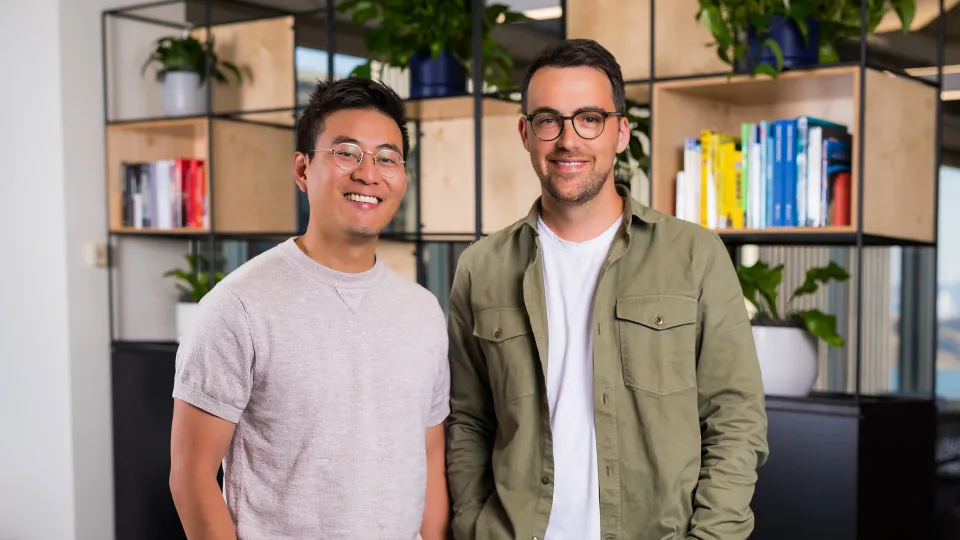
Speak reached its present position thanks to Korea. Korea was our first market and is still the strongest, and we are very hopeful about its future growth.
Connor Zwick · Co-founder and CEO · Statement quoted in Korean by Edaily after the Series C; translated from Korean by Signet · 2024-12-19
What Korea gave the company
Korea gave the company a product tested in a demanding market and a revenue base. Speak launched there at the end of 2019, and a company release issued in Korea put first half 2023 revenue at 2.05 times the year before. By January 2024, 5M of the app's 7M downloads were in Korea. Every measure found shows Korea as the largest part of the business, up to the last date measured.
Enterprise is the newer layer. Speak for Business was formally launched in Korea on 15 October 2024, but in late September 2024 the CEO already said eight of Korea's ten largest companies used it; the claim was repeated in December 2024 and September 2025. Named Korean customers include POSCO International and Naver Webtoon, and the Korean business page shows employer logos and short HR quotes, among them KRAFTON and LG U+. The page sets a 15 learner minimum and a dedicated manager; announced programs have been one month challenges.
Who is in Seoul, and who is being hired
On 6 October 2026, LinkedIn’s South Korea filter showed 42 profiles with titles in marketing, B2B sales, customer success, people, learning content and finance. Earlier press put the Korea branch at 20 to 25 people in February 2024, and pension-based job databases showed 35 to 44 for the Korean subsidiary in 2025. The Seoul office is in Seongsu, described on the careers page as home to the marketing and operations teams.
What the first hires are for shows in the postings. On 8 October 2026 Speak's own job board listed 11 Korea openings: seven hybrid roles in Seoul and four remote contracts. Five sit on the B2B team and form a sales chain. The sales development representative qualifies leads and closes transactional deals; the account executive needs five years of closing new and upsell business in HR, learning and development or related software, selling to companies with 5,000 or more employees on cycles of 3 to 12 months; the customer success manager owns renewals; the senior field marketing specialist builds enterprise pipeline; and the Head of APAC Sales manages the account executives and an SDR team leader directly. Around that chain sit a Head of Marketing for the consumer business, an APAC people operations generalist and four contracts that localize lessons and design curriculum across Korean, Japanese and Chinese. Read together, Speak is staffing its Korea business seat by seat, with the employer product at the center. That is Signet's reading.
The job description calls Speak the number one language learning app in Korea. Sensor Tower estimated that Speak led Korean education apps by app-store revenue from 16 March 2022 to 15 March 2023. This is a dated revenue estimate. App Store charts measure a different ranking that changes over time, so the metric and period behind the hiring claim deserve a separate check.
For the worry that Seoul is a satellite: the Korean subsidiary has existed since 2020, Korea supplied most downloads and, to 2023, most store revenue, and the company is hiring across the sales chain there. Against it: the Head of APAC Sales and APAC people operations postings also cover Japan and Taiwan, the sales one adds future emerging markets, and the newest consumer push targets English speakers in the United States. Korea looks core today; the current numbers are worth asking for.