Three doors onto one network
Telnyx sells many products, and a buyer meets three doors. The oldest is programmable telephony: phone numbers, the Voice API and SIP trunking, which connects a company's phone system or contact center to the public phone network. The second, launched in February 2025, is Voice AI Agents, assistants that answer or place calls with speech recognition, speech generation and orchestration in one stack. The third is Inference: open-weight models served on GPUs Telnyx owns, through an interface compatible with OpenAI's. Messaging, IoT SIMs, an Email API and Edge Compute sit around them, so one contract and one bill can cover a whole customer workflow.
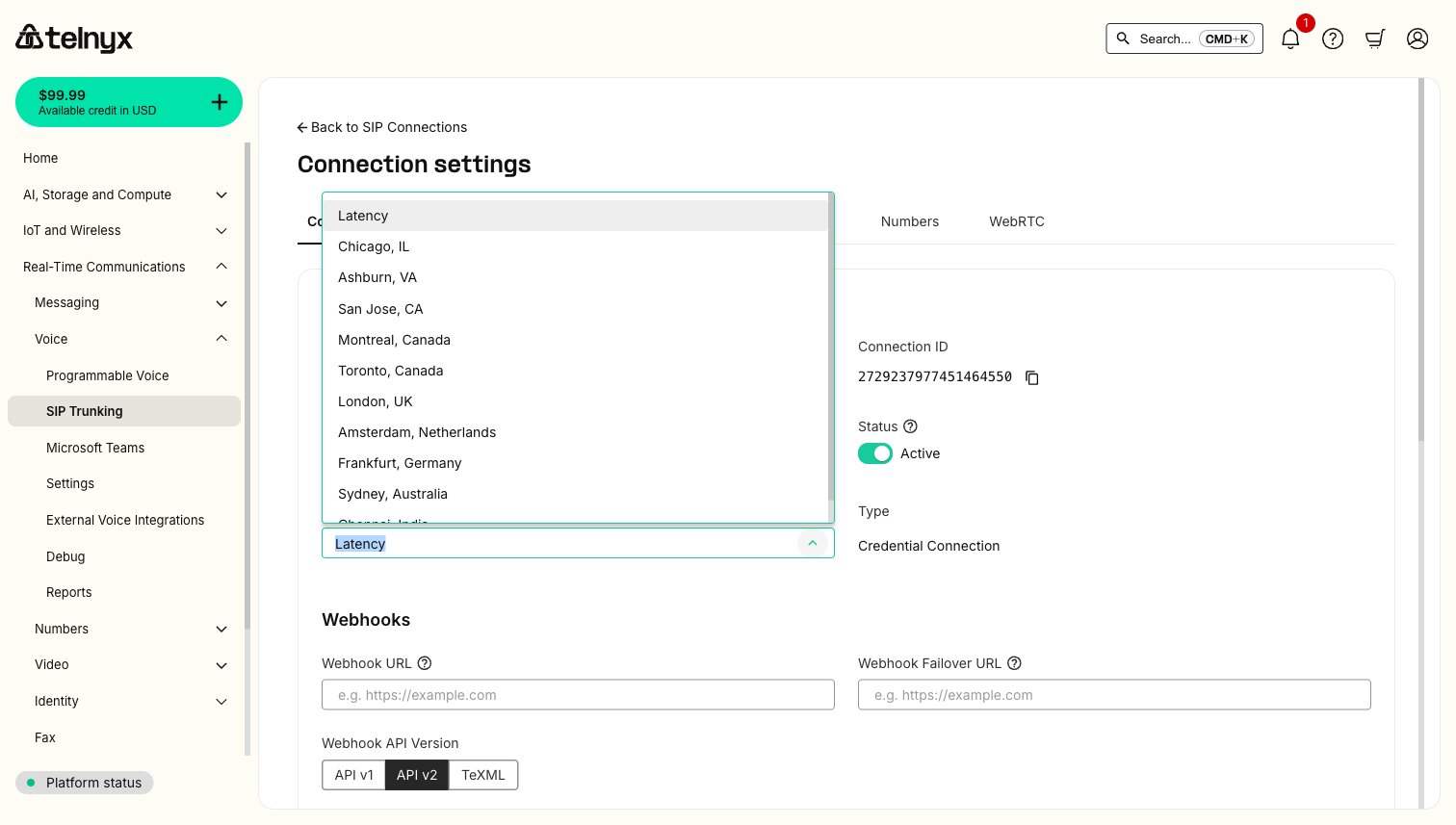
SIP trunking is where the network shows. A customer points its phone system at a Telnyx connection, and the portal lets it choose which point of presence carries the call's media, either automatically by measured latency or by picking a site. Local numbers come from Telnyx in 140+ countries, according to its network page. This door competes with other carriers and communications platforms on price, reach and uptime. Casem says carrier-grade infrastructure ensures five-nines uptime, meaning 99.999 percent.
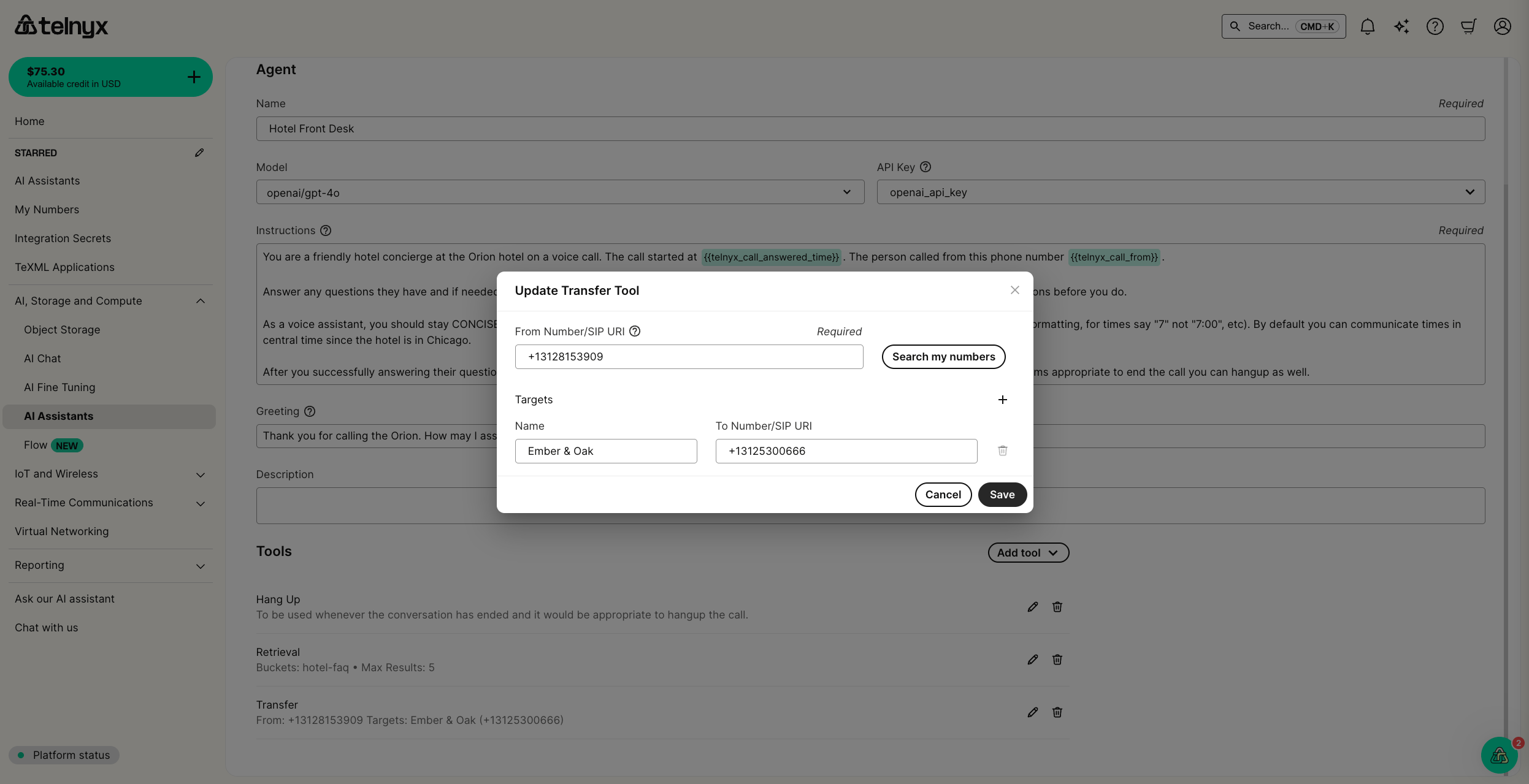
Voice AI Agents list $0.05 per minute for the voice engine, including orchestration, speech-to-text and text-to-speech. Model tokens and telephony are billed separately. Telnyx's pricing example estimates about $0.06 per minute for a US-local inbound call using Kimi with a stated token and caching profile. Voice-engine billing rounds each call to 60-second increments, so short calls can cost more than the estimate suggests. The product page advertises 1,400+ voices and 80+ languages. A builder picks a model and voice, writes instructions, adds a knowledge base and tools, and attaches a phone number. A Korean deployment needs its own measured cost and language evaluation.
Models, and engineers as part of the deal
Inference is the newest door and connects the model choice with the deployment location. The Seoul posting lists GLM, Kimi, DeepSeek, Qwen and MiniMax through Telnyx Inference and describes self-hosted models for sovereign-cloud or air-gapped customer environments. Telnyx also offers Forward Deployed Engineering as professional services. Its current FAQ makes free help available to customers and prospects with a Voice AI use case and a minimum $5,000 monthly communications spend with Telnyx. It describes initial prototypes in days and full deployments spanning weeks to months. These are the company's offered terms and delivery expectations; the actual scope is agreed for the customer project.
Who buys it, and what the cases show
The named customers fall into two groups. Platform and reseller companies make up most of the stories. Cisco has run communications on Telnyx for over five years, from SIP trunking and numbers to private connections and messaging across three continents, and the case lists 500 concurrent ports on a high-availability pair and 10 calls per second per trunk. Dialpad started with SIP trunking into Mexico and launched its own AI agent platform in 2026. UpLync, a small hosted voice provider, says 98 percent of its backend runs on Telnyx.
The second group is newer: companies buying voice AI for a specific language or rule. Alibaba.com's team in Pakistan had over 100 sales representatives making roughly 50 outbound calls a day each, about 5,000 calls, mostly in Urdu. Alibaba's team and Telnyx's solutions engineers worked through prompt versions, Urdu dialect edge cases and speech settings until recorded calls passed internal QA. Agents now qualify leads in Urdu and English before handing promising ones to people, and the same setup is scoped for Vietnam and India.
Noota's case connects the network choice with procurement. The Paris-based AI notetaker previously processed part of its phone audio through US infrastructure. Its enterprise buyers in France wanted European storage and processing. The vendor-written account says moving core telephony to Telnyx's European infrastructure helped those deals start closing and reduced voice-quality complaints and troubleshooting. It also describes plans to add automated recruiter screening on the Inference API. That planned service is a next step, while the telephony migration is the reported completed change.
Reinvent Telecom evaluated more than 20 vendors before building a white-label AI receptionist on Telnyx, and closed its first order on launch day.
The cases support different kinds of evidence. Cisco's 500 concurrent ports and 10 calls per second are a production specification; Alibaba describes a QA process and current lead qualification; Reinvent reports an initial order on launch day. Signet reads the Alibaba and Noota stories as useful analogies for a Korean enterprise discussion: agree the language test, data-processing location and business workflow, then iterate with the customer until its test passes. The analogy guides preparation. Each case remains the customer's vendor-published account, with its own scope and date.