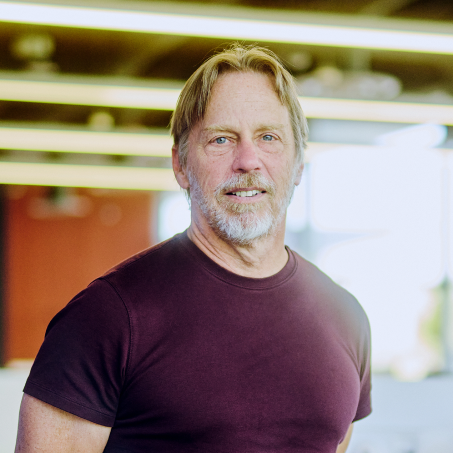
Jim Keller, official leadership portrait.
Tenstorrent / THE WORLD THEY ARE BUILDING

Build AI compute from open software to networked hardware.

Tenstorrent builds AI computers and licenses processor intellectual property.

See it taking shape ↓
01 / THE PRODUCTS

The products behind the promise.

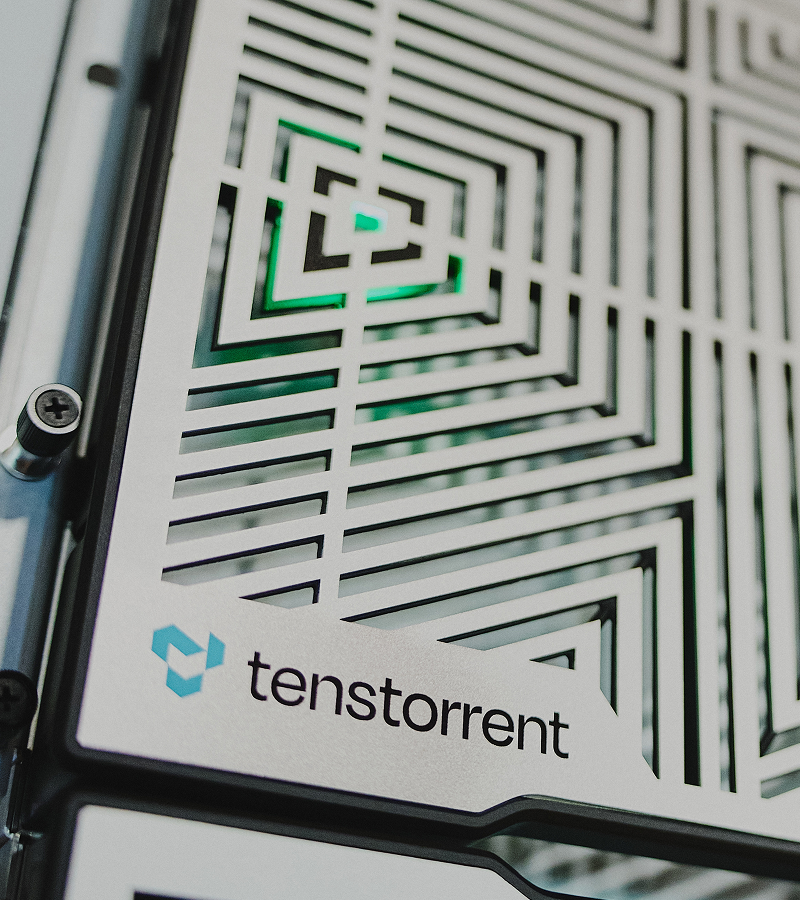
Official Galaxy Blackhole server photograph.
Galaxy Blackhole

Run validated AI models across servers and clusters.

Connect compute, memory and fabric for deployment.

LG Electronics

Custom silicon collaboration

A dated development partnership, without an invented deployed-product metric.

The 2024 collaboration expands chiplet work into SoCs and systems.

What changed? +

LG sought broader internal AI chip and system-design capabilities.

Published LG collaboration;future product directions remain plans.

Official Galaxy Blackhole server photograph.
02 / HOW IT BECOMES REAL

Workload, validation and deployment

Illustrative scene: an APAC robotics customer evaluates a compute solution.

  1. 01

    Scope

    State the model and application constraints.

  2. 02

    Validate

    Run a supported model and compare output and performance.

  3. 03

    Deploy

    Integrate the qualified system into operation.

Follow the work, step by step

Run AI models on networked compute

Tenstorrent builds AI computers and licenses processor intellectual property. A developer can start with a card or workstation, while an enterprise can evaluate server configurations for larger workloads. A chip designer takes a different route: it uses licensed AI or RISC-V CPU technology within its own silicon project. The current site brings these hardware choices together with an open-source software stack. Signet would begin with a concrete workload rather than the generic claim that a company needs more AI. A voice service, a language model and a video-generation application can have different constraints on response time, memory and concurrent requests. The useful product question is how the chosen model becomes a correctly executing workload on the intended hardware and how the buyer can observe its behavior. That is why software, memory movement and system connectivity belong beside the processor in explaining this business.

Choose the software entry point for the task

Official documentation distinguishes TT-Forge, TT-NN and TT-Metalium. Forge supplies a compiler route from supported model frameworks; TT-NN offers pre-optimized neural-network operations through a higher-level interface; Metalium gives kernel developers more direct control over execution on Tensix cores. These are different entry points into the same hardware ecosystem rather than three interchangeable finished applications. In an illustrative workflow, a developer identifies a supported model and configuration, installs the appropriate stack, runs a known example and compares output with a reference. The developer then examines performance and resource behavior before adjusting the implementation. Signet would keep correctness and speed in the same evaluation, since a faster result is useful only when it satisfies the application’s quality requirements. The current documentation and source repositories give a reader a way to inspect these steps and the limitations of a particular model path rather than rely solely on a headline hardware benchmark.

Scale a validated workload and observe operation

Galaxy configurations extend the compute into servers and multi-server clusters. The system page describes Blackhole hardware, memory and fabric specifications, while the LLM and video pages illustrate the workloads targeted by the company. Those published performance claims need the stated configuration, model, precision and quality conditions when compared with another system. Signet would first describe the application boundary: where requests enter, which model is served, where data and intermediate states reside and which operational team handles a failure. The October Smallest.ai partnership provides a current example of a voice model running natively on Galaxy Blackhole servers, and JapanFold gives a separate example of scientific models served within Japanese infrastructure. A deployment agreement does not automatically establish the same result for every model or buyer. The evidence to inspect is the selected workload, its validated behavior and the operating environment, including how the system handles load, monitoring and the next software update. A reference model run is a useful starting point before tuning concurrency or distributing work across devices.

Understand the products and their customers

QuietBox gives a local development system

TT-QuietBox 2 is a liquid-cooled workstation using Blackhole processors and an open-source software stack. The current product page describes two p300c boards and four Blackhole processors, which are different counts and should be kept distinct. It is positioned for local inference, experimentation and kernel work, with models and dependencies installed for a developer’s starting environment. The official product image shows the actual compact workstation; it is separate from a photograph of a generic desktop computer. Signet would evaluate the product with the intended model, memory requirement and sustained workload rather than assume that a model-parameter headline proves every configuration. The card-installation documentation also makes power, cooling and host compatibility concrete for buyers building their own system. A local workstation can provide control over the development environment, but the model path, software version and output checks still determine whether it fits a particular application.

Galaxy supplies a deployment and scale-out route

Galaxy is the second structured product in this dossier. Its Blackhole server page lists thirty-two ASICs and provides accelerator memory, interconnect, host and operating-environment specifications. The current page distinguishes Blackhole configurations from the earlier Wormhole generation, so the lowest server starting price on the homepage should not be treated as the Blackhole list price. The April 2026 announcement records general availability, with a page date one day after its body dateline. Signet preserves the publication date in review notes and treats the release as availability evidence, not as an independent benchmark audit. Buyers can discuss a single server or a cluster with sales and then test the exact workload and quality target. The system’s public technical description helps establish the deployment requirements; model validation and operational integration establish the application fit. A comparison should include the proposed configuration, load and output quality before drawing a conclusion from a claimed speed ratio.

Processor IP and open software form another buying path

Tenstorrent licenses TT-Ascalon RISC-V CPU and Tensix AI cores to customers designing silicon. The Ascalon availability announcement and the June Ascalon S update describe that processor route, while Chiplet Atlas and the Blue Cheetah acquisition address a broader chiplet ecosystem. A licensed core is not a complete server purchase: a design team needs integration, verification and a plan for its own system. The October Vayavya announcement gives a concrete virtual-modeling example for security and system-management IP before physical silicon is ready. Meanwhile Forge is currently presented as public beta, and the software documentation separates compiled model paths from direct operator or kernel work. Signet would explain each purchase through the deliverable the customer receives: a workstation to develop on, a server to operate, or IP to integrate. That distinction makes technical milestones, delivery responsibility and commercial scope easier to inspect without reducing every offering to a single chip. Virtual platform models address design validation, while Galaxy documentation addresses an operating physical system.

03 / THE EVIDENCE

The story, in numbers.

DATED OBSERVATIONS

Series D pre-money valuation

USD · billion
$2B

One December2024 pre-money observation; separate from funding and revenue.

Figures, dates & basis +
Series D pre-money valuation
DateValueBasis
2024-12-02$2BOfficial pre-money valuation in the financing release.

Tenstorrent

JapanFold launch

The September 3, 2026 JapanFold launch connects ai& infrastructure with Galaxy superclusters for structural-biology and drug-discovery models. It describes browser, API and agent-skill access, with computation running inside Japan. Signet treats this as a named platform deployment and checks a model’s availability and quality within that platform’s own scope. The announcement is distinct from a Korean customer launch, even though the broader regional ecosystem is relevant. A reader can follow the partnership through who owns the serving stack, which research task is supported and what evidence is returned. Scientific workload access is not clinical approval or a promised discovery outcome.

On-prem voice stack

On October 2, Tenstorrent and Smallest.ai announced a voice stack running Lightning V2 text-to-speech natively on Galaxy Blackhole. The release describes use cases where organizations want to operate voice workloads within their own infrastructure and offers a current service access route. Its performance comparison belongs to the specified model and measurement conditions, rather than every voice workload. Signet would evaluate a demonstration through audio quality, response timing, concurrency and the operating team’s control. That provides a clearer buying discussion than treating a partnership’s speed claim as a financial result. The compute, model service and enterprise integration remain separate responsibilities within one deployment story.

Virtual platform partnership

The October 8 Vayavya Labs partnership announcement describes delivered SystemC virtual models for security and system-management IP, extending work that began in 2024. The models let software and validation teams test against a hardware representation before physical silicon is ready. Current software sources and release feeds offer another way to inspect development progress, with model paths and tools changing over time. Signet would follow a virtual model through the subsystem covered, the target on which it runs and the integration issue it helps expose. This is evidence about development tooling, separate from a claim that a new processor is shipping or that a customer system has passed every qualification stage.

Read the growth story

Hardware sales and IP licensing have different milestones

Tenstorrent’s published commercial model includes selling AI hardware and licensing AI and RISC-V intellectual property. A card or workstation can be purchased as a defined physical product, while enterprise servers involve configurations and sales discussions. IP customers want to customize silicon and therefore work through a different design and integration process. Signet would describe the buyer, contracted deliverable and acceptance milestone before discussing growth. A hardware order, an IP agreement and a hosted model service are related to the same technology ecosystem but should not be assigned one recurring-revenue definition. The current product pages provide asking prices for specific configurations, which are product-price observations rather than total company revenue. The October voice partnership describes usage-based access to that joint service, another scoped commercial route rather than proof of a universal Tenstorrent pricing model. Each route needs its own buyer and operating responsibility.

Financing records support a historical valuation point

The August 2023 announcement describes a $100 million strategic financing led by Hyundai Motor Group and Samsung Catalyst Fund. In December 2024, Tenstorrent announced more than $693 million of Series D financing led by Samsung Securities and AFW Partners at a $2 billion pre-money valuation. Samsung Securities and Samsung Catalyst Fund are distinct entities and should retain their names. The chart uses the December 2024 pre-money valuation as one dated observation, not a current stock-market value or an annual revenue series. The same release refers to roughly $150 million in closed deals, which is a commercial-traction statement and not a recognized annual-revenue total. Signet does not add the financing amount to the pre-money value to manufacture an official post-money valuation. The capital announcement, deal statement and product sales describe different aspects of the company and should remain separately labeled when a reader examines the business.

Commercial scale depends on adoption and execution

The June 2026 product update and the April Galaxy availability announcement describe a later stage of system and processor development. The September JapanFold launch and October Smallest.ai partnership show named deployment paths for specific workloads. Blue Cheetah’s acquisition and Chiplet Atlas address design capabilities and ecosystem breadth, with their own integration responsibilities. Signet would evaluate commercial progress by following a customer’s technical qualification, contracted scope and operating result, rather than using every partnership announcement as an identical unit of revenue. Competition with established accelerator ecosystems makes software adoption, model support and customer integration meaningful questions. Manufacturing, hardware availability and system operations also matter to a physical-product business. An open stack gives developers inspection and tuning options, but those options must become a supported application that the buyer can use. The practical growth test is repeatable deployment and a clear value proposition for the particular customer, with scope and quality preserved as the system scales across devices and sites. A customer qualification milestone should retain its workload and acceptance criteria.

04 / THE PEOPLE

Someone saw it first.

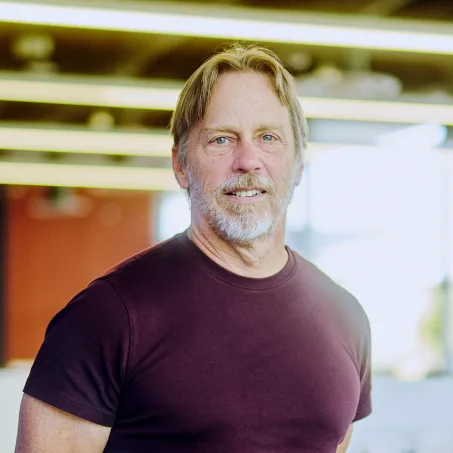
Jim Keller, official leadership portrait.
Chief Executive Officer

Jim Keller

Tenstorrent was founded in 2016 by Ljubisa Bajic, Ivan Hamer and Milos Trajkovic. In April 2023, the company said Bajic had stepped back from a full-time role and would remain an adviser. Current CEO Jim Keller has led silicon designs including the AMD Zen family, Apple A4 and A5 processors, and Tesla’s self-driving chip. Co-founder Milos Trajkovic leads systems engineering and foundational software, and has worked across Tensix architecture, verification and post-silicon validation. Signet reads the company through the connection between processor architecture, software that runs models and systems customers can deploy. These are complementary responsibilities that carry a design into a working customer environment.

The choice behind the company +

The first principle in Signet’s reading is openness that lets a developer inspect and modify the path from model to hardware. The Open Future material and public source repositories support that interpretation; it is not a claim that every licensed IP deliverable has the same terms as an open-source software repository. A candidate can demonstrate the principle by explaining a versioned change, its output checks and the performance evidence that made it worthwhile. The second principle is to connect customer needs with the whole system. The Moreh collaboration statement describes software and APIs as part of hardware adoption, while current documentation offers multiple entry points for model authors and kernel developers. Signet reads these as reasons to communicate across boundaries. A commercial candidate should be able to explain the customer’s intended workload and a technical validation plan, while a technical candidate should explain why the optimization matters to the application. These are preparation lenses drawn from public material, not an internal performance-rating framework.

“Our investors are great,”

Jim Keller · Series D announcement · 2024-12-02
The decisions behind the company

Separate founding history from current leadership

Tenstorrent was founded in 2016 by Ljubisa Bajic, Ivan Hamer and Milos Trajkovic. In April 2023, the company said Bajic had stepped back from a full-time role and would remain an adviser. Current CEO Jim Keller has led silicon designs including the AMD Zen family, Apple A4 and A5 processors, and Tesla’s self-driving chip. Co-founder Milos Trajkovic leads systems engineering and foundational software, and has worked across Tensix architecture, verification and post-silicon validation. Signet reads the company through the connection between processor architecture, software that runs models and systems customers can deploy. These are complementary responsibilities that carry a design into a working customer environment. The company’s development is easier to understand through the connection between architectures, compiled models and deployable systems than through a single famous engineer’s biography. A reader can ask which function owns a workload’s next milestone and how that milestone connects with the customer’s product or deployment plan.

Commercial and operating leaders connect the stack

Current leadership describes Keith Witek as COO with responsibility spanning operations, licensing, strategic deals, automotive and robotics. His appointment announcement supplies the dated background for that role. The present team also describes Christine Blizzard’s experience organization across customer touchpoints, including product, market entry and customer success. These published responsibilities help explain why a business-development role must connect engineering detail with a commercial decision. The December 2024 financing statement associates capital with software development, hiring and system expansion; it is a record of the company’s announced use of funding rather than evidence that every plan is completed. Signet would use a customer case to test the connection between these functions: who understands the requirement, who validates the solution, who agrees the commercial scope and who supports deployment afterward? The answer should come from the specific project and role rather than an invented reporting line or a headcount inferred from current openings.

Make control useful through reproducible work

The first principle in Signet’s reading is openness that lets a developer inspect and modify the path from model to hardware. The Open Future material and public source repositories support that interpretation; it is not a claim that every licensed IP deliverable has the same terms as an open-source software repository. A candidate can demonstrate the principle by explaining a versioned change, its output checks and the performance evidence that made it worthwhile. The second principle is to connect customer needs with the whole system. The Moreh collaboration statement describes software and APIs as part of hardware adoption, while current documentation offers multiple entry points for model authors and kernel developers. Signet reads these as reasons to communicate across boundaries. A commercial candidate should be able to explain the customer’s intended workload and a technical validation plan, while a technical candidate should explain why the optimization matters to the application. These are preparation lenses drawn from public material, not an internal performance-rating framework.

05 / THE NEXT CHAPTER

Pangyo presence and APAC development work

The current APAC robotics/automotive opening includes Korea and remote work.

Business development
Technical teams
Customer deployment

Published collaboration functions.

Why Korea? Why now?+

LG’s November 2024 announcement expands an earlier chiplet collaboration into SoCs and systems, with on-device AI, mobility and other application areas described as development directions. The page’s November 11 date differs from its November 12 Seoul dateline, which is retained in review notes. Moreh’s November 14 statement records an MOU signed earlier that month and plans to combine its software with Tenstorrent semiconductors for data-center AI. The first-half-2025 commercialization expectation is a plan in that historical statement, not current confirmation of a completed rollout. Signet would prepare a Korean customer discussion around the relevant workload, design ownership, integration and test evidence. An appliance chip, an automotive system and a data-center model service can share parts of the technology story but have different qualification and operating needs. Those distinctions help a business-development candidate explain why a customer should take a defined technical next step.

LG expands collaboration

Custom AI and RISC-V systems development.

Moreh partnership

Planned software and semiconductor integration.

Understand the Korea opportunity

Pangyo is the current published office location

The current careers and team pages list a Pangyo office in Gyeonggi-do. Older financing and partnership releases described Seoul among global offices, so Signet uses the current office listing for the local location and preserves the older text as dated context. Korean relationships cover several different roles in the ecosystem. Samsung Catalyst Fund and Hyundai Motor Group led the 2023 financing, while Samsung Securities and AFW led Series D in 2024. Samsung Foundry’s 2023 selection is a manufacturing relationship, and LG’s collaboration concerns custom AI and RISC-V technology. These are not interchangeable customer, investor and manufacturing categories. A reader interested in Korean work can understand the opportunity through specific projects and the required technical integration, rather than assume that investment establishes a production deployment. The local office is concrete evidence of company presence, with staffing and reporting responsibility still dependent on the relevant team.

LG and Moreh supply dated technical relationships

LG’s November 2024 announcement expands an earlier chiplet collaboration into SoCs and systems, with on-device AI, mobility and other application areas described as development directions. The page’s November 11 date differs from its November 12 Seoul dateline, which is retained in review notes. Moreh’s November 14 statement records an MOU signed earlier that month and plans to combine its software with Tenstorrent semiconductors for data-center AI. The first-half-2025 commercialization expectation is a plan in that historical statement, not current confirmation of a completed rollout. Signet would prepare a Korean customer discussion around the relevant workload, design ownership, integration and test evidence. An appliance chip, an automotive system and a data-center model service can share parts of the technology story but have different qualification and operating needs. Those distinctions help a business-development candidate explain why a customer should take a defined technical next step.

A current APAC role includes Korea and remote work

The official Greenhouse board has one current opening whose location explicitly includes Korea: Business Development Lead for robotics and automotive in APAC. The description says remote and based in APAC; its listed locations include Asia, Japan, Korea and Singapore. It asks for commercial instinct, technical credibility, compute and AI knowledge, complex-deal negotiation and direct robotics or automotive experience. The employer welcomes candidates at different levels and says assessment can result in a level different from the posted title. The posting does not specify minimum years or a number of direct reports; its Lead title alone does not establish people-management responsibility. The work connects customer requirements, strategic relationships, regional plans and revenue goals with distributed technical teams. Signet suggests preparing one robotics or automotive opportunity with a clear workload, validation plan, commercial decision and next step. The official posting contains its employment-access conditions; applicants should read the original description as part of assessing the role. The regional role also emphasizes independent work and collaboration with distributed functions, rather than one fixed office workflow.

KOREA OPEN ROLES

1 open role in Korea

Current Signet catalog · 2026-10-19

FOR YOU

Prepare a robotics/automotive customer and validation case.

GTM · Sales · BD

Business Development Lead(robotics/automotive), APAC

Asia; Japan; Korea; Singapore

Posting checked

The work
Build APAC robotics/automotive relationships and complex deals.
Who fits
Commercial and compute/AI depth with direct sector experience.
Keep in mind
APAC remote; Korea included; level assessed in interviews.
07 / NOW & NEXT

The next scene is taking shape.

JapanFold launch

The September 3, 2026 JapanFold launch connects ai& infrastructure with Galaxy superclusters for structural-biology and drug-discovery models. It describes browser, API and agent-skill access, with computation running inside Japan. Signet treats this as a named platform deployment and checks a model’s availability and quality within that platform’s own scope. The announcement is distinct from a Korean customer launch, even though the broader regional ecosystem is relevant. A reader can follow the partnership through who owns the serving stack, which research task is supported and what evidence is returned. Scientific workload access is not clinical approval or a promised discovery outcome.

On-prem voice stack

On October 2, Tenstorrent and Smallest.ai announced a voice stack running Lightning V2 text-to-speech natively on Galaxy Blackhole. The release describes use cases where organizations want to operate voice workloads within their own infrastructure and offers a current service access route. Its performance comparison belongs to the specified model and measurement conditions, rather than every voice workload. Signet would evaluate a demonstration through audio quality, response timing, concurrency and the operating team’s control. That provides a clearer buying discussion than treating a partnership’s speed claim as a financial result. The compute, model service and enterprise integration remain separate responsibilities within one deployment story.

Virtual platform partnership

The October 8 Vayavya Labs partnership announcement describes delivered SystemC virtual models for security and system-management IP, extending work that began in 2024. The models let software and validation teams test against a hardware representation before physical silicon is ready. Current software sources and release feeds offer another way to inspect development progress, with model paths and tools changing over time. Signet would follow a virtual model through the subsystem covered, the target on which it runs and the integration issue it helps expose. This is evidence about development tooling, separate from a claim that a new processor is shipping or that a customer system has passed every qualification stage.

More context on what comes next

JapanFold serves scientific models in Japan

The September 3, 2026 JapanFold launch connects ai& infrastructure with Galaxy superclusters for structural-biology and drug-discovery models. It describes browser, API and agent-skill access, with computation running inside Japan. Signet treats this as a named platform deployment and checks a model’s availability and quality within that platform’s own scope. The announcement is distinct from a Korean customer launch, even though the broader regional ecosystem is relevant. A reader can follow the partnership through who owns the serving stack, which research task is supported and what evidence is returned. Scientific workload access is not clinical approval or a promised discovery outcome.

An on-prem voice stack follows in October

On October 2, Tenstorrent and Smallest.ai announced a voice stack running Lightning V2 text-to-speech natively on Galaxy Blackhole. The release describes use cases where organizations want to operate voice workloads within their own infrastructure and offers a current service access route. Its performance comparison belongs to the specified model and measurement conditions, rather than every voice workload. Signet would evaluate a demonstration through audio quality, response timing, concurrency and the operating team’s control. That provides a clearer buying discussion than treating a partnership’s speed claim as a financial result. The compute, model service and enterprise integration remain separate responsibilities within one deployment story.

Virtual models support development before silicon

The October 8 Vayavya Labs partnership announcement describes delivered SystemC virtual models for security and system-management IP, extending work that began in 2024. The models let software and validation teams test against a hardware representation before physical silicon is ready. Current software sources and release feeds offer another way to inspect development progress, with model paths and tools changing over time. Signet would follow a virtual model through the subsystem covered, the target on which it runs and the integration issue it helps expose. This is evidence about development tooling, separate from a claim that a new processor is shipping or that a customer system has passed every qualification stage.

Their future. Your next chapter.

Find your part ↑

An independent profile by Signet. No affiliation or investment recommendation. Introductions happen only with your consent.
Research reviewed 2026-10-10

A LITTLE MORE CONTEXT

Understanding Tenstorrent.

What does Tenstorrent do?

Tenstorrent builds AI computers and licenses processor intellectual property. A developer can start with a card or workstation, while an enterprise can evaluate server configurations for larger workloads. A chip designer takes a different route: it uses licensed AI or RISC-V CPU technology within its own silicon project. The current site brings these hardware choices together with an open-source software stack. Signet would begin with a concrete workload rather than the generic claim that a company needs more AI. A voice service, a language model and a video-generation application can have different constraints on response time, memory and concurrent requests. The useful product question is how the chosen model becomes a correctly executing workload on the intended hardware and how the buyer can observe its behavior. That is why software, memory movement and system connectivity belong beside the processor in explaining this business.

What is the opportunity in Korea?

The current APAC robotics/automotive opening includes Korea and remote work.

Are these confirmed job openings?

Employer postings were checked on 2026-10-10. Availability can change. Mock applications request a review from Signet.

How can I explore the company in more depth?

Follow the company from its vision through products, evidence and people to the Korea team and current roles. Use the table of contents to move within the page, and expand the sections for more context.

Back to the collection ↗