Official Steve McMillan portrait.
Teradata / THE WORLD THEY ARE BUILDING

Turn governed enterprise data into analytical and AI action.

Teradata provides enterprise data, analytics and AI software for organizations that need to operate important workloads across cloud, on-premises and hybrid environments.

See it taking shape ↓
01 / THE PRODUCTS

The products behind the promise.

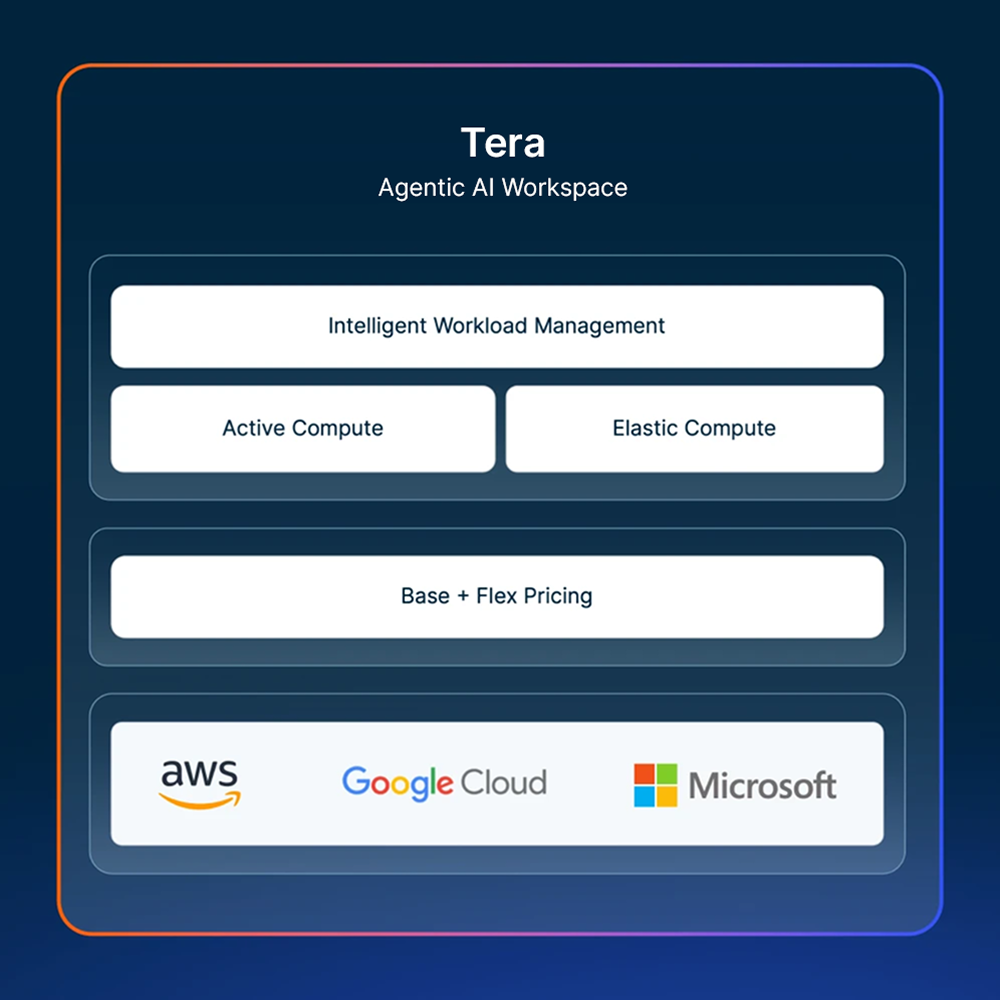
Official Cloud architecture illustration.
Teradata Cloud

Run enterprise analytics and AI workloads.

Governed operation with distinct compute paths.

KB Securities

Selected Korean customer

Customer-list evidence;no scoped performance metric.

Listed as a selected customer in the Q3 2026 backgrounder.

What changed? +

Illustrative sector question:govern financial and customer analysis.

No private project or deployment outcome inferred.

Official Cloud architecture illustration.
02 / HOW IT BECOMES REAL

Question,validation and activation

Illustrative scene:a Korean bank evaluates a governed analytical workload.

  1. 01

    Discover

    Define the decision and source data.

  2. 02

    Validate

    Compare model/query output with known cases.

  3. 03

    Activate

    Carry the qualified workload into operation.

Follow the work, step by step

Connect enterprise data with a concrete decision

Teradata provides enterprise data, analytics and AI software for organizations that need to operate important workloads across cloud, on-premises and hybrid environments. The current company presents this as the Autonomous Knowledge Platform. A useful starting scene is an illustrative bank investigating suspicious account activity. The institution must connect transaction sequences, customer relationships and operational definitions before a model or analyst can reach a useful conclusion. Teradata supplies a governed environment for querying and analyzing those data, with deployment choices that follow the customer’s architecture. Signet reads the business through the work required to make the conclusion usable: identify the source, apply the correct permissions, define the question and connect an output with the next human or automated action. A model response alone does not establish a successful business process. The data team, platform team and business owner need a shared account of what was analyzed, which controls applied and what the result allows them to do.

Keep the execution environment visible

The platform offers multiple ways to work with enterprise data. In-database analytics executes supported analytical operations near the data; ModelOps manages the lifecycle of models; Enterprise MCP provides a controlled connection between agents and database tools. These capabilities are related but answer different questions. An analyst needs access to an appropriate dataset and a clear business definition. A data scientist needs a validated model and a repeatable deployment process. A platform engineer needs visibility into workload behavior and resource requirements. In an illustrative implementation, the team establishes a baseline query or model, checks its outputs against known cases, assigns access roles and then observes behavior under the intended workload. Signet would document the chosen route rather than claim that every external system or model can be integrated without effort. The official developer resources give teams examples and documentation with which to test a particular path. Correctness, permissions and predictable operation belong in that evaluation alongside the speed of producing an answer.

Extend the data foundation without losing context

Teradata Fabric connects data across environments, and the September OneLake integration is a concrete example of access to another platform. The company says customers can query OneLake tables through Apache Iceberg APIs and use Microsoft Entra ID for authentication without first replicating those tables into Teradata. That scope is read access to the specified integration, rather than a promise that all integrations have identical behavior. Factory offers a separate on-premises route for organizations choosing to keep infrastructure and sensitive workloads within their own environment. AI Services adds professional expertise for selecting and delivering a business use case. Signet would map these options to a customer’s actual constraints: where the data lives, which operations are needed, which team owns permissions and which result must be measured. A hybrid architecture is meaningful when the team can explain its boundaries. It should help the buyer understand both the technical route and the operating responsibilities that remain after a demonstration becomes a production workload.

Understand the products and their customers

Cloud separates continuous and burst workloads

Teradata Cloud is the cloud deployment of the current platform across supported public cloud environments. Its official architecture distinguishes always-on Active Compute from on-demand Elastic Compute within a managed system. The product diagram also shows workload management and base-plus-flex pricing, giving the reader a concrete picture of how the company positions resource control. An enterprise may need production analytics to keep meeting an established service level while another team explores a new dataset or model. Signet would ask which workloads belong in each resource path and how the customer will measure the resulting cost and performance. The diagram is a company architecture illustration, not a screenshot of a particular customer account or evidence that every configuration produces the same savings. A buyer still needs to agree the workload, service requirements, capacity and commercial terms. This dossier treats the cloud offering as one deployment choice within a broader enterprise platform, rather than equating the company solely with a public cloud database.

AI Studio organizes the path from data to operation

AI Studio is presented as a unified environment for building, activating and managing AI outcomes. The current page shows data work, vectors, models and agent execution as connected parts, with links to Enterprise MCP, Enterprise Vector Store, AgentStack and ModelOps. A data engineer can prepare a usable dataset, a model team can choose an analytical or retrieval path and an operational owner can examine deployment and monitoring. Availability requires care: the same page says general availability is coming soon and that the rollout begins with Enterprise MCP before additional features. Signet therefore describes the product’s announced structure and asks a buyer to check the availability of the required components with the account team. The official AI Studio illustration makes the intended system easier to understand, while the linked capability pages explain narrower functions. A product roadmap and a live capability are separate observations. Neither a demonstration image nor a suite description proves that the complete announced package is available in every region or environment.

Tera and Factory address different parts of the system

Tera supplies a natural-language workspace for enterprise data work, while Factory supplies an on-premises deployment route. The September announcement describes new Tera Context Engine, Tera Harness and Agent Skills components with availability planned for the fourth quarter of 2026. Their role is to connect business knowledge with controlled execution, and the planned date is preserved here. The May Factory announcement describes an integrated system using Dell PowerEdge servers and NVIDIA AI infrastructure and software for customers with sovereignty and deployment requirements. That is a deployment proposition rather than proof that purchasing it automatically satisfies every regulation. Meanwhile Enterprise Vector Store addresses structured and unstructured retrieval, and ModelOps addresses validation, deployment and model observation. Signet’s product reading separates what a customer is buying, where it runs and which lifecycle function it serves. A qualified proposal should identify the live components, integration steps and operational acceptance criteria before treating the whole platform as a finished solution for a particular customer.

03 / THE EVIDENCE

The story, in numbers.

DATED OBSERVATIONS

Annual revenue

USD · million

Reported full-year revenue in USD;ARR and quarter results are separate.

Figures, dates & basis +
Annual revenue
DateValueBasis
2023-12-31$1.833BReported full-year revenue in USD.
2024-12-31$1.750BReported full-year revenue in USD.
2025-12-31$1.663BReported full-year revenue in USD.

U.S. Securities and Exchange Commission · Teradata

OneLake integration

Read specified OneLake data through Iceberg APIs.

Tera components announced

Context Engine,Harness and Skills planned for Q4.

Healthcare engagements

Three scoped customer examples.

Read the growth story

Subscriptions and services are the commercial routes

Teradata earns revenue from recurring software and related offerings, consulting services and a smaller category of perpetual software, hardware and other activity. Its annual report and financial releases distinguish those categories from management’s annual recurring revenue metric. In a customer scene, an enterprise chooses a deployment environment, agrees a subscription or service scope and operates workloads over the contracted period. Consulting and AI Services can support use-case selection, modernization and optimization, but a professional-services engagement is not automatically the same recurring product contract. Signet would start with the contracted deliverable and recognition period before comparing growth. The Cloud page’s base-plus-flex proposition makes resource control part of the product discussion; the buyer’s actual terms determine the commercial result. A workload reaching production can support renewal and expansion, which explains why the current new-business role includes early activation after signing. The dossier therefore links the business model with adoption work while retaining the separate financial definitions used by the company.

Keep annual revenue and dated ARR separate

The chart shows reported annual revenue of 1,833 million US dollars in 2023, 1,750 million in 2024 and 1,663 million in 2025. Those three comparable full-year observations describe a decline, even while the company introduces new AI products. The 2025 release reports recurring revenue of 1,445 million and year-end total ARR of 1,522 million. Recurring recognized revenue covers the reporting period, whereas ARR is an annual contract-value snapshot at a specified date. The second-quarter 2026 release reports 410 million in total quarterly revenue and 1,509 million in total ARR at June 30, including 686 million of public cloud ARR. These values are described separately rather than appended to an annual revenue chart or multiplied into an invented annual result. Signet would read product momentum alongside comparable financial evidence. A new offering can create an opportunity, but its announcement alone does not reverse the historical revenue series or establish how much recognized revenue that product generated.

Assess cash and customer economics with their scope

Financial interpretation also requires separating operating performance from unusual items. The first-quarter release records a SAP settlement benefit, and the second-quarter outlook includes an after-tax settlement contribution in the company’s expected cash flow from operations. The release separately reconciles adjusted free cash flow and other non-GAAP measures. Signet would keep the settlement visible when discussing cash generation rather than attribute the full amount to ordinary product demand. On the customer side, competing data and AI platforms can offer different architecture, capacity and consumption arrangements. A useful comparison identifies the customer’s supported workload, service requirements, integration effort and commercial scope before claiming a universal cost advantage. Teradata’s cloud, on-premises and hybrid routes explain its positioning, while adoption, retention and execution of its AI roadmap remain business questions. A candidate preparing for the Korean sales role should be able to connect a qualified deal with early activation and a credible customer value case, using operating evidence rather than a large contract headline alone.

04 / THE PEOPLE

Someone saw it first.

Official Steve McMillan portrait.
President and CEO

Steve McMillan

CEO since June2020;enterprise services and cloud experience.

The choice behind the company +

Company direction and customer value.

“Teradata again delivered a solid quarter, growing total ARR, recurring revenue, and meaningful free cash flow,”

Steve McMillan · Q2 financial results · 2026-08-04
The decisions behind the company

Read a long company history beside current leaders

Teradata’s official historical report records formation in 1979. The current story places the company’s enterprise data experience beside its AI direction, while today’s leadership material identifies Steve McMillan as president and CEO. His official biography says he joined the board in June 2020 and describes prior services and cloud leadership at F5, Oracle and IBM. This dossier treats him as the current executive rather than a founder of the original company. A long-lived enterprise software business has an installed customer base, technical history and operating commitments that shape how it introduces a new product direction. Signet would connect the leadership story with that transition: how does an organization carry trusted existing workloads into new analytical and agent use cases? The useful evidence is the product’s deployment choices, current customer engagements and the commercial work described in the active hiring material. Leadership experience helps explain a direction, but it does not establish the outcome of every product or sales initiative.

Connect product and operating responsibility

Current company material identifies Sumeet Arora as chief product officer and Michael Hutchinson as chief operating officer. The September Tera announcement and October healthcare statement provide dated examples of the subjects each leader discusses. The product organization frames context and execution as part of an enterprise data environment; the operating perspective frames a customer engagement through the business work it enables. Those statements do not reveal a complete internal organization chart or a Korean reporting line. Signet uses them to identify practical questions a candidate can bring to a conversation: who selects the use case, who validates the data and model path, who defines the customer’s acceptance criteria and who supports operation after activation? A role in the APJ new-business team must collaborate with solution architects, sales leadership and sales operations according to the employer’s posting. That published responsibility connects product and commercial functions without requiring an invented local headcount or an assumed executive reporting relationship.

Prepare with governed evidence and customer outcomes

The first principle in Signet’s reading is to make enterprise AI understandable through governed evidence. The Trust and Security Center separates data security, compliance, governance and privacy, while the developer and model-management pages supply concrete implementation routes. A candidate can demonstrate the principle with a case explaining the input, access boundary, output checks and decision made from the result. The second principle is to connect the technical result with a customer outcome. AI Services describes business value, modernization and optimization, and the active sales posting asks for outcome-led discovery and early workload activation. A technically impressive demonstration becomes commercially useful when its buyer can explain why it matters and how the organization will operate it. Signet would prepare a scoped customer example with an agreed baseline and next milestone, including an honest account of what still needs to be validated. These principles are editorial preparation lenses based on public material, not a statement of Teradata’s internal employee-rating framework or a guaranteed interview rubric.

05 / THE NEXT CHAPTER

What happens here matters.

Build an APJ new-logo sales motion in South Korea.

Account executive
Solution architects
Sales leadership/operations

Published role collaborators.

Why Korea? Why now?+

Enterprise and mid-market data/AI opportunities with local SI partners.

Selected Korean customers

Q3 media backgrounder names Korean enterprises.

Understand the Korea opportunity

Use named customer presence with a defined scope

Teradata’s Q3 2026 media backgrounder lists KB Securities, Hanwha Galleria and Shinsegae Department Store among selected customers. That is dated company evidence of customer presence, but it does not specify each customer’s deployment date, purchased configuration or quantified AI outcome. Signet would preserve that boundary while explaining why data and analytics matter to the named sectors. A securities firm may need reliable financial and customer analysis; a department-store business may need to connect merchandising, customer and operational data. These are illustrative sector questions rather than claims about the listed customers’ private projects. The current Korean financial-services page describes governed financial data and analytical use cases, which provides a product-level foundation for a discussion. A reader can connect that foundation with the new-business posting’s target enterprise and mid-market customers without treating the selected-customer list as proof of a new contract or a completed Korean AI rollout.

The current opening builds new Korean business

The official detail page for role 220530 is active and includes an Apply link, Full Time, Hybrid and Seoul, South Korea. It describes an APJ Growth Engine new-business account executive, with Korean and English fluency and direct South Korean enterprise, mid-market and local system-integration experience. The role owns prospecting, discovery, value framing, demonstrations, negotiation, close and early workload activation. It favors candidates who create their own demand and can connect data and AI with measurable customer value. The preparation focus follows the posting’s explicit experience, language and hybrid conditions. The official search list showed zero results during the check, which is recorded separately from the active detail page. The employer’s structured job metadata dates the posting to August 11, while the visible page says more than thirty days ago. Signet retains the full bilingual employer description and links this opening to the same existing operating catalog record.

Prepare a discovery and activation case

A useful preparation scene is an illustrative Korean enterprise considering a new analytical workload. The account executive identifies the business owner, current data environment and intended decision, then works with a solution architect to define a demonstration and acceptance criteria. A local system-integration partner may bring customer context and implementation capability, but the exact partner arrangement needs to be agreed for the project. After commercial agreement, the role’s published responsibility includes early activation, which makes handover and customer readiness part of the sales story. Signet would prepare a case that explains the original problem, technical and business stakeholders, qualification decisions, demonstration evidence, commercial tradeoffs and the first usable workload. The candidate should also explain how the team recorded lessons for a repeatable APJ sales motion. This is an editorial preparation suggestion rather than the company’s promised first ninety days. The published collaborators are customer solution architects, sales leadership and sales operations; the dossier describes collaboration through those published functions and responsibilities.

KOREA OPEN ROLES

3 open roles in Korea

Current Signet catalog · 2026-10-19

FOR YOU

Show discovery,demo,commercial decisions and activation.

Finance · Legal

AI Sales Engineer - North East Asia

Seoul / Taipei · Hybrid

Posting checked

The work
Runs AI demos, PoCs, and technical workshops for the APJ sales team and provides advisory support.
Who fits
Has eight or more years in presales, solution architecture, AI engineering, data engineering, or a similar customer-facing role.
Keep in mind
Read the role details for the full responsibilities and requirements.
GTM · Sales · BD

APJ Growth Engine: New Business Account Executive (South Korea)

Seoul, South Korea

Posting checked

The work
Create new business through close and early workload activation.
Who fits
Korea enterprise/SI experience,KO/EN and technical sales credibility.
Keep in mind
FullTime hybrid Seoul;no explicit minimum years or office-day count.
Finance · Legal

Customer Solutions Architect

Seoul · Hybrid

Posting checked

The work
Manages technical relationships with strategic clients and designs and proposes expanded AI adoption.
Who fits
Has eight or more years doing hands-on technical work with customers, such as presales, solution design, or delivery, in enterprise data platforms and cloud analytics settings
Keep in mind
Read the role details for the full responsibilities and requirements.
07 / NOW & NEXT

The next scene is taking shape.

OneLake integration

Read specified OneLake data through Iceberg APIs.

Tera components announced

Context Engine,Harness and Skills planned for Q4.

Healthcare engagements

Three scoped customer examples.

More context on what comes next

OneLake makes a specific integration available

The September 2 announcement states that customers can run Teradata analytical workloads against OneLake tables without replicating or migrating the specified data. It describes read access through Iceberg APIs and cross-platform authentication through Microsoft Entra ID. The significance is a concrete route between two environments already used by enterprises, including joins and feature pipelines on the stated data path. Signet would watch how a customer configures permissions, validates query behavior and assigns operation across those environments. The release is evidence of this integration, rather than proof that all Microsoft services or every external data format behave in the same way.

The new Tera components have a Q4 plan

On September 22 Teradata introduced Context Engine, Harness and Agent Skills within the Tera direction. The announcement links governed business knowledge with execution across data roles and identifies model choice and deployment control as customer concerns. Its availability statement says the new components will be available in the fourth quarter of 2026. This dossier keeps that statement as a plan at the October check rather than claiming completion because the quarter has begun. Company benchmark claims also require the stated model and methodology before comparison. The practical question is which component a buyer can use now and what the proposed implementation depends on.

Healthcare examples show scoped customer work

The October 7 release describes three unnamed healthcare and life-sciences engagements: population-level disease forecasting, patient engagement and a payer’s regulatory initiative. The research-model example is intended for aggregate demand planning and should not be presented as an individual diagnostic guarantee. The release connects supported models and enterprise data with an operating use case, while retaining the different maturity and outcome of each engagement. Signet would read these examples as evidence of use-case delivery and ask which dataset, access controls and validation criteria belong to each. Their business relevance comes from the stated work and customer outcome, without attaching invented customer identities or extrapolating a case-specific performance claim to the whole platform.

Their future. Your next chapter.

Find your part ↑

An independent profile by Signet. No affiliation or investment recommendation. Introductions happen only with your consent.
Research reviewed 2026-10-10

A LITTLE MORE CONTEXT

Understanding Teradata.

What does Teradata do?

Teradata provides enterprise data, analytics and AI software for organizations that need to operate important workloads across cloud, on-premises and hybrid environments. The current company presents this as the Autonomous Knowledge Platform. A useful starting scene is an illustrative bank investigating suspicious account activity. The institution must connect transaction sequences, customer relationships and operational definitions before a model or analyst can reach a useful conclusion. Teradata supplies a governed environment for querying and analyzing those data, with deployment choices that follow the customer’s architecture. Signet reads the business through the work required to make the conclusion usable: identify the source, apply the correct permissions, define the question and connect an output with the next human or automated action. A model response alone does not establish a successful business process. The data team, platform team and business owner need a shared account of what was analyzed, which controls applied and what the result allows them to do.

What is the opportunity in Korea?

Build an APJ new-logo sales motion in South Korea.

Are these confirmed job openings?

Employer postings were checked on 2026-10-10. Availability can change. Mock applications request a review from Signet.

How can I explore the company in more depth?

Follow the company from its vision through products, evidence and people to the Korea team and current roles. Use the table of contents to move within the page, and expand the sections for more context.

Back to the collection ↗