Matthew Bromberg of Unity
Unity / THE WORLD THEY ARE BUILDING

Give more people a way to build worlds.

For industry, the opportunity is to connect design data to visualization, training and simulation. A digital twin becomes operationally useful only when its data, purpose and validation are clear.

See it taking shape ↓
01 / THE PRODUCTS

The products behind the promise.

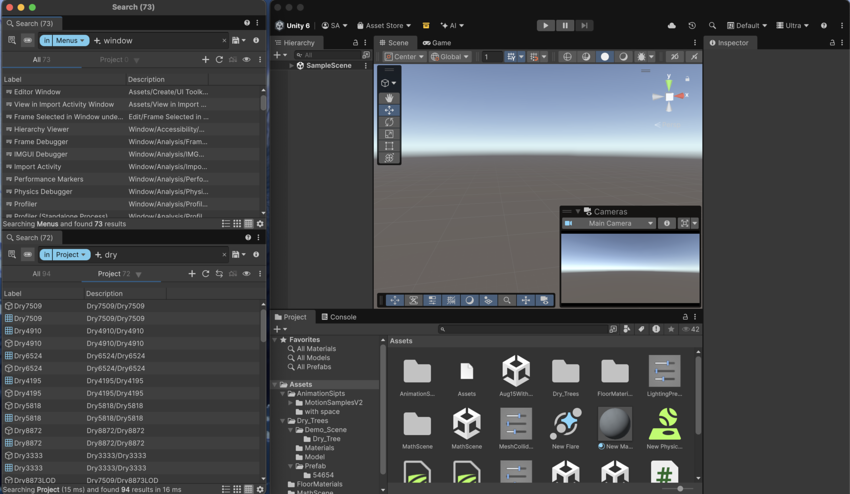
Unity Editor with Scene view, Project assets, and two floating Search tabs
Official Unity 6 manual example illustrating workspace layouts with floating Search windows and the main Editor.
Unity Engine

Create scenes, application behavior and cross-platform experiences.

One creation environment can support different interactive products.

Hyundai Motor

Hyundai’s Meta-Factory partnership plan

The January 2022 MOU first targeted Hyundai’s Singapore innovation center.

The MOU made Unity a strategic partner for a Meta-Factory roadmap, including digital-twin, AI-study and autonomous-driving simulation areas.

What changed? +

Hyundai’s January 2022 announcement sought virtual ways to test factory operations and support smart-manufacturing work.

Hyundai’s 6 January 2022 announcement describes the Meta-Factory plan and the intended work.

Bosch Rexroth

Virtual showroom for large machines

The case reports two months to market versus a year or more, and double engagement versus an in-person display alone.

A virtual showroom demonstrated five products using Unity Industry and Asset Transformer.

What changed? +

Large machinery demonstrations relied on in-person displays.

Unity’s June 2024 case describes this showroom and its comparison, including 20 sales members and 19 application engineers.

Unity Editor with Scene view, Project assets, and two floating Search tabs
Official Unity 6 manual example illustrating workspace layouts with floating Search windows and the main Editor.
02 / HOW IT BECOMES REAL

From industrial 3D data to an interactive application

Illustrative industrial workflow based on Unity Industry and the Engine; it does not claim completion of Hyundai’s announced Meta-Factory roadmap.

  1. 01

    Make CAD and BIM data usable

    Industry tools support bringing engineering and 3D data into a real-time project. The team prepares assets for the intended devices and visual detail.

  2. 02

    Build the scene and interaction

    The Engine provides the environment for assembling scenes and behavior. Designers and developers decide what a user can see and do.

  3. 03

    Validate the application’s purpose

    Teams test performance and check engineering accuracy against the intended training or visualization task.

  4. 04

    Deliver the experience on the chosen platform

    Unity supports deployment across multiple platforms. The team packages the application and collects user feedback for the next iteration.

Follow the work, step by step

Turn a file into something people can try

A game studio begins with characters, environments and rules. A manufacturer begins with a designed machine or a factory model. Both need people to experience how those things behave before they are finished. Unity supplies a real-time creation environment: a team places assets in a scene, specifies behavior and runs the result. The important shift is from describing an object to interacting with it. A user can move around, change a condition or try a sequence while the application responds. This is the common technical idea behind a mobile game, a virtual showroom and a training simulation. Each still needs its own content, design and operational judgment.

We are very pleased with the market recognition and adoption of our products and technology,

David Helgason · Co-founder and CEO at the time · 2009 investment announcement · 2009-10-26

David Helgason, Nicholas Francis and Joachim Ante founded the company that became this platform. The early promise was to make game development approachable and support distribution across platforms. The current business extends that creation work with software for industrial data and advertising for mobile applications. Signet’s reading is that the engine is the entry point to several different customer workflows. An automotive engineering team cares about its CAD assets and review process. An app advertiser cares about which acquired users support a campaign goal. Understanding that difference is more useful for a candidate than treating every Unity customer as a game programmer.

The workflow starts with the customer’s assets

Consider an illustrative machinery demonstration based on the Bosch Rexroth case. The team first brings engineering assets into the creation workflow. Asset Transformer helps prepare technical files, while Asset Manager organizes reusable assets. A developer or designer then builds the interactive scene in the Editor or a supported industrial authoring tool. The team decides what a buyer can inspect, what a demonstrator explains and how the experience is delivered. A technical file becoming visible is only one step: the scene also needs to answer a commercial question. A product demonstration succeeds when the intended audience can understand a machine and discuss its use.

Bosch Rexroth’s virtual showroom illustrates the delivery stage. The case describes five large products and use by 20 regional sales members and 19 application engineers. It reports two months to market compared with a prior process taking a year or more. Those are the results of that showroom project, with its own starting point and users. They make a concrete discussion possible: what was prepared, who used it and what work became faster? For a Korean marketer, this becomes a way to write a credible customer story. For a sales candidate, it becomes a way to ask about the buyer’s actual workflow before offering a product.

AI adds helpers; people approve the work

Unity now adds AI assistance to that creation environment. The Industry page describes an Editor beta that can help with scripts, scenes and materials, with proposed changes approved before they land. Its Unity CLI also provides a connection point for external AI tools. The next planned platform generation, Unity 7, puts human contributors and coding agents in the same development workflow. As of 8 October 2026, the roadmap targets an early beta in December 2026 and a full release in the first quarter of 2027. The practical question is how these tools fit a team’s review and production practices. Korea’s current openings work on communicating product value and acquiring advertising customers; their responsibilities belong to those commercial workflows.

Understand the products and their customers

Create, Industry and Ads serve different buyers

Unity Engine is the workspace for building real-time experiences. Teams assemble scenes, use assets and write the behavior that turns those scenes into a game or application. They test and deploy for supported platforms. Its value is therefore a combination of a creation tool and the surrounding production workflow. The official Editor screenshot on this page shows Scene and Project views alongside floating Search windows. It is an example of the standard workspace. A game studio choosing an engine is also choosing skills, workflows and a tool ecosystem for a project that may require years of updates. That makes stability, support and pricing part of the product discussion.

Unity Industry packages the creation environment for automotive, manufacturing, architecture, engineering and construction teams. The current bundle includes Unity 6, Studio with one Studio seat per Industry seat, Asset Transformer, Asset Manager, a Build Server license and Success support. Asset Transformer handles 70 or more technical file formats. The page lists an annual prepaid price of $4,950 per seat as checked on 8 October 2026. Commercial distribution of Industry runtime applications requires explicit authorization and a separate Distribution License. This matters for a proposal: an authoring seat, a shared asset workflow and a customer-facing runtime are distinct parts of the commercial conversation.

Advertising is a separate performance workflow

Unity Ads serves both advertisers acquiring users and developers earning revenue from advertising. An advertiser plans a campaign around a mobile app and evaluates the audience it attracts. A developer integrates monetization and reviews placements and performance. The official dashboard shows an example game with estimated ad revenue, active users and reporting metrics. Those displayed figures are demonstration values. The Seoul advertising Account Executive opening translates this product into customer work: developing new business, managing the sales cycle, interpreting campaign KPIs and coordinating proposals with product, marketing, legal and operations. Product knowledge therefore needs to connect with the client’s acquisition or monetization objective.

The three products overlap technically while buying decisions remain different. Industry customers may arrive with existing CAD and BIM systems and need a way to make those assets interactive. Korea’s industrial presentations describe Unity as complementing those systems, including through integration and solution partners. Studio also lowers the barrier for business and creative contributors joining a project. An advertiser evaluates campaign performance and commercial terms instead. Signet’s reading is that a useful demonstration starts with the buyer’s decision, then shows the relevant tool. A generic tour of every Unity feature would make it harder to understand which workflow a customer is paying to improve.

Read the customer’s actual use

Bosch Rexroth used Unity Industry and Asset Transformer for a virtual showroom. The case reports customer engagement doubling compared with an in-person display alone, alongside the shorter delivery period. The comparison is specific to its showroom. Mercedes-Benz provides another use: the Unity-powered MBUX interface in the new CLA, described in a June 2025 customer presentation. Cincinnati Children’s Hospital describes VR surgical simulation for planning and training in congenital heart disease. These cases cover sales, an in-car interface and clinical preparation respectively. They demonstrate varied applications of interactive 3D, with different users and project requirements. An applicant can use that distinction to prepare a customer narrative that names the task, the stakeholder and the reported result or application.

03 / THE EVIDENCE

The story, in numbers.

DATED OBSERVATIONS

Total annual revenue

USD · B

Reported total annual revenue in USD billions, including acquisition and portfolio changes. Revenue fell in FY2024 before increasing in FY2025; the series does not imply uninterrupted growth.

Figures, dates & basis +
Total annual revenue
DateValueBasis
2021-12-31$1.111BTotal recognized revenue for the fiscal year ended 2021-12-31. Includes all reported revenue categories.
2022-12-31$1.391BTotal recognized revenue for the fiscal year ended 2022-12-31. Includes all reported revenue categories.
2023-12-31$2.187BTotal recognized revenue for the fiscal year ended 2023-12-31. Includes all reported revenue categories.
2024-12-31$1.813BTotal recognized revenue for the fiscal year ended 2024-12-31. Includes all reported revenue categories.
2025-12-31$1.85BTotal recognized revenue for the fiscal year ended 2025-12-31. Includes all reported revenue categories.

Unity / SEC

Hyundai industrial roadmap

A Meta-Factory partnership was announced through an MOU.

Game Runtime Fee canceled

Unity canceled the proposed fee before implementation.

2025 annual results

The results release reported $503M Q4 revenue and a stronger Unity Vector advertising contribution.

Read the growth story

Software seats and advertising spending

Unity earns money through two reported segments. Create sells software and related services for developing and operating experiences. Grow includes advertising and monetization businesses. A company buying Industry seats pays for a creation package and support; commercial runtime distribution has separate license terms. An app advertiser spends to acquire users, while a developer participates in monetization. Those transactions answer different business questions. More creators using an engine can support the surrounding ecosystem, but advertising results depend on audience discovery and campaign performance as well. For a candidate, the first financial question is which customer workflow the role supports and which commercial measures belong to it.

This was arguably the best quarter in Unity’s history as a public company,

Matthew Bromberg · President and CEO · Q2 2026 earnings release · 2026-08-06

Annual recognized revenue was $2.187317B in 2023, $1.813255B in 2024 and $1.849648B in 2025. The trajectory fell and then rose modestly. In 2025 Create contributed $621.409M and Grow $1,228.239M. This mix places advertising at roughly two thirds of total revenue. Create includes the broader creation business. The annual report also allocates geography by the customer’s invoice address: Asia-Pacific outside Greater China contributed $349.0M in 2025. That regional category has its own scope. Read the chart as company revenue and the regional figure as invoice-address revenue, then assess Korea’s actual vacancies and customer examples separately.

The latest quarter has several denominators

For the quarter ended 30 June 2026, total revenue was $546.468M, up 24 percent from the corresponding quarter. Total Strategic Revenue was $486.411M, up 38 percent. Strategic Grow rose 63 percent to $328.955M. Strategic Create was $157.456M, up 5 percent as reported, or 14 percent after excluding a $12M one-time item in the prior-year comparison. The distinction matters because Unity is changing its portfolio. The ironSource Ads network ended on 30 April 2026 and Supersonic was sold on 4 August. A comparison of retained strategic products tells a different story from a comparison including the businesses being exited.

Profit measures also need their own labels. Q2 2026 GAAP net loss was approximately $23M, while adjusted EBITDA was $160M. Free cash flow was approximately $202M; Unity defines it as operating cash flow less purchases of property and equipment. The release attributes the adjusted EBITDA improvement to revenue growth and cost control. The company’s Q3 guidance put Strategic Revenue at $540M to $550M and Non-Strategic Revenue at $20M, including about one month of Supersonic. Those are forecasts made in August. A candidate can follow whether the next reported results meet that expectation while keeping GAAP earnings, adjusted measures and cash generation as distinct readings of the business.

Three risks connect the numbers to the work

The annual filing describes competition in creation software and advertising, dependence on customer adoption and exposure to platform and privacy changes. First, developer trust and product execution affect whether teams commit their production workflow to Unity. Second, advertising demand and the performance of its tools affect Grow, making campaign measurement material to the Seoul Ads role. Third, portfolio changes and restructuring alter revenue comparisons and the organization delivering the products. Signet’s reading is to ask about the retained product, the buyer’s success measure and the team’s ability to support adoption. Industrial marketing has an additional practical challenge documented in the Studio discussion: helping a promising demonstration become a workflow that a business team can use. These are specific questions to investigate in preparation and interviews.

04 / THE PEOPLE

Someone saw it first.

Official photograph of Matthew Bromberg
President and CEO

Matthew Bromberg

Bromberg joined Unity in May 2024 after serving as Zynga’s chief operating officer, overseeing global studios and functions including product, technology and data.

The choice behind the company +

During his tenure Unity canceled the proposed Runtime Fee for games in September 2024. The official FAQ states it had never been implemented; the cancellation removed that proposed pricing mechanism.

“We are very pleased with the market recognition and adoption of our products and technology,”

David Helgason · 2009 investment announcement · 2009-10-26
The decisions behind the company

Founders made a creation environment

The founders are David Helgason, Nicholas Francis and Joachim Ante. Unity’s October 2009 investment announcement identifies all three and places the company’s early ambition around approachable game creation and cross-platform publishing. That origin explains why a shared Editor and an accessible production workflow matter to the company’s identity. A developer brings an idea into a working environment, rather than building every underlying tool from scratch. The company then grew around the people using that environment. Reading the founders as historical figures also keeps the current leadership clear: today’s product, commercial and Korea responsibilities sit with the present executive and local teams.

Game development is changing faster than at any point in history

Matthew Bromberg · President and CEO · Unity 7 roadmap announcement · 2026-07-21

Matthew Bromberg is President and CEO. He joined Unity in May 2024 after serving as Zynga’s chief operating officer, with responsibilities spanning studios, product, technology and data. In September 2024 Unity canceled the proposed Runtime Fee for games. That pricing change followed a period of developer backlash and organizational restructuring. The decision matters because customers build long-lived products on an engine and need to trust the terms under which they will operate. Bromberg’s current roadmap places collaboration and AI-assisted work inside that production environment. Signet’s reading is that the commercial reset and the technical roadmap have to reinforce each other: improving creation tools also requires a relationship developers can plan around.

Three current leaders frame the Korea work

Sarah Lash leads Industry as senior vice president and general manager. The official Unite Seoul 2026 agenda identifies that role alongside Bromberg and Korea representative Song Minseok. Industry addresses people working with engineering data, interactive visualization and business applications. A designer or project manager joining a scene has different needs from a specialist game programmer, which helps explain the Studio authoring direction. Lash’s role is relevant to the current Industry marketing opening because that marketer connects headquarters positioning with industrial buyers in Japan and Korea. Her presence on the Seoul agenda connects the product organization with the local discussion without establishing a reporting line for the open position.

Song Minseok became the Korea representative on 1 February 2024. His background includes programming, technology strategy at Microsoft and commercial work at Unity Korea after joining in April 2016. The 2026 official agenda confirms him in the Korea leadership role. The local work covers a developer community and customers building industrial applications, alongside advertising relationships. This calls for more than translating headquarters messages word for word. A Korean customer may need a technical explanation, a local example or a conversation about implementation partners. The current digital and Industry marketing openings reflect those needs through content adaptation, customer stories and collaboration with regional sales.

Principles become interview evidence

Unity publishes four principles: empathy and respect, candid communication, urgency and the greater good. Its hiring guide describes structured interviews using the same questions for candidates applying to a given role and assessing them against that role. The published outline includes recruiter and hiring-manager discussions, a skills assessment and a final interview, usually by video. This is a company process description; the recruiting team sets the actual sequence for each vacancy. A useful preparation is a concrete account of a disagreement, a decision under time pressure or a campaign where several teams had to align. For Korea’s sales and marketing openings, the account should connect the candidate’s actions with a customer outcome and explain the evidence used.

05 / THE NEXT CHAPTER

Korean content, industrial demand and advertising sales

Regional sales and business development, headquarters product marketing, the localization team, and product, legal and operations partners appear across the postings.

LOCAL & REGIONAL LEADERSHIP

송민석

Korea representative

Engineering
Business development
  • Strategic partnerships
  • Senior Client Partner, Industrial AI & Digital Twin
Information technology
Sales
  • Client Partner
  • Channel Partner Account Manager
  • Unity Grow Account Management
Media and communication
Deal operations
  • APAC Quote to Cash / Revenue Operations

Team shape was read manually from public LinkedIn profiles on 8 October 2026. Counts describe associated profiles, facets may overlap and titles are grouped by function.

Why Korea? Why now?+

The local record connects a developer community, Korean industrial applications and mobile advertisers; current roles address those audiences.

Korea operation

Unity established its Korea operation.

Korea representative

Song Minseok became Korea representative.

Understand the Korea opportunity

Korea brings developers and industrial buyers

Unity established its Korea operation in 2011. The local context now combines game development, mobile advertising and customers working with manufacturing and engineering data. The industrial record includes a 2020 construction-simulator MOU with Doosan Infracore and Hyundai Motor’s 2022 Meta-Factory partnership plan. The first facility in that Hyundai plan was the group’s innovation center in Singapore. Hyundai’s H-Meta editor and H-VMS logistics application provide later examples of Unity-based industrial tools described in 2024 award coverage. They have distinct dates and scopes. Read them as a partnership plan and subsequent named applications, rather than merging them into a single completed factory project.

Korean industrial presentations describe connecting existing CAD and BIM assets to visualization, training and collaboration. The 2026 AW exhibition extended that discussion to physical AI and simulation-to-reality workflows. In September 2026 Ian and Unity announced cooperation on industrial digital twins, real-time 3D and XR, including joint customer development and a plan to connect opportunities beyond Korea. Signet’s reading is that local sales and marketing need to understand both the end customer and implementation partners. A case study should name the customer’s work, distinguish a demonstration from deployment and keep the application’s reported result in scope. That is the context for the Industry marketing vacancy.

Read the team as functions, not reporting lines

The manual LinkedIn People reading on 8 October 2026 found 132 South Korea associated profiles. Function facets included Engineering 55, Business Development 23, Information Technology 16, Sales 14 and Media and Communication 11. A person can appear in more than one facet, so the counts should be read individually. They describe publicly associated profiles. Observed titles include client partners, channel-partner account management, strategic partnerships, Grow account management and APAC deal operations handling quote-to-cash work. The official Seoul agenda confirms Song Minseok as Korea representative. The team view groups functions and titles while preserving that public-profile basis; it does not establish a chain of command for a new hire.

Three employer-board openings were live in the Korea location reading on 8 October. Digital Marketing Specialist owns Korea’s digital content across web, social and newsletters, adapting selected headquarters material and working with the internal localization team. It requires native Korean writing, business English, content execution, digital tools and hands-on use of AI tools. Senior Marketing Manager, Industry, APAC develops industrial demand through campaigns, events and customer stories, working with regional sales and headquarters product marketing. It requires at least seven years in B2B enterprise, field or go-to-market technology marketing. The role can be based in Seoul or Tokyo. Its language profiles require Korean, Japanese and professional working English, with the native language and business-level language reversed between the two profiles.

Three openings, three kinds of evidence

Senior Strategic Industry Account Executive, Ads develops new advertising business in Korea and manages the full sales cycle. Its required background is AdTech or mobile marketing, with acquisition, monetization, DSP or MMP experience preferred. It also asks for proven pipeline and closing ability, business English, data analysis and client-facing work across stakeholders. The Industry marketer can prepare a Japan/Korea campaign with a clear handoff to sales; the digital marketer can prepare a Korean content calendar and localization-quality example; the Ads candidate can prepare an acquisition or monetization sales case. These are Signet’s preparation suggestions derived from the postings. Every opening below has its own employer wording and 모의지원 action so a candidate can compare the actual conditions before choosing.

KOREA OPEN ROLES

3 open roles in Korea

Current Signet catalog · 2026-10-19

FOR YOU

Compare all three postings and choose the conditions that match your experience.

Marketing · Content

Digital Marketing Specialist

Seoul, South Korea

Posting checked

The work
Own Korea web, social and newsletter content and adapt headquarters material.
Who fits
Hands-on ownership of an organization’s web, social and newsletter channels, calendar, publishing and daily operation.
Keep in mind
Seoul, full time; work with the internal localization team.
Marketing · Content

Senior Marketing Manager, Industry, APAC

Seoul, South Korea / Tokyo, Japan

Posting checked

The work
Build industrial campaigns, events and customer stories across Japan and Korea.
Who fits
7+ years in B2B enterprise, field or GTM marketing in technology or SaaS.
Keep in mind
Direct customer conversations in Korean and Japanese are required; relocation is self-funded.
GTM · Sales · BD

Senior Strategic Industry Account Executive, Ads

Seoul, South Korea

Posting checked

The work
Win advertising customers and manage the full sales cycle and campaign KPIs.
Who fits
AdTech or mobile-marketing background.
Keep in mind
Seoul, full time; candidates arrange their own work authorization and relocation.
07 / NOW & NEXT

The next scene is taking shape.

Hyundai Meta-Factory MOU

Hyundai and Unity announced a roadmap for industrial digital-twin collaboration.

Runtime Fee for games canceled

Unity canceled the proposed game Runtime Fee with immediate effect on 12 September 2024.

Q4 2025 revenue reaches $503M

The company reported Create revenue of $165M and Grow revenue of $338M for the quarter.

More context on what comes next

The next platform is still a roadmap

Unity unveiled its Unity 7 roadmap at Unite Seoul in July 2026. The announcement describes a collaborative platform for developers, artists, producers and coding agents, with a shared project workflow and AI connections. The release schedule targets an early beta in December 2026 and a full release in the first quarter of 2027. For a customer preparing a production project, that schedule matters as much as a demonstration. A candidate can follow the beta, migration guidance and the way current Unity 6 work connects with the planned platform. The product story should distinguish the tools customers use today from features on the roadmap.

Google cooperation starts with an experiment

On 7 October 2026 Google and Unity announced an AI gaming partnership. Playground is an experimental experience available at launch for adults aged 18 and over, turning text prompts into playable games. Unity Spark is the expanded creation direction planned for later in 2026, with deeper Unity integration and professional 3D capabilities. The announcement describes access for more kinds of creators. Signet’s reading is to watch what those creators can actually build, how projects move into a production workflow and how Unity’s licensing and distribution fit the experience. An announcement’s ambition and an available product have different evidence, particularly when discussing it with professional customers.

Product launches meet a changing revenue mix

The August results placed the retained strategic business alongside the wind-down of ironSource Ads and the Supersonic sale. The next earnings release will provide the comparison with Q3 guidance, while the next product milestones will show progress toward Unity 7 and Spark. In Korea, current hiring spans digital content, industrial demand and advertising sales. Those openings give a concrete way to read the news: which audience needs a new explanation, which customer story shows production use and which advertising result supports a commercial discussion? Preparing those questions connects the company’s recent announcements to the responsibilities of an actual role.

Their future. Your next chapter.

Find your part ↑

An independent profile by Signet. No affiliation or investment recommendation. Introductions happen only with your consent.
Research reviewed 2026-10-08

A LITTLE MORE CONTEXT

Understanding Unity.

What does Unity do?

A 3D model becomes more useful when people can explore it, change a view and test an interaction. Unity turns digital assets into real-time applications for games and industrial uses, while its advertising business helps developers acquire users and monetize experiences.

What is the opportunity in Korea?

Regional sales and business development, headquarters product marketing, the localization team, and product, legal and operations partners appear across the postings.

Are these confirmed job openings?

Employer postings were checked on 2026-10-08. Availability can change. Mock applications request a review from Signet.

How can I explore the company in more depth?

Follow the company from its vision through products, evidence and people to the Korea team and current roles. Use the table of contents to move within the page, and expand the sections for more context.

Back to the collection ↗