Filip Kaliszan of Verkada
Verkada / THE WORLD THEY ARE BUILDING

A building that understands what is happening.

More site functions can share a management layer, but permissions and privacy remain part of operating the system. New product availability must be checked by country.

See it taking shape ↓
01 / THE PRODUCTS

The products behind the promise.

The official page shows a Verkada bullet camera.
Video Security

Manage cameras and search or share recorded footage through Command.

Remote investigation across locations.

Equinox

Investigate clubs without traveling to retrieve video

The customer describes remote access and simpler multi-site investigation.

Equinox adopted Verkada for remote access, longer usable coverage and simpler multi-site management.

What changed? +

Legacy recorders required maintenance and made remote footage access difficult. Loss-prevention staff sometimes traveled to retrieve clips.

Vendor-published customer account; benefits reflect this deployment and do not prove crime prevention generally.

Chung-Ang University

A Seoul university stops rewinding hours of video

The university says Verkada was the only solution it evaluated that combined AI-powered search and centralized management for an always-open campus. It began with higher-risk spots on the Anseong campus, such as rooftop access points, and is exploring wider use across campus operations.

What changed? +

Chung-Ang University runs campuses in Seoul and Anseong for about 30,000 students and 3,000 faculty and staff. When an incident occurred, staff often had to rewind through large volumes of recorded video to find a person, vehicle or moment.

Verkada customer case study published in 2026 with the university's own description of an initial deployment; improvements are described in words by university staff.

Verkada illustration: a map of the United States with camera, door reader, sensor and controller icons linked to hubs in San Francisco, Dallas, Chicago and New York.
Verkada's own illustration of cross-site visibility in Command: devices at many sites, one view.
02 / HOW IT BECOMES REAL

Investigate across a distributed building portfolio

Illustrative workflow: a facilities team needs to understand a reported event at a remote branch.

  1. 01

    Connect devices to Command

    An integrator installs cameras and controllers at the site. Authorized administrators group devices and configure access for the people responsible.

  2. 02

    Reach the relevant footage remotely

    An operator opens footage without requesting a local recorder export. Search and sharing tools support a focused incident review.

  3. 03

    Check door activity alongside video

    Access events supply context about a door and credential. Staff use the connected view to investigate and decide whether access settings need change.

  4. 04

    Share evidence and adjust the site

    Staff export or share the relevant material with authorized recipients. Site configuration and operational practices change after the review.

Follow the work, step by step

Security that still lives in a box on site

Verkada starts from a complaint most security teams know. Many buildings run cameras that record to a box on site, door controllers with their own servers, and separate tools for alarms and visitors. When something happens at a branch, someone has to be there to pull the clip, and every new location adds equipment to maintain. Equinox, one of Verkada's earliest customers, describes a loss-prevention head who sometimes flew to a club to retrieve video himself. Filip Kaliszan, Verkada's co-founder and CEO, says the starting point was the gap between the cameras people had at home and the ones protecting airports, schools and hospitals.

It’s like the iPhone of cameras.

Filip Kaliszan · Co-founder and CEO, Verkada · Impact Podcast with John Shegerian · 2022-05-31

The company's answer was to own the whole stack. Customers in 2016, Kaliszan says, were tired of integrations and of things breaking, and wanted something that works out of the box. The founders built cameras and cloud software together, a choice he says made early investors nervous; the first money came from the founders themselves, and in the first year he wrote personal checks to make payroll. The first product, two cameras, launched about 14 months after the company started in the summer of 2016. He described it as a modern cloud camera that you plug in and it just works.

Why the bet got bigger

Two things changed after the first cameras. The first is the move to the cloud. In 2022 the company called physical security one of the last industries to move from on-premise systems to cloud software, and in September 2026 Kaliszan told customers that cloud is the highest growth vector for the whole industry. The second is AI on the same devices. Verkada says it shipped more than 174 new AI features and product updates in the year to March 2026, from AI search to automated deterrence that speaks to an intruder. NVIDIA joined as an investor in July 2026, and Verkada says the collaboration improved mean average precision (mAP) of its AI search for spatial-temporal understanding by 68%. The company now calls its field physical AI.

We're now in the era of physical AI; artificial intelligence that can act in the real world, that can understand the real world.

Filip Kaliszan · Co-founder and CEO, Verkada · VerkadaOne keynote in Miami, as reported by The Stack · 2026-09-23

One incident, followed through the platform

Take an illustrative case: a facilities team hears of an incident at a remote branch. An integrator has already installed the cameras and door controllers, and administrators have grouped them by site in Command. An operator opens the footage from a browser or a phone, with no request to the branch for a recorder export, and uses search to find the person or vehicle in seconds. Door events sit beside the video, so the team sees which credential opened which door. Staff then share the clip with authorized colleagues or the police and change the site's access rules. Valvoline's command center worked this way during flash floods in Tennessee, when an offline-camera alert led it to check 22 nearby locations.

People still decide. Kaliszan has said humans will provide security to other humans for as long as he can think, and that a camera is a tool with limits. The product's job is to make a small team aware sooner across many sites. The response, the access policy and the privacy choices stay with the customer's own staff.

For someone joining in Korea, this is the story a buyer hears: fewer boxes on site, one screen for every location, and AI that helps a small team. It is also the story a seller has to defend, because Korean buyers ask where the video is stored and who can see it. Verkada lets customers keep data in South Korea, and the 2021 breach and the US regulator's order that followed are set out in chapter 04.

Understand the products and their customers

Many devices, one place to run them

Verkada sells families of hardware that all report to one piece of software. The Seoul job posting lists video security, access control, air quality sensors, alarms, intercoms and visitor management, and in September 2026 the company added cloud-managed sound systems and a transportation line for vehicle fleets. What ties them together is Command, the cloud platform where an organisation manages every device, user and site, whether it has five devices in one location or thousands across hundreds. The customer buys hardware and maintains product-specific term licenses that provide access to Command.

Video Security is the entry product. Each camera processes video on the device and stores it on the camera and in the cloud, so a site needs no recorder or server. AI search finds people, vehicles, faces or a matching image across sites, and AI-Powered Deterrence can play an automated voice warning when it detects intrusion or loitering, raising the level if the person stays. Verkada says its cameras process more than 400 million images an hour at peak. The product replaces recorder-based systems, so the sale often starts with a buyer who is tired of maintaining them, as at Equinox and Hard Rock Stadium.

Access Control adds door readers and controllers whose events appear on the same timeline as the video; the company says it powers 8 million door unlocks a day. Sound Systems, announced on 16 September 2026, manages background music and announcements across sites, with licensed music from Soundtrack, and its planned first markets are the US, Canada, the UK, the EU, Australia and New Zealand. The newest piece is Catalyst, a private-beta read-only connection that lets customers query Command from approved AI tools such as Claude, ChatGPT and Gemini.

Who buys, and what changed for them

Named customers tell a consistent story about the before. Equinox, with more than 135 locations across its brands, kept 14 to 30 days of video on local recorders and sometimes sent its loss-prevention head to a club to pull clips; with Verkada its team reviews footage remotely, and installation averaged about 10 minutes per camera. Valvoline is rolling Command out to 1,000 corporate locations, more than 600 of them live, after reviewing footage on site. At Hard Rock Stadium, home of the Miami Dolphins, two partners carried the deal: LDV Systems introduced Verkada and Castaway Technology and Security deployed it, while Command Connector pulled old camera feeds into the new system during the switch.

In Korea, Verkada names two customers, both universities, both published in 2026. Chung-Ang University, with about 30,000 students, used to rewind long stretches of video to find a moment; it began with higher-risk spots on its Anseong campus, such as rooftop access points. Woosong University in Daejeon runs cameras, door access and air quality sensors as one system in its IT operations center and values adding devices gradually, without a large upfront investment.

The university reports faster investigation and better response during its initial campus deployment. This is the customer’s qualitative assessment, rather than a measured safety effect.

How to read the results

These cases describe workflows in the customers' own words. Where Verkada publishes percentages, such as a 30% drop in security incidents at a manufacturer or a 93% cut in daily lockouts at a university, the customers are unnamed and the figures are their self-reported estimates. In a Korean sale the strongest evidence is likely to be a visit to a site like Chung-Ang or Woosong, or a trial at one of the buyer's own sites.

A seller here sells a platform, not a camera. The numbers that matter in a meeting are the ones Verkada publishes about expansion: in March 2026, 78% of core customers used two or more product lines and 54% used three or more. A first win is often one site and one product, and the account grows from there.

03 / THE EVIDENCE

The story, in numbers.

DATED OBSERVATIONS

Customers (organizations using Verkada)

customers
Customers (organizations using Verkada)2022-09-14: 13,000+ customers; 2023-08-03: 17,000+ customers; 2024-03-05: 22,000+ customers; 2024-10-10: 26,000+ customers; 2025-01-15: 28,000+ customers; 2025-02-19: 30,000+ customers; 2026-03-25: 31,000+ customers13,000+ customersSep 202217,000+ customersAug 202322,000+ customersMar 202426,000+ customersOct 202428,000+ customersJan 202530,000+ customersFeb 202531,000+ customersMar 2026

Organizations using Verkada, as stated at each date. Every figure is a 'more than' threshold, and the company's wording and country counts vary between releases. Worldwide, not Korea. These are dated disclosures, not a continuous growth record.

Figures, dates & basis +
Customers (organizations using Verkada)
DateValueBasis
2022-09-1413,000+ customersMore than 13,000 customers, as Verkada told the press at its Series D.
2023-08-0317,000+ customersMore than 17,000 customers in more than 70 countries, in the Seoul office release.
2024-03-0522,000+ customersOver 22,000 organizations, in the Singapore office release.
2024-10-1026,000+ customersOver 26,000 organizations across 85 countries.
2025-01-1528,000+ customersMore than 28,000 customers, including 89 of the Fortune 500.
2025-02-1930,000+ customersMore than 30,000 customers, in the Series E announcement.
2026-03-2531,000+ customersMore than 31,000 customers, including more than 100 of the Fortune 500.

TechCrunch · PR Newswire release via Yonhap (Daum) · Verkada via PR Newswire APAC · Verkada · Verkada via PR Newswire

DATED OBSERVATIONS

Financing valuation

USD · B
Financing valuation2020-01-29: $1.6B; 2022-09-14: $3.2B; 2025-02-19: $4.5B; 2025-12-03: $5.8B$1.6BJan 2020$3.2BSep 2022$4.5BFeb 2025$5.8BDec 2025

Dated valuations at financing events, distinct from revenue, financing proceeds and current secondary prices. These are dated disclosures, not a continuous growth record.

Figures, dates & basis +
Financing valuation
DateValueBasis
2020-01-29$1.6BSeries C post-money valuation.
2022-09-14$3.2BCompany-disclosed valuation in the Series D announcement.
2025-02-19$4.5BCompany-disclosed valuation in the Series E announcement.
2025-12-03$5.8BValuation disclosed with the CapitalG-led investment.

TechCrunch · Verkada via PRNewswire · Verkada

CapitalG investment

Verkada announced a $5.8B valuation and over $1B annualized bookings.

Sound Systems announced

A cloud-managed sound line adds music and announcements; availability was announced for selected markets starting in October.

Seoul role verified

The employer still displays its Account Executive, Seoul posting with the role and application form.

Read the growth story

Who pays, and for what

Verkada sells hardware together with term-based software licenses. US list prices include $799 for a CD22 indoor dome camera and $899 for a one-door access controller. Command licenses come in one-, three-, five- or ten-year terms and require renewal at expiry. Licensing depends on the product: cameras use camera licenses, access control uses door licenses, and alarm locations use site licenses, with additional rules for certain devices. By default, licenses in a Command organization share a weighted expiration date; separate license groups can have their own renewal dates. They provide Command access, support, archived-clip storage and updates. Customers transact with integrators; some partners package licensing inside annual maintenance. More sites and products can expand an account, while the contract term determines its renewal schedule.

What each number measures

Verkada is private, and the figures it publishes are milestones and growth rates, each measuring something different. In December 2025 it said annualized bookings, the yearly rate of orders signed, had passed $1B; that is not recognized revenue and not annual recurring revenue. In March 2026 it said revenue for its last fiscal year grew 30% year over year, after revenue rose 95% between September 2022 and February 2025. The $5.8B is a valuation set when CapitalG, Alphabet's independent growth fund, led an investment in December 2025. A report citing a person familiar with the terms put that financing at $100M, and the company said the round may also give employees liquidity.

Verkada's dated numbers and what each one measures (all from the company unless marked)
DateFigureWhat it measures
Dec 2025more than $1BAnnualized bookings: orders signed, at a yearly rate; not revenue
Mar 2026revenue up 30%Revenue growth in the last fiscal year, year over year
Sep 2022 to Feb 2025revenue up 95%Revenue growth over the whole period
Dec 2025$5.8BValuation at the CapitalG-led investment
Feb 2025$4.5BValuation at the $200M Series E
Feb 2025more than 4,700Customers spending $100,000 or more, up 43% in a year (company figures reported by the press)
Mar 2026more than 31,000Customers, including more than 100 of the Fortune 500
Jul 2026more than 2.4MDevices deployed, across 170 countries

Where the growth comes from

Customer counts show the shape of growth more clearly than revenue does. Verkada reported more than 13,000 customers in September 2022, more than 22,000 in March 2024 and more than 31,000 in March 2026. Large accounts are growing too: more than 4,700 customers spent $100,000 or more in February 2025, up 43% in a year. Most customers start the way Equinox did, with one location, and buy more over time; by March 2026, 78% of core customers used two or more product lines, and the average customer nearly doubled its initial spend within 12 months. Asia Pacific is growing fast: Verkada said its customer base in the region grew 60% in the year to October 2025.

Position, and three risks

Verkada competes against the systems already on the wall: cameras that record to on-site boxes and separate door controllers, sold by incumbents such as Motorola Solutions, whose video security and access control business grew in the second quarter of 2026, and in Korea by makers such as Hanwha Vision. Verkada's claim to lead rests on a ranking of video surveillance as a service, a cloud category that leaves out cameras, recorders and video software sold on their own. Three risks matter for a seller. The FTC alleged access to over 150,000 cameras during the 2021 breach. The court approved a settlement in September 2024 requiring a security program, independent assessments and defined covered-incident reporting obligations for 20 years. The incumbents are still growing, so each sale replaces equipment a buyer already owns. And Korea is early: the newest product line launches elsewhere first, and Seoul has one open role.

Two habits help in an interview. Say annualized bookings, not revenue, when you cite the $1B, and ask how the Korean business is measured: bookings, license renewals or new customers. And talk about the breach plainly; buyers raise it, and the FTC order is the factual answer.

04 / THE PEOPLE

Someone saw it first.

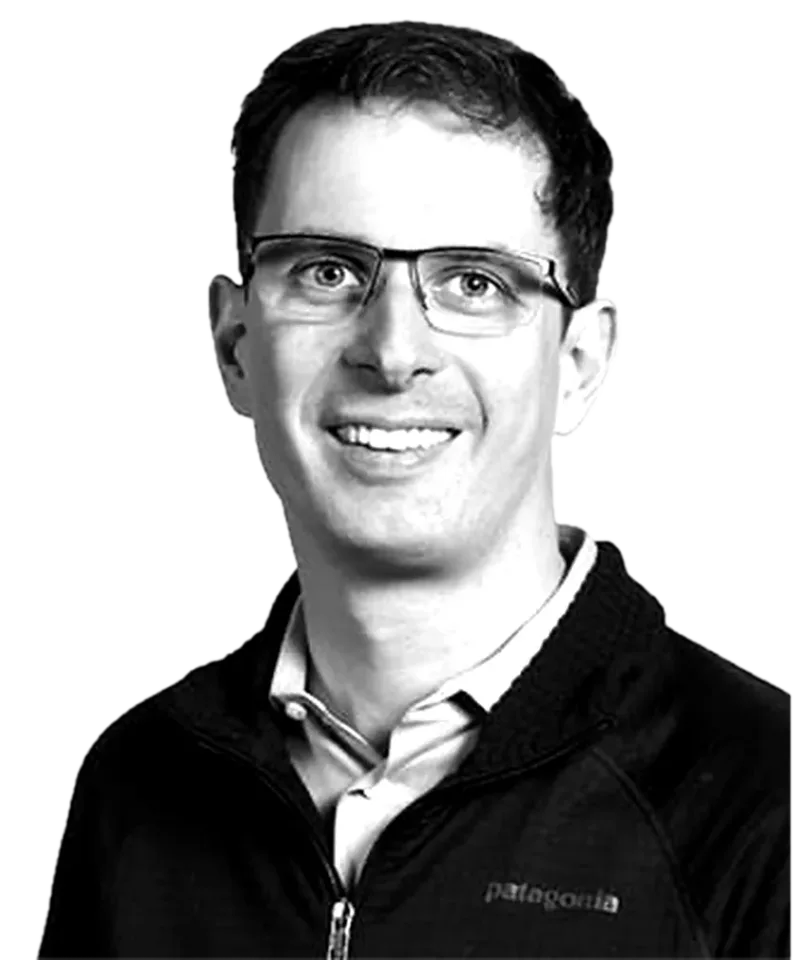
Photograph of Filip Kaliszan
CEO and Co-founder

Filip Kaliszan

Kaliszan co-founded Verkada and leads a company combining security hardware with cloud-managed software.

The choice behind the company +

The company is expanding a shared management platform into AI capabilities and additional site systems.

“It’s like the iPhone of cameras.”

Filip Kaliszan · Impact Podcast with John Shegerian, on the idea behind Verkada in 2016 · 2022-05-31
The decisions behind the company

Four founders and the first cameras

Verkada was founded in 2016 by three Stanford graduates, Filip Kaliszan, James Ren and Benjamin Bercovitz, who had built a course data site called CourseRank and sold it to Chegg, together with Hans Robertson, a co-founder and former chief operating officer of Meraki, now part of Cisco. Kaliszan is CEO. Robertson is executive chairman and, in the company's words, leads daily operations in partnership with Kaliszan. The company started with four employees; its careers page now counts more than 2,000 full-time employees. Kaliszan says he still spends a lot of his time hacking on cameras and building product.

Three decisions that shaped the company

Three decisions explain why Verkada looks the way it does. First, hardware: the founders built their own cameras instead of software for other makers' devices, because Kaliszan says software alone could not solve customers' problems well enough. Second, partners: for the first few years integrators were hard to win over, yet Verkada always sold through them, and Kaliszan says the company is only as successful as that relationship. Third, the platform: he points to Apple's first iPhone, which did a few things well and improved every year, to explain building the platform one product at a time.

We transact through the integrator, always, right from the beginning.

Filip Kaliszan · Co-founder and CEO, Verkada · Executive interview at the Security Industry Association's Securing New Ground conference · 2024-10-14

The leaders between Seoul and San Mateo

For a role in Korea, the people who matter sit on the sales side. Eric Salava, Chief Revenue Officer, oversees go-to-market strategy and the sales organisation worldwide. Jonathon Dixon joined in October 2024 as Vice President and Managing Director of JAPAC and leads teams in Australia, Japan, Korea, Taiwan and Singapore from Singapore. Boudewijn Pesch, Vice President of JAPAC Channel Sales since January 2025, oversees channel strategy and partnerships across the region. In Korea, Edward Kim (김기훈) has been Country Manager since October 2025. He brings more than 25 years in enterprise technology; most recently he ran Veeam Software Korea, where the release says installations grew from a handful of customers to more than 1,300.

How Verkada says it works and hires

The company states its mission plainly: to protect people and places in a privacy-sensitive way. It turns that into product rules, such as letting customers choose the country where data is stored and not training its underlying models on customer video unless a customer asks or donates it. Its board talks openly about pace. In an internal session published in April 2026, board member Mark Anderson, who joined in September 2025 and is also President of Revenue at Cloudflare, told staff that a company approaching $1B in sales has to plan for the next 30%. On hiring, the careers page says the best collaboration happens in person, and candidates meet the hiring manager or a team member early, right after the recruiter call.

I've got to grow 30% next year. There's another billion to go.

Mark Anderson · Verkada board member · Boardroom Insights session with executive chairman Hans Robertson, on Verkada's blog · 2026-04-21

Korea belongs to a region led from Singapore. The Seoul posting asks the seller to feed Korean-market feedback into regional strategy and products. Signet reads the country manager’s channel and infrastructure-software background alongside the partner-led local plan.

05 / THE NEXT CHAPTER

Sell connected site security in Seoul

Customer visits, tailored demonstrations and rollout coordination require understanding both physical sites and Korean buying processes.

Korea go-to-market and local operations

Edward Kim (김기훈)

Country Manager, Korea

LinkedIn ↗
Publicly identified Korea roles1 profiles
  • Edward Kim (김기훈)Country Manager, Korea

One publicly verified leader is shown; the diagram represents responsibilities.

Public-profile headline observation and verified leader appointment. Functions do not establish reporting lines; unclear profiles excluded.

Why Korea? Why now?+

Signet reads three reasons in what Verkada and the Korean press have said. Size and fit: when the Seoul office opened in August 2023, Verkada's Senior Vice President of Sales called South Korea a critical market for its size and because Korean customers share the company's excitement for high-value, high-quality solutions. A partner channel: within eleven months Verkada had signed at least 40 Korean technology partners, including an official distributor and LG CNS, and later LS Sauter and SK Shieldus, which suits a company that sells every deal through partners. Demand for AI: the Korea country manager says Korean organisations are adopting AI quickly, and that the market is growing around manufacturing, education and healthcare. Verkada has also made South Korea a place where customer data can be stored and published Korea-specific privacy guidance, two steps that answer a buyer's first question about cloud cameras.

Seoul office opens

Verkada opens a sales hub in Seoul, its fourth location in Asia Pacific and Japan, with a country manager in place.

Official distributor signed

아이넷뱅크 signs as an official Verkada distributor in Korea and plans regional channel training, seminars and technical support for partners.

LG CNS partnership

Verkada Korea signs with LG CNS. The announcement describes support for enterprise customers across varied cloud environments and reports at least 40 Korean partners since opening.

A regional head for JAPAC

Jonathon Dixon joins to lead Verkada's teams in Australia, Japan, Korea, Taiwan and Singapore from a Singapore headquarters.

LS Sauter partnership

Verkada Korea partners with LS Sauter, a smart-building and automation company in the LS Electric group, bringing Verkada into building-management projects.

Edward Kim appointed

Edward Kim (김기훈), formerly country manager of Veeam Software Korea, becomes Country Manager for Korea. The release names SK Shieldus, LG CNS and LS Sauter as partners.

The country manager's market view

Kim tells a Korean security publication that the market is growing around manufacturing, education and healthcare, and that the local team and customer support are expanding.

Korean customer stories

By May 2026 Verkada has published customer stories from two Korean universities, Chung-Ang University and Woosong University.

Understand the Korea opportunity

Why Verkada came to Seoul

Verkada opened a sales hub in Seoul in August 2023, its fourth location in Asia Pacific and Japan, with a country manager already in place. Its Senior Vice President of Sales gave two reasons: the size of the market, and Korean customers' appetite for high-value, high-quality systems. Signet reads a third reason in what came next. A company that sells every deal through partners needs a channel before it needs a large office, and Verkada built one quickly: an official distributor in November 2023, at least 40 Korean technology partners by July 2024, when it also signed LG CNS, and later LS Sauter and SK Shieldus.

Customers in South Korea share our excitement for the kinds of high-value and high-quality solutions we deliver.

Ryan Bettencourt · Senior Vice President of Sales, Verkada · Verkada release on the Seoul office · 2023-08-03

The partners do different jobs. 아이넷뱅크, the distributor, planned regional channel training, seminars and technical support for partners. LG CNS, a digital transformation company, is described in the partnership announcement as supporting enterprise customers across varied cloud environments. LS Sauter, part of the LS Electric group, brings Verkada into smart-building and building-management projects. Korean press described these partnerships as a way to widen Verkada's local references, which is the work a Seoul seller takes on.

The leader and the local footing

Verkada Korea (버카다코리아) is a registered business in Korea with an office in Daechi-dong, Gangnam, and a Korean-language website. In October 2025 Verkada appointed Edward Kim (김기훈) as Country Manager for Korea, responsible for go-to-market strategy, sales operations and country expansion. He has more than 25 years in enterprise technology; he led Veeam Software Korea and, before that, the managed service business of Fortinet Korea, working closely with major telecom companies. In April 2026 he said the market was growing around manufacturing, education and healthcare, and that Verkada was expanding the local team and investing in customer support.

We are continuing to expand the local team and invest in customer support.

Edward Kim (김기훈) · Country Manager, Korea, Verkada · Boannews interview, reported in Korean; translated by Signet · 2026-04-01

Verkada has prepared the product for Korean buyers in ways that matter in a sale. Customers can choose South Korea as one of seven places where their cloud data is stored, and the company publishes guidance on Korea's personal information law as it applies to biometrics. Two Korean universities, Chung-Ang and Woosong, appear as customer stories on its site. The September 2026 Sound Systems announcement planned initial availability in the US, Canada, the UK, the EU, Australia and New Zealand.

What the Korea hiring asks for

On 8 October 2026 Verkada's own board lists one open Korea role, Account Executive, Seoul, among 310 worldwide. It is a full sales cycle seat: prospecting, outbound activity, online demos, proposals and negotiation across all industries in a territory, with Korean integrators, resellers and channel partners, and with Solutions Engineers for technical demos and rollouts. It asks for at least 10 years in a quota-carrying role, and native or fluent Korean. The employer marks the agreement permanent, with a six-month probation period and no anticipated change in working conditions during probation. Standard hours are 9 a.m. to 6 p.m., including an hour for lunch, adjustable for business needs. Korean B2B experience, business English, a bachelor’s degree and CRM experience are preferred rather than mandatory.

Read together, the posting and the press describe a seat that builds Verkada's Korean reference base through partners. The first year is likely to be about turning partner relationships into named sites in manufacturing, education and healthcare, and about answering the questions every Korean buyer of cloud cameras asks: where the video lives, who can see it, and what happened in 2021.

Before a mock application, decide whether you want to carry a quota for a product Korean buyers are still getting to know, through integrators who hold the customer transaction, with regional leaders in Singapore. If you do, the open role below has its own mock application.

KOREA OPEN ROLES

1 open role in Korea

Current Signet catalog · 2026-10-19

FOR YOU

Compare the quota, customer travel and partner work with your next role.

GTM · Sales · BD

Account Executive, Seoul

South Korea

Posting checked

The work
Own prospecting, demos, proposals and closing with customers and partners.
Who fits
At least ten years of sales experience in a quota-carrying role.
Keep in mind
Permanent role with six-month probation; travel as needed for customer meetings and site visits.
07 / NOW & NEXT

The next scene is taking shape.

CapitalG investment

Verkada announced a $5.8B valuation and over $1B annualized bookings.

Sound Systems announced

A cloud-managed sound line adds music and announcements; availability was announced for selected markets starting in October.

Seoul role verified

The employer still displays its Account Executive, Seoul posting with the role and application form.

More context on what comes next

Capital for the AI turn

Read against the bet, the last year has three threads. The first is money for AI. In December 2025 CapitalG led an investment at a $5.8B valuation, $1.3B above the Series E of February 2025, as annualized bookings passed $1B. In July 2026 NVIDIA joined as an investor and technical partner, and Verkada said it was building a search agent that combines several models and exploring reasoning models for incidents such as safety problems on factory floors and inventory loss in stores.

The capital also says something about the people inside. The company said the December round may give employees liquidity, and a board member told staff in April 2026 that a company approaching $1B in sales has to plan for another 30% of growth. That is the pace the board talks about, and new hires join it. This illustrates growth pressure, rather than a disclosed forecast for the following year.

More of the building on the same screen

The second thread is breadth. At its VerkadaOne conference in September 2026 the company added a transportation line with three rugged camera models and a vehicle gateway, cloud-managed sound systems, and Catalyst, a private-beta read-only connection that lets customers query Command from approved AI tools such as Claude, ChatGPT and Gemini. Each addition is another product line an existing customer can add to the same account, which is how Verkada grows.

What to watch in Korea

The third thread is Korea itself. Edward Kim has led the country since October 2025, Verkada now names Korean university customers, and the market he describes is moving in manufacturing, education and healthcare. Three things are worth watching over the next year.

  • Whether Sound Systems and the transportation line launch in Korea, after first markets in North America, Europe and Oceania.
  • Whether Korean manufacturers, hospitals or large companies join Chung-Ang and Woosong as named customers.
  • Whether more Korea roles open beside Account Executive, Seoul, such as Solutions Engineers, which the board lists today in Sydney, Perth and Auckland.

In an interview, connect the three threads to the Korean seat. New AI features give a seller fresh reasons to call an existing customer, each new product line is a way to grow an account, and where Korea sits in the launch order is a fair question to ask the hiring manager.

Their future. Your next chapter.

Find your part ↑

An independent profile by Signet. No affiliation or investment recommendation. Introductions happen only with your consent.
Research reviewed 2026-10-07

A LITTLE MORE CONTEXT

Understanding Verkada.

What does Verkada do?

Verkada connects cameras, access control and other building systems through Command. A distributed operator can investigate footage and access events without maintaining separate recorder interfaces for every location.

What is the opportunity in Korea?

Customer visits, tailored demonstrations and rollout coordination require understanding both physical sites and Korean buying processes.

Are these confirmed job openings?

Employer postings were checked on 2026-10-08. Availability can change. Mock applications request a review from Signet.

How can I explore the company in more depth?

Follow the company from its vision through products, evidence and people to the Korea team and current roles. Use the table of contents to move within the page, and expand the sections for more context.

Back to the collection ↗