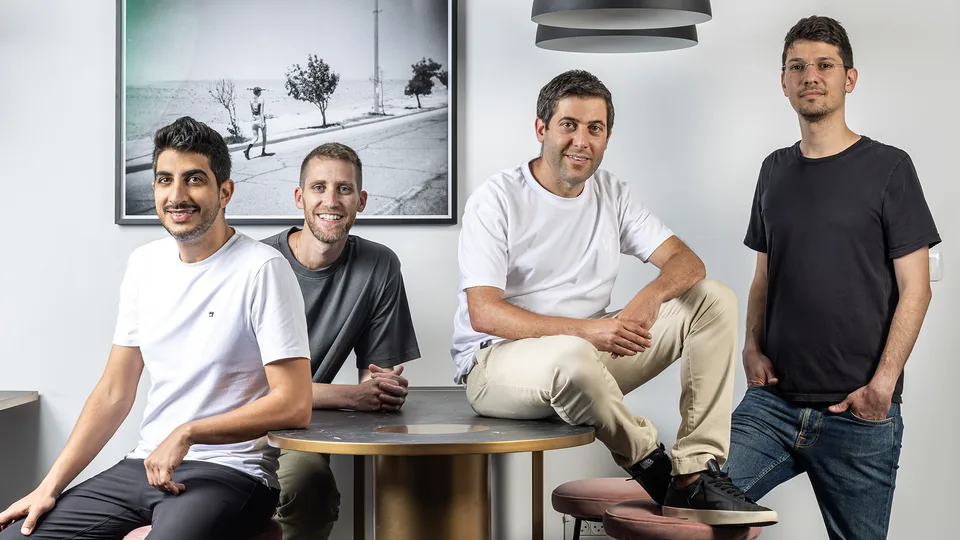
Wiz co-founders together in their office
Wiz / THE WORLD THEY ARE BUILDING

See cloud risk before it becomes an incident.

As AI applications add models and agents, the same question remains: which reachable path exposes important data or actions? This is a grounded direction, not a promise to prevent every incident.

See it taking shape ↓
01 / THE PRODUCTS

The products behind the promise.

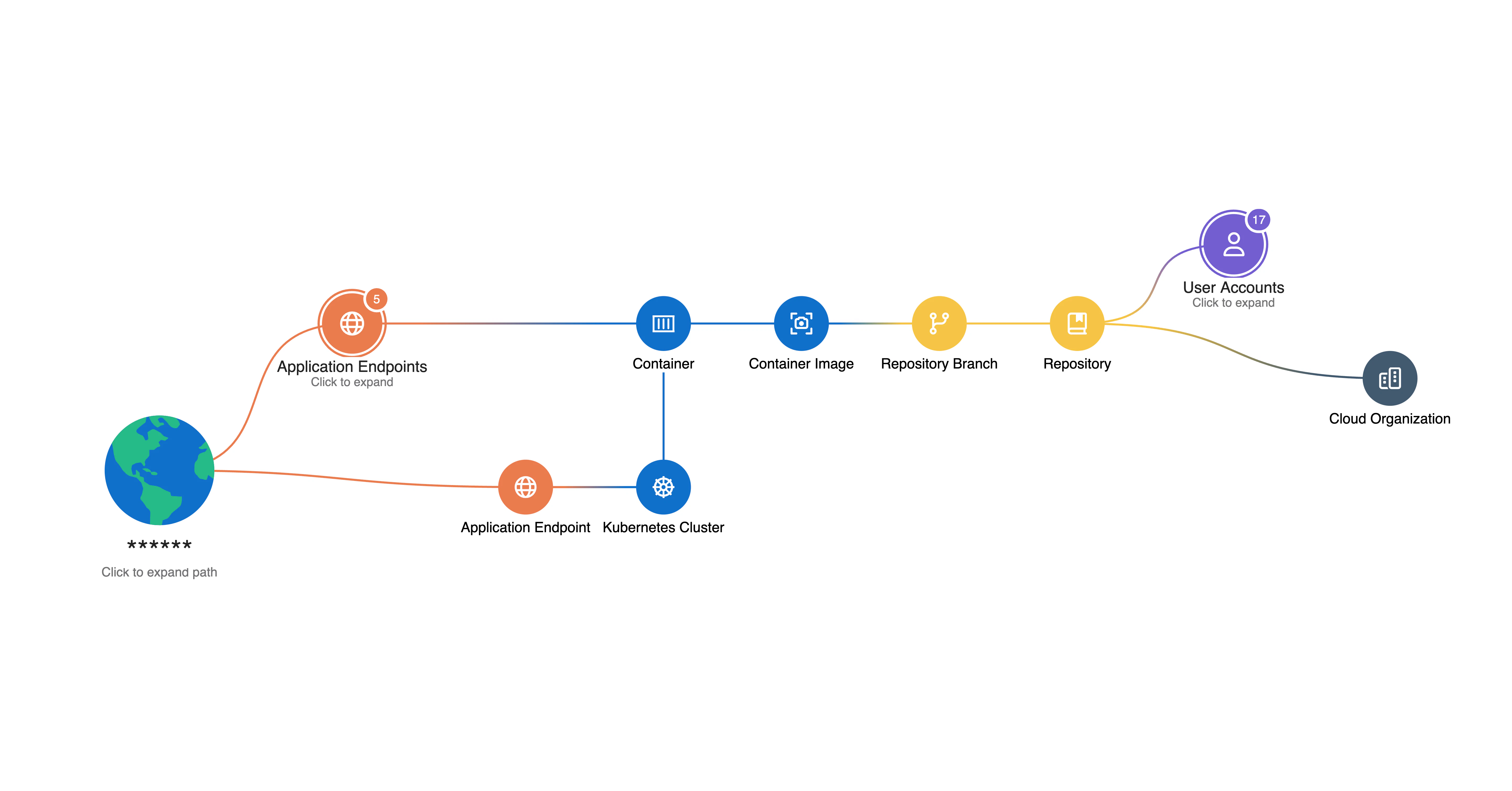
Wiz Security Graph connects cloud resources, code and user accounts.
Security Graph resources, code and user accounts in the Wiz Code launch.
Wiz Cloud

Map resources and prioritize related cloud risks.

Shared visibility across clouds and teams.

BMW

Developers take ownership of cloud risk

BMW reports 95% fewer critical issues and says 95% of Wiz users are outside the security team.

Wiz made cloud workloads visible within days and provided attack paths and remediation guidance to DevOps.

What changed? +

BMW needed multi-cloud visibility without slowing development and encountered Log4j during evaluation.

Vendor-published BMW experience comparing critical issues with the point when Wiz was enabled; the result covers the customer environment described.

The official platform page shows the Scan code with AI interface.
02 / HOW IT BECOMES REAL

From cloud inventory to a developer-owned fix

Illustrative workflow: the security team sees thousands of findings across several clouds and needs a defensible priority.

  1. 01

    Inventory cloud resources

    API-based discovery maps resources without installing a scanner on every workload. Runtime detection may also use the Wiz Sensor.

  2. 02

    Understand the attack path

    The graph connects exposure, identity, data and vulnerabilities. Analysts review dangerous combinations instead of treating all findings alike.

  3. 03

    Return the issue to its owner

    Code-to-cloud correlation identifies the repository and developer behind a resource. Teams use remediation guidance and workflow integrations to act.

  4. 04

    Monitor active behavior

    Wiz Defend combines runtime signals with cloud context. Responders investigate a threat with the resource and identity relationships already available.

Follow the work, step by step

Find the path an attacker can take

Wiz starts with the connections in a company’s cloud environment. A vulnerable component matters differently depending on whether the internet can reach it, which identity controls it and which data it can access. The company’s Security Graph puts those relationships into the same view so a team can decide which combination deserves attention first. That is the central bet: security becomes useful when a finding explains a possible route to harm and points to someone who can change it. This also explains the agentless approach in the original platform. API connections gather context across the environment before individual teams start assigning work. In a scene constructed by Signet, a security engineer investigates a public application with excessive permissions. The graph is a starting point for judging the exposure, while the customer decides the acceptable access and the owner of the repair. The product is meant to make that decision easier to explain across security, cloud and development teams.

Follow the finding into the work

The next question is who can fix the risk and how the fix reaches the application. Wiz Code maps running cloud resources back to repositories and development pipelines. Wiz Defend adds incident investigation and response with cloud context. These are separate responsibilities connected by the same graph: identify a dangerous configuration, trace its origin, investigate active behaviour and coordinate the response. The published product descriptions also distinguish agentless context from runtime signals collected by the Wiz Sensor. A candidate should preserve that distinction when explaining a deployment. Signet’s reading is that the practical challenge sits in the handoff between a security decision and a developer’s change. A useful customer discussion would establish what the team saw, which action reduced the risk, how the change was checked and who keeps monitoring the result. The company’s claims about shared context can then be tested against a concrete workflow rather than a general promise that buying a platform will solve security.

Protect the system around AI

AI-APP extends the proposition to models, agents, tools, data and infrastructure. The March 2026 launch describes risk emerging when these components interact, including agents permitted to retrieve sensitive information or act in production. The important continuity is context: an isolated model interaction can look normal while the connected route exposes a business asset. This is the company’s stated reason for connecting code, cloud and runtime in the AI era. Google completed its acquisition of Wiz on March 11, 2026, keeping the brand and support for multiple clouds. That enlarges the resources behind the product while preserving a customer promise that needs to hold in actual deployments. In Korea, the two open commercial roles sit at that point of translation. The account executive explains the customer’s security problem and manages a complex purchase. The sales director develops the team and territory plan. Both need to connect the platform’s technical proposition with the customer’s buying process and continued use.

Understand the products and their customers

Three responsibilities share a graph

Wiz Cloud gives security and cloud teams an inventory, relationships and a way to prioritize risks across the environments they connect. The product page describes agentless collection through API connectors, attack-path analysis and routing the right fix to the right owner. Wiz Code works earlier in development. It connects repositories and pipelines with the cloud resources they create, and maps a risk back to the code and team responsible. Wiz Defend addresses the security-operations part of the lifecycle: detection, investigation, containment and remediation with cloud context and runtime signals. Reading them as three responsibilities is more useful than treating the names as interchangeable. A buyer may begin with cloud posture and later involve developers or incident responders. The candidate’s task is to establish the customer’s starting point and the work each team needs to do. Signet’s interpretation is that the graph matters because it can preserve the reason for an action as that action moves between teams.

A customer case is a specific result

BMW’s published case describes the work of connecting cloud visibility with developer action. During the Log4j investigation, the team could identify relevant workloads and pass more useful remediation information to developers. The customer reports a 95% decrease in critical issues compared with the point when Wiz was switched on. That figure is a customer-reported result in a vendor-published case, and its scope is the described BMW environment. Colgate-Palmolive’s separate case illustrates a similar operational shift: development and cloud teams use shared findings instead of waiting for security to send information. Those cases explain who uses the platform and why the interface needs to carry enough context for someone outside security. For a candidate, the useful preparation is to reconstruct a customer example with the original operating problem, the people who needed to act and the measure used to judge the result. The customer’s result remains attached to that case instead of becoming a forecast for another enterprise.

Korean adoption includes the partner’s work

The Korean examples add an implementation perspective. Cloocus reported supporting Hyundai Motor Group’s Wiz-based cloud visibility project, including environment analysis, onboarding, policy design and stabilization. Megazone Cloud reported completing Coway’s CNAPP project and starting operation in September 2026. That work connected AWS, Google Cloud and GitHub, used Wiz Cloud Advanced and Wiz Code, and included architecture, tool integration, training and technical support. The examples are partner announcements carried by Korean trade press, with the customer and scope named. They therefore support a reading of local adoption through technical partners. The account executive’s posting explicitly includes partner alignment and customer-success cooperation, which makes this channel evidence relevant to the role. A candidate can ask how the commercial plan recognizes the work between a product demonstration and routine use. Signet’s reading is that clear ownership among customer, partner and vendor is part of making the product valuable in an enterprise setting.

03 / THE EVIDENCE

The story, in numbers.

DATED OBSERVATIONS

Annual recurring revenue

USD · M
Annual recurring revenue2021: $1M; 2022: $100M; 2023: $350M; 2024: $500M+; 2025: >$1B$1MFeb 2021$100MJul 2022$350M2023$500M+re:Invent 2024>$1B2025

Dated recurring-subscription milestones, with thresholds marked explicitly. ARR is the subscription pace at a point in time, read separately from completed annual accounting revenue. These are dated disclosures, not a continuous growth record.

Figures, dates & basis +
Annual recurring revenue
DateValueBasis
2021$1MWiz dates the $1M ARR starting point to February 2021.
2022$100MWiz dates the $100M ARR milestone to approximately July 2022.
2023$350MThe May 2024 company release states $350M ARR achieved during 2023.
2024$500M+A Wiz-sponsored 2024 presentation states $500M+ ARR; the value is a disclosed threshold.
2025>$1BReported 2025 ARR threshold.

Wiz · Wiz via ACCESS Newswire · Wiz / AWS · TechCrunch

Historical $100M ARR milestone

Wiz says it moved from $1M to $100M ARR in about 18 months.

Google announces $32B deal

Google signed an agreement to acquire Wiz.

Acquisition completed

Google announced completion and continued multi-cloud support.

Read the growth story

Read the subscription measure with its date

Enterprises buy subscriptions to Wiz’s security capabilities. The pricing page separates product packages and directs buyers to discuss the required coverage, so the useful commercial question is which environment and workflow the customer needs protected. Historical ARR gives one measure of recurring adoption. Wiz’s August 2022 announcement dates growth from $1M ARR in February 2021 to $100M around July 2022. Its May 2024 company release states that $350M ARR was achieved in 2023. A company-sponsored presentation at re:Invent 2024 states $500M-plus ARR. These are dated recurring-revenue milestones, and the threshold in the presentation remains a threshold. They describe the subscription pace at those points rather than completed annual accounting revenue. The chart can therefore show the company’s reported adoption path with the definition attached. A candidate in sales should understand that distinction when explaining what an account’s subscription contributes to the business and how the sales plan connects with adoption.

A purchase price measures a transaction

Google’s acquisition announcement in March 2025 used a $32B price subject to closing adjustments. The transaction completed on March 11, 2026. Alphabet’s quarterly filing later records a $29.5B purchase price after adjustments and excluding post-combination compensation arrangements. The figures belong to different descriptions of the same acquisition, so both need their basis and date. The accounted price is neither Wiz’s revenue nor a new private financing valuation. After the close, Wiz’s results are consolidated within the Google Cloud segment. Signet’s reading is that ownership changes the resources and distribution behind the product, while the commercial work still has to earn an enterprise purchase and sustained use. The account executive’s requirements make that work concrete: major Korean accounts, large enterprise deals and disciplined opportunity progression. The director’s responsibilities add forecasts, coaching and territory strategy. Transaction scale gives context for the owner’s commitment; customer and job evidence explains the operating work.

Watch execution in three places

Signet’s risk reading begins with the product’s dependence on useful context. Connections and signals need to reflect the customer’s environment well enough to prioritize a real issue. The second area is adoption across teams. A platform that spans code, cloud and runtime asks developers, security practitioners and cloud operators to agree how work is assigned and checked. Customer and partner cases show the effort involved in that cooperation. The third area is the commitment to multicloud service within Google ownership. The company and buyer repeat that commitment, which makes support across the customer’s actual providers a practical point to examine. These are questions grounded in the platform, deployments and ownership promise, rather than claims that a particular failure has occurred. Other cloud-security platforms and cloud-native controls compete for the same enterprise budget. A Korea seller needs to compare the customer’s current approach with the proposed change, including rollout effort, who uses it and how the customer judges a security outcome after purchase.

04 / THE PEOPLE

Someone saw it first.

Photograph of Assaf Rappaport
Co-founder and CEO

Assaf Rappaport

Rappaport authored the company’s historical ARR milestone and led Wiz through its Google acquisition.

The choice behind the company +

Wiz pursued unified cloud context and ultimately joined Google while retaining support for multiple cloud providers.

“customers help define what we should build”

Ami Luttwak · Dated leadership statement · 2026-04-21
The decisions behind the company

Four founders, distinct responsibilities

Wiz’s current company page lists Assaf Rappaport as CEO, Ami Luttwak as CTO, Yinon Costica as VP Product and Roy Reznik as VP R&D. The four co-founders had worked together before starting Wiz in 2020. Their account of the early company emphasizes a decision to change the product after listening to security buyers. Luttwak describes beginning with Beyond Networks and a different technological direction, then moving toward cloud security as customers showed them the problem they wanted solved. The choice helps explain the later platform: start with a customer’s environment and expose a risk that people can act on. Signet’s reading is that the founding story is useful when it identifies a decision and the evidence that changed it. A candidate can bring a comparable example of revising an account or product approach after learning something concrete from the customer, with enough detail to explain what was kept and what was changed.

Listen, then take responsibility

The careers page states a commitment to truthful communication, example-setting and accountability for execution. Luttwak’s dated account of operating principles similarly links customer input with rapid correction when an approach needs to change. These statements are the company’s own account of how it works. They provide a useful preparation frame, while an interview remains the place to examine how a particular team applies them. For the two Korea sales seats, responsibility is visible in the job descriptions: the director manages forecasts, goals and coaching; the account executive maintains executive relationships and advances a complex opportunity. A strong example would explain the customer problem, the evidence gathered, the decision made and the result, including a correction when necessary. Signet’s interpretation is that a sales story with only the final contract misses the operating decisions the postings require. The candidate should be able to describe the work that made the opportunity credible and the cooperation that carried adoption forward.

Google ownership changes the context

Rappaport’s March 2026 closing letter connects the new owner with a continuing commitment to secure customers across clouds. His July update repeats the multicloud direction and describes product cooperation with Google. These dated statements tell a candidate which chapter the company is in: the acquisition is complete, and the product and ecosystem are developing within Google Cloud. The Korea postings name reporting relationships rather than leaving the sales structure abstract. The account executive reports to the Regional Director of South Korea; the director reports to the Regional Vice President of SEAK. Korean reporting identifies Kaiyang Cai as a regional vice president involved in the market. That supports a regional leadership context, while the exact reporting roles in the current job descriptions remain the basis for the two seats. A candidate can use those relationships to ask how territory decisions, partner plans and product questions move between local customer work and the regional organization.

05 / THE NEXT CHAPTER

Build major-account business and the Korea sales team

The account executive progresses complex major-account purchases; the director sets territory plans, forecasts and team coaching.

Account sales
  • Enterprise Account Executive
  • Mid-Enterprise Account Executive
Solutions and customer engineering
  • Staff Solutions Engineer
  • Customer Engineer, Wiz/Google
Partner work
  • Staff Partner Solutions Architect
  • Regional Partner Manager

The public-profile reading supplies sales, technical and partner work examples; current employer postings separately specify reporting roles.

Why Korea? Why now?+

The data region, named enterprise projects and implementation partners give the two commercial hires a local adoption context.

Korea region reported

Cloocus describes support for local adoption.

Megazone Cloud partnership

The partnership connects graph analysis with operating support.

Coway project reported

The partner reports operation from September 18.

Understand the Korea opportunity

A data region and partners precede the hire

The Korean record starts with concrete adoption conditions. A March 2025 report describes Wiz’s Korea data region and Cloocus’s work supporting domestic customers. A region is the infrastructure context for handling customer data; the candidate can read it alongside the customer’s requirements for location and governance. In January 2026, Megazone Cloud announced a partnership with Wiz to apply the Security Graph and attack-path analysis in Korean operating environments. Subsequent named projects show how those plans reached customer work. Cloocus supports Hyundai Motor Group, and Megazone Cloud reported Coway entering operation in September. Together these sources support a local market with implementation partners and named enterprises. Signet’s interpretation is that the new commercial hires join an adoption chain already involving customer security leaders, technical partners and product specialists. A useful account plan should therefore recognize the work those parties perform and the conditions under which the customer can keep operating the platform.

Two roles own different parts of sales

The current employer board lists two Korea roles, both remote in South Korea. The Majors Account Executive develops major-account plans, executive relationships and complex sales engagements, working with partners and customer success through adoption and expansion. Its minimum qualification is ten-plus years of SaaS or security sales to major Korean accounts, with a record of multi-million-dollar enterprise deals. The Regional Director, Sales develops a territory strategy, manages forecasts and coaches account executives. Its minimums include five-plus years managing a team of at least four major-account executives and seven-plus years in complex cloud or security sales. Those requirements should be read separately: one seat owns an account’s progression, the other owns team and territory performance. Both postings require the legal right to work locally and say visa sponsorship is outside the offer. Each seat has its own original text and mock application, so the reader can compare the exact work and conditions before choosing.

Prepare an account and a decision

For these two roles, Signet’s first-quarter reading is to understand the territory and existing partner work, agree priorities with the reporting manager and connect a credible opportunity with the technical people needed to evaluate it. This is preparation guidance derived from the postings, rather than an employer onboarding schedule. The account executive names solutions engineering, customer success, product, marketing, delivery and executives as collaborators. The director adds team goals, coaching, pipeline analysis and sales forecasts. A candidate can make the fit visible through one enterprise case: the customer’s security problem, how the buying group reached agreement, the technical evaluation, the partner’s contribution and the outcome. For the director seat, add the decisions used to coach a team and improve a forecast. Someone whose preference is an individual engineering build should compare it with these commercial and management duties. Someone comfortable turning technical risk into a buyer’s decision can examine the exact experience threshold and the reporting relationship for each seat.

KOREA OPEN ROLES

1 open role in Korea

Current Signet catalog · 2026-10-19

FOR YOU

Compare the exact seat, then explain your experience in a mock application.

GTM · Sales · BD

Regional Director, Sales

Remote - South Korea

Posting checked

The work
Own territory strategy, coaching, sales pipeline and forecasting.
Who fits
5+ years managing a team of 4+ major-account executives.
Keep in mind
Remote South Korea; local work authorization required; reports to SEAK Regional VP.
07 / NOW & NEXT

The next scene is taking shape.

Historical $100M ARR milestone

Wiz says it moved from $1M to $100M ARR in about 18 months.

Google announces $32B deal

Google signed an agreement to acquire Wiz.

Acquisition completed

Google announced completion and continued multi-cloud support.

More context on what comes next

The deal has closed

Google completed the Wiz acquisition in March 2026 and kept the brand and the commitment to support customers across clouds. That is the current ownership fact behind the company page. The later quarterly filing supplies the accounted purchase price, while the 2025 announcement remains the basis for the original deal headline. For a candidate, the practical consequence to examine is how the product and field teams work with the wider Google Cloud security organization. The product promise remains connected context across the customer’s environment. Signet’s reading is that support for the customer’s actual providers is one concrete way to assess that promise.

AI security keeps the context question

The March AI-APP launch and July CEO update connect the established graph with AI applications and specialized security agents. The update describes cooperation with Google and reiterates multicloud support. A reader can follow the continuity without treating every announcement as a new business: the company is extending visibility and response to systems built with models, agents and tools. The point to watch is how these features fit the customer’s operating process, including the source of a finding, the action it recommends and the person who approves a change. Signet’s interpretation is that those details matter when technical interest becomes an enterprise purchase.

Korea has a recent operating example

Coway’s September project connects Wiz Cloud Advanced and Wiz Code with a Korean enterprise’s development and cloud work. The partner reported operation beginning on September 18 and described tool integration, access segmentation and training. That is a dated local adoption example to read beside the two current sales vacancies. Over the next year, Signet would watch whether the local commercial plan turns such implementation experience into repeatable account work, how partners and customer success support expansion, and whether product changes remain understandable to the people responsible for remediation. These are questions grounded in the sources, not forecasts of guaranteed results. The original job text and the role-specific mock application give the candidate a practical place to test their own experience against the work.

Their future. Your next chapter.

Find your part ↑

An independent profile by Signet. No affiliation or investment recommendation. Introductions happen only with your consent.
Research reviewed 2026-10-08

A LITTLE MORE CONTEXT

Understanding Wiz.

What does Wiz do?

Wiz connects software, cloud resources, identities and runtime evidence in a security graph. A security team can see why a vulnerability matters to a particular application and give its owner a concrete fix.

What is the opportunity in Korea?

The account executive progresses complex major-account purchases; the director sets territory plans, forecasts and team coaching.

Are these confirmed job openings?

Employer postings were checked on 2026-10-08. Availability can change. Mock applications request a review from Signet.

How can I explore the company in more depth?

Follow the company from its vision through products, evidence and people to the Korea team and current roles. Use the table of contents to move within the page, and expand the sections for more context.

Back to the collection ↗