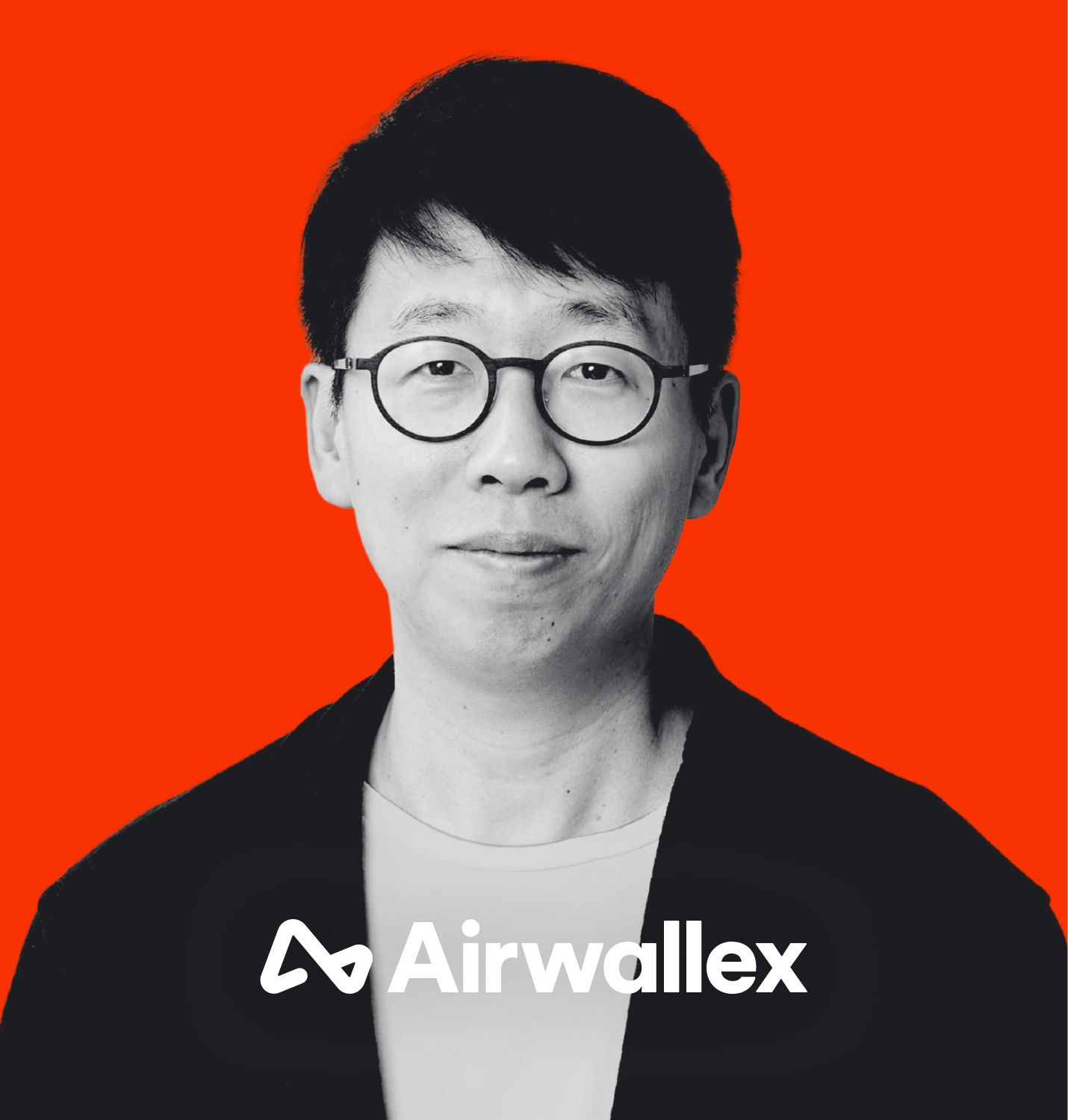
Photograph of Jack Zhang.
Airwallex / THE WORLD THEY ARE BUILDING

Money moves as easily as the business.

The opportunity is a finance operation that can add countries and products without rebuilding every payment workflow. Dependable settlement and clear financial records are part of that promise.

See it taking shape ↓
01 / THE PRODUCTS

The products behind the promise.

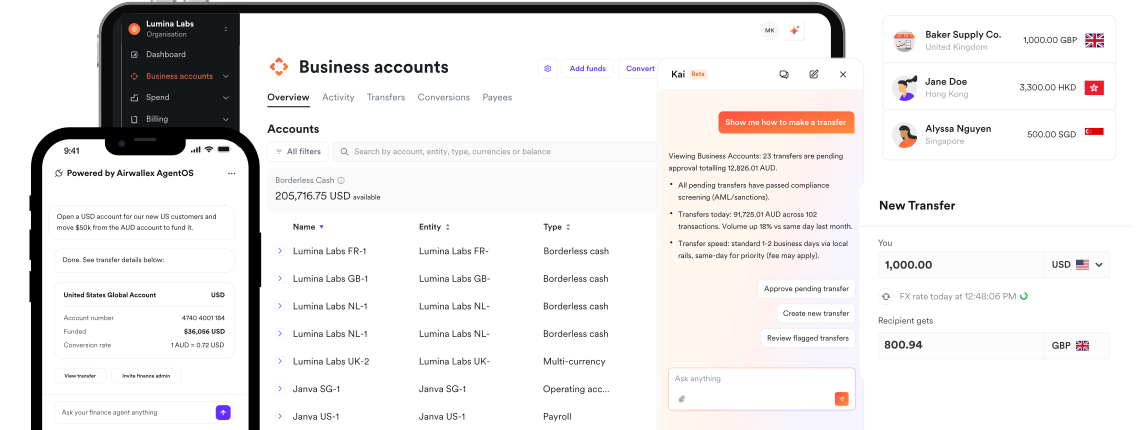
Airwallex Business Accounts: account balances, transfers and an AI assistant.
Business Accounts

Collect, hold, convert and transfer business funds.

Manage international cash movement in one operational view.

Arsenal

Unify premium hospitality payments

The announced implementation covers hospitality payment acceptance at Emirates Stadium.

The January 2026 agreement integrates Airwallex Payment Acceptance across Arsenal’s hospitality payments.

What changed? +

Hospitality purchases span premium seating, executive boxes and VIP packages at Emirates Stadium.

The relationship includes sponsorship, but this case uses the specifically described payment integration rather than treating a logo as customer evidence.

McLaren Racing

Batch payouts for a finance team

About half a day a month saved, in the finance team's own words.

A batch payout from a template takes a little under an hour per run, and onboarding took 14 days.

What changed? +

International payment runs were 30 payments made one at a time.

Airwallex case study about the 2024 season; the figures are the customer's statements, and McLaren is also an Airwallex sponsorship partner.

Business Account interface with balances, transfers and the Kai beta assistant.
Official Business Account interface illustration, viewed on 8 October 2026; the balances and example business are demonstration content.
02 / HOW IT BECOMES REAL

From overseas sale to a reconciled supplier payment

This illustrative exporter workflow uses documented collection, wallet, transfer and accounting functions. Product availability and fees depend on the customer’s registration region.

  1. 01

    Accept the customer’s payment

    The business offers checkout or payment links and selects supported local payment methods. The transaction currency and settlement currency are explicit choices.

  2. 02

    Keep funds in the right currency

    Multi-currency accounts and wallets let finance manage balances. Like-for-like settlement can avoid a conversion when the same currency will be spent later.

  3. 03

    Approve and route the supplier transfer

    Finance approves a bill or transfer. The network routes payment through available local or global rails while engineering handles asynchronous bank responses and recovery.

  4. 04

    Connect money movement to the books

    Accounting integrations sync financial data. Teams investigate discrepancies and exceptions rather than treating a submitted transfer as a completed settlement.

Follow the work, step by step

It started with paying suppliers abroad

Airwallex starts from a problem most exporters know. In 2015 Jack Zhang and a few fellow entrepreneurs opened a coffee shop in Melbourne. Buying products and materials from overseas, they met the inefficiencies, delays and costs of traditional finance and foreign exchange first hand. Ten years later the company describes the same problem at the scale of the world economy. A commissioned 2026 study examines the cost of foreign-exchange spreads, correspondent-bank fees, payment repairs and delayed settlement. It separates annual costs from capital tied up at a point in time. These are modeled estimates about business payments, rather than Airwallex revenue or measured savings for its own customers.

The bet: own the rails, then build the software

What sets Airwallex apart is where it chose to build. The company calls it the harder path: local licences secured market by market, direct connections to local payment networks and clearing systems, and payments and FX infrastructure built and run in-house, with accounts, cards and APIs on top. Zhang says building on top of other providers' infrastructure is simply not scalable. By June 2026 the company counted 85+ licences, direct integrations into 160 local payment networks and payouts to 200+ countries. Licences are slow to win: in Japan alone the process took seven years. That slowness is the point of the bet: the lead investor in the June 2026 round called what Airwallex has built unusually hard to replicate.

a technology company that wears banking licenses around the world.

Jack Zhang · Co-founder and CEO, Airwallex · Founders in Arms podcast (machine transcript) · 2026-01-16

Why now: AI makes even small companies cross-border

The company's answer to why now has two parts. The first is speed: with direct links to local clearing systems, it said in May 2025 that 95% of its transactions arrived within a few hours or the same day, and 68% were processed instantly. The second is AI. In December 2025 Zhang argued that as AI lowers the cost of software, infrastructure and data become the real difference between companies. In his June 2026 letter he went further: the next generation of founders will sign a first customer in San Francisco, source from Seoul and contract in Lagos before making a first full-time hire. Software for that can now be written quickly. The licences, banking relationships and local network connections underneath cannot.

Moving money across borders, managing multi-currency accounts, staying compliant across dozens of jurisdictions aren't problems you can prompt your way out of.

Jack Zhang · Co-founder and CEO, Airwallex · CEO letter on the company blog · 2026-06-25

One exporter's month, step by step

Follow an illustrative Korean exporter through the four steps Airwallex documents. Collect: an overseas buyer pays through a checkout or a payment link in a supported local method, and the exporter chooses the currency it settles in. Hold: the money sits in a multi-currency balance, so dollars received this month can pay a dollar supplier next month without converting twice. Pay: the finance team approves a supplier transfer, and Airwallex routes it over a local or international rail, handling slow or inconsistent bank responses behind the screen. Reconcile: accounting integrations sync the records, and the team checks exceptions instead of treating a submitted transfer as a finished one.

People still make the calls that carry risk: when to convert, which payments to approve and how to handle an exception. Currency conversion is also a smaller share of the work than the company's reputation suggests. In July 2025, by the CEO's account, only about 20% of transactions included an FX step; the rest moved money without changing its currency.

The strongest evidence for the bet is scale and speed, and it comes from the company itself: $287B of annualized transaction volume in March 2026 and 93% of transfers settled the same day. Customer-level results published so far are modest, such as half a day a month saved by one finance team. In an interview it is fair to ask how Airwallex measures what customers save.

A Korea hire sells or runs the rails, not only the app. The account executive posting lists what Korean distributors and trading firms need: cross-border payments, FX exposure management, multi-currency accounts, receivables and payables, and reconciliation. The licences Airwallex bought in Seoul are what let it serve them as a local provider.

Understand the products and their customers

Three doors into one money system

Airwallex sells one network through three doors. Most customers come in through the Business Account: the CEO said in April 2026 that more than 90% land on it first, and that payments and spend management follow. The second door is Payments and Spend, for collecting money from customers and controlling what employees spend. The third is Platform APIs, which let other companies put Airwallex accounts, FX and payouts inside their own products. All three lead to the same balances and the same network, which is why the company tracks how many products each customer uses. In June 2026 it said more than 90% of its revenue came from customers using more than one product; in November 2025 the CEO wrote that roughly half of customers used several.

Revenue by product line, July 2025, from the CEO's figures as reported in a research memo
Product lineShare of revenue
Business accounts45%
Spend management and corporate cards25%
Merchant acquiring (card payments)30%

The Business Account is the core. A company opens it online, receives money into local currency accounts (the Korean site says in more than 20 currencies), holds balances in several currencies and sends transfers in 60+ currencies to 200+ countries; the company says 93% of funds arrive the same day. The current US pricing page separates Explore, Grow and Accelerate. Grow charges $12 per active spend user each month plus a platform fee based on team size; purchase orders sit in Accelerate. Regional plans and product availability should be read separately. It is built to replace slow bank transfers: one small travel firm in the case studies moved off SWIFT transfers that took days.

Payments and Spend covers both directions of a company's cash. Payment acceptance takes card and local payment methods online and settles in the currency the merchant picks; Arsenal now runs all hospitality payments at Emirates Stadium through it. Spend issues multi-currency corporate and employee cards with limits, plus expense and bill management. In May 2026 Airwallex added billing for invoices, subscriptions and usage-based pricing at no added cost to existing plans, which it presents as a response to AI companies that charge by usage. Its head of data and AI describes Kai as a live assistant for plain-language requests. The October governance explanation keeps transfers and foreign exchange subject to human approval.

On 30 September 2026 Airwallex introduced a redesigned Business Account that brings account balances, transactions and permissions for multiple legal entities into one view. Customers can separate accounts by purpose, including cash, yield and credit, and connect their preferred AI tools within the organization's permissions and approval rules. The announcement describes local payout rails in more than 120 countries, a narrower scope than the company's broader 200+ country payout coverage. Account, entity and payment-route choices matter because a payment must be funded and recorded against the right legal entity.

Platform APIs turn Airwallex into infrastructure for other companies. A marketplace, software platform or fintech opens accounts for its own customers through the API, converts currencies, pays out and issues cards, while Airwallex supplies the licences and handles KYC and AML checks. Pricing is agreed with the sales team. This door explains the gap between two customer counts published a day apart in June 2026: more than 250,000 companies use Airwallex, and more than 676,000 businesses are served directly or through platform customers.

We hold licenses, operate payment infrastructure, price FX, and build the products and APIs customers use.

Dan Kim · VP Product Partnerships and Developer Ecosystem, Airwallex · Airwallex careers blog · 2026-09-17

Who buys it, and what changed for them

The named customer evidence comes in two kinds. The first is case studies with numbers, all from the customers' own statements as published by Airwallex. McLaren Racing's finance team used to make 30 international payments one at a time; with a batch template a run takes a little under an hour, which the team says saves about half a day a month. Authentic Vacations, a US travel firm with 10 to 50 staff, says it saves $10k a month on FX and 3% per card transaction, and that supplier transfers arrive in a few hours instead of the 2 to 5 days SWIFT took.

The second kind is named payment deployments. Arsenal integrated Payment Acceptance across its hospitality operation in January 2026. Turing, which works with about 4 million experts worldwide, replaced several regional payout providers with one Airwallex payouts platform. McLaren and Arsenal are also Airwallex sponsorship partners, so their stories are partnerships as much as purchases. The company's own lists add TikTok, SHEIN, Qantas and Navan, and Zhang has said SHEIN has been a customer since 2016, but a name on a list says little about product, size or result.

What a Korean customer will see

In Korea the product is on the website ahead of the licensed launch. Airwallex's Korean site describes accounts, spend, payments and platform APIs, including local currency accounts in more than 20 currencies and multi-currency cards with spending limits. Under the Korean licences the launch comes in steps: global business accounts and payment acquiring first, with core services scheduled for Korean customers in the second half of 2026. One Korean payment flow is already running: Korean Arsenal fans can buy the club's hospitality products with KakaoPay and Naver Pay.

Take an illustrative Seoul cosmetics brand selling on overseas marketplaces. Today it receives dollars and yen through several providers, converts each payment to won, then converts back to pay a Japanese packaging supplier. With a global business account it could hold dollars and yen, pay the supplier from the yen balance and reconcile both sides in one place. This is an example built from the product pages, not a customer case.

03 / THE EVIDENCE

The story, in numbers.

DATED OBSERVATIONS

Annualized revenue (run-rate)

USD · B
Annualized revenue (run-rate)2024-08: $500M+; 2024-11: $600M; 2025-03: $720M; 2025-10: $1B+; 2025-12: $1.2B; 2026-03: $1.3B$500M+Aug 2024$600MNov 2024$720MMar 2025$1B+Oct 2025$1.2BDec 2025$1.3BMar 2026

Airwallex calls this ARR but defines it as annualized run-rate revenue: recent revenue scaled to a year. It is not recurring revenue and not a full-year result. Transaction volume and funding are kept out of this line. These are dated disclosures, not a continuous growth record.

Figures, dates & basis +
Annualized revenue (run-rate)
DateValueBasis
2024-08$500M+The CEO's annual letter says annual run-rate revenue passed $500M around August 2024.
2024-11$600M$600M of ARR three months later, according to the same letter.
2025-03$720M$720M of annualized revenue in March 2025, up 90% year over year, reported with the May 2025 funding round.
2025-10$1B+Crossed $1B in October 2025, up 90% year over year.
2025-12$1.2B$1.2B in December 2025, reported with the Paynuri acquisition in January 2026.
2026-03$1.3B$1.3B in March 2026, up 74% year over year, reported with the Series H in June 2026.

Airwallex

DATED OBSERVATIONS

Valuation at each funding round

USD · B
Valuation at each funding round2025-05-21: $6.2B; 2025-12-08: $8B; 2026-06-25: $11B$6.2BMay 2025$8BDec 2025$11BJun 2026

The company value set by each private funding round. It is not revenue, not transaction volume and not the money raised. These are dated disclosures, not a continuous growth record.

Figures, dates & basis +
Valuation at each funding round
DateValueBasis
2025-05-21$6.2BSeries F: a $300M round, of which $150M was secondary share transfers.
2025-12-08$8BSeries G: $330M raised, led by Addition.
2026-06-25$11BSeries H: $320M raised, led by Addition.

Airwallex

$1B annualised revenue

The CEO’s November note dates this milestone to October.

Korean licensed infrastructure

Airwallex announced the Paynuri acquisition.

Series H

$320M financing at $11B valuation accompanies the March revenue and volume update.

Read the growth story

Where the money comes from

Airwallex earns as money moves. When a customer converts currency, it charges a margin above the interbank rate; a research memo in October 2025 listed US prices of 0.5% above interbank for major currencies and 1.0% for others. When a merchant accepts a card, it takes a fee, listed at 2.80% plus $0.30 for domestic cards in the US. Software adds plan and active-user fees, while platforms agree their own terms. The current US Grow plan lists $12 per active spend user each month plus a platform fee based on team size. In July 2025, by the CEO's figures, business accounts brought in 45% of revenue, spend and cards 25% and merchant acquiring 30%. In April 2026 he put average revenue per customer at about $12,000 to $13,000 and set about $20,000 as the goal.

The numbers, and what each one measures

Airwallex reports its size as annualized revenue, which it also calls ARR. It defines ARR as annualized run-rate revenue: recent revenue scaled to a year, not a subscription base and not a full-year result. On that measure it passed $500M around August 2024, reached $720M in March 2025, crossed $1B in October 2025 and reached $1.3B in March 2026, up 74% year over year. Transaction volume is a different number. The $287B of annualized volume in March 2026, up more than 120%, is customers' money passing through the network, not Airwallex's income.

It took us nine years to reach our first $500M in ARR

Jack Zhang · Co-founder and CEO, Airwallex · Company blog post on reaching $1B · 2025-11-03
The dated numbers and what each one measures
DateNumberWhat it measuresBasis
Mar 2026$1.3BAnnualized revenue (run-rate), up 74%company-disclosed
Mar 2026$287BAnnualized transaction volume, customers' money, not revenuecompany-disclosed
Jun 2026$11BValuation in the Series H round, which raised $320Mcompany-disclosed
Dec 2025$8BValuation in the Series G round, which raised $330Mcompany-disclosed
Jun 2026250,000+Companies using Airwallexcompany-disclosed
Jun 2026676,000+Businesses served directly or through platform customerscompany-disclosed
Jun 20262,300+Employees across 27 officescompany-disclosed
May 2026$1.5BARR estimate by a research firmresearch-estimate

Growth now comes from more regions. In November 2025 the Americas and Europe, the Middle East and Africa made up 35% of revenue, up from almost nothing three years earlier, and EMEA revenue grew 116% year over year in the fourth quarter of 2025. That leaves most revenue in Asia-Pacific, which is still growing: revenue there rose 85% in 2025 and 61% in the first quarter of 2026. The company raised $330M in December 2025 at an $8B valuation and $320M in June 2026 at $11B. A valuation is the price of a funding round, not a measure of sales.

Against Stripe and the banks

Airwallex fights on two fronts. Banks still handled 83% of small business cross-border payment flow in September 2024, according to industry data cited in a research memo. Among fintechs the rival is Stripe, which offered to buy Airwallex in 2018 and was valued at $159B in a February 2026 tender offer. Airwallex's answer is licences: Zhang says it holds close to 90 across 50 markets and estimates Stripe has about half that. Its weak spot, by his own account, is brand. In Korea the partnership posting for corporate service firms names Aspire, Stripe, Payoneer and Mercury as competitors or adjacent solutions a partner manager should know.

I think both companies like Airwallex and Stripe originated from different places

Shannon Scott · Chief Product Officer, Airwallex · Interview with Fortune · 2026-05-27

What could go wrong

Three risks stand out. Regulators are watching: Australia's financial crime regulator, AUSTRAC, required an external audit of Airwallex's anti-money-laundering program in January 2026, and the company expects to raise compliance spending by 70% this year; a Stripe investor's public claim of Chinese government access to US data, denied by Zhang, adds a trust question. Competition is converging, with Stripe far larger by valuation and a research firm warning that cross-border payments could become a commodity. And new markets take time: licences can take years, and Zhang admits that teams hired too early sat idle.

Two habits help. Say "annualized revenue" or "run-rate" when you cite $1.3B, never "recurring revenue", and keep the $287B of volume apart from revenue. When you cite customers, say which count: 250,000+ companies, or 676,000+ businesses including those served through platforms.

04 / THE PEOPLE

Someone saw it first.

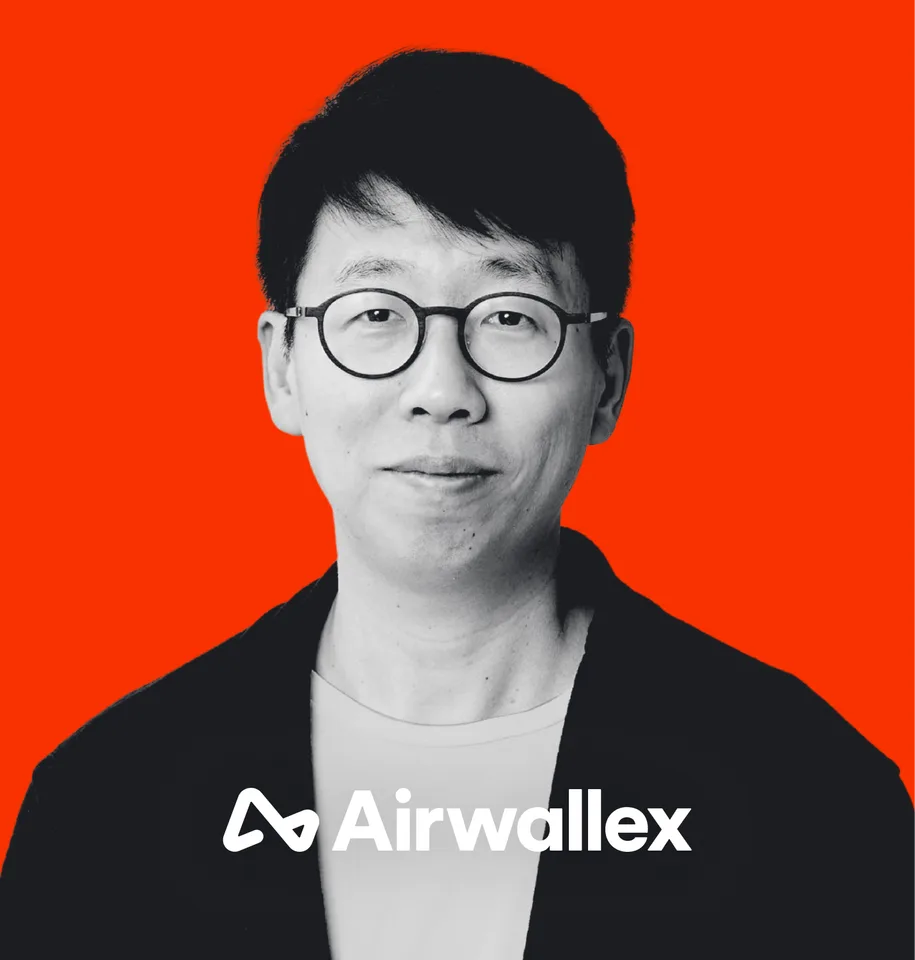
Photograph of Jack Zhang.
Co-founder & CEO

Jack Zhang

Zhang writes the company’s operating reflections and explains the revenue milestone as growth across financial products and markets.

The choice behind the company +

His November 2025 note emphasizes a multi-product platform, with roughly half of customers using more than one product at that time.

“a technology company that wears banking licenses around the world.”

Jack Zhang · Founders in Arms podcast (machine transcript) · 2026-01-16
The decisions behind the company

A founder who said no to Stripe

Jack Zhang is Airwallex's co-founder and CEO. He moved to Australia at 15, and the founding team started Airwallex in Melbourne in 2015. Lucy Liu is its co-founder and president. Early on Airwallex raised another $80M at a $450M valuation, and in 2018 Stripe offered to buy it for about $1.2B, nearly three times that price. The founders kept the company independent and continued building. The years that followed brought fraud losses and a Covid-era drop in revenue. The company that came out of that period now competes with the buyer it turned down.

And we also made pretty bad mistakes in going global too early.

Jack Zhang · Co-founder and CEO, Airwallex · Founders in Arms podcast (machine transcript) · 2026-01-16

Zhang is open about mistakes. In January 2026 he said Airwallex had launched commercial teams in some markets before the infrastructure was ready, so people sat for about a year with little to do, because building it took far longer than a few months. He has said its brand is "just not there yet" next to Stripe's. Four decisions explain the company's shape: staying independent in 2018; building licences and rails in-house instead of renting them; running regions through general managers; and, since December 2025, splitting headquarters between Singapore and San Francisco, with a plan to double US headcount to more than 400. Zhang himself works from London, and a third of the executive team sits in San Francisco and a third in Singapore.

The leaders a Korea hire will meet

For a Korea hire the chain of named people is short. Arnold Chan, General Manager for Asia-Pacific, is quoted in both Korean announcements. Yuna Kwon became the first Head of SME for South Korea on 27 May 2026, responsible for leading Airwallex's Korea operations, partnerships with financial institutions and customer success; she came from Shopee, where she headed Korea and Japan cross-border business. 김근빈 heads Enterprise for Airwallex Korea, according to a June 2026 Korean release. At group level, chief product officer Shannon Scott works from Melbourne, Pranav Sood joined as chief financial officer in June 2026 from Bain Capital's growth equity fund, and Carolyn Renzin, a regulatory litigator with more than 25 years of experience, became Chief Regulatory and Compliance Officer in April 2026.

How it says it works and hires

Zhang described the operating model in an interview recorded in April 2024. Airwallex has general managers for EMEA, the Americas and Asia-Pacific who manage marketing, legal, compliance, regulatory relationships and acquisition opportunities in their regions, loosely coupled to headquarters day to day but aligned on vision. His rule for managers is blunt: every leader must be an individual contributor first, so an engineering manager should be the best engineer on the team. The company's 12 published operating principles add a way of deciding: be decisive, know when to disagree and commit, bring data, and do not trade long-term value for short-term wins.

Our general managers are more like mini-CEOs of their regions.

Jack Zhang · Co-founder and CEO, Airwallex · Fintech Leaders interview, recorded April 2024, edited text · 2025-06-10

Product and engineering work is reviewed close to the top. The vice president of data and AI says teams hold regular product reviews with the chief revenue officer and the CEO, and major technology decisions go to the chief technology officer. An engineer who rejoined to build the London hub describes a still-forming team and hands-on leaders, and repeats advice Zhang gave at a company all-hands: go deep on how something actually works, and understand how the customer uses it.

On the worry that Seoul only executes, the evidence points both ways. Regional general managers are described as mini-CEOs with their own legal, compliance and regulatory work, and Korea has its own licences and a local production environment. But a third of executives sit in San Francisco and a third in Singapore, the Korea compliance role reports to a director in Singapore, and the January Korea plan targeted about 20 people by the end of 2026. Ask who in Seoul can approve pricing, partners and launches.

05 / THE NEXT CHAPTER

Build Korean delivery on a global payment network

The Seoul roles cover customer acquisition, partnerships, marketing, operations, payment-platform engineering, infrastructure and regulatory compliance. Responsibilities differ by posting.

LOCAL & REGIONAL LEADERSHIP

권윤아 (Yuna Kwon)

Head of SME, South Korea

Sales and partnerships
  • Director of Enterprise Sales, South Korea
  • Senior GTM Partnerships Manager
  • Account Manager
  • Sales Development Representative
Engineering and technical programs
  • Staff Technical Program Manager
  • Senior Software Engineer
  • Software Engineer II, GTPN
Legal and regulatory work
  • Regulatory Counsel

The Korea view combines current employer roles with public profiles observed on 7 October 2026 and official leader announcements. Profiles and overlapping search facets do not establish staff headcount or reporting lines.

Why Korea? Why now?+

Airwallex's reasons for Korea run in both directions. When it bought Paynuri in January 2026, its general manager for Asia-Pacific pointed to Korea's fast-growing ecommerce, creative and entertainment sectors, which want to sell abroad; in May 2026 he added that Airwallex also wants to help companies from other countries enter Korea and operate there. The company calls Korea the fifth-largest ecommerce market in the world. The route in was a licence holder, not a sales office: Paynuri brought a payment gateway licence, a prepaid electronic payment instrument licence and a foreign exchange business registration. Buying a licensed company is a method the CEO has described for markets where Airwallex could not apply for licences directly, and it bought one in Indonesia in December 2025. Signet's reading: Korea was named as an infrastructure target in May 2025, and the licences came before the leader and the products, which matches the lesson the CEO draws from earlier markets where commercial teams arrived first.

The licensed company is founded

The Seoul company Airwallex later bought is incorporated in October 2014. As Paynuri it registers as a payment gateway with the Financial Supervisory Service in 2015 and adds a foreign exchange business registration in February 2019.

Korea named as a target

Announcing its Series F, Airwallex lists Korea with Japan, the UAE and Latin America as new markets for its financial infrastructure.

Prepaid registration added

Paynuri reports that it has completed registration with the Financial Services Commission to issue and manage prepaid electronic payment instruments.

The old payment service closes

Paynuri ends its own payment gateway service for existing merchants at 23:59, citing internal policy and business restructuring.

Acquisition announced

Airwallex announces it has acquired Paynuri, plans global business accounts and payment acquiring as its first Korean products, and targets about 20 employees in Korea by the end of 2026. The company is renamed Airwallex Korea Co., Ltd. during 2026.

A Korea head of SME

Yuna Kwon, previously at Shopee, becomes Airwallex's first Head of SME for South Korea and leads Korea operations. Core services are scheduled for Korean customers in the second half of 2026.

Arsenal evening in Seoul reported

About 180 customers, supporters and influencers attend an Arsenal match viewing party in Seoul. Korean fans can now buy Arsenal hospitality products with KakaoPay and Naver Pay.

The Korea head on AI in finance

The Korean newsroom publishes a global survey of 1,279 finance decision makers in 11 markets, with comment from Yuna Kwon.

Understand the Korea opportunity

Why Korea: sellers going out, companies coming in

Airwallex's case for Korea runs in both directions. When it bought Paynuri in January 2026, Arnold Chan, its general manager for Asia-Pacific, pointed to Korea's fast-growing ecommerce, creative and entertainment sectors and their chance on the global stage; the release cited a projection that the market for Korean entertainment and consumer goods will reach $198B by 2030. In May 2026 Chan added the other direction: helping companies from other countries enter Korea and run their business there. The company also describes Korea as the fifth-largest ecommerce market in the world, with online sales close to half of all retail. For a network that earns on cross-border flows, a market that sends goods and content out and draws companies in justifies its own licences.

Korea's fast-growing ecommerce, creative and entertainment sectors present immense opportunities for Korean businesses on the global stage.

Arnold Chan · General Manager APAC, Airwallex · Airwallex press release on the Paynuri acquisition · 2026-01-21

Licences first, then people, then products

The route in was a licensed company, not a sales office. Paynuri, founded in Seoul in October 2014, registered as a payment gateway in 2015, added a foreign exchange business registration in 2019 and reported a prepaid electronic payment registration in July 2025. On 31 December 2025 it shut its own payment gateway service for existing merchants; three weeks later Airwallex announced the purchase, and the entity has since been renamed Airwallex Korea Co., Ltd. The acquired company brought local registrations and a corporate operating vehicle. Its earlier merchant service had ended before the acquisition announcement. It did the same in Indonesia in December 2025, and Zhang has said Airwallex bought companies in markets where it could not apply for licences directly.

The order matters because of Zhang's own lesson. In January 2026 he said that opening commercial teams before the infrastructure was ready left people with little to do for a year. In Korea the sequence so far is licences in January 2026, a head of SME in May, and core services for Korean customers in the second half of 2026, starting with global business accounts and an advanced payment acquiring service. The January plan was about 20 people in Korea by the end of 2026. Signet's reading: Korea is being built licence-first, and the Korea launch plan is distinct from the approximately 100 engineering roles announced for the UK.

Who runs Korea today

Yuna Kwon leads Korea operations as the company's first Head of SME for South Korea, appointed on 27 May 2026 after heading Korea and Japan cross-border business at Shopee. 김근빈 heads Enterprise for Airwallex Korea. Both spoke at an Arsenal match viewing party for about 180 customers, supporters and influencers in Seoul, as reported on 1 June 2026, an event Kwon said was meant to raise Airwallex's profile in Korea through a global sports brand. In September 2026 she was still speaking for the company, on a global survey of finance leaders about AI. Above Korea sits Arnold Chan, general manager for Asia-Pacific. The Korean newsroom is young: nine items between May 2025 and September 2026, four of them about Korea.

Fourteen roles, two jobs

On 8 October 2026 Airwallex's own job board listed 14 roles in Seoul among 539 postings. Half build the Korean business. An account executive is to win trading houses and distributors; an inbound sales representative is expected to be comfortable with 40 or more calls a day; three partnership managers work through government agencies and associations such as KITA and KOTRA, through cross-border ecommerce players, and through corporate secretarial, law, accounting and tax firms; the first Korea marketing hire is to build the brand from the ground up; and an operations manager is to build a team for customer operations and AML monitoring. The oldest Korea posting, for the government partnerships role, went up on 21 January 2026, the day the acquisition was announced.

The other half build and guard the Korean operation. Three GTPN Platform roles, a staff engineer, an engineering lead and an engineering manager, work on the payment network the postings call Airwallex's first product and largest revenue driver, alongside hubs in the US, Singapore, Hong Kong and Shanghai. A network engineer, a database administrator and a data and AI infrastructure engineer are based at the Gasan office, and the database role owns a Korean production database environment whose backups must meet Korean data residency rules. A senior regulatory compliance manager keeps the Korean licences in order and reports to a director in Singapore.

Satellite or base? Korea has its own licences, a local production environment and engineering leadership roles, which a sales outpost would not need. The dated Korea announcements describe a staged product launch, while the current compliance role reports to Singapore. The roles are recent and on the employer's own board, so the useful interview question is what Seoul will own once the products are live.

Across the 14 roles, a Korea hire would do one of three things: bring Korean customers and partners onto the local product rollout described in the company's dated announcements, run the operations and compliance that keep the licences safe, or build and run the systems that move money in and out of Korea under Korean rules.

KOREA OPEN ROLES

14 open roles in Korea

Current Signet catalog · 2026-10-19

FOR YOU

Use the posting's responsibilities and mandatory conditions to choose a role.

GTM · Sales · BD

Account Executive, South Korea

KR - Seoul (On-site)

Posting checked

The work
Win Korean trading and distribution customers.
Who fits
4+ years of sales experience and a record of winning Korean trading or distribution customers through inside/outbound sales.
Keep in mind
Own complex deals, onboarding and forecasts; FX certificates are nice to have.
Engineering · AI

Engineering Lead, GTPN Platform (Seoul)

KR - Seoul

Posting checked

The work
Lead technical direction, delivery and team development for global payment platforms.
Who fits
8+ years in modern software engineering with strong development and architecture skills.
Keep in mind
Five days weekly in the Seoul office, collaborating across US, Singapore, Hong Kong and Shanghai engineering hubs.
Engineering · AI

Engineering Manager, GTPN Platform (Seoul)

KR - Seoul

Posting checked

The work
Lead technical direction, delivery and team development for global payment platforms.
Who fits
10+ years in modern software engineering with strong development and architecture skills.
Keep in mind
Five days weekly in the Seoul office, collaborating across US, Singapore, Hong Kong and Shanghai engineering hubs.
See all 14 roles
GTM · Sales · BD

GTM Partnerships Manager, South Korea - CorpSec, Lawfirm, and Accounting

KR - Seoul

Posting checked

The work
Grow strategic legal, accounting and corporate-service partners.
Who fits
Experience owning strategic professional-service partners and executing commercially with senior stakeholders.
Keep in mind
Protect and expand relationships; FX and foreign-entity experience preferred.
GTM · Sales · BD

GTM Partnerships Manager, South Korea - Ecommerce

KR - Seoul

Posting checked

The work
Turn ecommerce partners into merchant onboarding.
Who fits
Commercial outcomes from direct lead generation OR partnership-led sales.
Keep in mind
Marketplace, logistics and tax/compliance partner programs.
GTM · Sales · BD

GTM Partnerships Manager, South Korea - Government Agencies and Associations

KR - Seoul (On-site)

Posting checked

The work
Build government and association referral programs.
Who fits
Strong partnership experience with government agencies, associations or institutional ecosystems.
Keep in mind
KITA/KOTRA and formal partnership frameworks are preferred.
Operations

Manager, Operations, South Korea

KR - Seoul (On-site)

Posting checked

The work
Build Korea customer operations and AML processes.
Who fits
Bachelor's degree or equivalent and 7+ years of relevant experience.
Keep in mind
Seoul; global, fintech and consulting experience are preferred.
Engineering · AI

Senior Database Administrator (DBA), Infra

KR - Seoul (On-site)

Posting checked

The work
Own reliability, security, performance and compliance for Korean production databases.
Who fits
4+ years administering production relational databases and live transactional workloads.
Keep in mind
Based in Seoul; primarily Google Cloud with a secondary AWS footprint.
Marketing · Content

Senior Marketing Manager, South Korea

KR - Seoul (On-site)

Posting checked

The work
Build Korea's marketing, content, events and ABM.
Who fits
6+ years in marketing with Korean B2B or technology-sector success; bachelor's degree or equivalent.
Keep in mind
As Korea's first marketing hire, mentor a contractor and own the local marketing budget.
Engineering · AI

Senior Network Engineer, Infrastructure

KR - Seoul (On-site)

Posting checked

The work
Design and operate global corporate and cloud networks for payment infrastructure.
Who fits
5+ years of production network engineering and CCNA-level routing/switching or above.
Keep in mind
Seoul-based, including global on-call and collaboration across APAC/EMEA time zones.
Finance · Legal

Senior Regulatory Compliance Manager

KR - Seoul (On-site)

Posting checked

The work
Manage Korean licences, monitoring and regulator engagement.
Who fits
Bachelor's degree and at least 6 years of compliance experience in regulated finance, fintech, legal/consulting or a combination.
Keep in mind
Reports to Asia director in Singapore; FSC/FSS experience preferred.
Engineering · AI

Senior Software Engineer, Infrastructure (Data & AI)

KR - Seoul

Posting checked

The work
Build Kubernetes-based data and AI infrastructure and self-service platform capabilities.
Who fits
5+ years in DevOps, SRE or platform engineering with end-to-end production ownership.
Keep in mind
Based in Seoul, South Korea.
Engineering · AI

Senior Software Engineer, Observability

SG - Singapore / KR - Seoul

Posting checked

The work
Build and operate observability platforms for distributed production systems.
Who fits
5+ years of professional software engineering, building and operating production systems.
Keep in mind
Based in Singapore or South Korea; collaborate across time zones including APAC and EMEA.
Engineering · AI

Staff Software Engineer, GTPN Platform

KR - Seoul

Posting checked

The work
Architect reliable distributed payment and settlement infrastructure at global scale.
Who fits
7+ years building and operating production software including scaled distributed systems.
Keep in mind
Five days weekly in the Seoul office, collaborating across countries and time zones.
07 / NOW & NEXT

The next scene is taking shape.

Arsenal payment deployment

The partnership includes hospitality payment acceptance.

Paynuri acquisition

Airwallex acquired Korean licensed payment infrastructure.

Series H and operating update

Airwallex raised $320M and reported March annualised revenue and payment volume.

More context on what comes next

Ten years of rails, now pitched to AI

The last year ties back to the thesis through one argument: AI agents will need licensed money rails, and Airwallex already has them. In December 2025 it said hundreds of purpose-built agents would soon spread across its platform, and in June 2026 it raised $320M at an $11B valuation. In September 2026 T:0, an AI accounting product for US startups run as a subsidiary, left private beta, and the company describes Kai as a live AI assistant for customer requests. Billing for usage-based pricing arrived in May 2026.

The 7 October 2026 explanation makes the AI boundary concrete. AgentOS lets teams query cash flow and balances, draft invoices and provision cards from tools such as Claude, Cursor and Codex. Transfers and foreign exchange remain subject to human approval. People set the permitted recipients, currencies, budgets and escalation rules; the infrastructure enforces those limits and records actions for audit. The stated goal is more direct agent execution with human oversight at sensitive decisions. Signet reads the distinction between preparing work and authorizing money movement as central to how Airwallex must earn trust.

We believe this is the most consequential moment in the history of global finance, and we are building accordingly

Jack Zhang · Co-founder and CEO, Airwallex · Series H press release · 2026-06-25

A company getting ready for more scrutiny

The other thread is preparation. A chief financial officer from growth equity joined in June 2026, a chief compliance officer in April, and compliance spending is set to rise 70% this year. IPO timing is reported two ways: a December 2025 report said the company was looking to list the next year, while in April 2026 Zhang put an IPO at least three to five years away. In November 2025 he wrote that Airwallex was on track to pass $2B of ARR within 12 months, which is a projection, not a result.

What to watch in the next year

  • Korea: whether global business accounts and payment acquiring reach Korean customers in the second half of 2026, and which Korean customers are named first.
  • Regulation: the outcome of the external review of the anti-money-laundering program that AUSTRAC required in January 2026.
  • Growth: whether annualized revenue passes the $2B the CEO projected within 12 months of November 2025, and how much comes from customers using several products.

For a Korea hire, the next 12 months decide whether Seoul becomes a launch market with its own customers. Joining now means working on the launch itself, against the actual product, regulatory and customer-onboarding responsibilities in the chosen posting.

The current Korea postings make the next phase concrete. Marketing works with the Head of SME and Growth on positioning, localized campaigns and customer acquisition. Operations owns customer onboarding, support quality and anti-money-laundering processes. Infrastructure engineers describe local production systems, access controls, backup recovery and incident response. These responsibilities turn the company-level rollout into work a candidate can investigate: which services are available to the customers they would serve, which decisions sit locally, and how product, risk and engineering teams resolve exceptions. Signet reads this as a coordination problem across licensed financial operations and software, rather than a promise about the size or speed of a new market.

Their future. Your next chapter.

Find your part ↑

An independent profile by Signet. No affiliation or investment recommendation. Introductions happen only with your consent.
Research reviewed 2026-10-08

A LITTLE MORE CONTEXT

Understanding Airwallex.

What does Airwallex do?

A business selling abroad can face separate systems for collection, currency conversion, supplier payments and reconciliation. Airwallex connects these jobs through financial accounts, software and a global payment network.

What is the opportunity in Korea?

The Seoul roles cover customer acquisition, partnerships, marketing, operations, payment-platform engineering, infrastructure and regulatory compliance. Responsibilities differ by posting.

Are these confirmed job openings?

Employer postings were checked on 2026-10-08. Availability can change. Mock applications request a review from Signet.

How can I explore the company in more depth?

Follow the company from its vision through products, evidence and people to the Korea team and current roles. Use the table of contents to move within the page, and expand the sections for more context.

Back to the collection ↗