Labs built the protocol; the Foundation builds adoption
The origin story starts with engineers who worked on the Diem blockchain and the Move language. Aptos Labs was formed in 2022, and the network launched mainnet that October. The current Labs team page names Avery Ching as co-founder and CEO and describes his previous work leading Meta's crypto-platform team and distributed-data systems. The Labs history records his move into the CEO role in December 2024. Those are Labs leadership facts, not titles at the Foundation. The distinction is useful for understanding how an ecosystem organization collaborates with a protocol developer. Labs develops technology and applications; the Foundation supports adoption, decentralization, grants and communities. The open Korea posting states that the Foundation operates independently while remaining closely aligned with Labs. Signet reads the relationship as different forms of work around the same network. A successful community program can surface a product problem that needs engineering attention without itself owning the protocol implementation. That boundary is worth understanding before describing the company in an interview.
Security becomes an ecosystem responsibility
The original whitepaper makes safety and upgradeability part of the architecture, and the current Labs team names Alin Tomescu as Head of Cryptography. The Foundation's security program connects that technical concern with independent audits, monitoring, responsible disclosure and support for application teams. Its January 2025 Chainlink integration announcement quoted the then Head of Grants and Ecosystem, Bashar Lazaar, on a scalable and secure ecosystem. That dated statement explains a responsibility shared across teams, rather than a current organizational chart. A fast network still depends on the contracts, wallets and data that users actually touch. For a community employee, security therefore affects communications as well as code. A report of suspicious activity needs the appropriate response path, and education must help users understand the product they are using. Signet would prepare an example of recognizing a risk, gathering useful information and handing it to the right specialists. It should show accurate escalation without claiming technical authority that belongs to another function.
Community principles need an operating rhythm
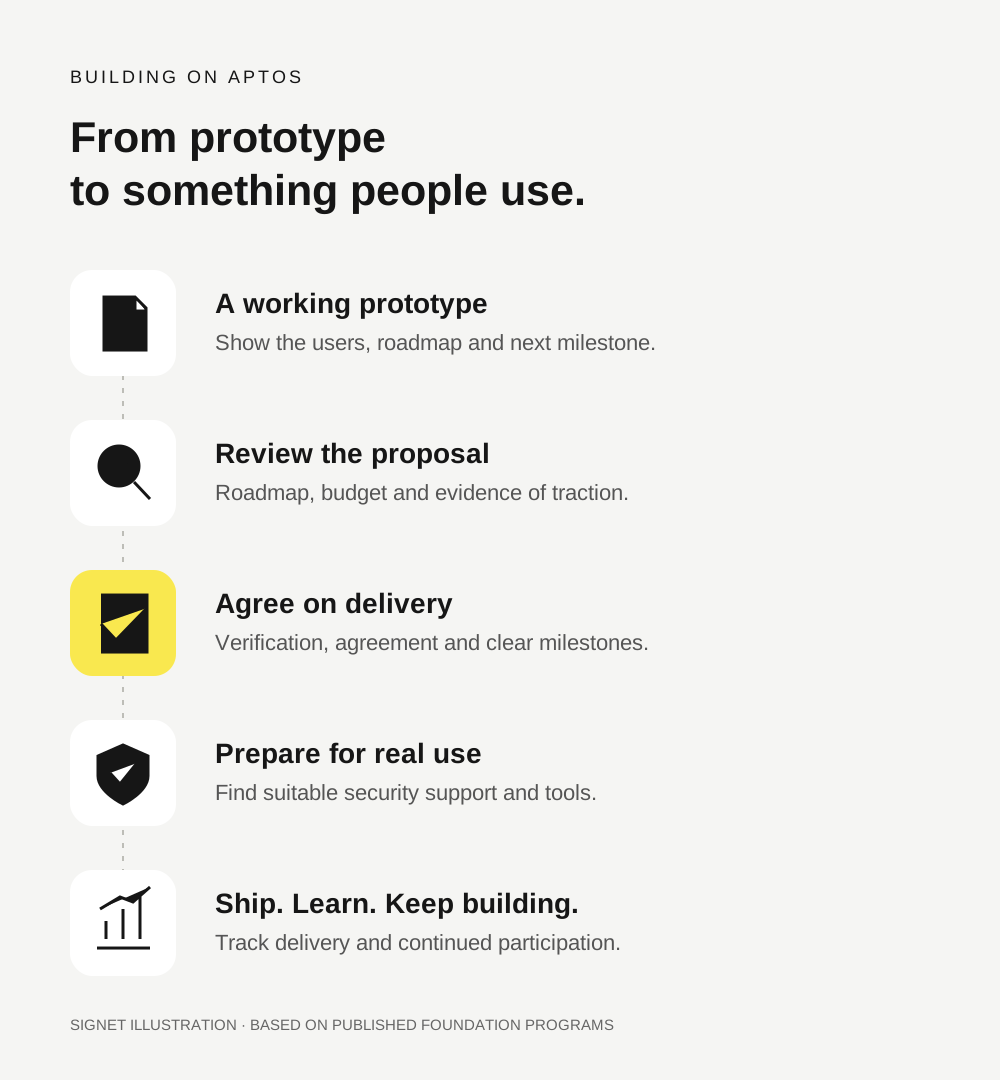
The Foundation's grant principles emphasize live products, clear execution plans and open-source contribution. Collective emphasizes sustained participation, education, events and support for builders, with reviews and recognition within the ambassador program. In a March 2025 interview, the then Head of Community Development, Po On Yeung, encouraged people to find their community. The current Korea role turns that broad idea into specific responsibilities: attract and retain traders, run events, gather feedback and localize programs. Signet reads the role as creating an operating rhythm rather than generating occasional excitement. There should be a calendar, a way to connect new participants to useful resources and a record of the feedback that product teams can act on. A candidate can explain a time when an active community was made healthier or more useful, including which behavior changed after an event. That connects the published principles to measurable work. It also avoids treating every follower, attendee or ambassador as the same kind of participant. Those groups can contribute differently to a network's development.