The data that cannot leave the building
Cohere starts from a customer most AI products are not built for. Its Asia Pacific job posting describes them in one line: banks, telcos, industrials and governments who cannot send their data to someone else's cloud, and who are past experimenting and into production. Such a customer cannot copy client records, contracts and internal policies into a service that runs outside its own systems, however useful the model is.
I run a company that builds AI systems deployed inside banks, telecommunications networks, and defense ministries.
Aidan Gomez · Co-founder and CEO · Essay on the Cohere blog · 2026-09-13
The belief that sets Cohere apart is about where the model sits. In August 2025 the company described its market as a security-first category of enterprise AI that repurposed consumer models do not meet. Co-founder Nick Frosst put the logic in one line: language models are only as good as the data they can reach. If the data cannot move to the model, the model has to move to the data. So Cohere builds models efficient enough to run on two GPUs in a customer's own building, and a workspace, North, that runs in the customer's cloud account, its data centre or a network cut off from the internet.
Why this became a business now
Two things changed. The first is agents: software that takes steps, calls tools and finishes a task instead of only answering. A Cohere engineer wrote in August 2026 that the bottleneck has moved from experiments to production, citing a survey in which only 25% of organisations had moved 40% or more of their AI pilots into production. The second is control as a buying criterion. In a survey Cohere commissioned in April and May 2026 among large companies in Canada, the US, the UK and Germany, 82% of financial services leaders named data leakage and privacy as a top issue that sovereign AI could address.
One question, four steps
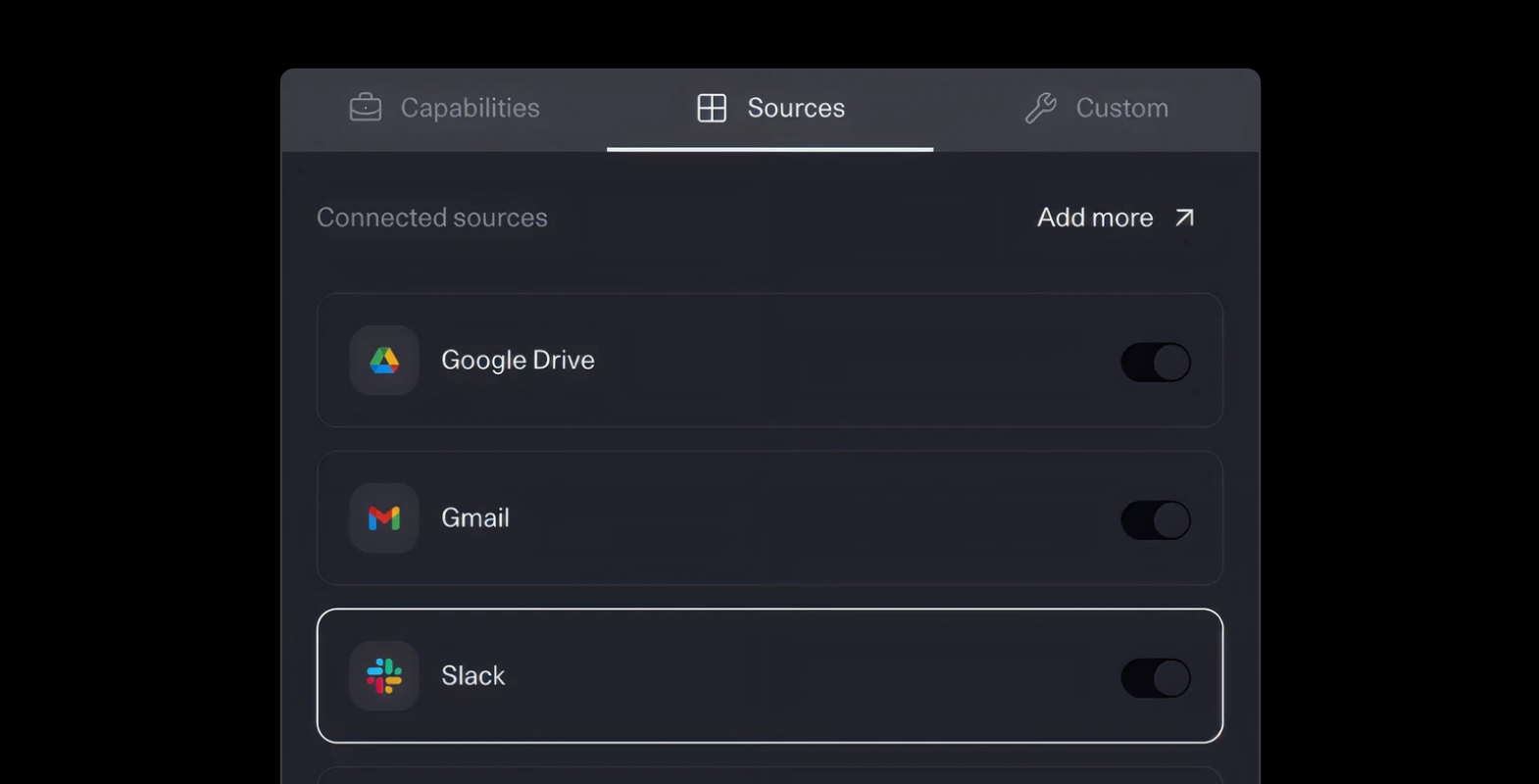
Take an illustrative compliance team at a bank that wants answers grounded in its own policies. First, administrators connect the sources an agent may read, such as SharePoint, Outlook, Slack or Jira, and set who may see what; the system runs in the bank's private cloud or its own data centre. Second, Embed finds the relevant passages by meaning rather than exact words, and Rerank puts them in order. Third, a Command model reads the question with that evidence and drafts an answer with citations. Fourth, North runs the result as a workflow, with guardrails set for each agent, audit records and, since North 2, controls on spending.
The diagram hides where people still decide. At CoreWeave, a cloud computing company, Cohere staff spent two days on site mapping the support process and the knowledge its agents would need, and North was in broad production about three months later inside CoreWeave's own data centres. Someone has to choose which documents an agent may read, who checks its answers and when an automated step becomes the rule. Cohere sells that work with the software, through forward deployed engineers placed with the customer and solutions architects who design the fit.
The story hangs together: private deployment, a workspace on top and engineers on site. Much of the evidence comes from the company itself, in launch posts, a survey it sponsored and case studies it wrote. Read the claims as Cohere's pitch, and test them by whether named customers keep expanding.
What this means for a hire in Seoul
In Korea the same logic runs through a partner. LG CNS tailors North for its Korean customers and uses it internally, and a multilingual model co-developed with Cohere is one of the engines of the Foreign Ministry AI platform that LG CNS contracted to build on a private cloud. A hire in Seoul works where the data cannot leave: installing North on a customer's servers, running delivery for strategic accounts, or heading the architects who win the technical decision. The architecture posting says Cohere cares more about what you have deployed, and what broke, than about which models you can name.