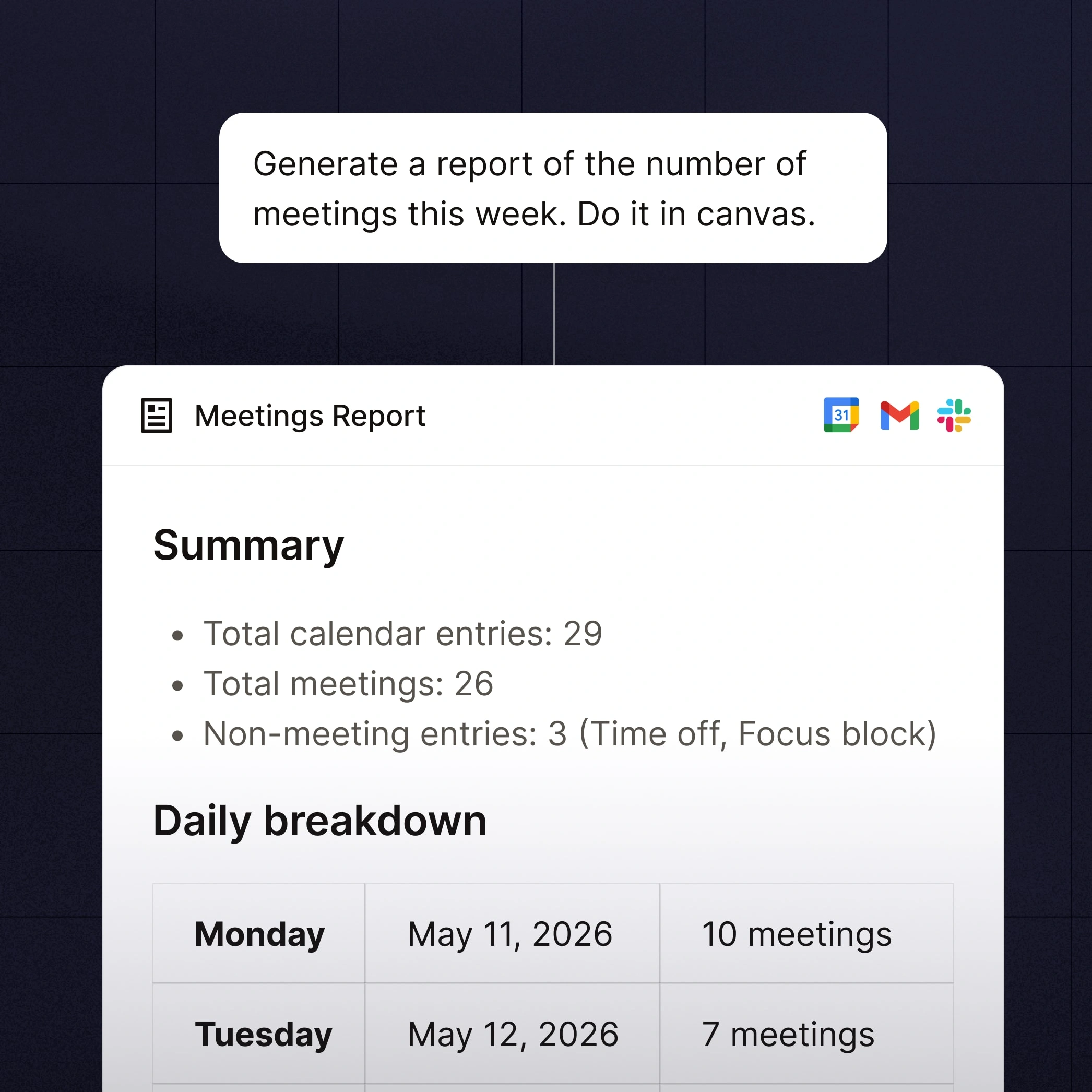
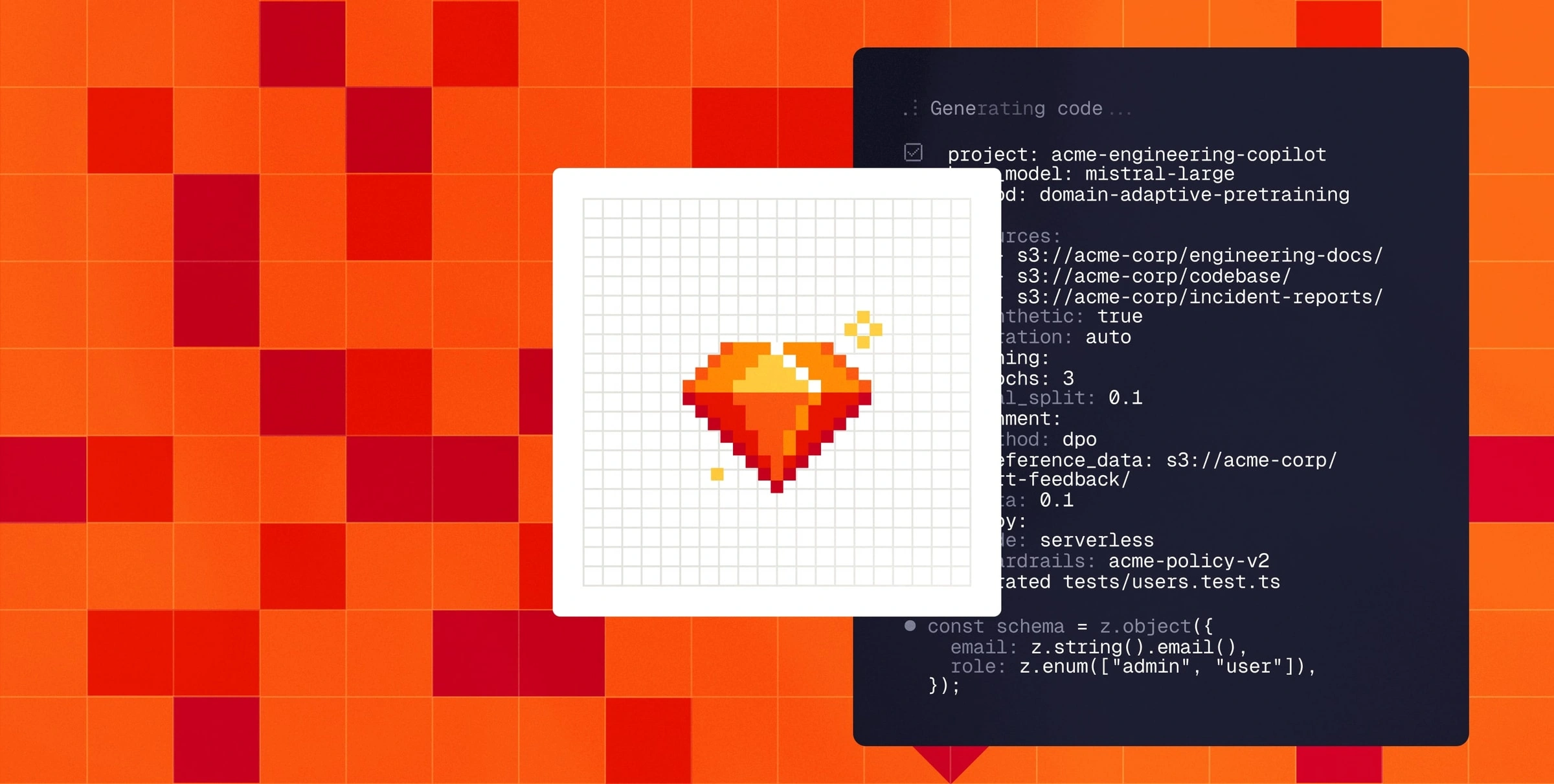
Official Vibe illustration of a meeting-report prompt and result.
Vibe
Vibe for work, formerly Le Chat, connects research and deliverables with team information.
More time using information, less time gathering it.
CMA CGM
Behind a shipment,
thousands of pieces of information.
Shipping & logistics · Real industrial documents and customer requests
CMA CGM’s work with Mistral spans cargo release, shipping documents and customer inquiries. It shows where AI can enter an established industry: the information-heavy tasks that help keep freight moving.
Official customer account of shipping, logistics and media workflows.
European Patent Office
Read complex patent documents at scale.
400,000 pages/day; character error below 1%
A customized OCR model and ST36 conversion pipeline serve patent transcription.
Company-published result for this document workflow after a three-month proof of concept.
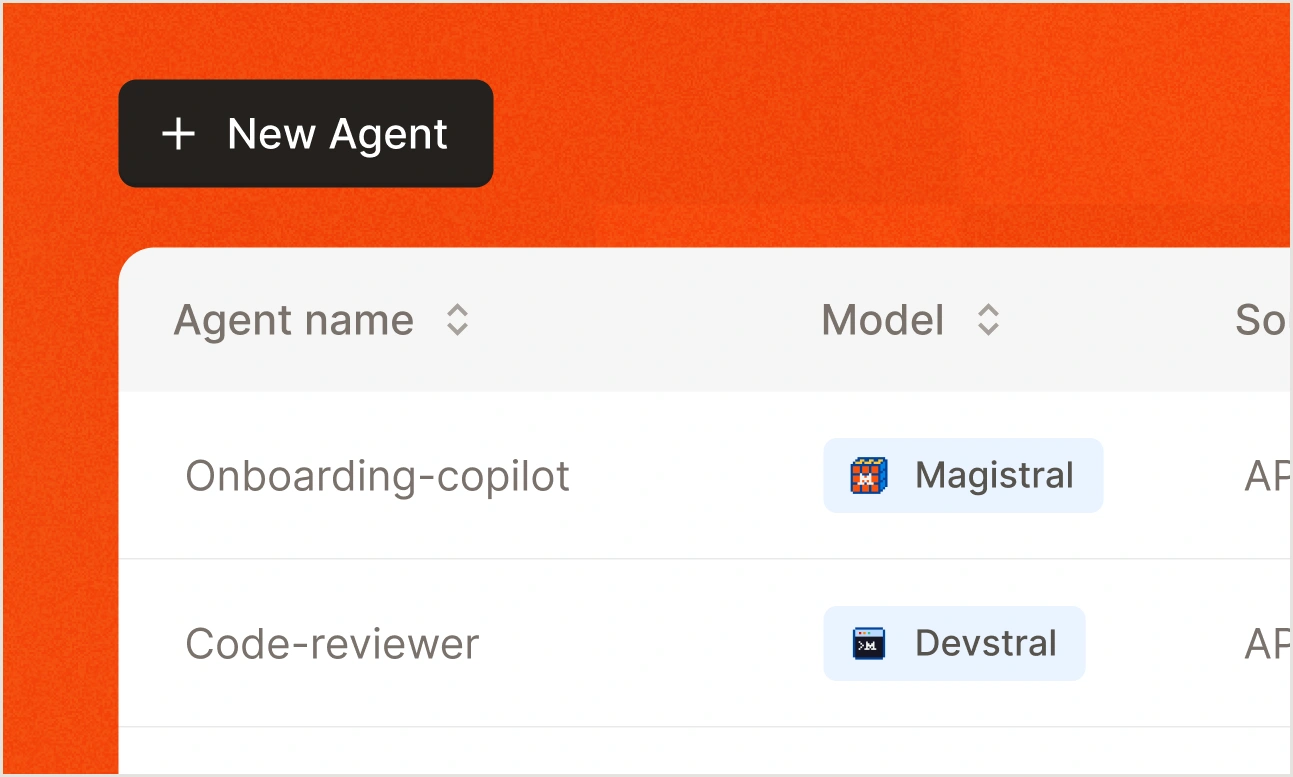
Official Studio agents table with agent names and model selections.
02 / HOW IT BECOMES REAL
A model needs more than a good benchmark.
Useful enterprise AI needs the right knowledge, an appropriate deployment environment and a way to judge the results. Explore the decisions between choosing a model and trusting it at work.
01
Choose for the task in front of you.
Documents, code and voice bring different demands. Define the task and required performance, then check the model’s access and licensing terms.
02
Give it the relevant knowledge.
Connect the information the workflow needs. Access rules must travel with the data, so each person can retrieve only what they are allowed to see.
03
Adapt to the company’s expertise.
Products such as Forge support training and adaptation around an organization’s knowledge, terminology and requirements.
04
Decide where the data and model belong.
Choose a cloud or self-hosted environment that fits security, infrastructure and operating requirements.
05
Test against the work that matters.
Check accuracy, time and cost on real tasks. A useful evaluation shows business users what they can rely on and where review is still needed.
Follow the work, step by step+
Start with the intelligence inside a company
An industrial company already holds knowledge in engineering files, software, operating records and the decisions people make every day. Mistral argues that applying AI to those materials should leave the organization in control of the intelligence it creates. Its sovereignty page describes control over data, models, adaptation, compute and production operations. An enterprise can choose an environment appropriate to the workload, including shared infrastructure, a private cloud or its own premises. The important decision is the boundary around the system and who can change it over time. Signet reads this as a practical engineering promise: the customer should understand the architecture, reproduce an adaptation and evaluate a replacement model. Mistral’s method therefore starts with a useful workflow and agreed success measures, then brings models and applications into that setting. For an illustrative manufacturer, the first conversation could concern a difficult engineering document rather than a general request for a chatbot. The team would establish which answer is useful and which evidence the factory needs before using it.
AI is reshaping how we build complex technologies, from silicon to software,
Arthur Mensch · Co-founder and CEO · Samsung partnership announcement · 2026-09-08
Define the test before the application
Official Studio agents table with agent names and model selections.
A September 2026 project account shows what that approach looks like inside an energy business. Mistral helped an unnamed European operator move a reservoir simulator from Fortran 77 to C++. The first sprint covered 40,000 lines of a 300,000-line codebase. Reservoir engineers identified important intermediate results as well as final outputs, and the team built a numerical parity test before migration. Agents documented the call structure, then a human coordinated coding, testing and review module by module. This was a bounded first stage with a runnable original system. It demonstrates a delivery method with domain experts, rather than a promise about every migration. The European Patent Office offers another kind of test: transcription that preserves complex patent structures. Its company-published customer story describes a three-month proof of concept and a specialized conversion pipeline into ST36 XML. It reports throughput of 400,000 pages per day with a character recognition error rate below one percent. The measurement concerns that document system, its throughput and its character-level accuracy.
Make delivery and capability transfer part of the product
Mistral describes a deployed team of strategists, applied AI engineers, applied scientists and deployment engineers. Each has a different task: steer the initiative, build the application, handle advanced use cases, or make production reliable. The sovereignty guidance adds a useful finish line. Customers should receive tooling, artifacts and runbooks so their own teams can operate and improve the system. That changes what a candidate needs to explain. A persuasive example includes the original business constraint, the evaluation, the integration and the handover to people who will run it. Korea’s current hiring includes software, machine learning, research, deployment strategy, infrastructure and regional people operations. The July partnership announcement also describes engineers dispatched to Korean customer sites through a local cloud partner. Signet connects those facts with a role beyond presenting a model: joining can involve helping a customer change a real workflow and retain the ability to manage it. Individual postings define the technical depth, language conditions and travel that make each contribution different.
Understand the products and their customers+
Separate the application from the control platform
Vibe is now the combined product for work and code. The current official FAQ says that Vibe for work was formerly Le Chat and that existing conversations, settings and plans carry over. Work features cover research, documents, email, spreadsheets and recurring tasks connected to a team’s information. Code features cover development through the terminal, editor and remote agents. The same product name therefore covers two related journeys; a historical Vibe CLI example refers to the coding journey. Studio sits closer to the builder. It provides tools to design agents, connect enterprise data, orchestrate stateful workflows, evaluate results and deploy across cloud or on-premises environments. Its official agents image shows named agents and their selected models. Signet compares these products with the work the buyer needs to perform: an employee wants a completed deliverable, while a platform team wants to define and govern how an application runs. Both benefit from a clear task, an appropriate permission boundary and tests that reflect actual usage.
Use the organization’s knowledge to adapt the model
Forge addresses model customization. The March 2026 launch describes training on an organization’s documents, systems and policies so a model can represent its internal context. The product covers the lifecycle from pre-training and synthetic data to reinforcement learning and evaluation against enterprise measures. A manufacturer could use engineering specifications or maintenance records, as the launch itself illustrates. This is an example of the intended workflow, and each deployed customer still needs its own data preparation and test. Models and APIs provide the underlying language, document and voice capabilities. OCR turns difficult documents into material an application can process; Voxtral addresses audio. Compute supplies the infrastructure layer through private capacity and an integrated stack. These offers compete at different parts of the customer’s process: application use, model choice, custom training and the place where the work runs. Signet’s comparison is consequently architectural. A Korean manufacturer may combine a local infrastructure partner with Mistral’s models and engineers, while another buyer chooses a different deployment environment for its workload.
Official Vibe illustration of a meeting-report prompt and result.
Judge the change inside the named customer
The Patent Office case makes the product concrete. Standard transcription had to cope with patent formulas, tables and images while meeting a structural document standard. The project used a fine-tuned OCR model and a conversion pipeline; the reported 400,000 daily pages and sub-one-percent character error describe that workflow. An Ericsson summit session offers a separate illustration of custom model work on proprietary silicon. The customer described an internal target improving from eight percent to above ninety percent during the engagement. The session says developers were testing and evaluating the resulting models while gradually moving toward production. Those results concern a narrow internal capability, rather than a general model score. Manufacturing stories describe another stage: BMW’s crash-simulation collaboration combines proprietary engineering data with model development, and Stellantis says it is evaluating anomaly detection and component-database tools. Signet keeps those verbs visible. A candidate can distinguish a measured deployment, an internal evaluation and a planned application, then explain which tests would show that their own customer can safely use the result.
03 / THE EVIDENCE
The story, in numbers.
DATED OBSERVATIONS
ARR · External estimate
USD · M
ARR is an outside estimate in USD; valuation is financing data in EUR. The €21 B point is the disclosed lower bound. These are dated disclosures, not a continuous growth record.
Figures, dates & basis +
ARR · External estimate
Date
Value
Basis
2024-12
$16M
Sacra outside research estimate
2025-12
$312M
Sacra outside research estimate
2026-01
$400M
Sacra outside research estimate
Sacra
DATED OBSERVATIONS
Funding valuation
EUR · B
ARR is an outside estimate in USD; valuation is financing data in EUR. The €21 B point is the disclosed lower bound. These are dated disclosures, not a continuous growth record.
Figures, dates & basis +
Funding valuation
Date
Value
Basis
2025-09-09
€11.7B
Funding-round valuation
2026-09
€21 B+
Funding-round valuation
Mistral AI
€1.7 B Series C
ASML-led financing at €11.7 B post-money valuation.
€3 B Series D
Samsung-led financing at a post-money valuation above €21 B.
125+ enterprise relationships
The company describes support for 125+ enterprises and operations in 20 countries at the announcement.
Read the growth story+
Follow the buyer and the deployment
Mistral sells at several layers of enterprise AI. API usage charges for model consumption, while Vibe’s paid plans give individuals and teams application access. The October 8 USD pricing display lists Pro at $14.99 per month and Team at $24.99 per user per month, excluding taxes and subject to the stated usage terms. Enterprise offers describe private deployments, custom models, agents, workflows and support through a sales conversation. Compute adds infrastructure capacity. Mistral’s method places implementation work beside those products, and the current hiring asks people to build customer applications and guide adoption. Signet reads the commercial motion as a combination of software, infrastructure and delivery, where the customer’s operating requirements shape the agreement. The annualized revenue number, a financing round and a multiyear infrastructure commitment describe different things. A candidate should keep that distinction when discussing business value: a useful application can create consumption and a deeper relationship, while the customer still needs its own evidence of benefit before expanding the deployment.
Keep the period and metric with the number
The official September 2026 Series D announcement reports €3 billion raised at a post-money valuation above €21 billion, led by Samsung with two co-leads. It also says the company supports 125+ enterprises and operates across twenty countries. Those are company-reported financing and activity measures at that announcement. The earlier September 2025 Series C was €1.7 billion at €11.7 billion post-money, with ASML as lead investor. The ARR chart uses an outside research estimate: approximately $16 million at the end of 2024, $312 million in December 2025 and $400 million in January 2026. A February acquisition report separately describes passing a $400 million ARR milestone. An August profile uses annualized revenue run-rate wording for a 2025 figure and describes a 2026 trajectory. Signet preserves those separate labels and chooses the explicitly estimated ARR series for the chart. It compares dated estimates within that series, while the euro valuation chart remains a financing series. Currency and metric therefore stay attached to every point.
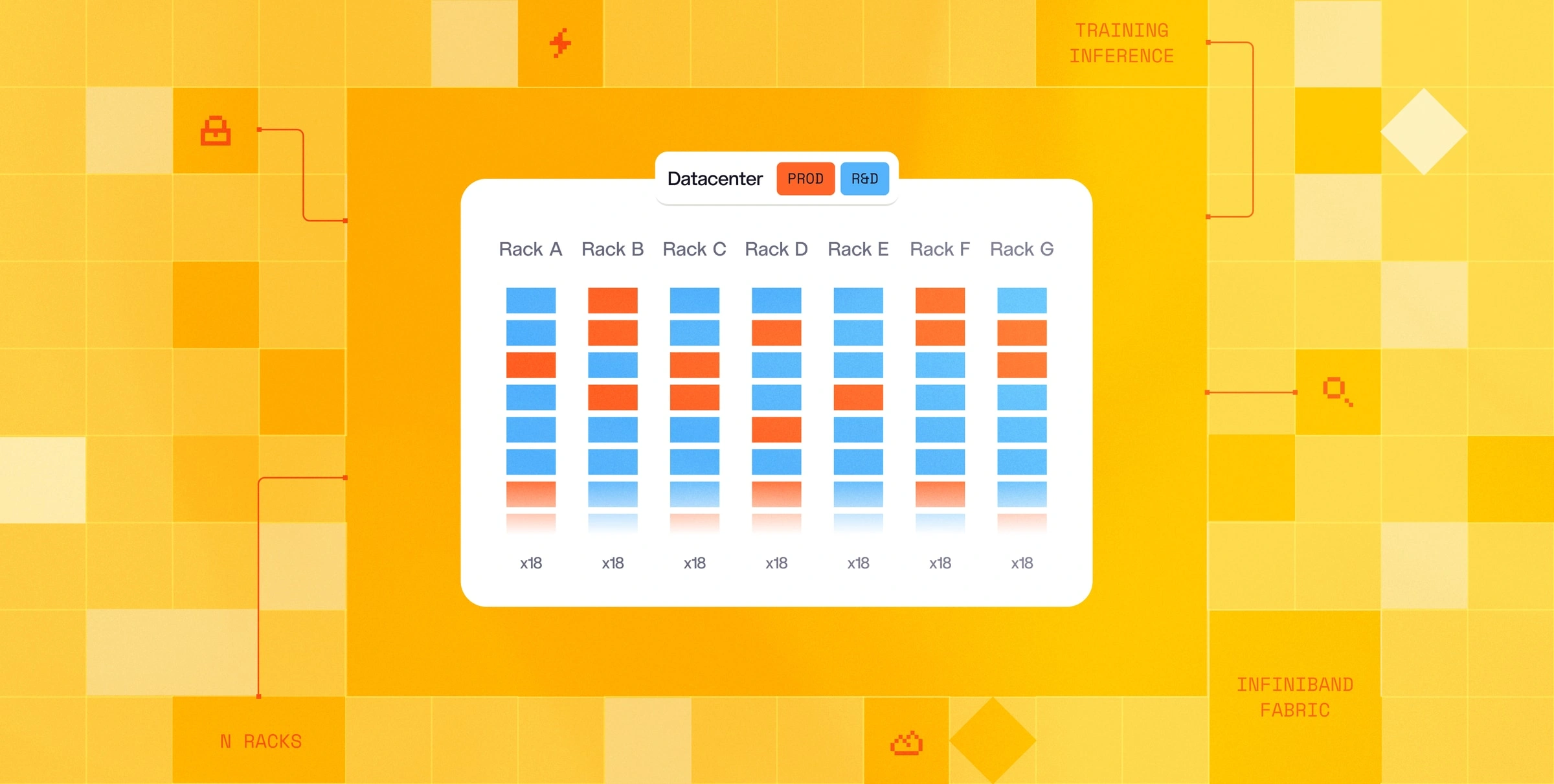
Official product illustration for AI Cloud.
Test delivery, utilization and dependence
The company competes with other model providers and with ways an enterprise can assemble its own AI stack. An August interview profile compares its deeper customer delivery with the broader adoption pursued by OpenAI and Anthropic. Mistral’s own position is control over a customer’s model and environment, supported by applications and engineers. Signet identifies three risks from the source material. First, custom delivery has to become a repeatable operating capability; the legacy migration account explicitly describes a bounded first sprint and conditions that made the original runnable. Second, owning more compute brings construction and utilization responsibilities; the Munich announcement’s future capacity plan requires execution. Third, control over AI still depends on suppliers and partners, as the CTO’s discussion of NVIDIA and the Microsoft infrastructure agreement show. These are Signet’s interpretations of the reported decisions. Useful observations are whether a customer can maintain its system, whether promised capacity comes into service and whether an expanded partner relationship supports reliable deployments. For a Korean candidate, those observations turn a financing story into concrete questions about customer delivery and infrastructure operations.
04 / THE PEOPLE
Someone saw it first.
Co-founder & CEO
Arthur Mensch
Chief executive and cofounder, leading Mistral’s company direction, products and enterprise business.
Co-founder & Chief Science Officer
Guillaume Lample
Cofounder and chief scientist, leading research on the models at the heart of Mistral’s products.
Co-founder & CTO
Timothée Lacroix
Cofounder and chief technology officer, leading technology development across Mistral’s AI work.
“This investment brings together two technology leaders operating in the same value chain.”
Arthur Mensch · Series C announcement · 2025-09-09
The decisions behind the company+
A research company with an operating proposition
Mistral’s official history dates the founding to April 2023 and names Arthur Mensch as CEO, Guillaume Lample as Chief Science Officer and Timothée Lacroix as CTO. The history frames the decision around access, customization and control. Those verified roles are enough to understand the company’s structure: scientific work and engineering sit beside the commercial promise to let a customer shape its own AI. The September 2025 financing announcement places that promise inside semiconductor engineering. Mensch says the investment brings together two technology leaders operating in the same value chain. The announcement describes an ambition to address present and future engineering challenges with ASML and its partners. The September 2026 Samsung statement carries the same industrial direction into chip design and manufacturing. Signet sees a consistent choice across these announcements: research is being connected with the proprietary knowledge and operating constraints of industrial partners. This is a reading of the company’s decisions, rather than a prediction that every partnership produces the same commercial result.
This investment brings together two technology leaders operating in the same value chain.
Arthur Mensch · Co-founder and CEO · Series C announcement · 2025-09-09
Build the infrastructure as well as the model
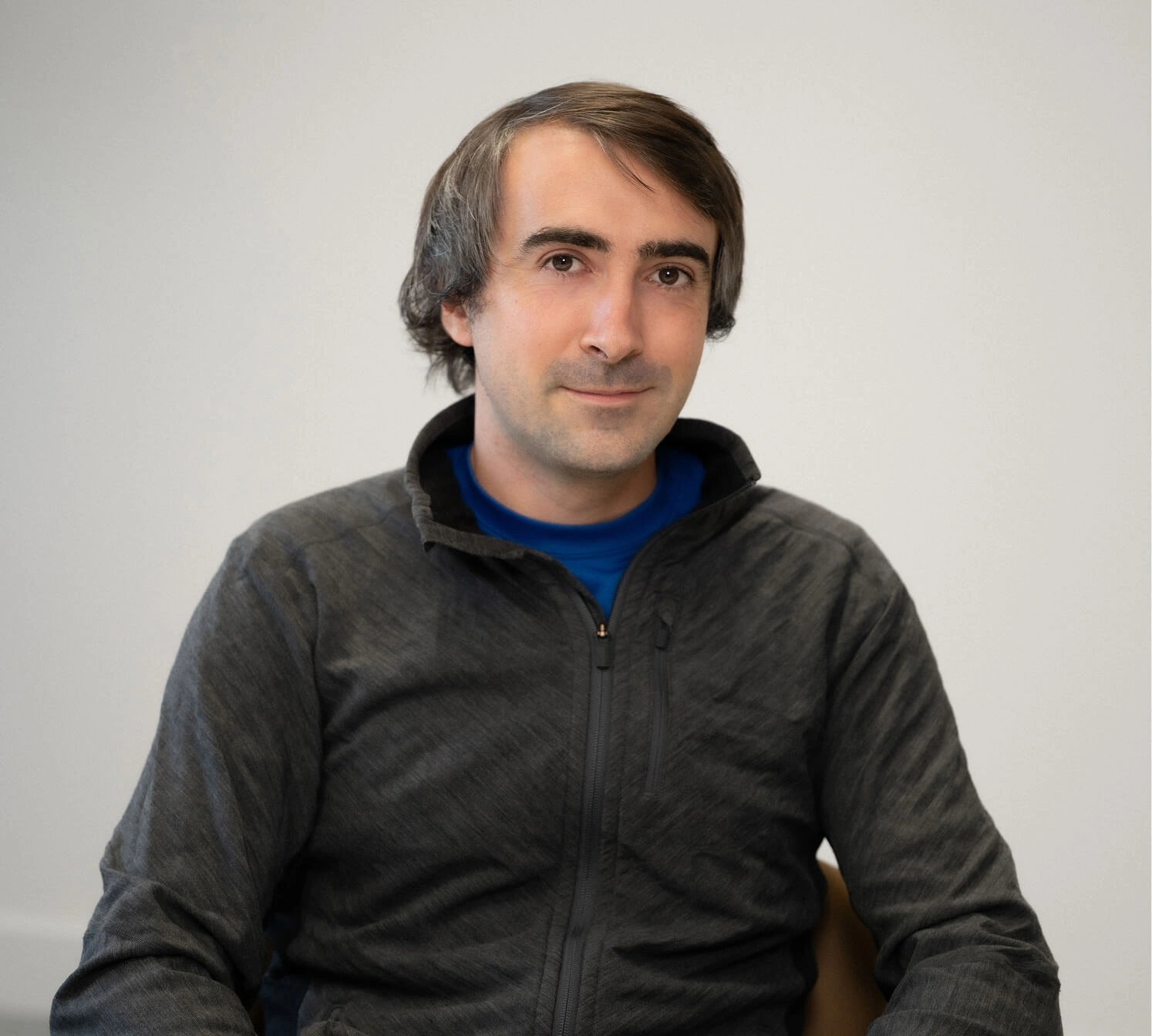
Arthur Mensch, official co-founder portrait.
The infrastructure decision is visible in the Compute launch and the acquisition of Koyeb. The February 2026 acquisition report quotes Lacroix saying the acquired product and expertise will accelerate Compute development. The report describes the infrastructure team joining Mistral’s engineering organization and an expected transition into Compute. An August interview then explains the desire to diversify compute supply. The CTO describes continuing to use NVIDIA hardware while looking at other chipmakers; sovereignty therefore concerns control and choice inside a supply chain. Munich’s September hub announcement extends the technical organization toward physics and industrial AI, with specialized researchers beside applied engineers serving partners. It describes engineering work with BMW and Siemens Energy and a plan for European capacity by 2030. A Korean candidate can read the relationship between research and deployment from those choices, while the current Seoul postings remain the authority for the actual role. The local applied positions ask for technical depth and customer collaboration; leadership positions combine hands-on contribution with mentoring and decisions across teams.
Show rigor and low ego through the work
Published careers values include audacity, rigor, customer centricity, speed and low ego. The text connects rigor with analytical decisions and customer centricity with the customer’s success as an important technology evaluation. Low ego appears as shared responsibility and a willingness to do the work the company needs. Hiring copy asks for people who improve systems, communicate directly and take ownership under ambiguity. These statements support preparation with a real delivery example: define the problem, explain a rejected approach, show the evidence used for a decision and describe how colleagues changed the result. Korea strategy postings make the assessment more concrete, with business-acumen discussions, technical depth and a prepared panel exercise. Technical roles emphasize strong coding or research, explaining difficult concepts and working with customers. Geoff Soon is publicly identified as APAC head in the July Korean partnership announcement. His verified regional remit explains the Korean commercial context; the LinkedIn role observation and current postings separately show local work. Signet recommends preparing collaboration and judgment alongside individual technical accomplishments, matched to the specific posting’s required and preferred qualifications.
05 / THE NEXT CHAPTER
The model is only the beginning. Someone has to change the work.
AI that Korean enterprises can run on their own terms.
Names shown were identified in public records reviewed on 2026-09-30. Counts cover only the people listed, not total headcount. Grouping does not establish reporting lines.
Why Korea? Why now?+
Local cloud distribution and semiconductor engineering make customer data control an operating task.
Manufacturing cloud partnership
Product supply through NAVER Cloud Platform and field engineers at domestic customer sites.
Samsung semiconductor collaboration
Plans customized on-premises AI within semiconductor operations.
Understand the Korea opportunity+
Manufacturing connects the two entry routes
Korea connects Mistral’s industrial knowledge with local infrastructure and semiconductor engineering. The July 8 cloud partnership announcement describes distributing Mistral’s full-stack products through NAVER Cloud Platform and dispatching field deployment engineers to domestic customer sites. It identifies quality anomaly detection and component selection as initial manufacturing tasks and describes a joint technical workshop to develop the commercialization roadmap. The September 8 Samsung announcement adds customized on-premises AI across semiconductor operations. It describes plans around defect detection, equipment optimization and the security of sensitive engineering data, while Samsung also leads the Series D. These announcements connect distribution, delivery and an industrial design partner. Signet’s reading is that Korea offers work where a model must fit an existing production environment, rather than simply reach a new consumer audience. The two partners keep their actual roles: the cloud partnership is a route to customer infrastructure and field support, while the semiconductor collaboration concerns a specific company’s engineering and manufacturing program.
NAVER Cloud is the optimal partner for realizing manufacturing AI business together.
Official Studio agents table with agent names and model selections.
The October 8 LinkedIn People observation used the South Korea filter and found five associated profiles. Four headlines identified current Mistral work: Applied AI, a South Korea founding Applied Scientist, an Enterprise AE and a Key Account Manager. The function diagram groups those observed technical and commercial titles without naming ordinary employees or inferring reporting relationships. Geoff Soon’s APAC title comes from the dated partnership release and a conference organizer’s speaker list; it is a regional remit. The current employer data separately contains twelve Korea-relevant postings in a pool of 206. Software and machine-learning roles build applications with customers before and after deployment. Applied Scientist and Lead Applied Scientist roles connect model research with customer challenges. Strategy roles guide discovery, business cases and adoption, with the lead requiring at least eight years of relevant experience. Infra and DevOps hiring adds the technical operating environment. Signet reads the combination as a team that has to agree on business value and build a working system together. The observed profiles and advertised vacancies describe different views of that work.
Keep the conditions specific to the position
The twelve postings have meaningful differences for applicants. Fullstack Software Engineer asks for two or more years of technical individual contribution, while its lead asks for five or more. Machine Learning Engineer asks for five or more years and a relevant master’s or PhD; the lead asks for ten or more and explicitly allows a self-made background as an alternative to those degrees. Fluent English and Korean are required in these roles, with native Korean wording in the lead machine-learning posting. Applied Scientist and Lead Applied Scientist put the relevant master’s or PhD in the preferred section, while requiring strong frameworks, coding and demonstrated accomplishment. Staff Infra/DevOps asks for at least eight years in DevOps or SRE and fluent English and Korean. Infrastructure Solution Architect emphasizes customer-facing infrastructure experience and approximately thirty to sixty percent travel. The overseas internship is a Korea path with separate stages: a candidate based in Korea and eligible to work there undertakes six months in Paris or London, with visa and relocation support; successful interns receive a Seoul full-time offer. Fluent English is required and postgraduate study is preferred. APAC HR lists Seoul among possible locations while requiring Singapore citizenship or permanent residency, eight to fifteen years of experience and deep Singapore employment-law knowledge. Signet’s preparation is to choose the relevant position, explain a real technical or operating case and show the collaboration it required. Each original posting remains the basis for application conditions.
KOREA OPEN ROLES
12 open roles in Korea
Current Signet catalog · 2026-10-19
FOR YOU
Choose the position and prepare its specific conditions and a real work case.
Solutions Engineer
AI Deployment Strategist, South Korea
Seoul
Posting checked
The work
Guide technical discovery, deployment, integration and customer adoption.
Who fits
A degree in a relevant scientific field; proven AI/ML product implementation, coding/frontend integration, project execution and success, technical communication and collaboration.
Keep in mind
Support customers after deployment and develop features when customer feedback calls for them.
Applied AI, Fullstack Software Engineer, South Korea
Seoul
Posting checked
The work
Build customer fullstack AI from pre-sale through production.
Who fits
Fluent English and Korean; a degree in Computer Science, Software Engineering or a related field; at least two years as a technical individual contributor.
Keep in mind
Bring customer feedback to product and science teams to improve the product and models.
Research model training and applications during the overseas internship.
Who fits
Currently based in Korea and eligible to work in Korea after the internship; fluent English, PyTorch/JAX expertise, performant fault-tolerant Python, independent large-codebase work and proven accomplishment.
Keep in mind
Korea-based/eligible; 6 months Paris/London, then Seoul offer for successful interns.
Research and train models, evaluations and applications for customer challenges.
Who fits
Fluent English and Korean; PyTorch or JAX expertise, clean performant fault-tolerant Python, independent work on large codebases and demonstrated personal, academic or professional accomplishment.
Keep in mind
Train and deploy models on thousands of GPUs, and build training data and evaluation tools.
Singapore / Tokyo / Seoul / Melbourne / Canberra / Sydney (Hybrid)
Posting checked
The work
Build APAC people operations, payroll, compliance, vendors and employee support.
Who fits
Eight to fifteen years of progressive HR experience, deep Singapore employment-law knowledge, multiple APAC markets such as Korea, Australia, India and Japan, and payroll, tax, EoR and HRIS experience.
Keep in mind
Singapore citizen or PR required; Seoul is an alternate work location.
Lead applied research and delivery while remaining a technical contributor.
Who fits
Fluent English and Korean; technical leadership of AI science/engineering teams alongside individual contribution; PyTorch/JAX expertise, large codebases, performant fault-tolerant Python and demonstrated accomplishment.
Keep in mind
Own regional pre- and post-sales technical scoping, executive engagement and research events.
Lead strategic AI roadmaps, business cases, delivery and account expansion.
Who fits
At least eight relevant years in technical management consulting, enterprise or customer-facing AI transformation; a relevant scientific degree, hands-on AI development, data architecture and change work; fluent English and Korean.
Keep in mind
Run executive workshops, mentor junior strategists and guide customers through organizational change.
€3 B Series D at a post-money valuation above €21 B.
Munich research and applied work
A German hub connects physics and industrial AI with applied engineers.
Large 4 API preview
Public preview now; weights planned for late October 2026.
More context on what comes next+
Investment connects with industrial delivery
September’s financing and semiconductor collaboration connect two kinds of commitment. The Series D provides capital for research, compute and commercial expansion, while Samsung’s partnership describes customized AI inside semiconductor infrastructure. The financing announcement’s more-than-€21-billion figure is post-money valuation. Samsung’s engineering objectives concern planned applications, with control over sensitive operating data as a design requirement. Signet follows these together because industrial adoption demands resources and a credible operating environment. The next useful evidence is progress within the customer workflow, judged against the objectives in the partnership.
A country hub puts research near the problem
The September 28 Munich hub announcement places physics and industrial AI researchers beside applied engineers serving partners. It describes a European compute-capacity plan for 2030 and engineering collaborations in the region. This is a dated German organizational decision. Signet uses it to understand the company’s preference for bringing domain research and deployment together. Korea’s route is read from its own cloud and semiconductor agreements and current hiring. The useful comparison is the relationship between research, customer engineers and an operating problem. It suggests watching how the Korea team combines scientific work with the execution required by local partners.
Official product illustration for Forge.
Read the preview and the release plan separately
On October 6 Mistral launched the public API preview of Large 4. The company describes a natively multimodal model with one trillion total parameters and forty-nine billion active parameters, trained on 3,800 NVIDIA Grace Blackwell GPUs in its European data centers. It says weights are planned for the end of October. The preview is therefore the current access stage, with the weight release still a stated plan on October 8. The launch connects the training environment with Forge, the customization offer for enterprises. Signet would watch the planned release, subsequent customer evaluations and the infrastructure that serves those systems. A Korea applicant can connect the latest model with a real use case and a test, alongside the specific job’s language, travel and technical requirements.
A LITTLE MORE CONTEXT
Understanding Mistral AI.
What does Mistral AI do?
Mistral AI develops AI models and enterprise tools, including Vibe (formerly Le Chat), for organizations that want to shape, deploy and control how they use AI.
What is the opportunity in Korea?
AI that Korean enterprises can run on their own terms.
Are these confirmed job openings?
Employer postings were checked on 2026-10-08. Availability can change. Mock applications request a review from Signet.
How can I explore the company in more depth?
Follow the company from its vision through products, evidence and people to the Korea team and current roles. Use the table of contents to move within the page, and expand the sections for more context.