Todd McKinnon official portrait
Okta / THE WORLD THEY ARE BUILDING

Okta connects people and AI agents to controlled application access.

Customers operate useful applications with tested access and revocation controls.

See it taking shape ↓
01 / THE PRODUCTS

The products behind the promise.

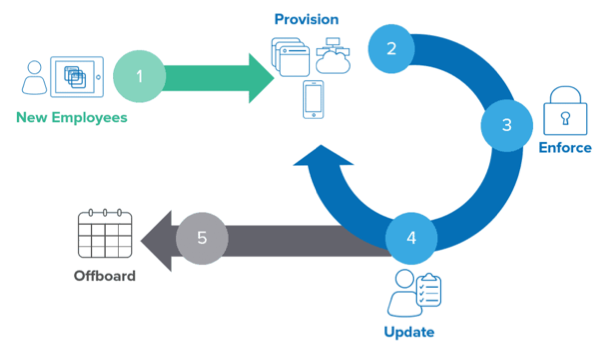
Official SCIM identity lifecycle diagram
Workforce Identity

Connect employee and partner access with lifecycle and security controls.

Identity teams can connect employee and partner sign-in with access provisioning, changes and removal as responsibilities change.

SEGA

A shared account across game services

Launched in January 2025; official story published October 2026.

SEGA Account uses Auth0 as a common identity foundation.

What changed? +

Separate services had separate aging login systems.

Named SEGA account project with later passkey plans.

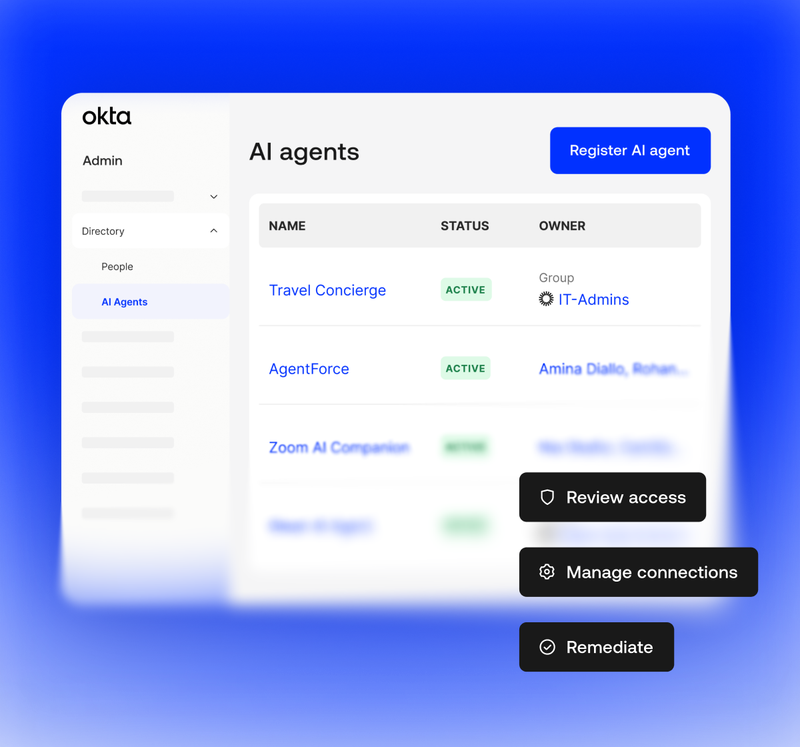
Official agent-management console graphic
02 / HOW IT BECOMES REAL

Illustrative employee access lifecycle

Illustration: a Korean company connects employee access across applications.

  1. 01

    Map

    Identify users, application owners and policies.

  2. 02

    Connect

    Configure sign-in and supported provisioning.

  3. 03

    Review

    Certify access as responsibilities change.

  4. 04

    Respond

    Apply configured threat and removal controls.

Follow the work, step by step

Identity connects people with their work

Okta supplies identity software for deciding who or what may connect to applications. The immediate problem is familiar: a company accumulates many systems, each with a different account, policy and owner. Joining employees need the appropriate applications, changing roles need different permissions, and departing employees need access removed. An application developer faces a related problem when customers register and return to a digital service. Okta organizes these decisions around identity instead of asking every application team to rebuild them independently. Signet reads the company as an operating layer between a person, device or agent and the resources it uses. This reading keeps authentication distinct from authorization: proving a caller's identity is one step, and deciding the permitted action is another. A successful deployment must still reflect the customer's actual job responsibilities and security policies. The identity platform makes those decisions easier to apply consistently, while the organization remains responsible for the business rules behind them and for checking that connected applications enforce the intended access.

The platform follows a lifecycle

Universal Directory brings identities and attributes from different sources into a common management surface. Single Sign-On connects an authenticated session with configured applications; Adaptive Multi-Factor Authentication adds policy-dependent checks. Lifecycle Management addresses provisioning and removal through integrations, including the SCIM protocol where supported. Identity Governance adds requests, reviews and certification campaigns so access can be reconsidered after the initial grant. Privileged Access addresses higher-risk resources and administrative work. These are connected decisions, with different deployment and purchase choices. An illustrative Korean company could start by mapping employee roles and application ownership, connect its existing directory, test sign-in policies, and then define a process for access changes. Signet would ask the candidate to explain that sequence with an actual customer problem, the people approving it and the evidence used after rollout. Listing product names is less useful than showing where a permission originates, what happens when the person's role changes, and how the team discovers an access rule that has remained broader than the work now requires.

Named customers show different boundaries

The official FedEx story describes consolidating legacy identity systems and connecting existing applications with Okta Workforce Identity. The Box story addresses a later stage: an established deployment used governance and workflows to make administrative access temporary and review permissions. These cases explain different operational problems; neither establishes that every buyer will reproduce the same timing or savings. Customer identity has a separate example in the October SEGA story, where Auth0 supports the shared SEGA Account across previously separate services. Signet uses these named cases to show the range of the platform while keeping each outcome within its stated context. A Korean account discussion should begin with the customer's current identity estate and a specific next decision. If the priority is employee onboarding, the evaluation differs from a consumer-registration project or an AI agent's resource access. The account executive must coordinate the technical and business people who can validate that choice, then connect implementation and continuing adoption with the commercial agreement. The product belongs inside a customer process, rather than replacing the process with an abstract security promise.

Understand the products and their customers

Workforce products serve operating teams

The workforce portfolio covers the identity decisions around employees, contractors and partners. Universal Directory supplies the identity record and attributes; Single Sign-On helps connect applications; Adaptive MFA adds checks according to context and policy. A customer can add lifecycle automation, governance, privileged access and threat protection as its requirements change. The current pricing page groups products into suites, but it also describes individual products and add-ons. Signet keeps the commercial packaging separate from the technical sequence because a suite name alone does not explain the problem being solved. A Korean candidate should be able to map a customer's existing identity source, target applications, access policies and administrative responsibilities before choosing an initial configuration. For example, the first project may address joiners and leavers while a later governance project reviews existing permissions. The handoff between those stages matters: granting access quickly can still create unnecessary risk if the organization never revisits it. A grounded demonstration follows an actual identity through the selected products and makes the approval, exception and removal steps visible.

Customer identity has a developer path

Auth0 is the developer-oriented customer identity platform within Okta's portfolio. Its current materials cover authentication, authorization, organizations, enterprise connections and extensibility for customer-facing applications. The related Okta Customer Identity offering has its own base platform and commercial structure, so Signet does not treat every customer-identity product as an interchangeable label. The practical buyer decision includes the application architecture, supported login methods, account migration, consent and how identity connects with the service's own data. SEGA's official case describes a shared account foundation built after planning and proof-of-concept work across separate services. The identity platform supports that change, but the application owner still defines its experience and data responsibilities. For a Korean enterprise seller, developer adoption and business approval can involve different stakeholders. A useful explanation translates the product into a login or authorization workflow that the technical team can test, then connects that workflow with the business purpose. It should also describe how the customer will operate the integration as applications and users change, rather than assuming that adding a login screen completes the full project.

AI agents add resource and ownership controls

Okta for AI Agents extends the identity model to software that can act across tools and resources. The current product page presents discovery, registration, ownership, resource connections, certification and containment as connected controls. Agent SSO became generally available in August and brings Cross App Access into core SSO; it is included without additional cost in the stated core plans. The September release distinguishes features available then from later Agent Gateway, endpoint discovery, visual connection design and expanded runtime Kill Switch delivery. Signet preserves those release stages even when a marketing overview shows the wider intended workflow. An agent's ability to call a tool depends on the connection, policy and runtime controls actually available in the customer's configuration. A technically useful explanation identifies the human owner, the resource and the permitted task, then shows what happens when access is reviewed or removed. This direction expands the identity problem beyond a human's login, while retaining the same need to map responsibility and validate the particular integration before treating it as a production control.

03 / THE EVIDENCE

The story, in numbers.

DATED OBSERVATIONS

Completed fiscal-year revenue

USD · USD

Consolidated fiscal-year revenue, January year end; includes Auth0 business.

Figures, dates & basis +
Completed fiscal-year revenue
DateValueBasis
2022-01-31$1,300,000,000 USDConsolidated fiscal-year revenue, January year end; includes Auth0 business.
2025-01-31$2,610,000,000 USDConsolidated fiscal-year revenue, January year end; includes Auth0 business.
2026-01-31$2,919,000,000 USDConsolidated fiscal-year revenue, January year end; includes Auth0 business.

Okta

FY2022

$1.3B consolidated fiscal-year revenue.

FY2025

$2.61B consolidated fiscal-year revenue.

FY2026

$2.919B consolidated fiscal-year revenue.

Read the growth story

Subscriptions follow the identities being served

Okta's commercial model centers on identity software subscriptions, with professional services and other revenue reported separately. The workforce pricing page shows suites sold per user per month and billed annually, with stated contract conditions and additional product choices. Auth0 has its own pricing path around the customer-application offering and usage or enterprise requirements. Okta Customer Identity also describes an enterprise base platform. Signet uses these pages to explain how a buyer enters a commercial agreement, while keeping list prices distinct from the terms of a negotiated Korean contract. A particular identity project may begin with sign-in and expand to lifecycle, governance or threat controls as the customer proves its need. This connects the account executive's land, adopt and expand responsibilities with a product that must keep serving users after the sale. Growth therefore depends on more than signing the initial agreement: the customer needs to connect the appropriate applications, operate the policies and have a reason to continue. A candidate's commercial example is strongest when it follows that process and states what was actually purchased, implemented and used.

Read revenue with its fiscal period

The completed fiscal years end on January 31. Okta reported $1.30 billion of revenue for fiscal 2022, $2.610 billion for fiscal 2025 and $2.919 billion for fiscal 2026. The fiscal 2022 release separately identifies Auth0's contribution, so a historical comparison includes changes in the business as well as operating growth. The chart presents the company's reported consolidated annual totals and preserves that scope. For the quarter ended July 31, 2026, the fiscal 2027 second-quarter release reported $805 million of revenue, including $793 million of subscription revenue. That is a completed quarter and is kept separate from the annual series and future guidance. Remaining performance obligations represent contracted subscription backlog with their own recognition timing; current RPO refers to the part expected within the next twelve months. Neither is interchangeable with recognized annual revenue. Signet emphasizes these distinctions because an enterprise software interview often mixes customer agreements, bookings, backlog, billings and revenue. The candidate should name the metric, its date and its scope before relating it to an account strategy or a company growth claim.

Technical trust supports continuing demand

The business must retain customers and win additional identity work while keeping the service dependable. Its financial release names cybersecurity incidents, service interruptions, competition, changing technology and customer retention among material risks. Signet asks how those stated risks affect customer implementation and account work. A customer can compare independent identity software with capabilities in an existing technology estate, other identity providers or an internal implementation. The seller's task is to explain the operational fit and the evidence behind a recommendation. A strong initial proposal specifies the systems and users in scope, the policy that will change, and how adoption and security will be checked. Later expansion should be justified by another concrete need, such as access reviews or an additional application population. The recent AI agent direction may create such a need, but its release timing and customer deployment must remain visible. This is why financial growth and product announcements are read together: the announcement explains what might broaden the workflow, and the reported period shows what the company actually recognized. Neither alone proves the economics of a particular Korean customer engagement.

04 / THE PEOPLE

Someone saw it first.

Todd McKinnon official portrait
CEO and co-founder

Todd McKinnon

Co-founded Okta in 2009 with Frederic Kerrest.

The choice behind the company +

Connect identity with changing application use.

Ric Smith official portrait
President, Products and Technology

Ric Smith

Leads product and technology responsibilities.

The choice behind the company +

Extend access controls to AI agent work.

“every agent needs a trusted identity”

Todd McKinnon · Dated official company announcement · 2026-08-26
The decisions behind the company

The founders connected identity with cloud use

Todd McKinnon and Frederic Kerrest founded Okta in 2009. The official leadership page now lists McKinnon as CEO, chairperson and co-founder, while Kerrest is a director and vice chairperson, co-founder and former chief operating officer. Keeping those current responsibilities separate helps avoid projecting an older operating role into today's organization. The company began around the need to connect people with changing technology and has expanded its identity platform across workforce and customer applications. The Auth0 product path and the current agent work show that the object of identity can change while the central access problem continues. Signet reads the founders' history through those product choices rather than an invented personal anecdote. For a candidate, the practical implication is to understand why customers want an identity service that connects different application providers. The company emphasizes that independence in its material, but the candidate should turn it into a concrete integration decision and explain how it helps the customer's particular estate. A founding story is useful when it clarifies a continuing customer problem, not when it substitutes for evidence of present work.

Current leaders own different decisions

The current executive list includes Ric Smith as president of products and technology, Brett Tighe as chief financial officer, and Jon Addison as chief revenue officer. Eric Kelleher is president and chief operating officer, while David Bradbury is chief security officer. These roles place product direction, financial reporting, commercial execution, operations and security in distinct responsibilities. Signet highlights McKinnon, Smith and Tighe to make the platform strategy and financial evidence easier to read without claiming a Korean reporting relationship. Smith's September statement connects agent access with the danger that the same capability can create. Tighe's quarterly statement relates the commercial result to core workforce and customer identity and newer products. Those statements serve as dated evidence of management priorities, rather than a promise that every team has the same daily routine. A candidate should relate their own work to the relevant responsibility: enterprise selling requires coordination across technical validation, partners, business value and customer adoption. Understanding leadership helps ask informed questions about that coordination, but it does not establish a local manager's name or a particular decision path for an individual offer.

Public principles become candidate examples

The current careers page states customer care, continuing security, ownership and forward product work as company principles. It also describes how employees are expected to raise their standard, turn action into progress, adapt to change and simplify repeated work. Signet treats this as the employer's stated expectation rather than an independently measured culture result. The Enterprise Account Executive posting makes the customer principle concrete through account growth and collaboration with channel partners, solutions engineering, business value management and customer teams. A candidate can prepare an example where listening changed a proposal, another where they owned an uncertain sales process, and a third where technical feedback altered the implementation plan. The useful details are the actual customer need, the decision made, the people involved and the result that can be supported. Security adds another boundary: a persuasive commercial promise must remain compatible with the product's current control and delivery state. If the proposed workflow depends on a planned feature, the account team should make that stage visible. Acting quickly and taking ownership should improve the customer's decision, rather than encourage the team to skip the evidence it needs to approve the work.

05 / THE NEXT CHAPTER

Work in Korea

Own enterprise pipeline, customer adoption and account expansion.

Enterprise Account Executive
  • Enterprise Account Executive

Open posting count, not team headcount

Posting counts describe current functions, separate from team headcount.

Why Korea? Why now?+

The current role explicitly serves enterprise account work from Seoul.

Understand the Korea opportunity

The current opening owns enterprise accounts

The official public Greenhouse feed was checked on October 10, 2026 and listed one role with Seoul, South Korea as its location: Enterprise Account Executive. Its first publication date is September 23, 2026. Signet includes the full original employer description and uses the live feed as the current hiring boundary. The posting places the role in Enterprise Sales and describes a territory approach across prospective accounts, existing customers and regional consultant influencers. The work includes new business generation, account and territory planning, relationship development, pricing, presentations, negotiations and contracts. It also follows prospects into implementation and continuing account expansion. Signet reads this as a commercial ownership role around enterprise adoption, rather than a generic introduction to the product. A candidate should prepare an example of building an account plan from a customer problem, finding the actual stakeholders and progressing a complex agreement. The useful evidence includes how the opportunity was qualified, what changed in the proposal and how the seller coordinated with the people who could validate and implement the identity workflow.

The employer asks for a proven selling history

The role asks for at least seven years selling enterprise technology solutions and a record of direct field sales that develops new customers. It names cloud software, infrastructure management, application development and management, security, business applications and analytics as relevant domains. It also asks for experience using partners, channels and alliances, a measurable history of exceeding targets, complex software deals and executive-level conversations. The description names target-account, solution or consultative selling and treats MEDDPICC and Challenger knowledge as a plus. A bachelor's degree, an MBA advantage or equivalent experience appears in the original requirements. Signet keeps these actual requirements visible instead of turning them into a universal checklist for every identity role. For the candidate, experience needs to connect with a decision involving several stakeholders and a technical product. A convincing example explains the customer's starting situation, the qualified business problem, the role of the partner and the next implementation step. The sales number should retain its period and the candidate's own contribution so that an account result is not presented as an unsupported personal achievement.

Local ownership depends on global collaboration

The original description names channel partners, solutions engineering, business value management and customer teams as collaborators. It describes land, adoption and expansion across enterprise accounts and asks the seller to explore relationships throughout the customer's organization. The role carries a hybrid marker and an immersive in-person onboarding expectation. Signet treats those words as the employer's stated arrangement, while leaving the interview to establish the actual schedule and account assignment. The public role count describes one open posting, not the Korean team's size. An illustrative identity opportunity might begin with employee access and later expand to governance or customer applications, but that sequence is Signet's preparation example rather than a promised territory plan. The candidate can bring an account map, a technical validation plan and a partner contribution that are connected to one real customer decision. They should be able to explain why the customer needed to act, how the team tested the proposed solution and what remained to operate after contract signature. That is the practical bridge between the company's broad identity portfolio and the enterprise account work described in Seoul.

KOREA OPEN ROLES

1 open role in Korea

Current Signet catalog · 2026-10-19

FOR YOU

Explain a customer decision, its technical validation and your own contribution.

GTM · Sales · BD

Enterprise Account Executive

Seoul, South Korea

Posting checked

The work
Own enterprise pipeline, customer adoption and account expansion.
Who fits
7+ years of enterprise technology sales and new-account experience.
Keep in mind
Hybrid marker; in-person onboarding is stated.
07 / NOW & NEXT

The next scene is taking shape.

Agent SSO generally available

Cross App Access enters core SSO.

Agent controls and Blueprint Alliance

Available features and Q3/Q4 plans are stated separately.

SEGA Account customer story

Auth0 connects a shared account across entertainment services.

More context on what comes next

Agent SSO moves into core identity

On August 24, 2026, Okta announced general availability of Agent SSO. The release places Cross App Access inside core SSO and gives agents an identity at the point of connection. It is included at no additional cost in the stated core SSO plans, while the broader Okta for AI Agents offering addresses discovery, onboarding, protection and governance across different agents. Signet reads the release as a specific available step. The account discussion should identify whether the agent uses the supported connection model and which additional controls the organization needs. General availability of one capability does not make every later runtime feature available in the same configuration.

Oktane separates availability from plans

The September 22 release states that Agent SSO, agent-to-agent connections and resource access certifications are available. It places Agent Gateway and endpoint discovery in planned third-quarter availability and the configuration designer and expanded runtime Kill Switch in planned fourth-quarter availability. The Blueprint Alliance announced the same day sets a shared reference architecture across identity, security, data, applications and infrastructure vendors. Signet keeps the alliance distinct from a completed integration at a particular customer. Its practical questions concern the agent inventory, permitted actions, runtime activity and response. A Korean proposal can use that architecture to organize an evaluation, with the dated feature status attached to each proposed control.

Customer stories explain the operating work

The September 24 World Central Kitchen announcement describes donated technology and a direction toward governed agents for relief operations; its planned applications should retain that stage. The October 7 SEGA story describes the already launched account foundation, the work of unifying services and future passkey plans. These are different forms of evidence. A candidate can use the SEGA account workflow to explain customer identity and the World Central Kitchen direction to discuss the ownership of an agent. The next question should concern the controls, data and operating responsibility in the named situation, rather than treating a future use case as recognized company revenue.

Their future. Your next chapter.

Find your part ↑

An independent profile by Signet. No affiliation or investment recommendation. Introductions happen only with your consent.
Research reviewed 2026-10-10

A LITTLE MORE CONTEXT

Understanding Okta.

What does Okta do?

Okta connects people and AI agents to controlled application access.

What is the opportunity in Korea?

Own enterprise pipeline, customer adoption and account expansion.

Are these confirmed job openings?

Employer postings were checked on 2026-10-10. Availability can change. Mock applications request a review from Signet.

How can I explore the company in more depth?

Follow the company from its vision through products, evidence and people to the Korea team and current roles. Use the table of contents to move within the page, and expand the sections for more context.

Back to the collection ↗