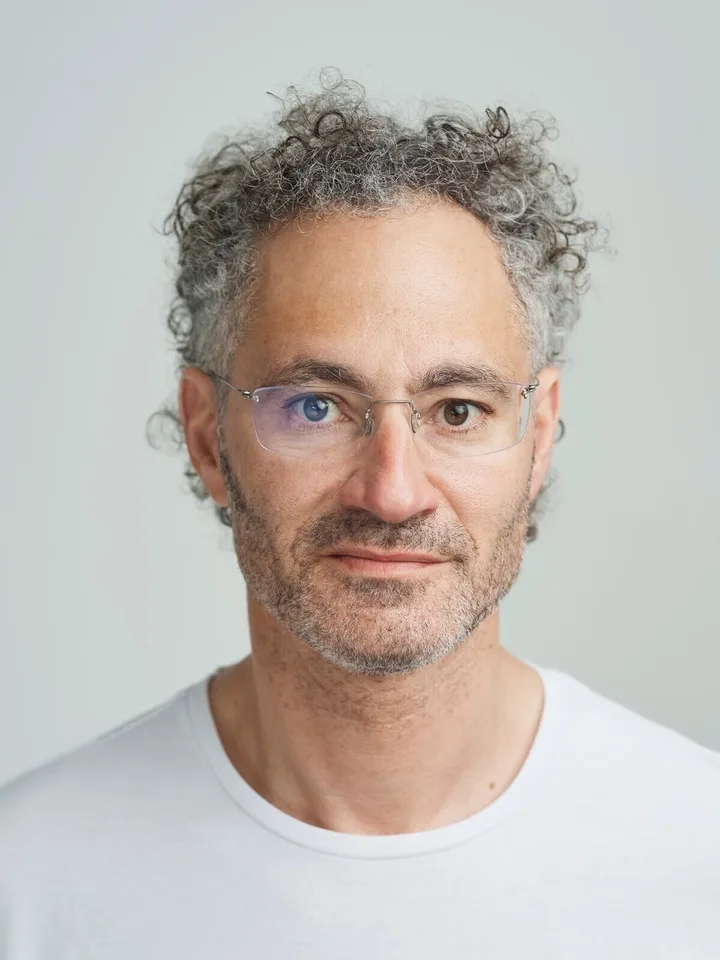
Official participant photograph of Alex Karp
Palantir / THE WORLD THEY ARE BUILDING

Make the decision the data was waiting for.

Its AI proposition depends on linking model output to governed operational actions. The opportunity is to shorten the distance between noticing a problem and making an accountable change; this is an interpretation of the platform, not a promise of autonomous factories.

See it taking shape ↓
01 / THE PRODUCTS

The products behind the promise.

Foundry Workshop flight-alert application with filters and object details
Official Foundry Workshop documentation example. The flight alerts and May 2020 dates are demonstration data, not a recent customer incident.
Foundry

Integrate data and build an Ontology, analytics and workflow applications.

A reusable operating model connects data analysis to day-to-day work.

Airbus / Skywise

An aviation platform that spans industrial and airline work

Palantir reported more than 50,000 daily operational users of Skywise.

The February 2026 renewal keeps Palantir behind Skywise for planning, supply chains, production and airline operations, including migration flexibility for sovereign cloud environments.

What changed? +

Aircraft production and airline operations require many distinct engineering and operational datasets.

Company press release dated February 10, 2026. This is platform adoption, not an independently measured productivity gain.

HD Hyundai Group

A shipbuilding group rolls Foundry across its shipyards

HD Hyundai says it is manufacturing ships around 30% faster with Palantir software. A separate report gives a 2030 target of 30% higher productivity.

In September 2022 the group signed a Foundry contract for its shipbuilding affiliates, and in January 2026 the companies announced a group-wide expansion of Foundry and AIP. Korean trade press describes the software being used for schedule management on ship construction and for material management, financial planning and equipment operation.

What changed? +

HD Hyundai began its Future of Shipyard project in 2021, aiming by 2030 for a largely automated shipyard built around a digital twin. In 2022 two shipbuilding affiliates ran pilots, from January and May, joining the data they had accumulated to look for ways to improve design and production.

The 30% figure is the companies' own claim, reported in January 2026. The $45M is the total value over five years of the group's contracts as announced in September 2022, not annual revenue. The January 2026 value, described only as hundreds of millions of dollars over several years, comes from an unnamed person and Palantir declined to comment on terms.

Header image on the Ontology overview page of Palantir's Foundry documentation
Illustration at the top of Palantir's Ontology documentation. The Ontology is the layer that maps an organization's data to its real-world assets and the actions allowed on them.
02 / HOW IT BECOMES REAL

From a missing component to a revised production plan

Illustrative manufacturing workflow based on Foundry, AIP and Apollo capabilities.

  1. 01

    Bring the operational evidence together

    Ingest inventory, orders and schedules, then preserve lineage and access rules. A shared view is useful only when teams can identify which source a number came from.

  2. 02

    Describe the objects people actually manage

    The Ontology relates parts, suppliers and production orders to available actions. This adds operational meaning to tables rather than leaving the planner to interpret raw joins.

  3. 03

    Explore a shortage with constrained AI

    AIP can help query context and propose a response through tools connected to the Ontology. Teams evaluate outputs and keep sensitive data and actions within configured controls.

  4. 04

    Publish an application people can operate

    A workflow app turns a selected response into an authorized operational action. Apollo supports software delivery across cloud, on-premises and edge environments as deployment needs change.

Follow the work, step by step

The problem Palantir says it solves

Palantir's own description starts with data that cannot be used where decisions are made. Its documentation calls the Ontology "an operational layer for the organization" that connects datasets to their real-world counterparts, from plants and equipment to customer orders and financial transactions. The same logic explains how it sells. Its annual filing for 2025 says Palantir is "fundamentally competing with the internal software development efforts of our potential customers." Read plainly, the first alternative to buying Palantir is a customer's own engineering team building the connection itself, not another vendor.

The belief that follows is that this work is done best by engineers who sit with the customer. Palantir calls them forward deployed engineers, FDEs for short. The Seoul engineering postings say the company pioneered the role, and the experienced one says it "isn't just a job title: it's the blueprint." The annual filing says "We embed directly with customers across numerous industries." The chief technology officer put the claim more bluntly on the Q2 2026 earnings call.

Remember, only Palantir has FDEs. Everyone else has sparkling sales engineers.

Shyam Sankar · Chief Technology Officer, Palantir · Q2 2026 earnings call · 2026-08-03

Why now: bootcamps and model control

Palantir gives two reasons this works at scale now. The first is the bootcamp. Its own overview describes sessions where customers "go from zero to use case in one to five days," building live alongside Palantir engineers, and its annual filing says bootcamps "deliver real workflows on actual customer data in days." The same filing says a sales cycle often lasts six to nine months and can run a year or more. Read together, a bootcamp lets a customer judge the product on its own data before that long process ends.

The second reason is language models, and who controls them. Palantir argues that enterprises now want to own the data, logic, actions and security around any model they use, rather than hand them to a model lab. That is the job it gives AIP. The number to watch is US commercial revenue, recognized in the quarter: $214M in Q4 2024, $306M in Q2 2025 and $764M in Q2 2026. Palantir presents bootcamps as part of how it wins customers.

Demand for AI sovereignty has now been unleashed. And Palantir is the only company that has demonstrated it can transform tokens into actual economic value.

Alex Karp · Co-founder and Chief Executive Officer, Palantir · Q2 2026 earnings release · 2026-08-03

What the work looks like, step by step

Take a manufacturer with a late part, as an illustration and not a real customer's project. First, data engineers and the customer's system owners bring inventory, order and schedule records into Foundry and reconcile the identifiers, keeping track of which system each number came from. Second, engineers and planners define in the Ontology the things the planner manages, such as parts, suppliers and production orders, and the actions allowed on them. Third, AIP can query that context and propose a response through tools connected to the Ontology, while domain experts test realistic failure cases. Fourth, a workflow application turns the chosen response into an authorized change to the plan, and Apollo keeps the software delivered in the cloud, on premises or in more rugged environments.

In this illustrative workflow, people agree on object definitions, test AI failures and approve the proposed change. That final human approval is a choice in the example. Palantir's Ontology documentation describes actions and granular security and governance for changes. Organizations configure who can access objects and execute actions; the documentation does not make a named person's approval mandatory for every AIP action.

In Seoul this chain is the job. The engineering postings put engineers with the customer and in front of stakeholders from technical teams to executives, the strategist postings send strategists onsite to customer analysts, and every posting requires fluent Korean and English. The first test of the idea in Korea is therefore human: can you agree with a Korean planner or plant manager on what a part, a shipment or a quality defect means, and then build the application that acts on it? Chapter 02 shows what Palantir sells, chapter 04 whether the numbers hold, and chapter 06 what is known about Korea.

Understand the products and their customers

Three products that stack

Palantir's architecture documentation describes three integrated platforms that stack. Foundry is the base, AIP attaches language models to it, and Apollo keeps the software delivered. The annual filing lists a fourth, Gotham, used across government functions, which this chapter leaves aside. The filing calls Foundry the "foundational data operations platform" and describes the Ontology as "the heart of our platforms."

Foundry integrates an organization's data, such as datasets, virtual tables and models, and maps it in the Ontology into objects, properties and links, which Palantir calls the semantics of the organization. Action types and functions define what people are allowed to change, which it calls the kinetics. Teams then build analyses and applications on top, and the Workshop screen in the documentation is one example, built on demonstration data. Buyers are operations leaders, data teams and application builders. Palantir says its first rival is the customer's own software team, and describes the other rivals by category.

AIP connects language models, tools and agents to the Ontology so a model can look up an organization's own data and propose actions within the controls that organization has set. Teams can test how the model behaves before it reaches users. Palantir sells it through bootcamps, where customers build use cases live with its engineers in one to five days. The screen shown is AIP Chatbot Studio from Palantir's documentation, with a demonstration chatbot built on Federal Reserve press conference transcripts. Palantir frames its rival here as the language labs behind the models, and its CEO has said customers "have declined to become vassal states of the language labs."

Apollo is the delivery side of the platform. Palantir's architecture documentation describes it as managing continuous delivery of software across different environments, so applications stay current where a customer's data and operations sit. The documentation screens show an API explorer and a documentation explorer for queries and types. Buyers are platform and software operations teams.

One customer, and the limits of what is reported

HD Hyundai is the best-documented customer in Korea. The work began in 2021 at HD Hyundai Oilbank, the year HD Hyundai also started its Future of Shipyard project, which aims by 2030 for a largely automated shipyard built around a digital twin. In 2022 two shipbuilding affiliates ran pilots on Palantir's platform, starting in January and May, joining the data they had already accumulated to look for ways to improve design and production. In September 2022 the group signed a Foundry contract covering its shipbuilding affiliates, valued at $20M over five years, which Palantir said brought the total value of its contracts with the group to $45M over five years. Korean trade press describes the software being used for schedule management on ship construction and for material management, financial planning and equipment operation.

Together with Palantir Technologies, (we are) drawing on the latest innovation in AI, digital twins, and so much more to transform our shipyards, unlocking a whole new level of productivity and safety

Chung Ki-sun · Executive Vice Chairman, HD Hyundai · Palantir's customer video, as reported in Korean English-language press · 2025-02-28

What was reported afterwards is a claim, not a measurement. The companies say HD Hyundai is manufacturing ships around 30% faster with Palantir software. A separate report gives a 2030 target of 30% higher productivity. In January 2026 the companies announced a group-wide expansion, which Palantir called its largest and longest partnership of its kind in Korea. Its value was reported as hundreds of millions of dollars over several years, but that figure came from an unnamed person and Palantir declined to comment on terms. The announcement also names areas where HD Hyundai Oilbank saw results. Distinguish the company's 30% performance claim, anonymous-source reporting of January contract value, and the $45M contract value announced in 2022.

A second named customer: Airbus

A further customer example is Airbus. Palantir and Airbus began collaboration on A350 manufacturing in 2015 and developed the Skywise aviation platform. Palantir says more than 50,000 people used Skywise in daily operations as of the February 2026 renewal. The initial collaboration date and the later platform adoption are separate milestones.

HD Hyundai announced group-wide expansion in January 2026, while LG CNS announced broader LG Group adoption plans in March. Announced expansion and live deployments are separate stages.

03 / THE EVIDENCE

The story, in numbers.

DATED OBSERVATIONS

Total annual revenue

USD · B

Company-disclosed total annual revenue in USD billions. Fiscal-year end dates are shown on each point. Historical comparatives follow the cited filing; revenue includes acquisition and currency effects and is not ARR.

Figures, dates & basis +
Total annual revenue
DateValueBasis
2021-12-31$1.542BTotal recognized revenue for the fiscal year ended 2021-12-31. Includes all reported revenue categories.
2022-12-31$1.906BTotal recognized revenue for the fiscal year ended 2022-12-31. Includes all reported revenue categories.
2023-12-31$2.225BTotal recognized revenue for the fiscal year ended 2023-12-31. Includes all reported revenue categories.
2024-12-31$2.866BTotal recognized revenue for the fiscal year ended 2024-12-31. Includes all reported revenue categories.
2025-12-31$4.475BTotal recognized revenue for the fiscal year ended 2025-12-31. Includes all reported revenue categories.

Palantir / SEC · Palantir

Airbus collaboration begins

The historical partnership overview dates the initial A350 production work to 2015.

Skywise agreement renewed

Airbus and Palantir announced a multi-year collaboration extension.

LG CNS expansion announced

The partners reported an LG affiliate deployment in late 2025 and plans for broader group adoption and an embedded engineering team.

Read the growth story

Who pays, for what

Palantir's customers are governments and companies, and the split is close to even. In FY2025, the year ended 2025-12-31, total recognized revenue was $4.475B. Of that, 54% came from government customers and 46% from commercial customers, and 74% came from customers in the United States and 26% from customers abroad. US government revenue was $1.855B and US commercial revenue was $1.465B. Palantir counts as a customer any organization it recognized revenue from in the trailing twelve months: 954 at 2025-12-31, and 1,049 in the period ended 2026-06-30 against 849 a year earlier.

The model is to start small and expand inside the account. HD Hyundai Group shows the pattern: pilots at two shipyards in 2022, then a Foundry contract across its shipbuilding affiliates with $20M of new contract value over five years, taking total contract value to $45M over five years. Contract value is what was signed, not what Palantir recognizes each year. Palantir's filing says a sales cycle often lasts six to nine months and can run a year or more, and that existing customers have expanded their relationships, so that a limited number of customers account for a substantial portion of revenue. That is the strength of the model and also its main risk.

This would be impossible without the Ontology. We do not see this as a vendor relationship or a one-off endeavor.

Kirkland & Ellis, quoted by Ryan Taylor · Palantir customer · Q2 2026 earnings call · 2026-08-03

What has grown, and when

Growth accelerated first in US commercial business. Quarterly recognized US commercial revenue was $214M in Q4 2024, $306M in Q2 2025, $595M in Q1 2026 and $764M in Q2 2026. Total revenue was $2.87B in FY2024 and $4.475B in FY2025. In the single quarter ended 2026-06-30 it was $1.935B, up 93% from a year earlier, with GAAP net income of $1.062B, a 55% margin.

US commercial revenue by quarter, recognized revenue, company-reported
QuarterUS commercial revenueGrowth vs same quarter a year earlier
Q4 2024$214M+64%
Q2 2025$306M+93%
Q4 2025$507M+137%
Q1 2026$595M+133%
Q2 2026$764M+149%

Bookings run ahead of revenue. In Q2 2026 Palantir signed $3.373B of total contract value, up 49% from a year earlier, including 73 deals of at least $10M. It reported $6.238B of US commercial remaining deal value, which assumes customer options are exercised and contracts are not terminated, up 124%. Its FY2026 revenue guidance, a forecast and not a result, rose from 61% growth in February to 71% in May and 82% in August, the last being $8.150B to $8.158B of revenue.

Palantir's competition statement points first to customers' internal software teams, then to categories: large enterprise software companies, government contractors and system integrators. Trade press in October 2026 cited an AWS FDE organization with $1B of funding (announced June) and a Microsoft program of $2.5B (July) as signs the FDE model is spreading, and industry analysts warn of vendor dependency, security exposure, technical debt and talent atrophy.

Where it is thinner, and three risks

Outside the United States the business is smaller and slower. For the six months ended 2026-06-30, US revenue was $2.855B, or 80%, up 110%, and rest-of-world revenue was $713M, or 20%, up 35%. In 2022 Palantir's then chief operating officer, Shyam Sankar, estimated that within five years about 40% of revenue would come from outside the US. FY2025 showed 26%.

  • A few customers carry a lot. Palantir's filing lists reliance on a limited number of customers as a risk. The average revenue of its top twenty customers was $93.9M in the twelve months to 2025-12-31 and $124M in the twelve months to 2026-06-30.
  • Government work depends on public budgets. Government customers were 54% of FY2025 revenue, and the filing lists failure to receive or keep government contracts, or changes in public-sector fiscal policy, as a risk.
  • Growth abroad is chosen, not automatic. The CEO said in January 2026 that Palantir has to engage abroad selectively, and rest-of-world growth of 35% trails the US at 110%. Palantir's filing also says the jointly owned Korean entity it created with HD Hyundai limits its own opportunities for growth in Korea. A Korea office depends on a company deciding where to spend its attention.

The business is real in the narrow sense that matters first: the revenue is recognized, profitable and growing fast in the US. For a Korea candidate the live question is different, which is how much of that growth reaches Korea and who leads it.

04 / THE PEOPLE

Someone saw it first.

Official participant photograph of Alex Karp
Co-founder and CEO

Alex Karp

Karp is identified as co-founder and chief executive in the August 2026 results release, leading a business serving commercial and government customers.

The choice behind the company +

His Q2 commentary frames AI around customers retaining control of operational data and decisions. This gives sovereignty an operational meaning beyond choosing a model provider.

“Remember, only Palantir has FDEs. Everyone else has sparkling sales engineers.”

Shyam Sankar · Q2 2026 earnings call · 2026-08-03
The decisions behind the company

The people who set the direction

Three executives matter most for a Seoul hire. Alex Karp is co-founder and chief executive, and his Q2 2026 commentary frames AI around customers keeping control of their own data and decisions. Shyam Sankar is chief technology officer and the person who has spoken and written most about the FDE model in the material Signet read. In 2022, as chief operating officer, he described Palantir's Hyundai approach as starting with the decision a customer makes and widening the data around it. Ryan Taylor is chief revenue officer and chief legal officer, visited Korea in June 2025 for talks with KT, and spoke for Palantir at the LG CNS announcement in March 2026. On LinkedIn (6 October 2026) a Korea-based profile carries the title Head of Korea, which Signet records as a self-described title.

Three decisions behind the company's shape

Three decisions explain the company's shape. First, it built for the US government before it sold to companies. Karp told investors on the Q2 2026 call that the story begins when Palantir dedicated itself to its most important partners in the US government and built products to deliver value for them. Second, the first version of the Ontology took shape in that government work: Karp told the same call it was developed when early engineers made the code work in sensitive environments, which fits the way Palantir's documentation puts controls and governance into how actions are defined. Third, it put engineers at the customer. Sankar traces the idea to a 2006 conversation in which Karp asked him why French restaurants are so good and told him that there "the wait staff is actually part of the kitchen staff." Sankar says he named the engineering version forward deployed engineering in 2007.

FDEs embed alongside our customers and work to ensure our software solves their problem and not some proxy for their problem.

Shyam Sankar · Chief Technology Officer, Palantir · His essay "The Primacy of Winning" · 2024-04-09

Karp's own account of why Palantir looks different came on the Q2 2026 call. He said the company rejected the way Silicon Valley taught software companies to be built at the time, and described being told that the job was to get clients to pay for something that left them attached to Palantir but added no value, which he called a parasitic model. The FDE model is the company's answer to that, in Sankar's telling. He describes forward deployed engineering as the extreme form of an ownership habit Palantir built early: taking total control of the implementation, because that is where the feedback, the quality and the improvement come from.

Principles, in the company's words

Palantir has published enough about itself to name four working principles. The first is total ownership, as above. The second is to prove value fast on real data: bootcamps put customers hands on keyboard for one to five days. The third is a shared data model: the Ontology maps data to meaning and to actions. The fourth concerns people. Sankar describes an FDE as someone "crazy enough to get on a last-minute plane to Iraq," smart enough to ship quality, same-day code and still able to talk to users. The Seoul postings add that Palantir celebrates individual strengths "rather than rely on traditional career ladders."

The Seoul postings carry one paragraph saying Palantir values excellence regardless of background and prefers people in an office with some hybrid days, and the engineering postings add that it wants engineers who learn continuously and make decisions themselves. The postings are Palantir's general text. The scale of hiring is clearer. At 2025-12-31 Palantir had 4,429 full-time employees, 28% of them outside the United States. In the Q2 2026 quarter its finance chief attributed a 37% year-over-year rise in adjusted expenses primarily to "the continued investment in our AI platform and technical hiring."

The claim to take from this chapter is ownership. For a Korean engineer it means being the person the customer calls, not a specialist handed a ticket. The costs the company itself names are travel, ambiguity and no ladder to point at.

05 / THE NEXT CHAPTER

Korea needs builders who understand industrial operations

The five open Seoul postings connect this opportunity to customer-facing work on two tracks: engineers investigate a business problem, work through data and deploy a usable application, and deployment strategists go onsite with customer analysts, choose datasets and train users, all in Korean and English.

Forward deployed engineering
  • Forward Deployed Software Engineers (FDSE)
  • Forward Deployed Engineers (FDE)
Software engineering, optimization, AI/ML, reliability
  • Software Engineers
  • Optimization
  • AI/ML
  • Site reliability (SRO)
Deployment strategy and business development
  • APAC Commercial Business Lead
  • Deployment Strategists
  • Korea business development
  • Consultant
  • Project Development Manager
Mission operations and analysts
  • Mission Operations
  • Data analysts
Interpreters and translators (Korean and English)
  • Interpreter / Translator
Head of Korea

The organization diagram groups self-described titles from 40 Korea-based associated LinkedIn profiles observed on 6 October 2026; it describes the observed profile mix, not official staffing or reporting lines.

Why Korea? Why now?+

Palantir's own words give three reasons and some limits. In 2022 its then chief operating officer estimated that within five years about 40% of revenue would come from outside the US, with Asia a large part of it and Japan, South Korea and Singapore the focus at the time, and Palantir formally opened a Seoul office. Korea has heavy industry that fits operational software: the annual filing names supply-chain managers in South Korea among the users of its software, and HD Hyundai has worked with Palantir since 2021. Partners give Palantir routes it does not have to staff itself: KT since March 2025 and LG CNS since March 2026. The limits are the CEO's own line in January 2026 that Palantir has to engage abroad selectively; the annual filing's statement that its jointly owned Korean entity with HD Hyundai limits its ability to sell independently in Korean markets; and the numbers: 26% of FY2025 revenue came from abroad, below the 40% estimate. Signet's reading is that Korea is a chosen bet with real customers, run partly through partners.

HD Hyundai work begins

Palantir and HD Hyundai date the start of their work to 2021, at HD Hyundai Oilbank. HD Hyundai's Future of Shipyard project also began in 2021.

Pilots at two shipyards

Hyundai Samho Heavy Industries began pilot tests on Palantir's platform in January 2022 and Hyundai Heavy Industries in May 2022.

Korean subsidiary registered

Two third-party company-information sites list 팔란티어테크놀로지스코리아 as incorporated on 2022-02-09, with its address in Seoul's Jongno district.

Foundry contract across shipbuilding affiliates

HD Hyundai Group announced a Foundry contract for its shipbuilding affiliates, valued at $20M over five years, which Palantir said brought the total value of its contracts with the group to $45M over five years. Palantir was reported to have formally opened a Seoul office.

Joint entity with HD Hyundai

Palantir's annual filing says it created a jointly owned entity in South Korea with HD Hyundai in December 2022, in which Palantir has a controlling interest.

Customer video with a Palantir FDE on camera

Korean English-language press reported a Palantir video about HD Hyundai's Future of Shipyard project, in which a Palantir forward deployed engineer and HD Hyundai's executive vice chairman spoke.

KT becomes a premium partner

KT and Palantir signed a strategic partnership, and KT became Palantir's first premium partner in Korea.

Palantir's chief revenue officer visits KT

KT said Ryan Taylor visited Korea to discuss strategy. The two companies are mutually exclusive partners for banking and insurance, and KT staff work on joint projects with Palantir's engineers.

CEO visit and AX Leaders Summit

Alex Karp was in Seoul for a second AX Leaders Summit with KT, where leaders of four Korean groups each met him for about 25 minutes. Palantir also ran a pop-up store, and a Palantir executive said Korea is its second-largest market for merchandise purchases after the US. That measures brand attention, not software revenue.

First LG Group affiliate deployment

The March 2026 announcement says Palantir software was first deployed within one LG Group affiliate in late 2025, for quality management.

HD Hyundai group-wide expansion announced

HD Hyundai and Palantir announced a group-wide expansion of Foundry and AIP, which Palantir called its largest and longest partnership of its kind in Korea, with a plan for a Center of Excellence. The reported value, hundreds of millions of dollars over several years, came from an unnamed source, and Palantir declined to comment on terms.

LG CNS partnership announced

Palantir and LG CNS announced a deepened partnership and a dedicated FDE team embedded within LG CNS, ahead of Palantir's AIPCon, after a signing in Miami.

KT describes its FDE organization

A KT executive was reported as defining the FDE as an AX sherpa for companies and as saying KT holds the most Palantir engineering in Korea. That is the partner's claim.

Understand the Korea opportunity

Why Korea, and the limit on it

Palantir's own words give a reason for Korea and a limit on it. In 2022, as Palantir formally opened a Seoul office, its then chief operating officer Shyam Sankar estimated that within five years about 40% of revenue would come from outside the United States, with Asia a large part of it and Japan, South Korea and Singapore the focus at the time. In FY2025, 26% of revenue came from customers abroad. In January 2026 Karp called the Korean market "one of the more innovative, interesting, artistic places in the world," and in the same interview said Palantir has to engage abroad selectively. Korea is a chosen bet, not an automatic one.

We're doing so well in America, we have to selectively engage abroad

Alex Karp · Co-founder and Chief Executive Officer, Palantir · Interview at Davos, Switzerland · 2026-01-20

Real customers, and partners who share the build

The customers are the proof. HD Hyundai is the longest-running named Korean customer: work began in 2021 at HD Hyundai Oilbank, a Foundry contract covering its shipbuilding affiliates was signed in September 2022, and in January 2026 the companies announced a group-wide expansion that Palantir called its largest and longest partnership of its kind in Korea. Its reported value, hundreds of millions of dollars over several years, came from an unnamed source, and Palantir declined to comment on terms. One LG Group affiliate began using Palantir software in late 2025 for quality management and, per the March 2026 announcement, was on track to expand. KT is both a customer and a partner.

Part of the Korean delivery capacity sits outside Palantir. KT has been Palantir's first premium partner in Korea since March 2025. The two are mutually exclusive partners for banking and insurance, and KT puts its own specialists on joint projects with Palantir's engineers to take on the technical capability. A KT executive was reported in July 2026 as saying that KT holds the most Palantir engineering in Korea. That is the partner's claim. In March 2026 LG CNS and Palantir committed to a dedicated FDE team "embedded within LG CNS," not within Palantir. Palantir's own Korean structure also runs through HD Hyundai: a jointly owned entity created in December 2022 and controlled by Palantir, which its annual filing says limits its ability to sell independently or compete in Korean markets. Signet's reading is that Palantir Seoul is the small core of a larger network, which helps with access to customers and leaves open how much hands-on build work stays inside Palantir.

The Seoul team and its five roles

On 2026-10-08 the official Lever API listed five Seoul roles: three Delta engineering roles (experienced, new graduate and intern) and two Echo deployment strategy roles (experienced and new graduate). The posting text describes customer deployments, data pipelines, custom workflows, user training and executive presentations.

The experienced FDSE posting asks for willingness to travel as needed and prefers 25 to 50% availability, with requirements varying by team and location. The FDSE new graduate and internship postings expect 25 to 50% travel. Both strategist postings require 25 to 75%, varying by team and location. All five require fluent Korean and English. The company-wide employment text encourages office work and says many teams offer one or two work-from-home days; confirm the assigned Seoul team's schedule. Job examples include power grids and supply chains. Lever records the experienced engineer and strategist postings as created on 2022-04-22 and the graduate and intern postings on 2026-08-10. All five were listed on 2026-10-08. Those creation dates establish the age of the records, not continuous hiring or repeated replacement.

Compare the customer-facing work and your role's travel conditions before starting a mock application. Strategists require 25 to 75% travel; graduate and intern FDSE postings expect 25 to 50%; the experienced FDSE posting prefers that range while requiring willingness to travel as needed. Ask how Palantir and partner engineers split responsibilities and which customers the role serves.

  • Which Korean customers and sites the commercial roles serve.
  • How much of the work is in Korean and how much is with Palantir colleagues abroad in English.
  • Who leads the Seoul team and where it reports.
  • Whether a hire is pending now, and the pay band.
  • How Palantir's own engineers divide work with the KT and LG CNS teams.
KOREA OPEN ROLES

5 open roles in Korea

Current Signet catalog · 2026-10-19

FOR YOU

The Korea-filtered LinkedIn page showed 40 associated profiles. All five current roles require fluent Korean and English.

Solutions Engineer

Deployment Strategist

Seoul, South Korea

Posting checked

The work
Builds workflows for customer problems; also runs training, demos, exec talks and new industry prospecting.
Who fits
Read, write and speak fluent business Korean and English.
Keep in mind
Seoul full time; 25 to 75% travel required, varying by team and location.
Solutions Engineer

Deployment Strategist, New Grad - Commercial

Seoul, South Korea

Posting checked

The work
Meets analysts at customer sites to find problems, then works with engineers and data on custom workflows.
Who fits
Read, write and speak fluent business Korean and English.
Keep in mind
25 to 75% travel is required, varying by team and location; submit a PDF resume and 3-minute video.
Engineering · AI

Forward Deployed Software Engineer

Seoul, South Korea

Posting checked

The work
Embeds with customers to build custom apps on large scale data and AI, driving them from idea to deployment.
Who fits
Speak fluent Korean and English.
Keep in mind
Willingness to travel as needed is required; 25 to 50% availability preferred, depending on team and location.
See all 5 roles
Engineering · AI

Forward Deployed Software Engineer, Internship - Commercial

Seoul, South Korea

Posting checked

The work
Interns take on real customer projects from day one, building custom apps and LLM workflows.
Who fits
Speak fluent Korean and English.
Keep in mind
Seoul internship; expect 25 to 50% travel and submit a PDF resume and 3-minute application video.
Engineering · AI

Forward Deployed Software Engineer, New Grad - Commercial

Seoul, South Korea

Posting checked

The work
From day one, new grads embed with customers, build custom apps and LLM workflows, and work with executives.
Who fits
Read, write and speak fluent business Korean and English.
Keep in mind
Expect 25 to 50% travel, depending on team and location; submit a PDF resume and 3-minute video.
07 / NOW & NEXT

The next scene is taking shape.

LG CNS commits to joint FDE capability

A partnership announcement describes broader LG Group AI transformation and a dedicated team embedded within LG CNS.

Q1 2026 revenue reaches $1.633B

Palantir reported 85% year-over-year total revenue growth for the quarter ended March 31.

Q2 revenue grows 93%

Quarterly revenue was $1.935B and US commercial revenue was $764M.

More context on what comes next

The numbers against the bet

Read the last few months against the thesis. The bet is that engineers at the customer, on a shared data model, turn AI into operations. In the quarter ended 2026-06-30 Palantir reported recognized US commercial revenue of $764M, up 149% from $306M a year earlier, 1,049 customers in the twelve months to that date against 849 a year earlier, and $3.373B of total contract value signed in the quarter, up 49%. Those figures fit the thesis. They do not by themselves show that the FDE model, and not other factors, explains them.

Control, and rivals copying the model

Karp's framing now centers on control. In the Q2 release he said demand for AI sovereignty had been unleashed, and on the call he said Palantir ran a sovereign bootcamp after that demand took off. Airbus's February 2026 renewal included migration to sovereign cloud environments, which shows what that demand can look like inside an existing customer.

The model is spreading. Trade press in October 2026 cited an AWS FDE organization with $1B of funding and a Microsoft program of $2.5B as signs of that, while Sankar's answer on the call was that only Palantir has FDEs. If rivals can place engineers with customers, Signet's reading is that Palantir's edge has to come from the platform and its practice, and not from the job title.

Korea's mixed signals

Korea gives a useful mix of signals. KT was reported in July 2026 as describing an FDE organization and certified Palantir engineers, and LG CNS is building an embedded team. In a strategy meeting reported on 2026-06-26, President Lee Jae Myung named Palantir as a model for Korean security-technology companies and set a 2030 goal of five firms valued above 1 trillion won. Policy attention is high, and so is the chance that Korean firms and partners build the capability themselves.

Three things to watch

  • Whether US commercial growth holds. FY2026 US commercial revenue guidance is more than $3.424B, a forecast of at least 134% growth, and the CEO said he is driving the business to grow at or above the US commercial rate for the next 18 months.
  • Whether Korea shows up in numbers: a value the companies themselves give for the HD Hyundai expansion, LG affiliates beyond the first, and whether the five Seoul postings fill.
  • Whether the FDE model keeps its edge as AWS, Microsoft, KT and LG CNS build their own teams.

Their future. Your next chapter.

Find your part ↑

An independent profile by Signet. No affiliation or investment recommendation. Introductions happen only with your consent.
Research reviewed 2026-10-08

A LITTLE MORE CONTEXT

Understanding Palantir.

What does Palantir do?

A late part, a production schedule and a quality incident often live in different systems. Palantir connects those records to the people, assets and actions of an operation, so a planner can investigate a shortage and change the plan within the same environment.

What is the opportunity in Korea?

The five open Seoul postings connect this opportunity to customer-facing work on two tracks: engineers investigate a business problem, work through data and deploy a usable application, and deployment strategists go onsite with customer analysts, choose datasets and train users, all in Korean and English.

Are these confirmed job openings?

Employer postings were checked on 2026-10-08. Availability can change. Mock applications request a review from Signet.

How can I explore the company in more depth?

Follow the company from its vision through products, evidence and people to the Korea team and current roles. Use the table of contents to move within the page, and expand the sections for more context.

Back to the collection ↗