Palo Alto Networks chairman and CEO Nikesh Arora, official company portrait
Palo Alto Networks / THE WORLD THEY ARE BUILDING

Protect the way business now runs.

The opportunity is to reduce the handoffs between developers, cloud owners and responders. The practical test is whether teams can act on a prioritized risk and maintain control over automated responses.

See it taking shape ↓
01 / THE PRODUCTS

The products behind the promise.

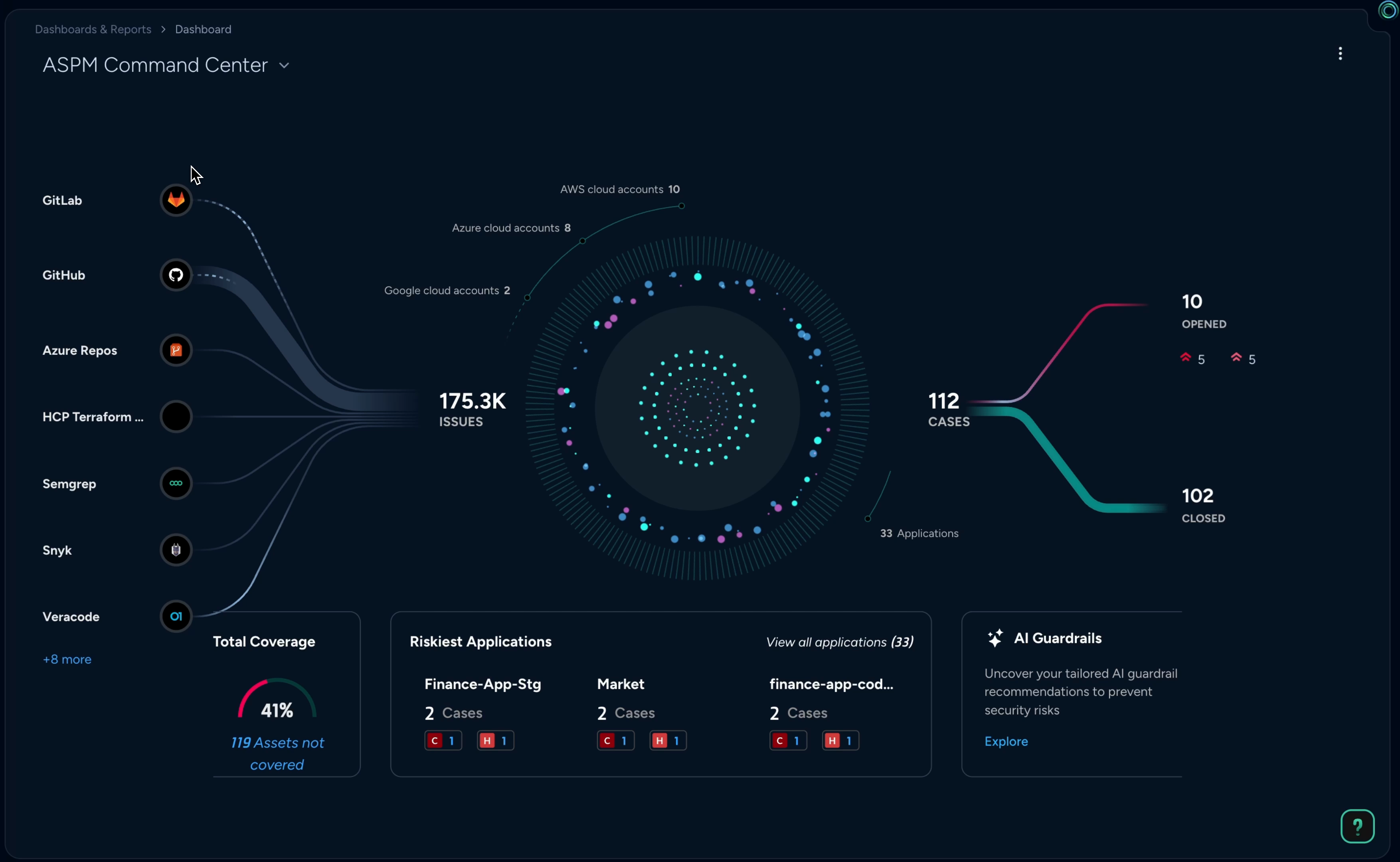
Cortex Cloud ASPM Command Center demo screen
Frame at 00:02 from the official Cortex Cloud application security demo. Values shown are demonstration data.
Cortex Cloud

Combine CNAPP capabilities with cloud detection and response.

Connect prevention findings with active threat response.

Coveo

Give a small SOC more time for investigation

The customer reports 30 hours saved per analyst per week and a six-second median resolution time.

Coveo adopted Cortex XSIAM to unify data and automate routine operations. The published case describes production rollout in three to four months.

What changed? +

Coveo’s analysts worked across ten siloed tools to secure a large cloud and workstation environment. Switching tools and manually processing cases limited their capacity.

Vendor-published case, not an independent universal benchmark. These are XSIAM outcomes; Cortex Cloud is described as a next step rather than the source of realized results.

Sabre

Move cloud security toward one platform

In the July 2025 story, Sabre reports 90% less time to contain security cases over two years and 56% of alerts handled automatically through its wider platform, including Cortex XDR and XSOAR.

Prisma Cloud gave its teams central visibility and automated vulnerability fixes, as part of a wider platformization with Palo Alto Networks. Its security chief says Sabre looks forward to transitioning to Cortex Cloud as another step.

What changed? +

Moving its platforms to Google Cloud gave Sabre agility but made it harder to keep development secure and visible across environments.

Vendor-published July 2025 customer account. The incident-response results refer to the wider SOC platform with XDR and XSOAR. Prisma Cloud supports cloud visibility and vulnerability fixes; Cortex Cloud and XSIAM are future steps in this story.

Diagram of Cortex Cloud: application security, cloud posture security and cloud runtime security on an AI and automation layer over the Cortex Extended Data Lake
Official Cortex Cloud architecture diagram. Code, supply chain, AI models, configurations, identity, cloud logs, workloads, vulnerabilities, sensitive data and network data feed one data lake, which is the platformization idea in one picture.
02 / HOW IT BECOMES REAL

From cloud exposure to a reviewed response

Illustrative workflow: a security team needs to distinguish an actionable cloud attack path from a long list of findings.

  1. 01

    Connect code and cloud context

    Application and posture findings provide a starting point. Teams establish which workload is affected and who can change it.

  2. 02

    Bring runtime evidence into the decision

    Cloud detection adds evidence from running workloads. The team compares exposure with observed activity to choose its next action.

  3. 03

    Build a case across security data

    XSIAM centralizes endpoint, network, identity and cloud telemetry. Analysts can investigate a case with related evidence instead of switching between isolated tools.

  4. 04

    Automate repeat work and review the result

    The SOC configures workflows for suitable tasks and keeps controls for consequential actions. Teams review closure quality and feed lessons into prevention.

Follow the work, step by step

Too many tools, each seeing part of the attack

Palo Alto Networks starts from a problem every large security team knows. Companies bought security one product at a time, for the network, laptops and servers, cloud accounts and identities. Each product sees part of an attack, and analysts move between screens to connect the parts. The annual report states the answer the company sells: help customers simplify their security architectures by consolidating disparate point products. In November 2024 chief executive Nikesh Arora cited Gartner research that 75% of security leaders were pursuing vendor consolidation, while less than 15% of large enterprises had implemented any one security platform. That gap is the market the company is built for.

ingest all relevant security data once

Nikesh Arora · Chairman and Chief Executive Officer · Earnings call, fiscal first quarter 2025 · 2024-11-20

The belief that sets the company apart is about where the market ends up. On the same call Arora said security would converge on a smaller set of platform vendors over five to ten years, and that the company, having started the trend, intended to be one of the few. Palo Alto Networks bets that the buyer's wish for fewer vendors will matter more. That quarter it reoriented sales enablement around platformization across thousands of sellers.

Why now: the cloud and AI moved the attack

Two changes make the pitch more urgent than when the firewall business was built. The first is the cloud. At the Cortex Cloud launch in February 2025 the company cited its Unit 42 research team: 80% of security exposures were found in cloud attack surfaces, with a 66% increase in threats targeting cloud environments. The second is AI on both sides. In September 2026 the company began selling a Unit 42 service that uses frontier models from Anthropic and OpenAI to find exposures before attackers do, and Arora told investors on 1 September 2026 that advances in AI were lifting cybersecurity to the top of the CIO priority list.

Modern cybersecurity requires machine-speed defense.

Sam Rubin · Senior Vice President, Unit 42 · Press release on Unit 42 Continuous Frontier AI Defense · 2026-09-22

One case, followed from code to response

Take an illustrative case: a security team faces a long list of cloud findings and needs the one that is a real attack path. First, Cortex Cloud's application and posture modules link a weakness in code or configuration to the workload it affects and the people who can fix it; the company says it adds code and runtime context to every finding, groups related signals into cases and scores them by real exposure. Second, an agent on running workloads captures behavioral telemetry, so the team can tell a theoretical weakness from live activity. A security engineer still decides whether the risk is real.

Third, the case moves to the security operations center (SOC), the team that watches alerts and responds. Cortex XSIAM brings endpoint, network, identity and cloud data together, so an analyst investigates one case with its evidence attached instead of switching tools. Fourth, the SOC automates the repeatable parts of the response, keeps controls on actions with consequences and feeds lessons back into prevention. The judgment that stays with people is what to automate, and when an automated action is safe to let run.

The measured customer results the company publishes come from XSIAM in the SOC, such as Coveo's. The Cortex Cloud stories describe adoption and plans, such as Sabre's planned move from Prisma Cloud. Treat one platform from code to SOC as the direction of travel, and ask which parts a given Korean customer already runs together.

In Korea this changes the job. The country manager told the Korean press in November 2025 that what Korean companies need is not swapping features but redesigning the security system from the ground up (Signet's rendering of his Korean). A seller or engineer here helps a customer redraw its security across several budgets, rather than replacing one product with another.

Understand the products and their customers

Three platforms and a services arm

Palo Alto Networks sells three platforms and a services business. Network & AI Security holds the next-generation firewalls the company was first known for, plus secure access service edge (SASE), which delivers network security from the cloud. Cortex is the security operations family: Cortex XSIAM for the SOC, Cortex XDR for detection and response, and Cortex Cloud. Idira is its next-generation identity security platform; identity became a core pillar when the CyberArk acquisition closed in February 2026. Unit 42 provides threat research, incident response and consulting. The two products covered here, Cortex Cloud and Cortex XSIAM, appear in several Korea roles that sell, deploy or support them.

Cortex Cloud: cloud security rebuilt on the SOC platform

Cortex Cloud is the next generation of Prisma Cloud, launched in February 2025. It merges a cloud-native application protection platform (CNAPP), the tools that check code, configurations and cloud accounts for weaknesses, with cloud detection and response (CDR), which watches running workloads for attacks. The company rebuilt it on the Cortex security operations platform so that the cloud team and the SOC work from the same data. The product page lists four parts: application security, cloud posture, runtime security and exposure management. Customers can buy it on its own or add it to Cortex XDR or Cortex XSIAM, and existing Prisma Cloud customers are offered an upgrade.

CNAPP at no additional cost

Lee Klarich · Chief product officer at the time of the launch · Cortex Cloud launch press release · 2025-02-13

Signet reads that pricing as giving the posture layer away to runtime customers, where cloud security specialists compete, to win the runtime and SOC work it can tie into the rest of the platform. In Seoul the company presented Cortex Cloud 2.0 to the press in November 2025 as the cloud part of its platform pitch, and the Korean distributor's demonstration center, opened in June 2026, runs Cortex Cloud on AWS, Microsoft Azure and Google Cloud environments.

Cortex XSIAM: replacing the SIEM

Cortex XSIAM is the company's AI-driven security operations platform. A SIEM (security information and event management) is the log and alert system most SOCs run; XSIAM is pitched as its replacement. It prepares and enriches incoming data, stitches it into connected security events, applies machine learning detection and runs automated playbooks. The annual report says XSIAM customers can consolidate SIEM, extended detection and response, SOAR (automation of response steps), attack surface management and threat intelligence into one platform.

Who has bought it, and what was measured

The clearest measured case is Coveo, headquartered in Canada, which runs about 5,000 cloud instances and 1,000 workstations with a small SOC team. In the customer story, Coveo moved from ten separate tools to XSIAM and was fully deployed in three to four months with the company's professional services team. Coveo reports that automated playbooks now handle 65 cases a day without an analyst, median time to resolution fell to six seconds, the share of cases closed rose from 60% to over 99%, and each analyst saves 30 hours a week. Its SOC lead calls Cortex Cloud the next step. These are XSIAM results, reported by the customer in a vendor-published story.

Sabre shows both the cloud and SOC paths in a July 2025 customer account. It used Prisma Cloud for visibility and automated vulnerability fixes after moving to Google Cloud. Its wider SOC platform, including Cortex XDR and XSOAR, reduced time to contain security cases by 90% over two years and automatically handled 56% of alerts, as reported by Sabre. Its security chief looks forward to transitioning to Cortex Cloud; XSIAM is also being explored. The NHL separately lists Cortex Cloud for posture management and XSIAM for its SOC.

If you sell or support these products in Korea, be precise about which product produced which result. Coveo's numbers belong to XSIAM; Sabre's incident-response figures belong to its wider SOC platform, including XDR and XSOAR. The country manager said in February 2025 that the company has references in each field in Korea.

03 / THE EVIDENCE

The story, in numbers.

DATED OBSERVATIONS

Annual revenue

USD · B

Audited consolidated revenue for fiscal years ending July 31. The FY2026 filing rounds dollar amounts to millions and includes revenue from acquisitions; NGS ARR and billings are not annual revenue.

Figures, dates & basis +
Annual revenue
DateValueBasis
2021-07-31$4.256BFull fiscal year ended 2021-07-31; consolidated company revenue.
2022-07-31$5.502BFull fiscal year ended 2022-07-31; consolidated company revenue.
2023-07-31$6.893BFull fiscal year ended 2023-07-31; consolidated company revenue.
2024-07-31$8.028BFull fiscal year ended 2024-07-31; consolidated company revenue.
2025-07-31$9.222BFull fiscal year ended 2025-07-31; consolidated company revenue.
2026-07-31$11.48BFull fiscal year ended 2026-07-31; consolidated company revenue.

Palo Alto Networks / SEC

Cortex Cloud introduced

Palo Alto Networks announced a combined approach to cloud application protection and detection/response.

CyberArk acquisition completed

The company completed CyberArk, making identity security a core platform pillar while retaining standalone availability.

FY2026 preliminary results

The company reported $11.480B annual revenue and $9.10B quarter-end NGS ARR.

Read the growth story

Who pays, and for what

Palo Alto Networks is paid by enterprises and governments, mostly through partners. Customers buy products such as firewalls, and above all subscriptions and support: in the fiscal year ended 31 July 2026, subscription and support brought in $9.20B of the $11.48B total, or 80%. The company's own sales team handles large accounts and market development and works with channel partners to win and support customers. The channel carries a great deal: two distributors each accounted for 10% or more of revenue, together 30%, and the company had more than 8,700 channel partners at year end.

Three numbers describe the business, and each measures something different. Revenue is what was recognized in the year: $11.48B, up 24%. Next-Generation Security ARR (NGS ARR) is the company's own operating measure, the annualized allocated revenue of defined active product, subscription and support contracts: $9.10B at 31 July 2026, up 63% from $5.6B. Remaining performance obligations, $21.2B, are contracted future revenue not yet recognized. For FY2027 the company guided to revenue of $14.10B to $14.20B, up 23% to 24%, and it has set a target of $20B NGS ARR for fiscal 2030.

The dated numbers and what each one measures
NumberWhat it measuresDateBasis
$11.48BAnnual revenue, up 24%FY2026 (to 2026-07-31)Company annual report
$9.20BSubscription and support revenue, 80% of totalFY2026Company annual report
$9.10BNGS ARR, up 63%2026-07-31Company results release
$8.1BNGS ARR, of which $1.6B from CyberArk and Chronosphere2026-04-30Company results release
$21.2BRemaining performance obligations2026-07-31Company annual report
$1,373MAsia Pacific and Japan revenue, 12% of total, up 25%FY2026Company annual report
70.4%Gross margin, 73.4% a year earlierFY2026Company annual report
28%Organic growth excluding acquisitions2026-08-26Analyst estimate reported in Korean press
$14.10B to $14.20BRevenue guidanceFY2027Company forecast

How much of the growth was bought

The headline growth needs one correction before you repeat it. Chronosphere joined in January 2026 and CyberArk in February 2026. In the quarter to 30 April 2026, the company said its $3.0B of revenue included $388M from the two, and its $8.1B of NGS ARR included $1.6B. On Signet's arithmetic the rest of the company had about $6.5B of NGS ARR at that date. The company says its organic bookings growth is accelerating; a Korean brokerage analyst estimated organic growth excluding acquisitions at 28% in August 2026. That is an estimate, not a company figure.

The business is profitable and generates cash, though acquisitions weigh on it. Gross margin was 70.4% in FY2026, down from 73.4%. The September results release put GAAP operating income at $695M and net income at $307M, and reported an adjusted free cash flow margin of 38.4%, a non-GAAP measure; the finance chief has said the company aims for 40% in FY28. Headcount rose from 16,068 to 21,921 during the year, about 4,223 of them from CyberArk.

Who it competes with, and where it stands

The annual report names independent vendors that sell a mix of security products, including Check Point, CrowdStrike, Fortinet, Okta, SailPoint, Delinea and Zscaler, and warns that the major public cloud providers increasingly offer their own security, identity and observability tools. In cloud security, Wiz became part of Google Cloud in March 2026, after Google agreed in 2025 to pay $32 billion. The company's position rests on breadth: after the CyberArk deal, channel trade press wrote that it has an offering in nearly every major category of modern cybersecurity. For cloud security alone, Arora said in November 2024 that the business had crossed a $700 million milestone the previous quarter, in the Prisma Cloud era; read that as a size marker, not as ARR.

Three risks matter most for a Korea hire: growth that was partly bought, cloud providers and large bundles competing for the same consolidation budget, and a Korean market that still buys firewalls first, through partners.

Two habits help in an interview. Say NGS ARR, not revenue, when you quote $9.10B, and say how much came from acquisitions. When you talk about the region, use Asia Pacific and Japan revenue: $1,373M in FY2026, 12% of the total and up 25%, the regional figure the company reports for Korea's part of the world.

04 / THE PEOPLE

Someone saw it first.

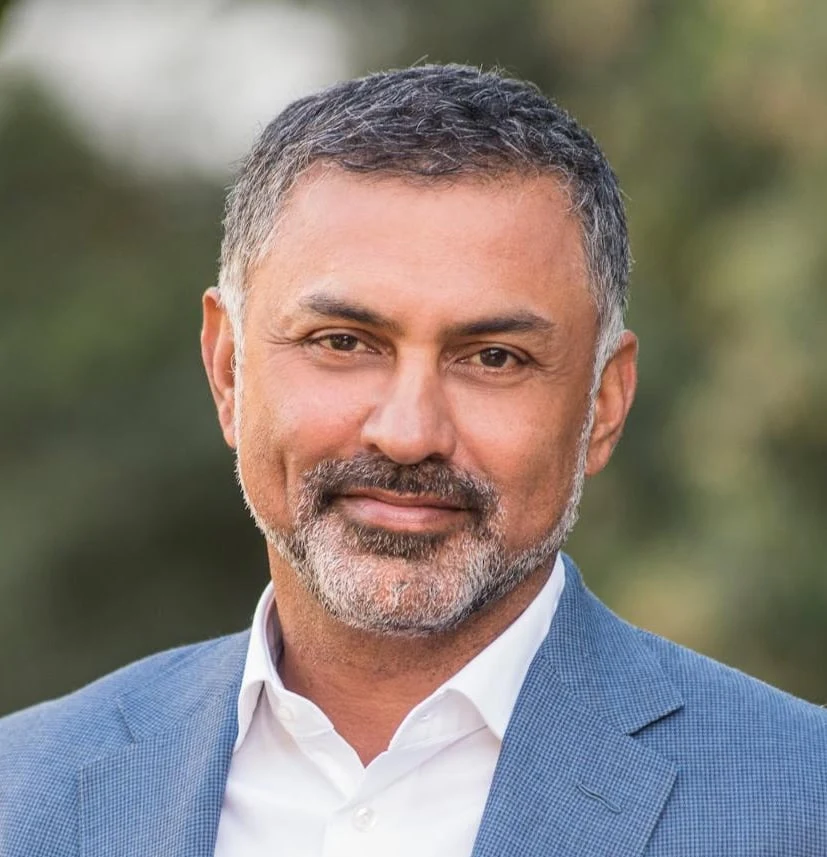
Photograph of Nikesh Arora
Chairman and CEO

Nikesh Arora

Arora has led Palo Alto Networks since 2018. He previously served as SoftBank president and COO and Google chief business officer.

The choice behind the company +

Under the current leadership, the company is packaging cloud prevention and response together and expanding platform sales across enterprise buying centers.

“ingest all relevant security data once”

Nikesh Arora · Earnings call, fiscal first quarter 2025 · 2024-11-20
The decisions behind the company

Founded by security engineers, reshaped by an outsider

Palo Alto Networks was co-founded in 2005 by security specialists including Nir Zuk and Rajiv Batra, and is headquartered in Santa Clara, California. Lee Klarich has led product management since the first products in 2006; in August 2025 he joined the board and became chief product and technology officer. The company's present shape comes from Nikesh Arora, chairman and chief executive since 2018, who earlier built his career at Google and was president and chief operating officer of SoftBank. The host of a January 2026 podcast introduced him as a chief executive who did not come up through cybersecurity and was not a founder.

Four decisions that explain the company

Four decisions under Arora explain what a new hire walks into. The first is platformization: selling customers on consolidating many products onto the company's platforms, with sales enablement reoriented around it in fiscal 2025. The second is buying capability. The Financial Times estimated in July 2025 that the company had spent more than $7 billion on acquisitions since 2018; since then it has closed Chronosphere, an observability company, in January 2026 and CyberArk, an identity security company, in February 2026, for total purchase consideration of $3.0B and $21.1B. The third is pricing to win the platform: CNAPP at no additional cost for Cortex Cloud runtime customers and, in Korea, covering a customer's remaining maintenance costs when it replaces another security product, according to the country manager. The fourth is rebuilding one line on another: Prisma Cloud became Cortex Cloud on the SOC platform.

We are excited to not just enter this space, but to disrupt it.

Nikesh Arora · Chairman and Chief Executive Officer · Press release on the Chronosphere acquisition · 2025-11-19

The podcast host also describes an unusual way of absorbing companies, in which founders of the acquired companies run the acquiring company's teams. One visible case: Martin Mao, co-founder of Chronosphere, launched Cortex XCOR, an AI-driven observability product, on the company blog six months after joining.

The leaders closest to a Korea hire

Three leaders matter most for someone joining in Seoul. Karim Temsamani joined in September 2024 as President, Next Generation Security; he leads go-to-market programs and global sales for the cloud security, security operations and network security platforms, and spent 12 years at Google, where he oversaw sales and operations across Asia Pacific. Lee Klarich owns the product roadmap that Korea sells. In Korea, the appointment of 박상규 as country manager was announced in March 2024; before that he led a customer segment organization at AWS and held sales leadership roles at Oracle Korea, over a career of at least 30 years.

it provides end-to-end security.

박상규 · Country manager, Palo Alto Networks Korea · Interview with a Korean enterprise IT outlet; reported in Korean, translated by Signet · 2025-02-10

How it says it works and hires

The company publishes five values that its annual report says were co-created with employees: disruption, execution, collaboration, inclusion and integrity. Its Korea postings add two working rules. Most teams work from the office full time, with flexibility when needed; the Unit 42 Principal Consultant posting separately specifies remote work. And AI is part of every job: the postings say the company weaves AI into everything it does to raise what each person can achieve. New sales hires go through FLIGHT, an onboarding program of six to ten weeks that mixes online modules with an in-person HQ Week in Santa Clara. The careers culture page describes equity and benefits programs; candidates should discuss local eligibility with the recruiter.

Signet's reading: look at both local execution and the route to product influence. FLIGHT gives sales hires access to headquarters training. Korea has an announced country leader, an expanded office with a briefing center and local partner programs. The JDs show where new hires act: account planning, technical validation, customer adoption and incident response. Ask who receives local customer requirements and how they affect the roadmap, rather than assuming a reporting line.

05 / THE NEXT CHAPTER

Connect cloud security buyers in Seoul

The postings describe large enterprise sales cycles run with channel partners, technical validation by solutions consultants, deployment and adoption of XDR and XSIAM after the sale, and incident response for major clients.

Korea country leadership

박상규

Country Manager, Korea

Enterprise, Cortex and SASE sales
  • Observed profile headlines and current hiring responsibilities, not employee counts or reporting lines.
Technical validation and consulting
  • Observed profile headlines and current hiring responsibilities, not employee counts or reporting lines.
Channel and partner business
  • Observed profile headlines and current hiring responsibilities, not employee counts or reporting lines.
Customer operations and incident response
  • Observed profile headlines and current hiring responsibilities, not employee counts or reporting lines.

October 8 South Korea LinkedIn filter: 88 associated profiles with overlapping functions. Groups combine observed headlines and current hiring functions. The country leader is confirmed separately in June 2026 reporting; no reporting relationships are inferred.

Why Korea? Why now?+

Signet's reading of the sources is that Korea is a conversion bet. The company already sells firewalls to Korean enterprises; its Korea executives said in 2023 and again in 2025 that Korea is still firewall-led, while elsewhere cloud, security operations and SASE have overtaken firewalls. The country manager, announced in March 2024 after coming from AWS, has spent his tenure pushing an integrated platform, and the office's 2024 investment in sales, technical and support staff went the same way. Korean conditions help the pitch: the office presented cloud access security to the financial sector in October 2024, and the country manager argues that repeated incidents in Korea trace back to old architecture, from VPNs and network separation to many stitched-together products. Local steps include an expanded Seoul office with a briefing center in 2023, hiring announced in November 2025 to build a dedicated Unit 42 Korea team, and a distributor-run demonstration center for Cortex Cloud opened in June 2026.

Expanded Seoul office shown to the press

The acting Korea head showed reporters the expanded office in the Samsung Life Seocho Tower, with sales, customer support and systems engineers, a customer briefing center for demonstrations and a training room.

박상규 named country manager

The company announced 박상규 as Korea country manager, to lead strategy and execution for the whole Korea business. He came from AWS and earlier held sales leadership roles at Oracle Korea.

Managed cloud security through Megazone Cloud

Megazone Cloud signed as a managed security service provider for Prisma Cloud, the predecessor of Cortex Cloud, at the time the only one in Korea.

Partner roadshow in three cities

The company reported a roadshow for about 400 partner staff in Seoul, Daejeon and Busan from 17 to 19 June 2025.

Agreement with Samsung Fire & Marine Insurance

A memorandum of understanding on cyber insurance products, new business reviews and discount terms for customers.

Cortex Cloud 2.0 and Unit 42 in Seoul

At Ignite On Tour Seoul the company presented Cortex Cloud 2.0 to the Korean press and said it was hiring for a dedicated Unit 42 Korea team.

Distributor opens a demonstration center

The Korean distributor iCloud opened the Zero Trust Experience Center, where customers and partners can test the platform, including Cortex Cloud on AWS, Azure and Google Cloud.

Frontier AI pitch to Korean CIOs

박상규 and the Unit 42 Asia Pacific head spoke at the Korea CIO Forum in Seoul about AI-found vulnerabilities.

Understand the Korea opportunity

A firewall market the company wants to turn into a platform market

Palo Alto Networks already has a business in Korea; the question is what it sells there. In November 2023 the then acting Korea head said that globally, areas other than next-generation firewalls made up 60 to 70% of revenue, while Korea was still concentrated on firewalls. In February 2025 country manager 박상규 said firewalls were still a large share of what the company supplies in Korea, and that his first year, and the office's investment in sales, technical and support staff, went into widening beyond them toward an integrated platform. He said that firewalls were already under half of the business in Japan and expected the Korean market to reorganize quickly.

redesigning the security system from the ground up

박상규 · Country manager, Palo Alto Networks Korea · Ignite On Tour Seoul 2025 press briefing; reported in Korean, translated by Signet · 2025-11-18

The timing has local reasons. At an October 2024 financial-sector conference, the Korea office presented cloud access security. The country manager argues that repeated incidents in Korea trace back to old architecture: VPNs, network separation, firewall perimeters and many combined point products. The company has built capacity to match: an expanded office in the Samsung Life Seocho Tower with a customer briefing center (2023), a country manager hired from AWS (2024) and, hiring announced in November 2025 to build a Unit 42 incident response team for Korea.

Sold through partners, led from Seoul

Korea is a partner market. The distributor, iCloud, opened a Zero Trust Experience Center in June 2026 where customers and partners test the platform, including Cortex Cloud on AWS, Azure and Google Cloud. Megazone Cloud signed in October 2024 to deliver Prisma Cloud, the predecessor of Cortex Cloud, as a managed service. A June 2025 roadshow in Seoul, Daejeon and Busan drew about 400 partner staff, and in November 2025 the company signed a memorandum of understanding with Samsung Fire & Marine Insurance on cyber insurance.

The Korea business, Palo Alto Networks Korea Ltd., is led by 박상규, whose appointment was announced in March 2024. Above Korea, the Japan and Asia Pacific go-to-market and ecosystem lead, Michelle Saw, has joined Korean partner events, and global sales for the cloud security, security operations and network security platforms sits with Karim Temsamani. Ask in interviews which of these lines each Seoul role reports into.

What the twelve open roles say the office needs

On 8 October 2026 a live Workday query for Korea locations returned 12 roles. Five are field sales: three Account Managers, a District Sales Manager who leads a team of field sellers, and a Cortex Cloud Sales Specialist who works with the core sales team. Five are pre-sales engineering: three Solutions Consultant 2 roles asking for six or more years of pre-sales experience, and two Associate Systems Engineers requiring a four-year undergraduate degree and one to two years of relevant experience, with a program of up to 24 months that can place people across Japan and Asia Pacific. One Customer Success Architect looks after XDR and XSIAM after the sale, and one Principal Consultant leads Unit 42 incident response.

Read together, this is a full platform sales motion rather than a cloud outpost: sellers who forecast large deals with several buyers through partners, engineers who win the technical evaluation, someone who makes the SOC product work after the sale, and an incident commander whose work is expected to pull through product sales. The two oldest postings date from January 2026 and were still taking applications in October.

Korea looks like a long-term office in the middle of a change of product mix: an expanded office, a leader hired from cloud, a Unit 42 team being built and twelve open roles. What to watch is how fast the mix moves away from firewalls. The annual report shows Asia Pacific and Japan as one line, $1,373M in FY2026, up 25%, and Korea sits inside it.

If you apply, ask three things early: which buying centers in your accounts already buy from the company, which partner carries each account, and how credit is shared when a specialist and a core account manager work the same account. Each role below has its own mock application.
KOREA OPEN ROLES

7 open roles in Korea

Current Signet catalog · 2026-10-19

FOR YOU

Prepare a customer example for your specific role and work arrangement.

GTM · Sales · BD

Account Manager

Office - Korea - Seoul

Posting checked

The work
Sell and expand security platforms across complex customer accounts.
Who fits
SaaS architecture experience and knowledge.
Keep in mind
Travel within the territory and for company meetings.
Solutions Engineer

Associate Systems Engineer

Office - Korea - Seoul

Posting checked

The work
Train across the platform and support presales customer work.
Who fits
Four-year undergraduate degree.
Keep in mind
Up to 24 months training; JAPAC field placement by business needs.
GTM · Sales · BD

Cortex Cloud Sales Specialist

Office - Korea - Seoul

Posting checked

The work
Grow Cortex Cloud deals with core sales teams and channels.
Who fits
5+ years cybersecurity field sales to Enterprise or Major accounts.
Keep in mind
SIEM, EDR or CNAPP sales highly preferred; domestic travel as needed.
See all 7 roles
Customer Success

Customer Success Architect

Office - Korea - Seoul

Posting checked

The work
Guide XDR/XSIAM adoption, integrations and customer outcomes.
Who fits
Develop and maintain Python scripts.
Keep in mind
Turn technical knowledge into customer guides and work with Product/Engineering; visa sponsorship eligible.
GTM · Sales · BD

District Sales Manager

Office - Korea - Seoul

Posting checked

The work
Lead field sellers, hiring, coaching, quotas and forecasts.
Who fits
Proven first-line sales leadership.
Keep in mind
Network or security industry experience is ideal.
Solutions Engineer

Principal Consultant, IR

Seoul, South Korea

Posting checked

The work
Lead major incident response and coach customer-facing consultants.
Who fits
6+ years hands-on professional IR AND 3+ years client-facing consulting.
Keep in mind
Remote, with travel as needed; present incident findings to CxOs and boards.
Solutions Engineer

Solutions Consultant 2

Office - Korea - Seoul

Posting checked

The work
Understand customer needs and prove the security platform technically.
Who fits
6+ years presales or sales engineering.
Keep in mind
Travel may be needed for in-person customer meetings; own sales targets through technical account plans.
07 / NOW & NEXT

The next scene is taking shape.

Console acquisition announced

The company announced Console to bring AI agents into security workflows.

Frontier AI defense subscription introduced

Unit 42 introduced an annual subscription drawing on Anthropic and OpenAI models for security testing.

Cortex XCOR launched

The Chronosphere team introduced AI-driven observability with an operator interface and specialized agents.

More context on what comes next

From dashboards to agents

Read against the thesis, the last year has three threads. The first is agents. On 1 September 2026 the company announced it had acquired Console, a platform for agentic workflows across enterprise operations; press reports, citing two people with knowledge of the deal, put the price at $500 million in cash and stock and said Arora had been an angel investor in Console. On 22 September Unit 42 launched Continuous Frontier AI Defense, an annual subscription that uses frontier models from Anthropic and OpenAI to find and fix exposures. On 1 October Chronosphere's co-founder launched Cortex XCOR, observability with an AI agent that looks for the root cause of incidents.

managing dashboards and queuing tickets

Nikesh Arora · Chairman and Chief Executive Officer · Press release on the Console acquisition · 2026-09-01

Identity, scale and the Korean pitch

The second thread is identity. The CyberArk deal closed in February 2026 and made identity security a core pillar, now sold as the Idira platform, while CyberArk's products remain available on their own. The third is scale: FY2026 revenue of $11.48B, NGS ARR of $9.10B and FY2027 revenue guidance of $14.10B to $14.20B. In Korea, 박상규 told the Korea CIO Forum on 30 June 2026 that the company had spent at least $1 million in one week scanning its own products with frontier AI, and still spends at least that much almost every week.

What to watch over the next year

  • Organic growth: whether growth without CyberArk and Chronosphere holds near the 28% analyst estimate once the deals pass their first year.
  • Cortex Cloud results: whether a named customer publishes measured outcomes for Cortex Cloud itself, as Coveo did for XSIAM.
  • Korea's product mix: whether cloud, SOC and SASE deals grow as a share of the Korea business, through partners, the distributor's demonstration center and the Unit 42 Korea team.

The products you would sell in 2027 are changing during the hiring process. Read the latest launch posts before an interview, and be ready to explain where AI agents fit for a Korean SOC that still runs many separate tools.

Their future. Your next chapter.

Find your part ↑

An independent profile by Signet. No affiliation or investment recommendation. Introductions happen only with your consent.
Research reviewed 2026-10-08

A LITTLE MORE CONTEXT

Understanding Palo Alto Networks.

What does Palo Alto Networks do?

Palo Alto Networks sells enterprise security across networks, cloud and security operations. Cortex Cloud connects application and posture security with runtime detection, while Cortex XSIAM organizes broader SOC data and response.

What is the opportunity in Korea?

The postings describe large enterprise sales cycles run with channel partners, technical validation by solutions consultants, deployment and adoption of XDR and XSIAM after the sale, and incident response for major clients.

Are these confirmed job openings?

Employer postings were checked on 2026-10-08. Availability can change. Mock applications request a review from Signet.

How can I explore the company in more depth?

Follow the company from its vision through products, evidence and people to the Korea team and current roles. Use the table of contents to move within the page, and expand the sections for more context.

Back to the collection ↗