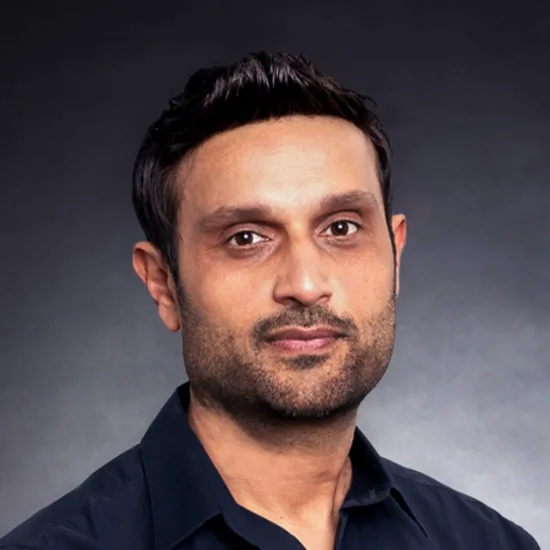
Portrait of Dylan Jadeja, CEO of Riot Games
Riot Games / THE WORLD THEY ARE BUILDING

Free games kept alive for decades, funded by skins.

If the bet holds, a player who started League as a student is still playing, watching the LCK and buying cards years later. Riot's own values describe that commitment as measured in years and decades, not days or weeks.

See it taking shape ↓
01 / THE PRODUCTS

The products behind the promise.

League of Legends key art with several champions mid-fight against a blue sky.
League of Legends key art from Riot's Who We Are page.
League of Legends

Players pick a champion and play online team matches, then buy optional items if they choose.

A game players stay with for years, which funds Riot's esports, music and animation.

T1 and the LCK partner teams

From a league entry fee to a share of esports item sales, 2025

T1 reported 2025 revenue of ₩88.6 billion and its first operating profit, ₩2.51 billion, against a ₩8.86 billion loss the year before.

From 2025 LCK teams receive a fixed stipend and a share of the Global Revenue Pool built from esports digital item sales. T1 won Worlds 2025 in Chengdu, beating KT Rolster 3 to 2 for its third straight title.

What changed? +

Under Riot's earlier model, teams committed to pay about $10M to join a league and received 50 percent of certain league revenues, mostly sponsorship. Riot wrote in 2024 that team cash reserves had dried up as costs outgrew revenue.

Riot's description of the model and a press report on T1's company-wide results; the report credits merchandise and sponsorship for most of T1's growth.

Gen.G GGX

A PC bang partner hosts the Riftbound launch, 2026

Qualitative: partnership announced 2 September 2026; Riot said early Korean demand beat its positive forecast.

GGX in Dongdaemun hosted a launch event from 18 to 23 September 2026 with the full Korean Origins range on sale, and Riot says flagship partner stores will get dedicated Riftbound spaces.

What changed? +

Riftbound needed physical places in Korea where new players could learn the game, buy product and play together.

Riot's launch announcement and Korean press on launch day; they describe the partnership, the events and early demand as Riot reported it.

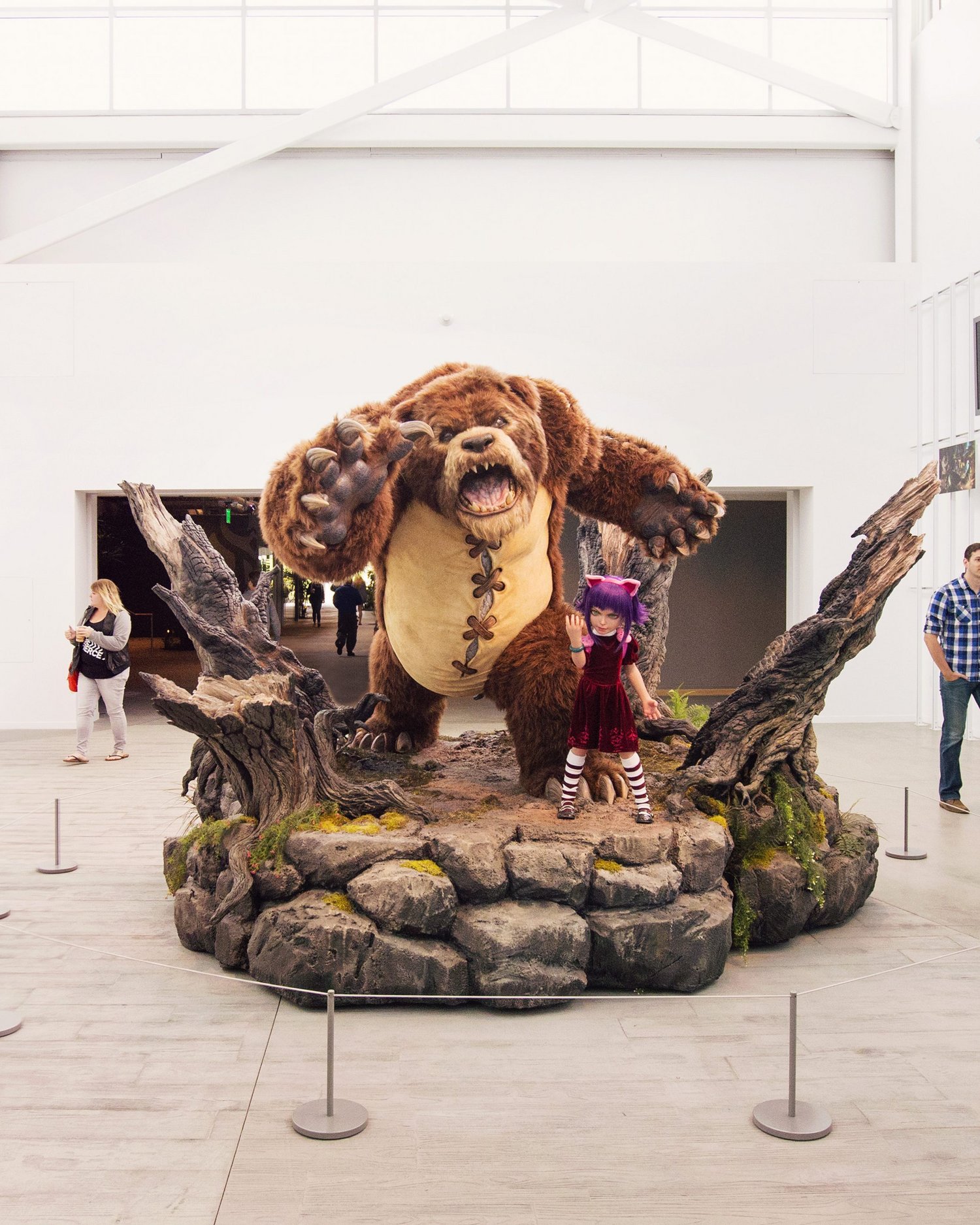
A large statue of the League champion Annie and her bear Tibbers in a Riot lobby, with visitors beside it.
A League of Legends statue in a Riot lobby, from Riot's Who We Are page.
02 / HOW IT BECOMES REAL

One evening of League in Korea, from a PC bang to a card table

An illustrative player in Seoul plays, spends, watches and sits down at a card table. Each step is a place where Riot Games Korea earns money or runs a service, and where one of the seven open Korea roles works.

  1. 01

    Log into League at a PC bang

    The game is free for the player. Riot Games Korea bills the PC bang for the hours played and stores each hour as one session record, about 4 billion a year by 2023.

  2. 02

    Buy an optional skin or an esports item

    League earns from optional purchases rather than a price at the door. From 2025, revenue from LoL Esports digital items feeds a pool that Riot shares with LCK, LCS and LEC teams.

  3. 03

    Watch the LCK from LoL Park

    Riot's Seoul office runs the LCK from LCK Arena at LoL Park in Jongno, opened in 2019. Sponsors and media rights partners pay to be part of the broadcast.

  4. 04

    Join a Riftbound Nexus Night at a card store

    Riftbound, Riot's physical trading card game, went on sale in Korea on 18 September 2026. Weekly Nexus Nights at card stores lead to store and open qualifiers and a first Korean tour event in December.

  5. 05

    Turn Korean revenue into cash, payments and reports

    Riot Games Korea reported ₩491.3 billion of revenue for 2025 and pays the US headquarters for services such as IT support. Finance in Seoul manages cash, foreign exchange and event budgets for the Korea publisher.

Follow the work, step by step

A game run like a long relationship

Riot Games starts from a complaint about how games were made. Its co-founders, Brandon Beck and Marc Merrill, met at the University of Southern California, shared a place after college and founded Riot in 2006 in their Los Angeles apartment. Riot's own account says they set out to build a company that would redefine how games are developed, delivered and supported for players. In practice that meant one game, League of Legends, released in 2009, free to play and updated for years instead of being replaced by a sequel. Riot's 2026 job postings still open with that history and say more than 100 million people play League every month.

These people think we make things like Arcane to sell skins, when in reality we sell skins to make things like Arcane.

Marc Merrill · Co-Founder, Co-Chairman and Chief Product Officer · Reddit reply to reports on Arcane's cost, as quoted by 80 Level · 2024-12-25

The belief behind it is that a player's relationship with a game should be measured in years. Riot's published values say so directly: its commitment to players is measured in years and decades, not days or weeks, and company dollars should be treated as player dollars. Merrill made the money side of that belief explicit in December 2024, after a report that the two seasons of Arcane had cost about $250 million. Riot does not make shows to sell skins, he wrote; it sells skins to make things like Arcane. That is the model in one line. The game is free, players pay for optional items, and the margin funds esports, music, animation and new games set in the same world.

Why the model keeps changing

Why now is a story in three stages. Free online play let League grow fast: Riot reported 32 million monthly players in October 2012, 67 million in January 2014 and more than 100 million in September 2016. From 2019 Riot widened the bet, announcing Legends of Runeterra, Teamfight Tactics for mobile, VALORANT and the animated series Arcane in October 2019. By January 2024 CEO Dylan Jadeja wrote that Riot had doubled in size in a few years, had costs it could not sustain and lacked focus. It cut about 530 roles, around 11 percent of the workforce.

Today, we're a company without a sharp enough focus, and simply put, we have too many things underway.

Dylan Jadeja · Chief Executive Officer · Letter to Rioters announcing about 530 job cuts, published on riotgames.com · 2024-01-22

The third stage is under way in 2026. On 20 August Riot told players that active development of its fighting game 2XKO will end in December because it costs substantially more to run than it brings in. On 18 September it launched Riftbound, a physical trading card game set in League's world, in Korea. Both moves follow the same rule: keep investing in what players stay with, and stop what they do not.

One evening of League in Korea

Take an illustrative player in Seoul. She logs into League at a PC bang after work. The game costs her nothing, but the PC bang pays Riot Games Korea for the time she plays: Riot Korea bills PC bangs by play time and stores each hour as a session record, about 4 billion a year by 2023. If she buys a skin or an esports item, part of that esports digital revenue goes into a pool that Riot shares with LCK teams. Later she watches an LCK match broadcast from LoL Park in Jongno, and at the weekend she may sit down at a card store for a Riftbound Nexus Night. People make the calls that matter at each step: which items to release, how a league pays its teams, which stores get stock first.

Riot's player numbers are its own, and the biggest dated ones are a decade old. The series runs from 32 million monthly players in 2012 to more than 100 million in 2016, and the 2026 postings repeat the more than 100 million line. Treat it as Riot's description, and ask in an interview how the team you would join measures players today.

The 7 open Korea roles sit at three points on that evening: Riftbound in stores and PC bangs, esports partners and live events, and the platform and finance systems behind the Korea publisher. In each, the job is to keep a long-running player relationship working in Korea, not to launch something and move on.

Understand the products and their customers

Free games, paid extras

Four Riot businesses matter for a Korea hire. League of Legends is the base. Riot lists more than 160 champions, the playable characters each match is built around. The game is free, and Riot earns from optional purchases; in Korea it also earns from PC bangs, which pay Riot Games Korea for the hours their customers play. In January 2014 Riot said League had 27 million daily players and 7.5 million at peak, against roughly 600,000 on weekdays for Valve's Dota 2. By 2022, publishing Riot's games brought in ₩354.0 billion of the Korean entity's ₩386.4 billion consolidated revenue.

VALORANT is Riot's first first-person shooter and its second major esport. It launched in 2020, and Riot said a year later that more than 14 million people played it each month, while Valve's Counter-Strike: Global Offensive had 27 million in the month before. Its league, the VALORANT Champions Tour, is the model Riot now follows more closely for League teams: predictable revenue plus upside from in-game items.

One of our top goals this first year was to earn the trust and respect of the global FPS community, and to prove to them that Valorant will always uphold the fundamentals of a truly worthwhile competitive tac-shooter.

Anna Donlon · Executive producer of VALORANT at the time; now Studio Head, VALORANT · Statement on VALORANT's first anniversary, quoted by PC Games Insider · 2021-06-03

Esports as a product

LoL Esports is the third business. Riot runs regional leagues, including the LCK from LCK Arena at LoL Park in Seoul, and the international events, MSI and Worlds. Riot says it invests hundreds of millions of dollars in LoL Esports every year. Under the model in place in 2024, partner teams committed to pay about $10M to enter a league and received half of certain league revenues, mostly sponsorship. From 2025 LCK, LCS and LEC teams receive a fixed stipend and a share of a Global Revenue Pool built from esports digital item sales, split 50 percent general, 35 percent by results and 15 percent by fandom.

A card game in the real world

Riftbound is the newest. It is a physical trading card game set in League's world, sold abroad from 2025 and in Korea from 18 September 2026, starting with the Origins set. Korea plays its own standard format until Riot aligns Korean releases with the global schedule at the tenth set in early 2028. Weekly Nexus Nights at card stores feed store and open qualifiers and a first Korean tour event in December, and Riot is working with PC bangs, starting with long-time partner Gen.G GGX. In Korea it meets Pokémon and Yu-Gi-Oh!, which already have long-time players and distribution.

Who has bought in, and what was reported

Riot's payers are mostly players, but the Korea roles work with business partners, and three named cases show what those relationships look like. T1, the LCK team that beat KT Rolster in the Worlds 2025 final for a third straight title, reported 2025 revenue of ₩88.6 billion and its first operating profit, ₩2.51 billion, in the first year of the revenue pool; the report credits merchandise and sponsorship for most of the growth. Mastercard, Kia, Red Bull and Mercedes-Benz, sponsors since 2018 to 2020, extended and expanded their LoL Esports deals in early 2024. Gen.G GGX in Dongdaemun hosted the Riftbound launch from 18 to 23 September 2026.

Riot's business partners in Korea, from PC bangs and card stores to sponsors and media partners, are where most of the seven open roles spend their days. The player relationship is the product, but these partners are the people a Korea hire will negotiate with, supply and report to.

03 / THE EVIDENCE

The story, in numbers.

DATED OBSERVATIONS

Riot Games Korea revenue by year (billions of won)

KRW · B

Press reports of the Korean entity's audit filings. 2022 is consolidated and included the LCK subsidiary; 2024 and 2025 come from the 2025 filing, after the LCK company was merged in on 30 October 2025.

Figures, dates & basis +
Riot Games Korea revenue by year (billions of won)
DateValueBasis
2022₩386.4BConsolidated revenue of ₩386.4 billion, ₩354.0 billion of it from publishing.
2024₩443.3BPrior-year figure in the 2025 filing: ₩443.3 billion.
2025₩491.3B₩491.3 billion, up 10.8 percent.

비즈워치 · Inven Global

Global Revenue Pool starts

LCK, LCS and LEC teams start sharing esports digital item revenue.

LCK merged into Riot Games Korea

The separate LCK company becomes part of the Korean entity.

Riftbound launches in Korea

The Korean edition of Riot's card game goes on sale with the Origins set.

Read the growth story

Who pays, and for what

Riot's money comes from several payers, and the order matters. Players pay first, for optional items in free games; Merrill says Riot sells skins to make things like Arcane. In Korea, PC bangs pay Riot Games Korea for the hours their customers play. Sponsors and media rights partners pay for esports, and since 2025 fans buying esports digital items also fund the teams through the Global Revenue Pool. Riftbound adds physical cards sold through distributors and stores. Arcane earned licence fees, with reports putting Netflix's payment at $3 million per episode and Tencent paying a similar amount for China, against a reported cost of about $250 million for two seasons; Riot said season two was on track to at least break even. Riot itself has been wholly owned by Tencent since December 2015.

The dated numbers in Korea

The clearest numbers come from the Korean entity's audit filings, as reported in Korean and English press. Riot Games Korea reported ₩491.3 billion of revenue for 2025, up 10.8 percent from ₩443.3 billion, and operating profit of ₩102.7 billion, up 117.5 percent from ₩47.2 billion. Net income was ₩98.2 billion. Part of the jump reflects the merger of the LCK company into Riot Games Korea on 30 October 2025, so the two years are not on exactly the same footing. In 2022, on a consolidated basis, revenue was ₩386.4 billion, of which ₩354.0 billion came from publishing. Money also flows to the parent: royalties of ₩90.1 billion in 2020, ₩92.2 billion in 2021 and ₩92.7 billion in 2022, a ₩111.6 billion dividend in 2022, and ₩100.3 billion in 2025 for services such as IT support.

Riot Games Korea: dated figures and what each measures
YearMeasureValueBasis
2022Revenue, consolidated₩386.4BAudit filing, press-reported
2022Royalties paid to the parent₩92.7BAudit filing, press-reported
2024Revenue₩443.3BPrior-year figure in the 2025 filing
2025Revenue₩491.3BAudit filing, press-reported; LCK merged in
2025Operating profit₩102.7BAudit filing, press-reported
2025Paid to the parent for services such as IT₩100.3BAudit filing, press-reported

We still believe that the strongest path forward for the esports business is to monetize it more like games, sharing the upside with our team partners.

John Needham · President, Publishing and Esports · Riot post, Adjusting our LoL Esports Strategy · 2024-03-14

Esports is where Riot is still working out the economics. Riot says it invests hundreds of millions of dollars a year in LoL Esports. In March 2024 Needham wrote that leagues and teams had leaned too heavily on sponsorship, that sponsorship had slowed after COVID, and that team cash reserves had dried up. The answer was to tie team income to digital item sales, which Riot calls more resilient than sponsorship, and to share other direct revenues only after Riot recovers its annual investment. In Korea that money now runs through Riot Games Korea itself, after the LCK merger.

Competitors and position

Each business has its own rival. League once dwarfed Dota 2 in concurrent players, and VALORANT launched against Counter-Strike: Global Offensive. Riot calls LoL Esports the number one esport; in November 2024 Needham said a Worlds semifinal between T1 and Gen.G peaked at 4.81 million concurrent viewers outside China. Riftbound enters a Korean card market where Pokémon and Yu-Gi-Oh! are established. In Korean PC bangs, Riot says League became the most played game within 100 days of launch and has rarely given that up.

Three risks

Three risks stand out. New bets fail often: Riot shrank Legends of Runeterra and closed Riot Forge in 2024 and is ending 2XKO's active development in 2026, so Riftbound must prove itself. Esports still has to pay for itself, and team income now rises and falls with item sales. And the business rests heavily on one game released in 2009; Jadeja wrote in 2024 that the core of the business was at risk from unsustainable costs and too many projects.

Two habits help in an interview. Say Riot Games Korea revenue, not Riot revenue, when you cite ₩491.3 billion, and mention that the LCK merger changes the comparison with 2024. And ask how your seat's results are measured: retail sell-through, partner deliverables, service health or a cash forecast.

04 / THE PEOPLE

Someone saw it first.

Portrait of Dylan Jadeja, CEO of Riot Games
Chief Executive Officer

Dylan Jadeja

Jadeja joined Riot in 2011 as chief financial officer, added chief operating officer in 2014 and became president in 2017. The board selected him as CEO in May 2023 and he took the role in July 2023. Before Riot he was at Goldman Sachs.

The choice behind the company +

In January 2024 he cut about 530 roles, around 11 percent of staff, to refocus on League, VALORANT, TFT and Wild Rift; Riot credits him with a central role in the 2015 equity sale to Tencent.

Portrait of Marc Merrill, co-founder of Riot Games
Co-Founder, Co-Chairman and Chief Product Officer

Marc Merrill

Merrill co-founded Riot with Brandon Beck in 2006 and co-led the development and launch of League. As Riot's first chief product officer he guides strategy and product direction, including 2XKO, Riftbound and an MMO in development.

The choice behind the company +

He was an executive producer on Arcane and defended its cost in December 2024, saying Riot sells skins to make things like Arcane.

Portrait of John Needham, President, Publishing and Esports
President, Publishing and Esports

John Needham

Needham joined Riot in 2017 to run Europe and North America and now leads publishing, esports, music, consumer products and international operations. Before Riot he worked at Microsoft and Sony Pictures Entertainment, among others.

The choice behind the company +

In March 2024 he moved LoL Esports team revenue from sponsorship sharing to a pool built from digital item sales, starting in 2025.

“These people think we make things like Arcane to sell skins, when in reality we sell skins to make things like Arcane.”

Marc Merrill · Reddit reply to reports on Arcane's cost, as quoted by 80 Level · 2024-12-25
The decisions behind the company

Two founders, then an operator

Brandon Beck and Marc Merrill are still at the top of Riot, now as co-chairmen. Merrill is also Riot's first chief product officer: he co-led League's development and launch, was an executive producer on Arcane, and now guides strategy and product direction for a portfolio that includes 2XKO, Riftbound and an MMO set in League's world. Beck, known to players as Ryze, served as an executive producer on Arcane and has helped steer Riot's creative work across music, comics, board games and television.

Day-to-day leadership passed to an operator. Dylan Jadeja joined in 2011 as chief financial officer after Goldman Sachs, added chief operating officer in 2014 and became president in 2017. Riot's board chose him as CEO in May 2023 and he took over in July. Riot credits him with a central role in the 2015 sale of the remaining equity to Tencent, which had bought a majority in February 2011 and owned about 93 percent before the final purchase. As CEO he has focused on the core games and the ecosystem around them; Arcane's second season in November 2024 became the most watched show on Netflix in more than 60 countries.

As CEO, I'm accountable for the changes we're making and where we're headed in the future.

Dylan Jadeja · Chief Executive Officer · Letter to Rioters announcing about 530 job cuts, published on riotgames.com · 2024-01-22

The leaders closest to the Korea roles

Three global leaders shape the Korea openings. John Needham, president of publishing and esports since joining in 2017, leads publishing, esports, music, consumer products and international operations, and wrote the 2024 change to how League teams are paid. Whalen Rozelle, at Riot since 2012, is head of international publishing and esports and oversees Riot's regional offices. Michael Sherman is global head of Teamfight Tactics and emerging esports, the area the Riftbound esports role reports into. In Korea, 조혁진 (Cho Hyuk-jin) joined before League's Korean launch in 2011, ran HR, operations, finance and PR, served as interim head from January 2020 and has led Riot Games Korea since July 2020. 이지수 (Lee Ji-su) heads publishing strategy and operations in Korea and spoke for Riftbound's Korean schedule at its September 2026 launch.

How Riot says it works and hires

Riot publishes five values: Player First, Serious About Games, Dream and Deliver, In for the Long Term and One Riot. A few lines inside them explain recent decisions. Riot would rather do less and do it better, and kill good ideas in pursuit of a great one. It treats company dollars as player dollars. It asks people to leave egos at the door and fully commit once a call is made. The Korea postings add how it hires: for the Riftbound and esports roles, success comes through craft expertise, a collaborative spirit and decisions that prioritize the delight of players, and Riot says it will look at your personal relationship with games. The finance postings say being a dedicated fan of games is not necessary.

On the worry that headquarters decides and Seoul executes, the postings point both ways. Several Korea roles report to managers outside Korea, including production finance in Los Angeles, and the Riftbound lead is asked to translate global product and publishing direction into local plans. Yet the same lead is asked to represent Korean players in planning forums and argue for local adaptations, and Korea runs its own Riftbound format and release pace until 2028.

05 / THE NEXT CHAPTER

League's strongest home, now opening a card table business

The postings ask for launching and growing Riftbound in Korea through distributors, card stores and PC bangs, building its organized play, serving esports media and sponsorship partners across APAC, leading a Seoul engineering team on Riot's publishing platform, and running cash, banking and event finance for the Korea publisher.

Korea office, game services, PC bangs and, since October 2025, the LCK

조혁진 (Cho Hyuk-jin)

Head of Riot Games Korea

Publishing strategy and operations1 profiles
  • 이지수 (Lee Ji-su)Head of Publishing Strategy and Operations, Riot Games Korea

Named in Korean press at the Riftbound launch on 18 September 2026; a named person, not team headcount.

Team view built from Riot's Seoul office page, Korean press and the 7 Korea postings read on 10 October 2026. It shows people and teams those sources name; counts are not official headcount, and grouping does not establish reporting lines.

Why Korea? Why now?+

The sources give four reasons. First, Korea took to League faster and more deeply than almost anywhere: Riot says League became the most played game in Korean PC bangs within 100 days of its December 2011 launch, a title it has rarely given up, and Korean teams won five straight Worlds from 2013 to 2017. T1 then won in 2023, 2024 and 2025. Second, Korea is a profitable publisher for Riot. The Korean entity reported ₩491.3 billion of revenue and ₩102.7 billion of operating profit for 2025, and in 2022 it sent ₩92.7 billion of royalties and a ₩111.6 billion dividend to the US parent. Third, Korea is an esports base: Riot runs the LCK from LoL Park, hosted the Worlds 2023 final in Seoul, held MSI 2026 in Daejeon in June and July, and folded the LCK company into Riot Games Korea in October 2025. Fourth, Korea's PC bangs and card stores give Riftbound a ready network of places to play, which Riot is using for its September 2026 launch.

Seoul office and League launch

Riot opens its Seoul office in 2011; League's Korean service starts in December with Ahri, a champion tied to the nine-tailed fox legend.

Cultural heritage project begins

Riot's Seoul office starts supporting Korea's cultural heritage agency, later bringing artifacts back from abroad.

First change of Korea head

이승현, an insider since the office opened, succeeds founding head 오진호.

LoL Park and LCK Arena open

Riot opens an esports space in Gran Seoul, Jongno-gu, two years after moving to Parnas Tower.

조혁진 named Korea head

A 2011 hire who had run HR, operations, finance and PR becomes head of Riot Games Korea.

LCK becomes a franchise league

Ten partner companies are confirmed and Riot sets up a separate LCK company to share league revenue with teams.

Worlds final in Seoul

T1 and Faker win Worlds at the Gocheok Sky Dome, Faker's first world title on home soil.

LCK merged into Riot Games Korea

The league company becomes part of the Korean entity.

Heritage support passes ₩10 billion

A ₩800 million pledge takes cumulative support since 2012 past ₩10 billion.

Riftbound Korean edition

Riot launches its card game in Korea with the Origins set and a new Ahri, Gumiho card.

Understand the Korea opportunity

Seoul since 2011

Riot opened its Seoul office in 2011, and League's Korean service began that December with Ahri, a champion drawn from the nine-tailed fox legend. Within 100 days, Riot says, League was the most played game in Korean PC bangs, a position it has rarely given up. Korean teams won five straight Worlds from 2013 to 2017, and T1 won again in 2023, 2024 and 2025. The office moved to Parnas Tower near Samseong Station in 2017 and opened LCK Arena and LoL Park in Jongno in 2019. Today Riot says more than 130 Rioters work there in over 20 teams. Its heads have included 오진호 from the start to 2013 and 이승현 from 2014; since July 2020 the office has been led by 조혁진 (Cho Hyuk-jin).

Riot Games has always wanted to put down deep roots in Korean society and grow into a game company that players trust.

조혁진 (Cho Hyuk-jin) · Head of Riot Games Korea · Heritage pledge ceremony at LoL Park, reported by Newsis in Korean; English rendering by Signet · 2025-12-03

Why Korea matters to Riot

The reasons are commercial as much as sentimental. Korea is a profitable publisher: Riot Games Korea reported ₩491.3 billion of revenue and ₩102.7 billion of operating profit for 2025, and it has sent the US parent royalties of about ₩90 billion a year plus a ₩111.6 billion dividend in 2022. Korea is also an esports centre. Riot hosted the Worlds 2023 final at the Gocheok Sky Dome, held MSI 2026 in Daejeon from 28 June to 12 July, and on 30 October 2025 merged the LCK company into Riot Games Korea so that league revenue and the new revenue pool run through one entity. And Korea has put money into goodwill: since 2012 Riot has supported the national heritage agency, passing ₩10 billion in cumulative support in December 2025, and it was the first foreign company to receive a Presidential Citation for that work.

The newest reason is Riftbound. Korea's PC bangs and card stores are a ready network of places to play, and Riot is using it: launch events at Gen.G GGX and in Yongsan, weekly Nexus Nights in stores, quarterly prize programs of about ₩10 million in 2026 and 2027, and a Korean edition with its own Ahri, Gumiho card. Riot said early Korean demand beat its positive forecast, and some stores did not get all the stock they asked for.

What the seven open roles add up to

Read together, the 7 postings open on 10 October 2026 describe two moves. Three roles build Riftbound in Korea: a publishing lead with a team, a retail operations manager for distributors, stores and PC bangs, and an esports product manager for organized play. Four roles strengthen the established business: an APAC esports partnership manager for media rights partners and sponsors, an engineering manager on the Publishing Platform working with legal and business teams in Korea, a production accountant for live events across APAC, and a treasury and risk manager who will run cash, banks, foreign exchange and investments across the Korean entities. Coming a year after the LCK merger, the finance roles in particular read as Riot building a bigger financial base in Seoul.

On the fear that the Korea office is a satellite: Riot has been in Seoul since 2011, Korea is profitable, the LCK now sits inside the Korean entity, and Riot is opening a new product line here. The open question is scope rather than survival: several roles report outside Korea, and product decisions start abroad.

Pick the business before the title. Riftbound is a build with launch risk and a lot of hands-on channel work; esports partnerships and platform engineering sit on businesses that have run for years; the finance roles sit close to the Korean entity's books after the LCK merger.

KOREA OPEN ROLES

7 open roles in Korea

Current Signet catalog · 2026-10-19

FOR YOU

Use the mock application to show Korean channel or partner work with numbers.

GTM · Sales · BD

APAC Esports Partnership Manager

Seoul, Korea

Posting checked

The work
Manage media rights and sponsorship partners for Riot Esports across APAC, from contracts to activation.
Who fits
Has spent four or more years in partnership work, whether account management, business development, or consulting
Keep in mind
Joins the APAC Riot Commercial Partnerships team; measures partner value with data.
Product

Esports Product Manager, Korea - Riftbound

Seoul, Korea

Posting checked

The work
Build Korea's Riftbound organized play, from store events to premier events and global qualification.
Who fits
5+ years in product or program management, esports, or sports tournament operations.
Keep in mind
Reports to the Esports Product Lead, TFT and Emerging Esports; Korea's first organized play.
Engineering · AI

Manager, Software Engineering, Publishing Engagement - Publishing Platform

Seoul, Korea

Posting checked

The work
Lead 4 to 5 engineers building platform services for game content delivery and player-facing features.
Who fits
Studied computer science or a similar field at the bachelor's or master's level, or brings equivalent hands-on experience instead.
Keep in mind
Stays hands-on through code reviews; works with legal and business teams in Korea.
See all 7 roles
Finance · Legal

Production Accountant

Seoul, Korea

Posting checked

The work
Give on-site financial support to live esports events across APAC: budgets, cost tracking, retros.
Who fits
Is fluent in both Korean and English.
Keep in mind
Reports to a Sr Manager, Production Finance in Los Angeles; regional and international travel.
Product

Regional Publishing Product Lead - Riftbound

Seoul, Korea

Posting checked

The work
Lead Riftbound's Korea publishing strategy and team across marketing, community, organized play and retail.
Who fits
Has eight or more years in publishing, product, or marketing roles in games, entertainment, or consumer products.
Keep in mind
Reports to a Sr. Director, General Management; owns the Korea publishing budget.
Operations

Retail Operations Manager, Korea - Riftbound

Seoul, Korea

Posting checked

The work
Build and run Riftbound's retail operations with distributors, TCG shops and PC bangs.
Who fits
6+ years of experience in retail operations, channel management, or distribution.
Keep in mind
A new capability for Riot in Korea; reports to a Director, Publishing.
Finance · Legal

Treasury and Risk Manager

Seoul, Korea

Posting checked

The work
Run cash, banking, FX, intercompany settlement, short-term investments and insurance for the Korea publisher.
Who fits
Eight or more years of international treasury experience.
Keep in mind
The senior treasury professional for Korea; reports to a Sr. Manager, Treasury.
07 / NOW & NEXT

The next scene is taking shape.

T1 wins a third straight world title

T1 beat KT Rolster 3 to 2 in the Worlds 2025 final in Chengdu, its sixth title and the first three-peat in LoL esports.

2XKO active development will end

Riot said its fighting game will get its final bug fix patch in December 2026 because it costs substantially more to run than it brings in and engagement stayed flat despite larger updates. Servers stay on, purchases made before 20 August are refunded, and a final champion, Samira, arrives in October.

Riftbound goes on sale in Korea

The Korean edition launched with the Origins set; Riot said demand beat its forecast and some stores did not get all the stock they asked for.

More context on what comes next

Back to the thesis

The last year tested both halves of Riot's bet. The long-running half held: T1 beat KT Rolster 3 to 2 in Chengdu on 9 November 2025 for its third straight world title, the LCK company was folded into Riot Games Korea, and the Korean entity's 2025 operating profit more than doubled to ₩102.7 billion, partly because of that merger. The esports revenue pool finished its first year, and T1, its most famous partner team, reported its first operating profit.

Bets cut and bets made

The new-bets half moved both ways. On 20 August 2026 Riot said 2XKO would get its final bug fix patch in December because it costs substantially more to run than it brings in, while keeping servers on. On 18 September Riftbound went on sale in Korea, and Riot said demand beat its forecast.

Riftbound is not a game that simply recreates League as cards.

Chengran Chai · Executive Producer, Riftbound · Riftbound Korea launch briefing, quoted in Korean by Byline Network; English rendering by Signet · 2026-09-18

Korea also stayed at the centre of the esports calendar. MSI 2026 ran in Daejeon from 28 June to 12 July, and Worlds 2026 moves to the United States, with the play-in at the Riot Games Arena in Los Angeles from 15 October, the Swiss and knockout stages in Allen, Texas, and the final at Barclays Center in Brooklyn on 14 November.

What to watch next

  • Whether Riftbound supply catches up with Korean demand before the first Korean tour event in December, and whether Riot keeps to seven Korean sets in 2027.
  • How an LCK team fares at Worlds 2026, which runs from 15 October in Los Angeles to the final at Barclays Center in Brooklyn on 14 November.
  • What Riot does after 2XKO: the company says it will return to its R&D lab to work out how to come back stronger for the next genre.

For a Korea hire, two of these threads arrive on the first day. The Riftbound roles start in the months when supply, store allocation and the first Korean events decide whether the launch sticks. The finance and esports roles start in a Korean entity that now carries the LCK and its revenue pool on its own books.

Their future. Your next chapter.

Find your part ↑

An independent profile by Signet. No affiliation or investment recommendation. Introductions happen only with your consent.
Research reviewed 2026-10-10

A LITTLE MORE CONTEXT

Understanding Riot Games.

What does Riot Games do?

Riot Games released one free game, League of Legends, in 2009 and has run it ever since. Around it the company built esports leagues, music, an animated series and, from 2025, a physical card game, all set in the same world.

What is the opportunity in Korea?

The postings ask for launching and growing Riftbound in Korea through distributors, card stores and PC bangs, building its organized play, serving esports media and sponsorship partners across APAC, leading a Seoul engineering team on Riot's publishing platform, and running cash, banking and event finance for the Korea publisher.

Are these confirmed job openings?

Employer postings were checked on 2026-10-10. Availability can change. Mock applications request a review from Signet.

How can I explore the company in more depth?

Follow the company from its vision through products, evidence and people to the Korea team and current roles. Use the table of contents to move within the page, and expand the sections for more context.

Back to the collection ↗