David Baszucki, official leadership portrait.
Roblox / THE WORLD THEY ARE BUILDING

Connect creators’ playable worlds with the people who return to them.

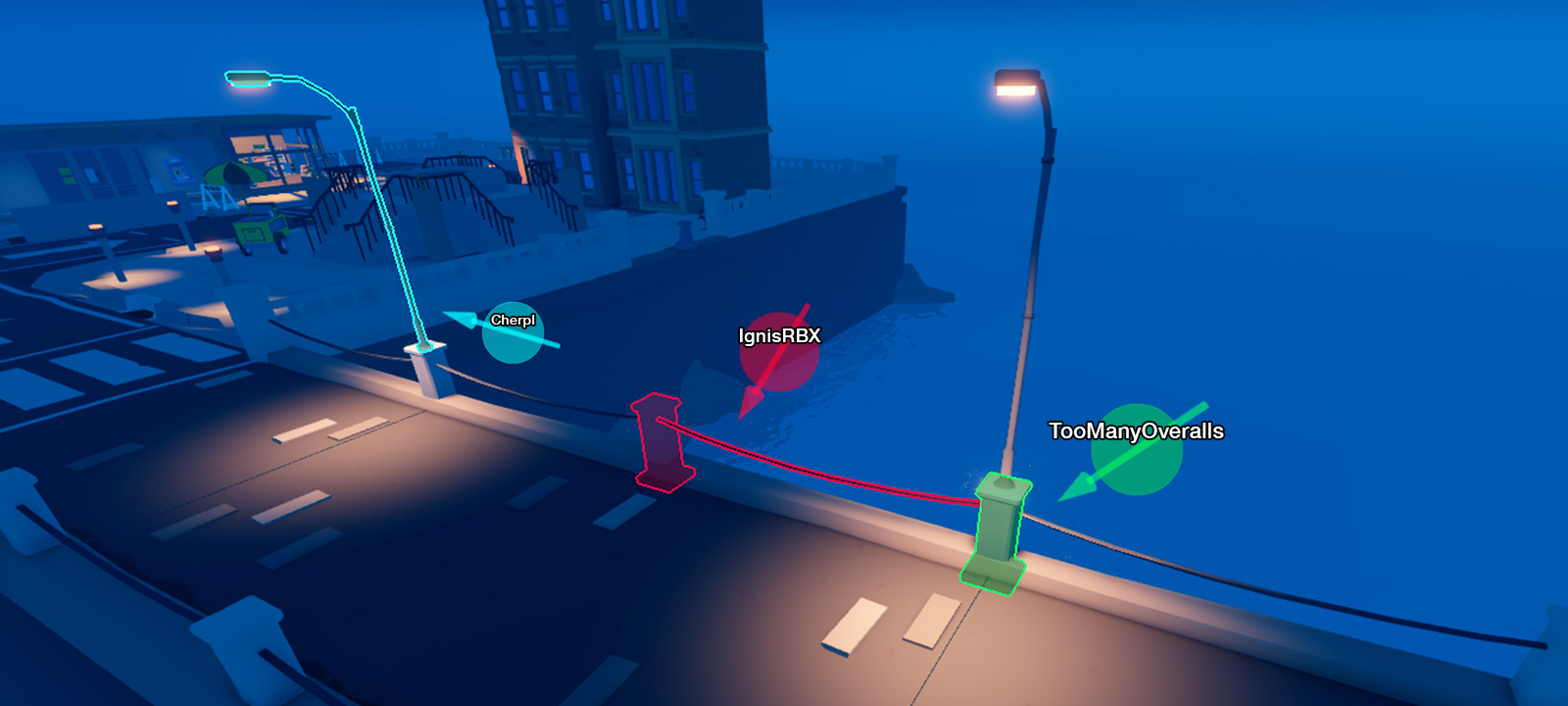
A Roblox player chooses a game, brings an avatar into its world and plays with other people.

See it taking shape ↓
01 / THE PRODUCTS

The products behind the promise.

Studio collaborative editing example.
Roblox Studio

Build, script, test and publish games.

Turn a creator’s idea into a playable world.

Versework

A Korean creator studio reaches broader audiences

Qualitative case; October 2025 interviews.

The report describes Sol’s RNG and named brand collaborations using Roblox.

What changed? +

A studio develops games and branded creative work.

The studio is a creator business, separate from Roblox Korea employees.

Studio collaborative editing example.
02 / HOW IT BECOMES REAL

From creation to a return visit

Illustrative workflow based on the published tools.

  1. 01

    Build a place

    Create the environment and scripts in Studio.

  2. 02

    Test and publish

    Review multiplayer behavior and release the configuration.

  3. 03

    Observe returns

    Connect retention and player feedback with later improvements.

Follow the work, step by step

Players enter worlds made by other people

A Roblox player chooses a game, brings an avatar into its world and plays with other people. A creator has built that world using the platform’s tools and services. Roblox connects the two sides through creation, discovery, multiplayer operation and a virtual economy. Its published mission is to connect a billion people each day with optimism and civility. Signet reads the practical proposition as giving a creator the means to make a playable social experience and reach an audience, while giving players a place to return with friends and express themselves across different games.

The product is therefore a connected system rather than one centrally authored game. Players can discover experiences made by different creators, while each creator makes choices about the world, mechanics and items. A group of friends can move between games without the creator independently building the entire distribution platform. Signet would examine the first visit and the return visit separately: how someone finds a game, understands its controls, joins other people and gains a reason to come back. Those questions connect the player experience with the creator’s development and operating choices.

A project becomes a running multiplayer experience

An illustrative creator starts a project in Studio with one place. That place holds a data model containing the environment, objects and scripts. A larger game can contain multiple places, such as a starting area and a separate dungeon, with players moving between them. Publishing sends a copy of the place’s data model to Roblox’s servers. This matters because making a local model is one step in a broader journey: the creator must prepare access, age-related content information and a game that other people can actually join. A release is a playable configuration with an audience, not simply an exported image.

Making that configuration usually involves different skills. The collaboration documentation names modeling, scripting, interface design and audio production as complementary work. Studio supports creators working at separate times or together in a live session. Its current Team Create rules require an age check for collaboration with other creators, while solo use can continue without that collaboration check. Signet would use a small shared project to explain ownership, editing and review: who changes a script, who adjusts the environment and how the team decides the resulting game is ready for someone outside the development session.

Discovery and safety continue after publication

Creator Hub analytics brings the running game back into the development loop. Its guidance starts with retention, engagement and monetization before pushing many new users into a game. A creator can inspect whether first-day players return and how long they stay, then investigate what in the experience might explain the pattern. The numbers help ask a question about the game; they do not automatically identify the cause. Signet would connect a measured drop in return visits with a concrete player journey, a proposed change and a later comparison, keeping observation and interpretation distinct.

Safety is part of the same operating environment. Roblox’s Safety Center describes account and parental controls, community rules and age-appropriate experiences. Creators design a game for the users who are permitted to enter and for the communication and purchase conditions that apply to them. The monetization guidance asks creators to present offers clearly and use PolicyService for features restricted by location, age or platform. Signet reads successful platform operation through all of these handoffs: build the experience, publish responsibly, observe real use, maintain clear transactions and keep improving the game people actually play.

Understand the products and their customers

Studio turns a game idea into an editable world

Roblox Studio is the free development environment for building, scripting, testing and publishing experiences. Its 3D workspace lets a creator manipulate objects and their properties, work with terrain and materials and connect the environment to game logic. The engine provides physics, rendering and audio capabilities that a team combines into its own experience. Signet would demonstrate the product through one change a player can feel: adjust a platform’s geometry, update its behavior and test the resulting movement. This makes the creation tool understandable through the playable outcome rather than a list of editor panels.

The Script Editor gives that behavior a specific working surface. It supports Luau code editing with completion, syntax feedback, navigation and debugging-related tools. A creator can inspect the script that responds to an event and compare the intended behavior with what happens during testing. The relevant skill is more than writing a short command: the developer must understand where code runs, how it interacts with objects and how errors affect players. Signet would ask a candidate explaining Studio to trace a single action from input through a script to a visible change in the world.

Creator Hub supports the game as a business

Creator Hub combines documentation and a dashboard for managing the published experience. A creator uses analytics to observe engagement, retention and monetization, and configures the offers that fit the game. A developer product can be bought repeatedly, such as consumable resources; a pass is intended for a benefit purchased once. Subscriptions provide recurring benefits while the user continues paying. Those choices imply different delivery obligations. Signet would compare what the player believes they bought with how the server grants the benefit and how the creator handles a later return, cancellation or repeated purchase.

A private server adds another form of access. It lets a player choose who can join and may be free or charge a monthly Robux fee. The documentation gives examples such as a gathering of friends, a class or a recording session and explains that private servers cannot be enabled alongside paid access. Creator Store serves a different customer: another creator buying or obtaining a model or a plugin for the development workflow. These products sit around the same ecosystem but solve different tasks, from a player’s controlled gathering to a developer’s reusable asset or editor extension.

Creation tools must produce games worth playing

Build extends creation to a mobile-first prompt workflow. The September conference described its public alpha in New Zealand and expansion to Serbia and Singapore, with access for conference creators. In October, the engineering team explained how it evaluates generated games through specifications, static engineering and design checks, actual playtests and visual review. These are different questions. A mechanically working game can still have a shallow loop or little reason to replay. Signet would show Build as a product being evaluated and expanded in explicit stages, with the creator retaining the task of reviewing and developing the experience.

Roblox also gives brands an advertising and experience channel. Its brand site presents immersive experiences and advertising formats for reaching audiences within the platform. A brand campaign still needs a creative experience and a way to assess what participants actually do. Signet would separate a paid advertising placement from a creator’s game business, even where the two support each other. For a candidate, the product discussion becomes clearer when the audience, paying party and operational task are named: a player uses the experience, a creator builds and manages it, and a brand funds a particular engagement or promotion.

03 / THE EVIDENCE

The story, in numbers.

DATED OBSERVATIONS

Annual GAAP revenue

USD · million

Calendar years ended December 31; recognized revenue, separate from bookings.

Figures, dates & basis +
Annual GAAP revenue
DateValueBasis
2022-12-31$2,225.052MCalendar-year GAAP revenue converted from reported USD thousands.
2023-12-31$2,799.274MCalendar-year GAAP revenue converted from reported USD thousands.
2024-12-31$3,601.979MCalendar-year GAAP revenue converted from reported USD thousands.
2025-12-31$4,890.551MCalendar-year GAAP revenue converted from reported USD thousands.

Roblox / SEC · Roblox

RDC expands the roadmap

At RDC on September 11, Roblox described new ways to play, build and grow. Build’s public alpha was expanding to Serbia and Singapore after New Zealand, while the company outlined additional engine and creation capabilities. The announcement also set future timing for browser play by the end of 2026 and offline play by mid-2027. Signet keeps these plans separate from currently delivered features. A candidate can ask how each change affects the creator’s development process, player access and eventual measurement, while the published schedule remains a roadmap subject to delivery.

Security across the ecosystem

On October 2, Grinstead explained a security model built around external creator code, virtual economic activity and changing infrastructure. She described internal products that help teams use secure defaults and validation before internal AI code tooling is approved. The practical implication is that a platform serving independent creators needs controls inside the work itself. Signet would look at how a control is used and monitored in a real workflow, with clear responsibility for a risk, rather than assume that a published security philosophy alone proves every experience is safe.

Evaluate generated games

The October 8 Build evaluation article explains a framework that checks creator intent, game structure, actual playability and visual experience separately. Its worked example shows why a game can function correctly and still offer weak replay value. The team describes evaluation results as guidance for product improvement and identifies areas it is still developing, including broader genre coverage and repeated edits. Signet reads this as evidence of an evaluation practice for an expanding alpha product. A measured technical score, a player’s enjoyment and a later commercial outcome remain different kinds of evidence.

Read the growth story

Robux purchases and revenue have different timing

Users fund much of Roblox’s business by buying Robux, directly or through subscription arrangements, and spending within the platform. Bookings measure the underlying sales transaction timing. Roblox initially records virtual currency sales as deferred revenue and recognizes revenue as virtual items are consumed or over the estimated period that durable items remain available. Signet therefore keeps bookings and accounting revenue separate. A large quarter of cash-generating purchases can influence revenue recognized in later periods, and a recognized revenue increase can partly reflect earlier purchases rather than only the current quarter’s player spending.

The annual chart uses calendar-year GAAP revenue in US dollars. Revenue was 2,225.052 million in 2022, 2,799.274 million in 2023, 3,601.979 million in 2024 and 4,890.551 million in 2025. The 2025 filing separately reports bookings of 6,788.430 million. These numbers describe different measurement bases over the same year. They are not annual recurring revenue, a company valuation or a creator’s take-home earnings. Signet uses the recognized revenue series for the chart and puts the transaction measure beside it with its own label, so a reader can see the trend without silently changing definitions.

Creators receive a separately governed payout

A creator can earn Robux through eligible activity such as selling game items, passes, subscriptions or avatar items and through certain creator programs. Developer Exchange allows eligible creators to exchange Earned Robux for real-world currency. The documentation and terms distinguish earned balances from other Robux and attach eligibility, review and ongoing service conditions to cashing out. Signet reads this as a creator payment mechanism inside the ecosystem. The exchange payment is an expense and incentive for Roblox and income for the eligible creator, with a different purpose from the company’s recognized revenue figure.

The offers that produce those earnings also create work for the creator. A subscription must deliver its stated benefits for the paid term, while a repeatable developer product needs a purchase receipt and a reliable grant of the item or ability. The monetization guidance asks for clear pricing and truthful offers and identifies location-dependent purchase restrictions. Signet would inspect one transaction end to end: what a player sees, what the purchase records, which server-side logic grants the benefit and what happens on a later visit. A useful commercial experience depends on that operational reliability as well as the initial purchase.

Engagement growth has an operating cost

In the second quarter of 2026, Roblox reported 123 million average daily active users, 29 billion hours of engagement, revenue of 1,469 million dollars and bookings of 1,557 million. The shareholder letter also reported a consolidated net loss of 185 million and developer exchange fees of 363 million. These rounded quarterly figures belong to their own period. A large active audience and positive cash generation are relevant signals, while the income statement still reflects the costs of paying creators, infrastructure, safety and employees. Signet keeps that economic picture visible when discussing the platform’s scale.

Advertising and creator tools broaden the commercial surface. Brands can fund experiences and placements, and Creator Store lets creators offer development assets to other creators under its own transaction rules. Signet would compare the paying party and delivery obligation in each route before describing them as interchangeable monetization. The business also has to keep people returning to experiences that support healthy transactions. Analytics guidance places retention and engagement ahead of aggressively expanding acquisition. This suggests a practical operating question: whether the experience is useful and appealing enough to sustain repeated participation while the creator and platform cover the work required to serve it.

04 / THE PEOPLE

Someone saw it first.

David Baszucki, official leadership portrait.
Founder and CEO

David Baszucki

Current founder and chief executive on the official leadership page.

The choice behind the company +

Connect play, creation and audience growth in the platform roadmap.

Nicole Grinstead, official leadership portrait.
Chief Information Security Officer

Nicole Grinstead

Current CISO and author of the October security account.

The choice behind the company +

Build secure defaults and validation into the operating platform.

“The world needs more play.”

David Baszucki · RDC 2026 bylined article · 2026-09-11
The decisions behind the company

The founder remains responsible for the platform direction

David Baszucki is the founder and current chief executive on Roblox’s official leadership page. At the September 2026 developer conference, he framed the company’s twentieth anniversary around playing, building and growth. The talk connects the player’s social experience, the engine and services available to creators and the ability to find an audience. Signet reads this as a continuing platform thesis: the company can expand what creators make and where people play by developing shared technology underneath many independently authored experiences. The interpretation follows the published product direction and keeps announced future delivery stages attached to it.

The current executive team gives that direction several accountable functions. Naveen Chopra is chief financial officer, Vlad Loktev leads the creator ecosystem and Matt Kaufman is chief safety officer. Nicole Grinstead is chief information security officer, while Mark Reinstra is chief legal officer. These titles matter because platform growth involves distinct decisions about creator tools, user safety, secure infrastructure and financial reporting. Signet would follow the owner of a particular decision rather than assume that one executive’s statement describes every operating team. A product promise, a security control and a recognized revenue figure are connected but have different evidence and responsibilities.

The Builder Framework turns values into operating choices

The published Builder Framework combines a long view, daily execution, respect for the community and responsibility for intended and unintended outcomes. Its operating principles include starting difficult foundational work early, concentrating on fewer things done well and treating people with consistent standards. Those are useful questions for a candidate preparing examples: which difficult problem they started, how they made an incremental path and what they chose to leave out so a useful result could ship. Signet treats the framework as the company’s stated expectations and a basis for discussion, with the candidate supplying evidence from their own work.

The same framework asks managers to combine domain expertise with people leadership and encourages direct communication with people doing the work. Its principle about noticing a small piece of trash uses everyday attention as an example of ownership. This connects particularly well with a workplace role: a missing supply, an unclear room booking or a vendor request needs someone to notice, document and resolve it. Signet’s connection is an interpretation, not an additional employer requirement. The relevant evidence is a candidate’s example of improving a small operational detail while keeping the appropriate people informed.

Security is built into the creator environment

Grinstead’s October account describes why the security team protects more than internally written software. Roblox runs code made by external creators, maintains virtual items with economic value and operates communication and infrastructure across changing environments. The article emphasizes isolation, runtime monitoring and internal tools that make secure work easier. Signet would ask an engineering candidate to connect a control with the real person it protects: the player joining a game or the creator whose work and earnings depend on a trusted platform. Security responsibility continues through the creation and operation cycle rather than ending at a release review.

AI adoption adds another version of that responsibility. The security account describes validating code tools inside a sandbox before approval, and the Build evaluation article keeps technical playability separate from design and visual quality. A generated experience needs both secure execution and a reason for people to keep playing. Signet reads these accounts as complementary operating disciplines: define what a useful result means, test the parts that can fail and observe what happens when a person interacts with the running game. A candidate can use the same reasoning to explain their own quality decisions without claiming that every metric is already a proven business outcome.

05 / THE NEXT CHAPTER

Creator ecosystem and a Seoul workplace

The official board lists one Korea opening on October 10: Workplace Experience Coordinator - Part-Time (Short Term). It is an onsite, part-time, one-year fixed-term contract. The posting specifies Tuesday, Wednesday and Thursday attendance, typically from 1:30 PM to 6:00 PM, with occasional morning flexibility for business needs. The work covers office resources and inventory, facility providers, employee onboarding, meeting rooms, visitors, shipping, essential office documents and internal team events. The scope is concrete support for the Korea office, with collaboration across the local team and external partners.

Korea team
Facility providers and vendors
Global headquarters

The employer posting names collaboration functions, not staffing counts.

Why Korea? Why now?+

The same report describes local creator workshops and education partnerships around skills and digital civility. It names media literacy education and hands-on creation as parts of the Korean ecosystem. A creator-facing program serves a different purpose from a corporate workplace function, even though both can involve events and coordination. Signet would follow the participant and intended outcome: a creator learning to publish a game, a teacher preparing safe participation or an employee arriving at an office. Keeping those settings distinct makes the Korea story useful for a candidate deciding which work their experience actually fits.

Korea privacy addendum

The effective policy names Roblox Korea Ltd. as domestic representative.

Workplace role first published

Official Greenhouse first_published date.

Understand the Korea opportunity

Korean creators build for audiences beyond Korea

Roblox’s commissioned Korea ecosystem report includes Versework, a Korean studio established in 2021. The report describes Sol’s RNG and collaborations with brands including YouTube Korea, Naver Webtoon, JYP Entertainment and Adidas. It also describes work with Devsisters on a Roblox title. These are specific creator and partner activities, with evidence from interviews conducted in October 2025. Signet reads the example as a local creative business using Roblox’s tools, community and distribution to develop experiences for a broader audience. The studio’s own workforce and game performance belong to that studio and the report’s historical period.

The same report describes local creator workshops and education partnerships around skills and digital civility. It names media literacy education and hands-on creation as parts of the Korean ecosystem. A creator-facing program serves a different purpose from a corporate workplace function, even though both can involve events and coordination. Signet would follow the participant and intended outcome: a creator learning to publish a game, a teacher preparing safe participation or an employee arriving at an office. Keeping those settings distinct makes the Korea story useful for a candidate deciding which work their experience actually fits.

A public Korean entity supports local obligations

The Korea privacy addendum, effective September 11, 2026, names Roblox Korea Ltd. as the domestic representative and Mark Reinstra as its representative. This establishes a specific legal and service context. Reinstra is also the company’s chief legal officer on the current leadership page. Signet keeps the domestic-representative designation attached to privacy obligations and does not treat it as a country management title. The policy discusses delegated processing, international transfers and users’ rights, making local service responsibilities part of the operating setting in which the platform reaches Korean users.

As an illustrative operational question, a local team must know who handles a request and which record should be maintained when it works with external service providers. The privacy policy supplies a service context, while the workplace posting supplies the duties of the current office opening. These sources describe different responsibilities. Signet would ask a workplace candidate to explain reliable vendor coordination, documentation and escalation using their own example, without adding a legal decision-making role to the job. Clear ownership helps an employee resolve the practical request while involving the appropriate specialist when the matter requires one.

The current Seoul opening runs the workplace

The official board lists one Korea opening on October 10: Workplace Experience Coordinator - Part-Time (Short Term). It is an onsite, part-time, one-year fixed-term contract. The posting specifies Tuesday, Wednesday and Thursday attendance, typically from 1:30 PM to 6:00 PM, with occasional morning flexibility for business needs. The work covers office resources and inventory, facility providers, employee onboarding, meeting rooms, visitors, shipping, essential office documents and internal team events. The scope is concrete support for the Korea office, with collaboration across the local team and external partners.

The posting asks for Korean and English communication and organizational ability with Google Workspace. It describes zero to two years of facility or office administration experience as preferred, and also prefers office, administration, hospitality or customer service exposure and basic vendor, event or invoice experience. Signet’s suggested preparation is a simple operational example: handle competing requests, record the status, coordinate a provider and tell the team what changed. A prospective applicant should also align the specified contract and work schedule with their plans. Those suggestions help interpret the role while the exact employer wording remains the reference for requirements.

KOREA OPEN ROLES

1 open role in Korea

Current Signet catalog · 2026-10-19

FOR YOU

Prepare a vendor, visitor or onboarding coordination example.

Operations

Workplace Experience Coordinator - Part-Time (Short Term)

Seoul, Seoul, South Korea

Posting checked

The work
Coordinate resources, vendors, onboarding and internal events.
Who fits
Organized communicator; facility or admin experience preferred.
Keep in mind
1-year contract; Tue/Wed/Thu onsite, usually 1:30-6 PM.
07 / NOW & NEXT

The next scene is taking shape.

RDC expands the roadmap

At RDC on September 11, Roblox described new ways to play, build and grow. Build’s public alpha was expanding to Serbia and Singapore after New Zealand, while the company outlined additional engine and creation capabilities. The announcement also set future timing for browser play by the end of 2026 and offline play by mid-2027. Signet keeps these plans separate from currently delivered features. A candidate can ask how each change affects the creator’s development process, player access and eventual measurement, while the published schedule remains a roadmap subject to delivery.

Security across the ecosystem

On October 2, Grinstead explained a security model built around external creator code, virtual economic activity and changing infrastructure. She described internal products that help teams use secure defaults and validation before internal AI code tooling is approved. The practical implication is that a platform serving independent creators needs controls inside the work itself. Signet would look at how a control is used and monitored in a real workflow, with clear responsibility for a risk, rather than assume that a published security philosophy alone proves every experience is safe.

Evaluate generated games

The October 8 Build evaluation article explains a framework that checks creator intent, game structure, actual playability and visual experience separately. Its worked example shows why a game can function correctly and still offer weak replay value. The team describes evaluation results as guidance for product improvement and identifies areas it is still developing, including broader genre coverage and repeated edits. Signet reads this as evidence of an evaluation practice for an expanding alpha product. A measured technical score, a player’s enjoyment and a later commercial outcome remain different kinds of evidence.

More context on what comes next

The conference expands the creation roadmap

At RDC on September 11, Roblox described new ways to play, build and grow. Build’s public alpha was expanding to Serbia and Singapore after New Zealand, while the company outlined additional engine and creation capabilities. The announcement also set future timing for browser play by the end of 2026 and offline play by mid-2027. Signet keeps these plans separate from currently delivered features. A candidate can ask how each change affects the creator’s development process, player access and eventual measurement, while the published schedule remains a roadmap subject to delivery.

Security work follows the whole ecosystem

On October 2, Grinstead explained a security model built around external creator code, virtual economic activity and changing infrastructure. She described internal products that help teams use secure defaults and validation before internal AI code tooling is approved. The practical implication is that a platform serving independent creators needs controls inside the work itself. Signet would look at how a control is used and monitored in a real workflow, with clear responsibility for a risk, rather than assume that a published security philosophy alone proves every experience is safe.

Generated games are tested through interaction

The October 8 Build evaluation article explains a framework that checks creator intent, game structure, actual playability and visual experience separately. Its worked example shows why a game can function correctly and still offer weak replay value. The team describes evaluation results as guidance for product improvement and identifies areas it is still developing, including broader genre coverage and repeated edits. Signet reads this as evidence of an evaluation practice for an expanding alpha product. A measured technical score, a player’s enjoyment and a later commercial outcome remain different kinds of evidence.

Taken together, these developments extend the platform while increasing the importance of release scope and quality. Signet would check whether a candidate can state the current stage, identify the user affected and explain how the result could be evaluated. For the Seoul workplace opening, the immediate application is more local: support an office whose team works across a changing platform organization. Understanding the business provides context for good coordination, while the employer’s posting defines the operational work the applicant is actually being hired to do.

Their future. Your next chapter.

Find your part ↑

An independent profile by Signet. No affiliation or investment recommendation. Introductions happen only with your consent.
Research reviewed 2026-10-10

A LITTLE MORE CONTEXT

Understanding Roblox.

What does Roblox do?

A Roblox player chooses a game, brings an avatar into its world and plays with other people. A creator has built that world using the platform’s tools and services. Roblox connects the two sides through creation, discovery, multiplayer operation and a virtual economy. Its published mission is to connect a billion people each day with optimism and civility. Signet reads the practical proposition as giving a creator the means to make a playable social experience and reach an audience, while giving players a place to return with friends and express themselves across different games.

What is the opportunity in Korea?

The official board lists one Korea opening on October 10: Workplace Experience Coordinator - Part-Time (Short Term). It is an onsite, part-time, one-year fixed-term contract. The posting specifies Tuesday, Wednesday and Thursday attendance, typically from 1:30 PM to 6:00 PM, with occasional morning flexibility for business needs. The work covers office resources and inventory, facility providers, employee onboarding, meeting rooms, visitors, shipping, essential office documents and internal team events. The scope is concrete support for the Korea office, with collaboration across the local team and external partners.

Are these confirmed job openings?

Employer postings were checked on 2026-10-10. Availability can change. Mock applications request a review from Signet.

How can I explore the company in more depth?

Follow the company from its vision through products, evidence and people to the Korea team and current roles. Use the table of contents to move within the page, and expand the sections for more context.

Back to the collection ↗