Wonderful co-founder and CEO Bar Winkler
Wonderful / THE WORLD THEY ARE BUILDING

AI should finish the job.

The larger opportunity is repeated production workflows across customer service and back-office operations. Each new workflow still needs integrations, clear policies and an accountable operating owner.

See it taking shape ↓
01 / THE PRODUCTS

The products behind the promise.

Customer overview screen of a customer value management application, with engagement by channel and customer segments
An AI-native application as shown on Wonderful's Systems page: software the company designs, builds and runs on its platform to replace a legacy business tool.
Wonderful AI OS

Coordinate agents, applications, integrations and execution.

Reuse a shared foundation as enterprise workflows grow.

Telefónica Colombia / Movistar

Replace a limited billing automation

Company case reports 91.5% containment on eligible interactions and 77% issue resolution.

Wonderful connected billing APIs and expanded explanations across mobile, fixed-line and convergent customers.

What changed? +

The previous AI solution covered only part of the fixed-line customer base and could not expand smoothly.

Containment measures eligible interactions completed without a human handoff. The case separately headlines resolution of issues; each figure keeps its own measure and scope.

OTE / Cosmote TV

Integrate a telecom voice agent

Vendor reports 30% lower average handling time in the deployment.

The agent connected 10 skill areas, including authentication, troubleshooting and account actions.

What changed? +

High call volume and repeated contacts had to improve while protecting NPS and brand perception.

Specific enterprise case; public figures do not establish a universal saving.

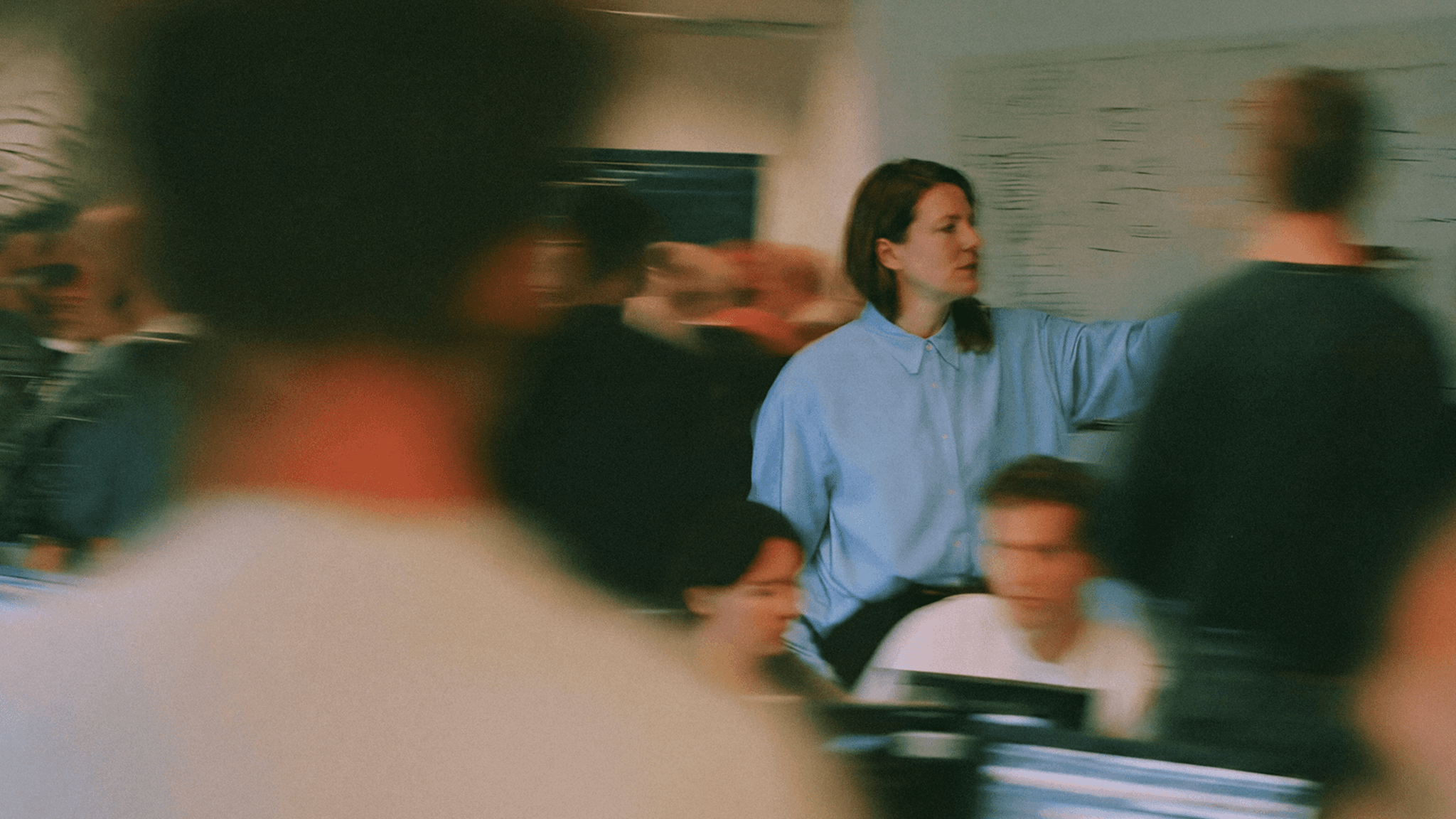
People at desks in an open office, one standing to talk with colleagues
Photograph from Wonderful's deployment page. The company describes teams that put AI into production and then hand over operations to the customer.
02 / HOW IT BECOMES REAL

From a disputed bill to a resolved conversation

An illustrative telecom billing journey follows the documented Telefónica deployment. It requires both conversational ability and access to operational APIs.

  1. 01

    Trace the customer request through operations

    The deployment team maps high-volume problems and failure points. It defines success with the customer before building an agent.

  2. 02

    Connect identity and billing tools

    Engineers connect telephony and backend APIs. The OTE case used Genesys plus a custom ETL pipeline across legacy and modern systems.

  3. 03

    Explain the difference between bills

    The Telefónica agent compares billing periods and checks payment status. It explains account-specific changes across voice and WhatsApp.

  4. 04

    Inspect production results and expand carefully

    Teams monitor completion and exceptions after launch. The strategist coordinates improvements and identifies the next use case from actual usage.

Follow the work, step by step

Most enterprise AI stalls after the pilot

Wonderful starts from a pattern its chief executive, Bar Winkler, says he saw across nearly 50 deployments in 18 countries: companies can get capable AI, and the trouble starts when it has to work inside the business. The model is rarely what stops it. What stops it is the call-routing rules of a telecom, the compliance steps of a bank, the scheduling system of a hospital, and the language and habits of each country. A McKinsey survey quoted when the two firms announced an alliance in April 2026 put the gap in numbers: 79 percent of organizations were experimenting with generative AI, and fewer than 10 percent had scaled AI agents.

companies don’t have a technology problem; they have an implementation problem.

Bar Winkler · Co-founder and CEO, Wonderful · Company essay, The Execution Gap No Model Can Close · 2026-01-07

The bet: delivery is part of the product

The belief that sets Wonderful apart is that delivery is the product, not an extra sold as professional services. Winkler writes that real AI transformation needs sustained investment on the ground in delivery "as a first-class capability, not an afterthought." In practice the company places engineers and strategists inside each customer's environment, in each country it sells in, and pairs them with its own platform. Insight Partners, which led the Series B and the Series C, wrote that one of its strongest convictions was that enterprise AI adoption would be won locally. From the start Wonderful aimed at markets where English is not the first language, tuning its agents for language, culture and regulation.

Why now is partly technology. Winkler says the story began when GPT-4 arrived and voice agents became fast enough for a phone call; as he put it in a May 2026 interview, a caller cannot wait three or four seconds for an answer. He and his co-founder, Roey Lalazar, started work at the end of 2024. By Winkler's account the company was established on 5 January 2025, had a product ready for customers at the end of February and signed its first deal in April. The other part is fatigue with pilots. In a February 2026 interview he said that for large companies the problem is not whether the technology exists, but whether it can be delivered so that it actually works in their systems.

One request, followed through the team

The path below is illustrative and follows the documented Telefónica Colombia deployment. A telecom wants an AI agent to answer billing questions. A Deployment Strategist, the role Wonderful sums up as making the work matter, leads discovery with the customer's operations owners: which questions arrive most, where they fail, and which result will count as success. A Forward Deployed Engineer, the role that makes it work, connects the agent to the systems that hold the answers, such as billing and payment records, telephony and identity checks. The agent then compares billing periods and explains a price change by voice or on WhatsApp.

People keep the decisions that carry risk. The customer agrees the scope and the success measures with the Deployment Strategist, and operational tools let a person step in when needed. After launch the pair watch live conversations, fix the cases that only appear in production, and look for the next workflow. Wonderful's own writing says this work after go-live, tuning responses, handling edge cases and updating the agent when policies change, is often as large as the initial build and never fully stops.

The bet is easy to state and hard to scale, because every new customer needs people who can sit inside it and ship. Watch whether hiring keeps pace: Wonderful had 350 employees in March 2026, planned about 900 by the end of the year, and reported 650 in September 2026.

For someone joining in Seoul, this chapter describes the job itself. Wonderful says each market gets a full local team of forward-deployed engineers, deployment strategists and go-to-market staff, and the Korea office was set up to supply exactly that team.

Understand the products and their customers

One platform, sold with the team that installs it

Wonderful sells a platform, which it now calls the AI OS, together with the people who put it into production. The company describes the AI OS as one operating layer for employees, agents and apps. Its Series C release lists four kinds of products on that layer: managed workflows that automate complex processes end to end, productivity agents that support employees, AI-native applications that complement or replace legacy software, and conversational agents that serve customers. Permissions, integrations and audit setup are built once and reused, so that, in the company's words, each new use case launches faster than the last.

Wonderful Agents is where the company began, and where most of its named results come from. An agent takes work from any channel, voice, chat, email or documents, and completes it end to end, reading data, triggering actions and updating records in the systems the work runs on. Teams assemble agents in a workflow editor that chains triggers, functions, MCP tools and model calls. In January 2026 the company launched Agent Builder, an agent powered by Anthropic's Claude that builds, tests and refines other agents. Wonderful says it cuts time to production by up to 50%.

Two other lines take the pitch beyond the service desk. Under the Systems name, Wonderful maps how a business function really runs, builds AI-native software around it, migrates the data from the legacy tool and then runs the new software for the customer. The AI Gateway picks a model for each task and enforces the customer's cost, security and performance policies. Its page puts the commercial argument in one line, "Model companies earn when you consume more," and says the gateway is there so customers ship more per dollar.

Customers, before and after

Telefónica Colombia, which trades as Movistar, is the clearest before and after. It had evaluated over 20 providers and already ran an AI solution, but that system served land lines, left broadband customers out and was slow to extend. The first ask was modest: match what the old system did. Wonderful's agent now explains bills and price increases by voice and WhatsApp for mobile, fixed-line and convergent customers. The case reports 91.5% containment on eligible interactions, average handling time 50% lower than with the previous AI solution, and call volume up 2.5 times in two months while NPS held steady. Its headline says the agent resolves 77% of issues; containment and resolution are different measures.

Integrating a fully generative AI agent into OTE's environment is not a trivial task: it requires deep investment in mapping and bespoke integrations, many different APIs, legacy systems, and strict operational requirements.

Yannis Vitzilaios · CIO, OTE Group · Customer quote in Wonderful's OTE case study · 2026-05-21

Later cases repeat the pattern in other industries. At OTE Group, Greece's largest telecom operator and part of Deutsche Telekom, the Cosmote TV agent covered 10 skill areas; deflection reached 50%, nearly triple the baseline, and handling time fell 30%. Banco Caja Social went from zero to a live collections agent in nineteen days, and in the first six weeks after launch, 65% of the agent's direct contacts ended with a promise to pay, against a 45% human baseline. Maccabi, an Israeli health provider, has its agent handle 45,000 calls a day on its appointments and service-information line. At Bank Hapoalim, a bank data engineer new to agents built a production agent in three weeks, reusing 15 tools that Wonderful's engineers had built for earlier deployments.

How to read these numbers

Every result above comes from Wonderful's own case studies, and each uses its own measure (containment, deflection, resolution, promise to pay) against its own baseline. Read them as evidence that agents reached production at named companies, and compare a figure only with the same measure.

The detail that repeats is time to production: nineteen days at Banco Caja Social, three weeks at Bank Hapoalim, four weeks at PPC Energie, ten weeks for three agents at Mercado Libre. A Korea hire would be asked to produce the same kind of first result at a Korean enterprise.


03 / THE EVIDENCE

The story, in numbers.

DATED OBSERVATIONS

Enterprise customers

customers
Enterprise customers2025-07-02: 15 enterprises; 2026-08-08: 100+ enterprise customers15 enterprisesJul 2025100+ enterprise customersAug 2026

Enterprise customers as stated at two dates. Deployments are a different count and stay off this line. These are dated disclosures, not a continuous growth record.

Figures, dates & basis +
Enterprise customers
DateValueBasis
2025-07-0215 enterprises15 market-leading enterprises served at the time of the seed round, as the lead seed investor described them in its announcement.
2026-08-08100+ enterprise customersOver 100 enterprise customers across verticals, stated by the company in its India launch post.

Index Ventures · Wonderful

DATED OBSERVATIONS

Valuation at each funding round

USD · B
Valuation at each funding round2026-03-12: $2B; 2026-09-02: $5B$2BMar 2026$5BSep 2026

The price investors put on the whole company in each round. It is neither revenue nor money raised: the Series B raised $150M and the Series C $550M. These are dated disclosures, not a continuous growth record.

Figures, dates & basis +
Valuation at each funding round
DateValueBasis
2026-03-12$2BSeries B valuation in the company's announcement, with $150M raised; trade press reported the same figures.
2026-09-02$5BSeries C valuation in the company's announcement of the closed round, with $550M raised.

Wonderful · TechCrunch

Company founded

Wonderful began with enterprise AI agents and a local delivery model.

Series B

$150M financing supported platform investment and local expansion.

Series C and AI OS

The company announced $550M funding and broader enterprise OS scope.

Read the growth story

How the money works

Wonderful earns from enterprises that buy its platform together with the team that deploys it. Korean trade press describes the model as consulting and software as a service combined, and a May 2026 profile described a mix of technology and consulting, with data engineers and AI implementation specialists placed inside each client. A deal usually starts with one use case. "Over 70% of enterprises that begin with a single use case expand into additional workflows within the first three months," Winkler said in March 2026; it is the company's own figure. The stated aim after that is handover: engineers bring the first use case into production, then transfer the skills so the customer can build and run more on its own.

The company frames value as business results rather than usage. "The number that matters is the cost of the resolved inquiry, not the tokens consumed getting there," Winkler wrote in July 2026, and the AI Gateway page contrasts Wonderful with model companies that earn when customers consume more. He also argues that workflow AI is an operating-model decision that the chief executive has to sponsor, because the value compounds only when AI runs across functions. That pushes Wonderful's sales toward the top of each customer.

What each dated number measures

The dated numbers cover funding, scale and customers, and each measures something different. Funding came in four rounds: a $34M seed in July 2025, a $100M Series A in November 2025, a $150M Series B in March 2026 and a $550M Series C in September 2026. The Series B valued the company at $2B and the Series C at $5B; a valuation is the price investors put on the whole company in that round, not money raised and not revenue. Scale: 650 employees and more than 35 markets in September 2026, up from 350 employees in March. Customers: 15 enterprises at the seed, as the lead investor described them, and over 100 enterprise customers by August 2026, in the company's words. On revenue, the founder's plan, reported in May 2026, is to reach $100M of top line within five quarters. That is a target, not a result.

Dated numbers and what each one measures
DateNumberWhat it measuresBasis
2025-07-02$34MSeed round, money raisedLead investor's announcement
2025-11-11$100MSeries A, money raisedPress report
2026-03-12$150M at $2BSeries B raised, and the valuationCompany announcement
2026-05-29$100M in five quartersTop-line revenue target, a planFounder, press interview
2026-08-08100+Enterprise customersCompany post
2026-09-02$550M at $5BSeries C raised, and the valuationCompany announcement
2026-09-02650Employees worldwideCompany announcement

Competitors and position

One trade analysis of the Series C compared the AI OS pitch to Palantir's AIP: one platform rather than loose tools, engineers embedded with customers, and proof in critical deployments. It named Relevance AI as the closest startup match and Cognigy, now part of NiCE, as a direct rival in customer service, where Wonderful began. Wonderful itself credits Palantir with pioneering the embedded-engineer approach. Its CTO counts frontier model labs and cloud providers as competitors and said that, outside the US at least, he is not seeing them in production. Buyers compare before they choose: Telefónica Colombia had evaluated over 20 providers. Signet's reading is that Wonderful's position rests on speed to production in markets where English is not the first language.

Signet's reading: Three risks follow from the model. Growth depends on hiring, because every market needs a full local team and quality has to hold as headcount rises. Leaving is easy by design, so each renewal has to be earned. And the field is crowded with larger players, from Palantir-style platforms to the model makers themselves, while Wonderful's own Agent Builder runs on Anthropic's Claude.

In an interview, keep the measures apart. Say $550M raised at a $5B valuation, and never call either revenue. Say over 100 enterprise customers, not deployments, which the company counts separately. If revenue comes up, cite the five-quarter plan as a plan.

04 / THE PEOPLE

Someone saw it first.

Photograph of Bar Winkler.
Co-founder & CEO

Bar Winkler

Winkler leads Wonderful, founded in 2025, alongside CTO and co-founder Roey Lalazar.

The choice behind the company +

The company paired local forward-deployed teams with the platform, then broadened it into an enterprise AI OS.

Photograph of Roey Lalazar.
Co-founder & CTO

Roey Lalazar

Wonderful’s company page identifies Lalazar as CTO.

The choice behind the company +

The documented architecture emphasizes coordinated agents, enterprise context and governed execution; it is a company decision, not a personal quote.

“companies don’t have a technology problem; they have an implementation problem.”

Bar Winkler · Company essay, The Execution Gap No Model Can Close · 2026-01-07
The decisions behind the company

Two founders who had built companies before

Bar Winkler is the co-founder and chief executive. Before Wonderful he led expansion at IronSource and founded and sold Approve.com, according to the lead seed investor, and he lives in Tel Aviv. Roey Lalazar is the co-founder and chief technology officer; the same investor says he built million-dollar businesses and led elite security teams. The two began work at the end of 2024 and founded the company in 2025. Its press releases carry an Amsterdam dateline and its website the name Wonderful AI B.V., while press coverage calls it an Israeli startup.

Three decisions explain the company's shape. The first is full teams in every market rather than sales offices: "we hire full teams on the ground and not just sellers," Winkler said in December 2025. The second is one core product, run from the center. In the same conversation he said a country office cannot touch the core product, and that most customization happens for each customer rather than for each country. The third is breadth: he wants a horizontal product rather than a vertical solution, and the CTO says the company works in roughly 11 industries, led by banks, telecoms, insurers, healthcare and energy.

Most platform bets are really bets on switching costs. Ours is a bet on the technology itself, and our ability to make it usable in the enterprise.

Roey Lalazar · Co-founder and CTO, Wonderful · Company essay, Open by default, competitive by design · 2026-06-10

Lalazar's essays explain the technical stance. He says the company designs as if models will keep getting better, and argues that in AI the most expensive technical debt is an architecture that only makes sense if models stop improving. He also made leaving easy: every agent, skill, tool, governance configuration and app can be exported. He presents that as discipline, because the company then cannot raise prices arbitrarily or inflate switching costs, and customers stay only if it is better.

The leaders a Korea hire will meet

Three more leaders shape the work in Korea. EungSub Joung (정응섭) was named general manager for South Korea in April 2026, the company's first country head there. His background is enterprise software leadership: Samsung C&T, i2 Technologies (now Blue Yonder) and SAP, then Slack's first country head in Korea, then head of Workday Korea from January 2024. Henek Lo is managing director for Asia-Pacific and is quoted in the March 2026 post that opened the region. Boaz Francis, head of FDE, leads the engineers placed with customers; in September 2026 he wrote that field engineers began opening pull requests on a new product within hours of its release.

Deployment isn't something that happens after the product is built. It's part of how the product gets better.

Boaz Francis · Head of FDE, Wonderful · Company blog, Let the Field Build the Product · 2026-09-17

How Wonderful says it works and hires

The values page is short: move fast, take ownership, solve problems before they grow, make decisions without waiting for permission, and "We play to win." The careers page says the company hires "high-ownership, mission-driven builders and operators" who care more about shipping impact in production than about theory, titles or comfort, and who like working on site with customers. Its essay on the FDE role says the closest analogy is a founder, and is plain about who should look elsewhere: engineers who want stable, well-scoped work, who prefer to go deep on one technical domain, or who find customer contact draining. In Israel, the local general manager said one in seven of the FDEs there had been a founder.

On the worry that headquarters decides and Seoul executes, the evidence points both ways. The core product is run from the center, by the CEO's own account. But integrations and customer builds are done locally, the CEO tells regional leaders to land their first reference customers and expects things to get simpler from there, and field engineers now send changes back into the core product.

05 / THE NEXT CHAPTER

Bring deployment ownership into Seoul

The four open Korea roles form one field team: GTM sells, the Deployment Strategist scopes the work and owns the outcome, the Forward Deployed Engineer builds, and Marketing builds the name.

LOCAL & REGIONAL LEADERSHIP

EungSub Joung

General Manager, South Korea

LinkedIn ↗
Customer engineering
  • CTO Korea
  • Forward Deployed Engineer

Profile headlines under the Korea filter; the FDE posting describes hands-on customer deployments.

Delivery and commercial work
  • Enterprise AI / Strategy / Product
  • GTM

Headline scope indicates strategy, product and market work; it does not establish a reporting hierarchy.

Building the Korea team
  • Building the founding team / Hiring FDE & DS

A public headline describes recruiting the field team.

Team view built from the company's leadership page, its Korea announcement of 9 April 2026 and the employer job board read on 8 October 2026; it lists people named there, not headcount, and does not establish reporting lines.

Why Korea? Why now?+

Wonderful's April 2026 release gives the reasoning. The company calls Korea one of the most closely watched enterprise AI markets, with mature digital infrastructure, competitive companies and high expectations of performance, and says Korean firms want AI that works deep inside complex legacy systems and delivers results at scale. Strict data security and regulatory requirements, and the difficulty of wiring AI into complex internal systems, have kept real adoption slow. That is the gap the company's model of local, on-site deployment teams is built for. The entry followed a regional plan: Asia-Pacific was announced as an early 2026 goal in November 2025, the first regional offices in March 2026 and the Korea office in April. The CEO's rule for a new region is to win one or two well-known reference customers first, and he says the speed of a deployment depends on how strongly the customer's own chief executive backs AI.

Asia-Pacific set for early 2026

With its $100M Series A, Wonderful said it planned to expand in Asia-Pacific in early 2026.

First offices in Asia-Pacific

Wonderful announced its first offices across the region and named South Korea among the markets where it was hiring Deployment Strategists, Forward Deployed Engineers and account managers.

Korea office and first country head

Wonderful announced its Korea office and named EungSub Joung (정응섭), former head of Workday Korea, as its first country head.

Understand the Korea opportunity

Why Korea: the market wants AI and finds it hard to deploy

Wonderful's reason for Korea, as its April 2026 release set it out, is that the market wants AI and finds it hard to deploy. The company calls Korea one of the most closely watched enterprise AI markets, with mature digital infrastructure, competitive companies and high expectations of performance, and says Korean firms are looking for AI that works deep inside complex legacy systems and delivers results at scale. Strict data security and regulatory requirements, and the difficulty of wiring AI into complex internal systems, have kept real adoption slow. That is the gap Wonderful's model is built for, so Korea is a direct test of its thesis.

I will do my best so that Wonderful becomes the standard infrastructure in the Korean enterprise AI market.

EungSub Joung (정응섭) · General Manager, South Korea, Wonderful · Company release on the Korea office, as quoted in Korean press; English rendering of the published Korean text · 2026-04-09

The timing followed a plan. In November 2025 Wonderful said it would expand in Asia-Pacific in early 2026. In March 2026 it announced its first offices in the region and named South Korea among the markets where it was hiring Deployment Strategists, Forward Deployed Engineers and account managers. On 9 April 2026 it announced the Korea office and its first country head, EungSub Joung.

Who is here, and what the first hires are for

The Korea team the company names in public is led by EungSub Joung as general manager, inside an Asia-Pacific region run by managing director Henek Lo. The April release said Wonderful Korea was hiring Deployment Strategists, Forward Deployed Engineers and GTM specialists to work beside customers on site from the first stage of adoption. On 8 October 2026 the employer's own job board listed four Korea roles: Deployment Strategist, Forward Deployed Engineer and GTM, all posted on 2 March 2026, and Marketing, South Korea, posted on 6 August 2026. A regional marketing lead role based in Hong Kong also lists Korea among its markets.

The CEO's playbook for a new region is specific. He says he tells regional leaders to focus on closing one or two lighthouse customers, well-known names that make the next sale easier, and that the speed of a deployment comes down to how strongly the customer's own chief executive backs AI. Wonderful's named cases sit in telecoms, banking, healthcare, energy and postal services. Signet's reading is that Seoul's first year will go to a few large Korean enterprises with heavy service or back-office volume, where one visible result in production opens the next door.

it ultimately comes down to how bullish the CEO of the company is on AI and how fast they want to move.

Bar Winkler · Co-founder and CEO, Wonderful · Scaling Europe podcast, episode 16 (automatic captions) · 2025-12-11

What the Korea hiring asks for

Read together, the four postings describe one field team being built at once. GTM opens the door: seven or more years of beating SaaS or AI sales quotas on large accounts with many stakeholders, relationships with CxOs, wins alongside system integrators and cloud providers, and excellent English plus fluency in the local language. The Deployment Strategist owns the outcome, leading customers from discovery through pilot to production and sitting between the customer, the engineers and Product; the careers page says the role is measured on customer P&L outcomes. The Forward Deployed Engineer builds it, with five or more years building software or solving complex technical problems, with experience across APIs, integrations and distributed systems. Marketing, South Korea builds the name from the ground up and asks for eight or more years of B2B field marketing in Korea's enterprise technology market.

On the worry that the Korea office is a satellite: in Wonderful's model the country team is the delivery engine, not a sales outpost, and the company added a fourth Korea role in August 2026, five months after the first three. Two questions are worth asking in an interview: which reference customers Seoul is pursuing first, and who approves pricing and hiring for Korea.

In one line: you would help land and deliver Wonderful's first Korean lighthouse customers, as one of four roles that sell, scope, build and market together.

KOREA OPEN ROLES

5 open roles in Korea

Current Signet catalog · 2026-10-19

FOR YOU

Pick one of four roles and show how you move a customer into production.

Solutions Engineer

Deployment Strategist

South Korea

Posting checked

The work
Lead discovery, scope, rollout and measurable outcomes.
Who fits
Experience in deployment-focused, technical or execution-oriented roles.
Keep in mind
Work onsite; hands-on engineering is nice to have.
Engineering · AI

Forward Deployed Engineer

South Korea

Posting checked

The work
Build AI agents and integrations through production.
Who fits
At least five years building software or solving complex technical problems.
Keep in mind
Customer-facing role; AI-agent experience is nice to have.
GTM · Sales · BD

GTM

South Korea

Posting checked

The work
Close enterprise deals and grow customer accounts.
Who fits
At least seven years exceeding SaaS or AI sales quotas, with large, complex multi-stakeholder account wins.
Keep in mind
Own new deals and expansion; record use cases, purchase timelines and revenue forecasts in Salesforce.
See all 5 roles
GTM · Sales · BD

GTM Public Sector

South Korea

Posting checked

The work
Close government deals and grow agency accounts through public procurement.
Who fits
7+ years beating quotas in SaaS or AI solutions for the public sector or govtech, consistently closing large, complex agency accounts with multi-stakeholder approval cycles.
Keep in mind
Manage procurement and budget cycles; US contract examples allow regional equivalents.
Marketing · Content

Marketing, South Korea

South Korea

Posting checked

The work
Build Korea field campaigns, partnerships and pipeline.
Who fits
At least eight years of B2B field marketing in Korea enterprise technology, with brand-growth and executive-program results.
Keep in mind
Korea-first scope with APAC marketing work; enterprise AI or SaaS experience is highly preferred.
07 / NOW & NEXT

The next scene is taking shape.

Local teams receive expansion capital

Wonderful raised $150M Series B.

Billing agent case published

Wonderful published Telefónica Colombia’s billing-agent results.

The product scope broadens

$550M Series C supports enterprise-wide AI OS development.

More context on what comes next

From a service agent to an AI OS

Read against the thesis, the past year has three threads. The first is scope. Wonderful began as a customer service agent company. With the $550M Series C at a $5B valuation on 2 September 2026, led by Insight Partners with Salesforce joining, it now presents itself as an AI operating system for the whole enterprise, adding productivity agents, managed workflows and AI-native applications that replace legacy software. Winkler's argument is that without a shared operating system, AI risks recreating the sprawl of traditional SaaS.

Bigger names and new kinds of work

The second thread is the customer list. In September 2026 Mercado Libre's used-car business in Mexico went live with three agents that give a seller a valuation and guide them to inspection, a sales workflow rather than a service desk, and FC Bayern named Wonderful its official enterprise AI partner for three years, starting with fan services. Partners widened the channel: Anthropic's Claude has powered Agent Builder since January 2026, and McKinsey announced an alliance with Wonderful in April 2026.

The third thread is reach. Wonderful opened Singapore in May, Australia in June and India in August 2026, and by then said it worked with over 100 enterprise customers in more than 35 markets. In September its head of FDE described field engineers opening pull requests on the core platform within hours of a release, which is the company's answer to the worry that local teams only execute.

What to watch over the next year

  • Whether the founder's plan of $100M top line within five quarters, stated in May 2026, turns into a reported revenue figure.
  • Which Korean enterprise becomes Wonderful's first lighthouse customer, in which industry, and how fast it reaches production.
  • Whether hiring keeps pace: 650 employees in September 2026 against a plan of about 900 by the end of the year.

A useful habit for an interview is to tie each headline back to the delivery bet. Every new market, partner and product line still needs people in the field who can make it work at a customer, and that is the work the Korea roles exist to do.

Their future. Your next chapter.

Find your part ↑

An independent profile by Signet. No affiliation or investment recommendation. Introductions happen only with your consent.
Research reviewed 2026-10-07

A LITTLE MORE CONTEXT

Understanding Wonderful.

What does Wonderful do?

A billing question can require identity checks, invoice comparison and payment records. Wonderful combines an AI platform with local deployment teams so agents can perform that operational work.

What is the opportunity in Korea?

The four open Korea roles form one field team: GTM sells, the Deployment Strategist scopes the work and owns the outcome, the Forward Deployed Engineer builds, and Marketing builds the name.

Are these confirmed job openings?

Employer postings were checked on 2026-10-10. Availability can change. Mock applications request a review from Signet.

How can I explore the company in more depth?

Follow the company from its vision through products, evidence and people to the Korea team and current roles. Use the table of contents to move within the page, and expand the sections for more context.

Back to the collection ↗