Four products along one purchase
Pay Station is the core. It is Xsolla's checkout, offered as a hosted page, as components inside a game or headless through the API. Behind it Xsolla works as the merchant of record: it takes the money in more than 130 currencies, handles tax and compliance, runs fraud checks and answers players about refunds and chargebacks around the clock. Its SDK pricing page lists 5 percent per transaction with no monthly fee or minimum volume, and its anti-fraud page adds US$15 for each chargeback dispute.
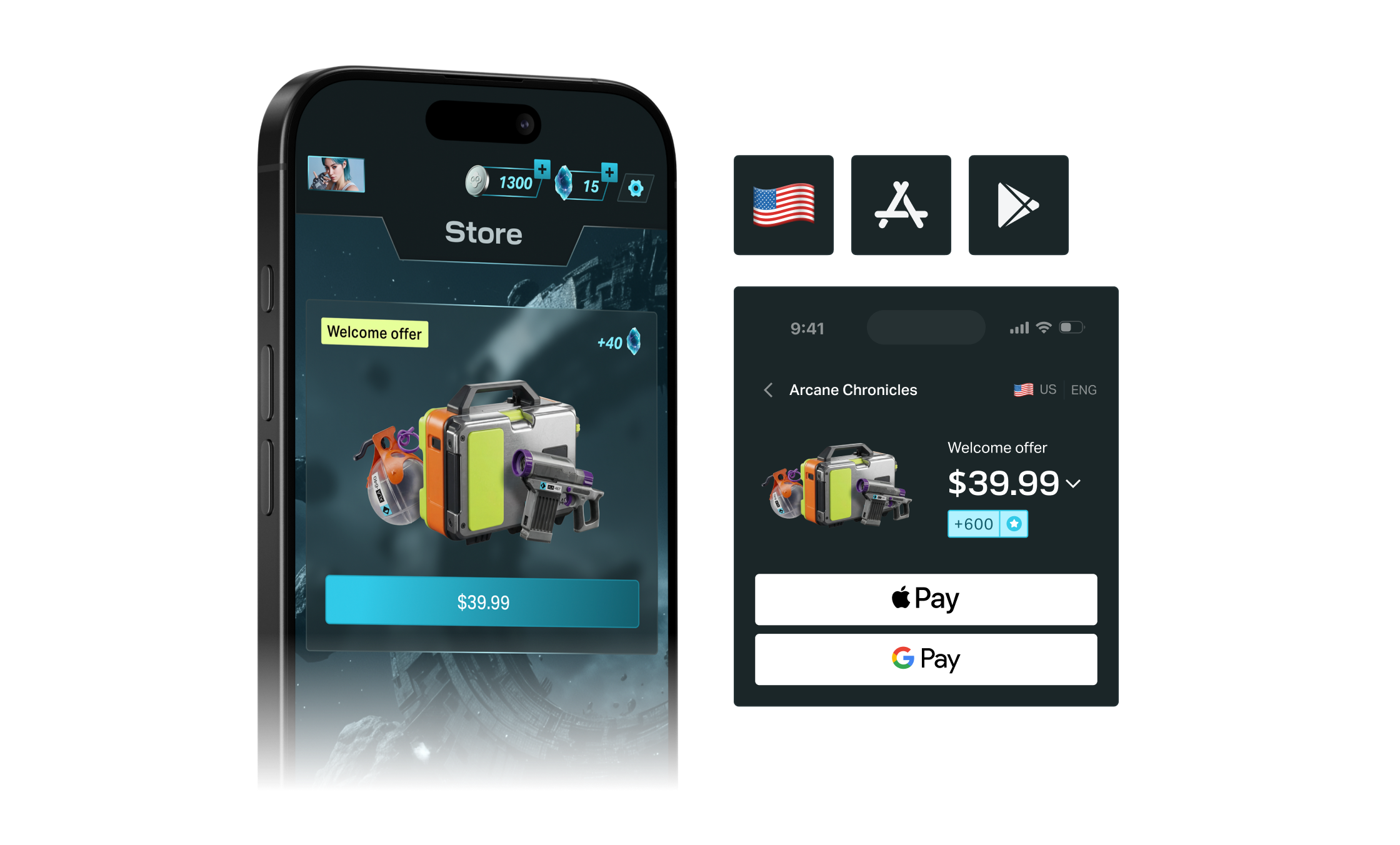
Web Shop is the product the mobile rule changes created. A studio pastes its App Store link, imports its items and gets a branded, mobile-first store with regional pricing and login. In the US the Buy Button links a player from inside an iOS or Android game to a one-tap checkout. In August 2026 Xsolla folded the shop, LiveOps scheduling, offers, subscriptions and player acquisition into one account and said it powered more than 800 mobile game D2C experiences. Its home page claims most mobile studios lift revenue 10 to 16 percent within months of launch, a vendor claim. Appcharge, Stash, Aghanim and Unity's webshop built with Stripe all sell into the same opening.
Xsolla Ads goes after the players who never pay. It began as Offerwall, a list of quests such as trying another game that rewards players with in-game currency while advertisers pay for the completed actions. In May 2026 Xsolla rebuilt it as Xsolla Ads, with a consent-based player identity across games, opt-in rewards and ad formats, and said it was live with more than 25 partners. Its premise is that more than 90 percent of players never make an in-app purchase. One partner, Tilting Point, reported a 30 percent rise in web shop users and an 8.5 percent rise in paying users after adding Offerwall to its web shop. For a Korean reader the product matters for a practical reason: the Seoul backend and full-stack roles sit in the AdTech team and value offer monetization experience.
Partner Network pays creators to sell games. Publishers search more than 137,000 creators, invite them to campaigns and set the share of each creator-driven sale they will pay, and performance on Twitch and YouTube is tracked automatically. The open Product Owner role, which lists Seoul among 15 locations, describes it as a two-sided marketplace in which publishers and creators each shape the other.
Who has bought it, and what was reported
The clearest Korean case is JOYCITY's Resident Evil: Survival Unit, launched in November 2025. The game reached number one in more than 17 countries, and its web shop needed payment methods for markets where card-based store payment falls short. JOYCITY plugged Xsolla Payments into the existing shop. Xsolla's case page reports a 4x increase in payment revenue through Xsolla and a 3x increase in Xsolla's share of the game's revenue within about five months, with the US, Hong Kong, Malaysia and Japan as top markets. A JOYCITY director repeated the result on stage at Xsolla's Seoul event in May 2026 and named local payment methods as the deciding factor.
Wemade, the other Korean name in Xsolla's case library, moved MIR4 payments onto Pay Station, Anti-Fraud and in-game services; Xsolla reports more than 200,000 transactions in two months, five times the daily volume, a $20 average order and a 10 percent rise in conversion. A later promotion with a payment partner lifted MIR4 sales 53 percent in 14 days. Outside Korea, Ubisoft opened a Growtopia web shop in May 2025 and, by Xsolla's account, recorded 66 percent more web purchases than comparable titles and a 10 percent rise in revenue per paying user.
How to read these cases
Every number here comes from Xsolla's own case pages or its own events, and each one measures revenue or activity that flowed through Xsolla, not the game's total. They show where the product works, and the seller chose them. The Korean names that recur, Wemade, JOYCITY and KRAFTON, are publishers with global audiences, which is where cross-border payment matters most.